Can you run an RV inverter while driving?
6 min read

Yes. An RV inverter draws its power from the battery, so it works the same whether the vehicle is parked or moving; what changes on the road is that the alternator is charging the battery at the same time. The two currents meet on the DC side rather than cancelling out, so what the battery actually has to supply is the inverter's draw minus the charge coming in. That is why a modest AC load can run all day while driving, and why a heavy one is still a question about the battery rather than about the engine.
The inverter never sees the engine
An inverter is a load on the battery, and that does not change when the engine starts. What the engine adds is a charging path through a DC-DC charger or a split-charge arrangement, which tops the battery up while the inverter draws it down. Nothing about the inverter's behaviour depends on the vehicle moving, so the same rules apply as when parked: the DC current has to come out of the battery, and the battery's own rating sets the ceiling.
Where the difference shows up
- A small AC load on the move, such as a laptop charger, a slow cooker or a coffee machine, sits well inside what a charging path can replace, so the battery barely notices it.
- A kettle or a microwave is a short, heavy draw. It is the battery that carries it, and the alternator refills afterwards rather than supplying it as it happens.
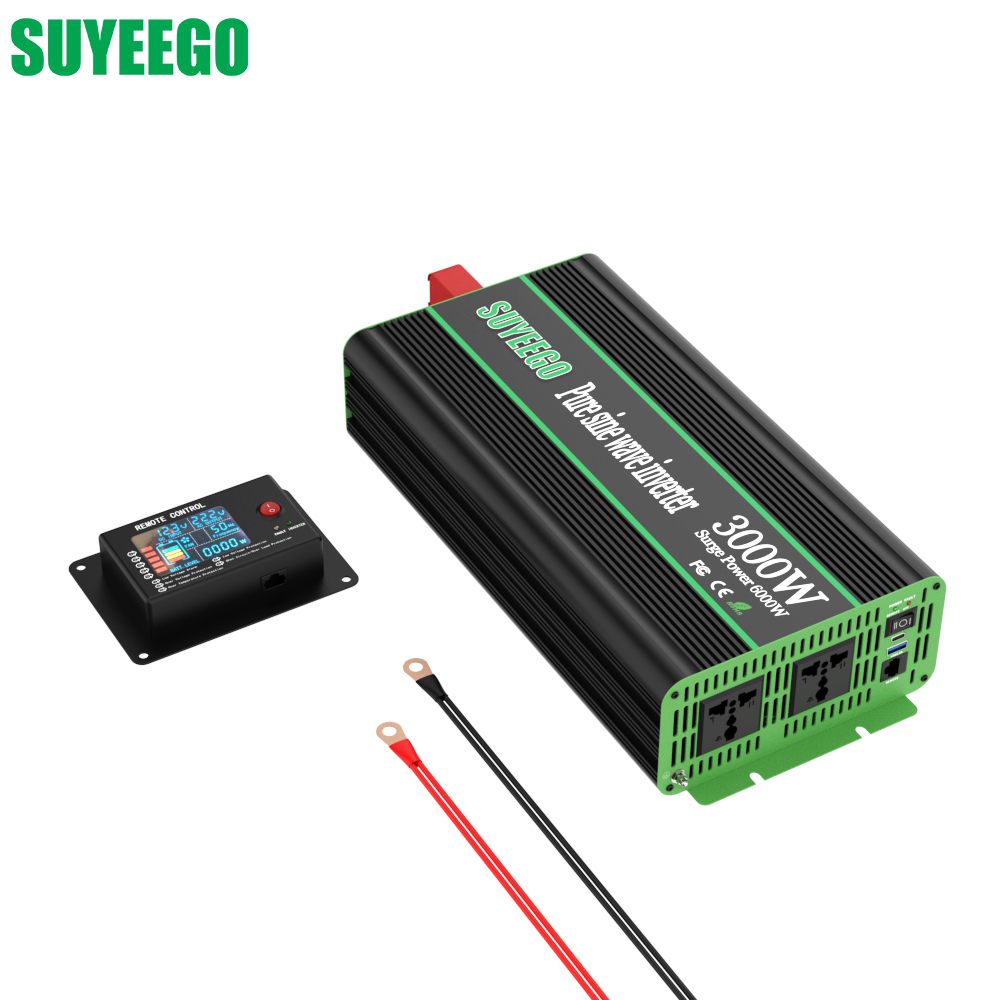
- A 3000W load is roughly 260A at 12V once conversion loss is included, which no alternator input we publish comes close to. At that size the battery is doing the work and the charging path is a refill.
- The same 3000W on a 24V bank halves the current, which is the one change that makes heavy loads on the move easy rather than marginal.
What the published figures cover
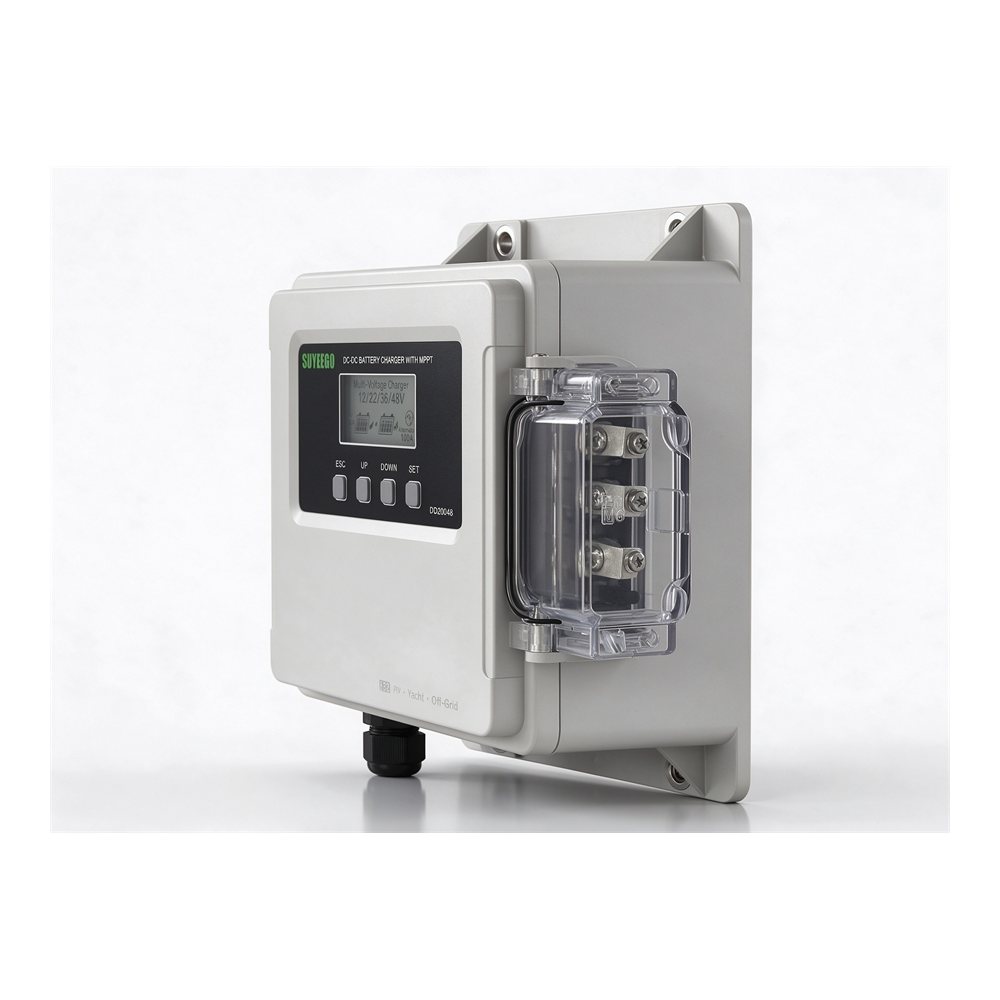
Two published numbers set the picture. The DC-DC charger range publishes an alternator input of 40A, 60A and 100A depending on the model, and the 12.8V 200Ah LiFePO4 battery publishes 200A of continuous discharge. Charging at 100A while a 1000W load draws something over 80A means the net flow is a modest charge rather than a heavy discharge; a 3000W load moves the same arithmetic far into discharge, which is a question for the bank rather than the engine.
Practical points for loaded driving
- Run heavy loads at cruising speed rather than at idle, where most alternators produce a fraction of their rated output.
- Keep the DC side sized for the full inverter draw, not for the charge current: the cable and fuse see the peak of the two.
- Watch the battery voltage under load the same way you would when parked. A charging path raises the resting voltage but cannot hide a cable or connection that drops volts.
- The inverter's mounting, ventilation and clearance requirements are unchanged by driving, so nothing needs to be reconfigured for travel.
Frequently asked questions
- Does the inverter run off the alternator directly?
- No. The inverter draws from the battery, and the alternator charges the battery through a DC-DC charger or equivalent. The two happen at the same time, which is why the battery only has to cover the difference between what the inverter takes and what the charging path puts back.
- Can I run a 3000W inverter while driving?
- Yes, provided the battery can supply it. 3000W is around 260A at 12V once conversion loss is included, which is above what our 12.8V 200Ah battery publishes for continuous discharge on its own, so a bank of two or a 24V system is where that conversation starts.
- Will running the inverter while driving damage the alternator?
- The charger limits what it asks for, which is what the 40A, 60A and 100A published alternator inputs describe. Whether your alternator can deliver that continuously, especially at idle, is a vehicle question rather than an inverter question.
- Is it better to run AC loads when parked and charging?
- Running a heavy load while the engine charges the battery means the battery ends the journey closer to full, which is useful if the next stop has no hook-up. It does not make the load any easier on the battery while it is running, and the difference is recovered afterwards either way.