Which appliances should run on 12V and which on the inverter?
7 min read
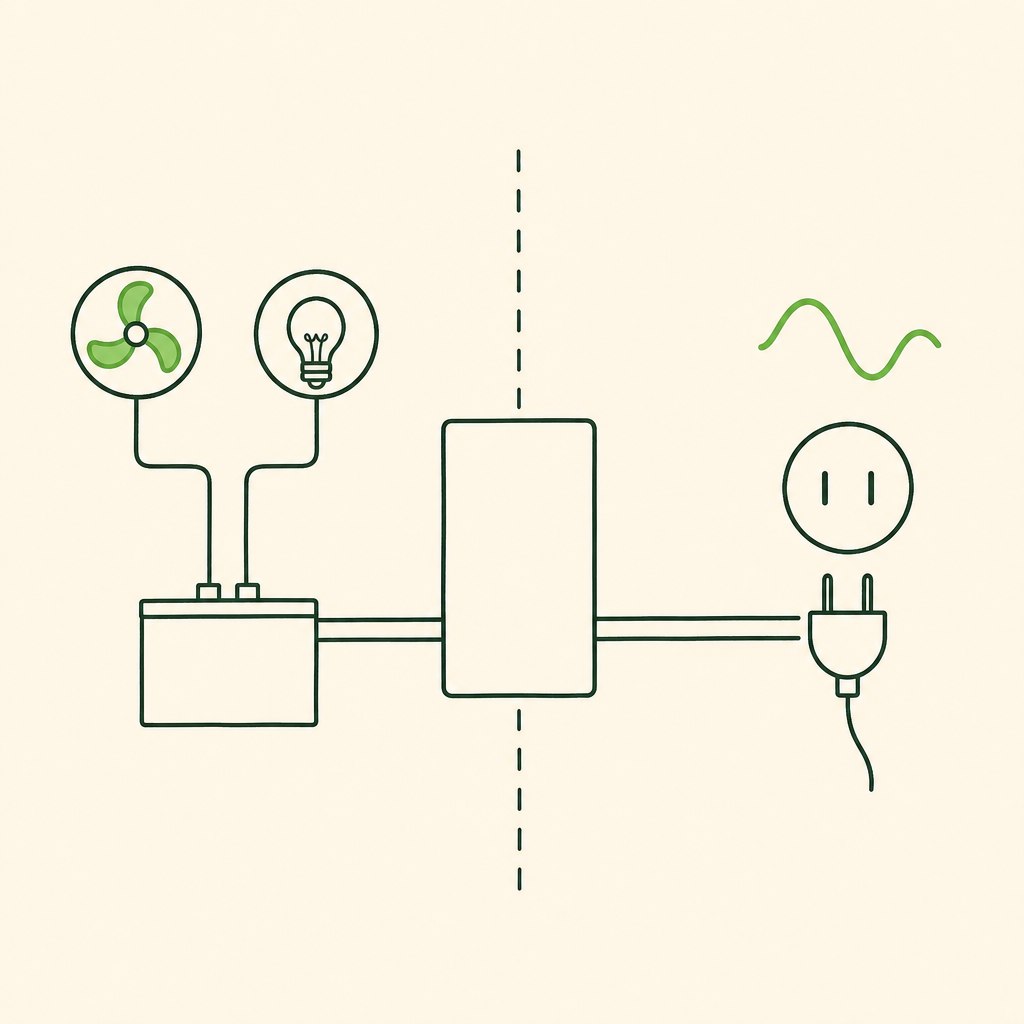
Keep an appliance on 12V when it is available as a native DC appliance, and put it on the inverter when it is only made as a mains appliance. A compressor fridge, LED lighting, fans, pumps, phone charging and most laptop charging all exist in 12V versions, and running them directly avoids the inverter's conversion losses altogether. An appliance that only exists as a mains product — a microwave, an induction hob, a coffee machine, most air conditioners — is the reason to fit an inverter at all, and those are the loads worth planning the inverter around.
Start from the appliance, not the voltage
The question is not whether 12V is better than 230V. It is whether the appliance you want exists as a DC product. Where it does, running it straight from the battery is the shorter path: no conversion step, no inverter left running, and the same result for a lower current on the DC side. Where it does not, a mains appliance plus an inverter is the only option, and the cost of that conversion becomes part of the design rather than an afterthought.
What the inverter costs you
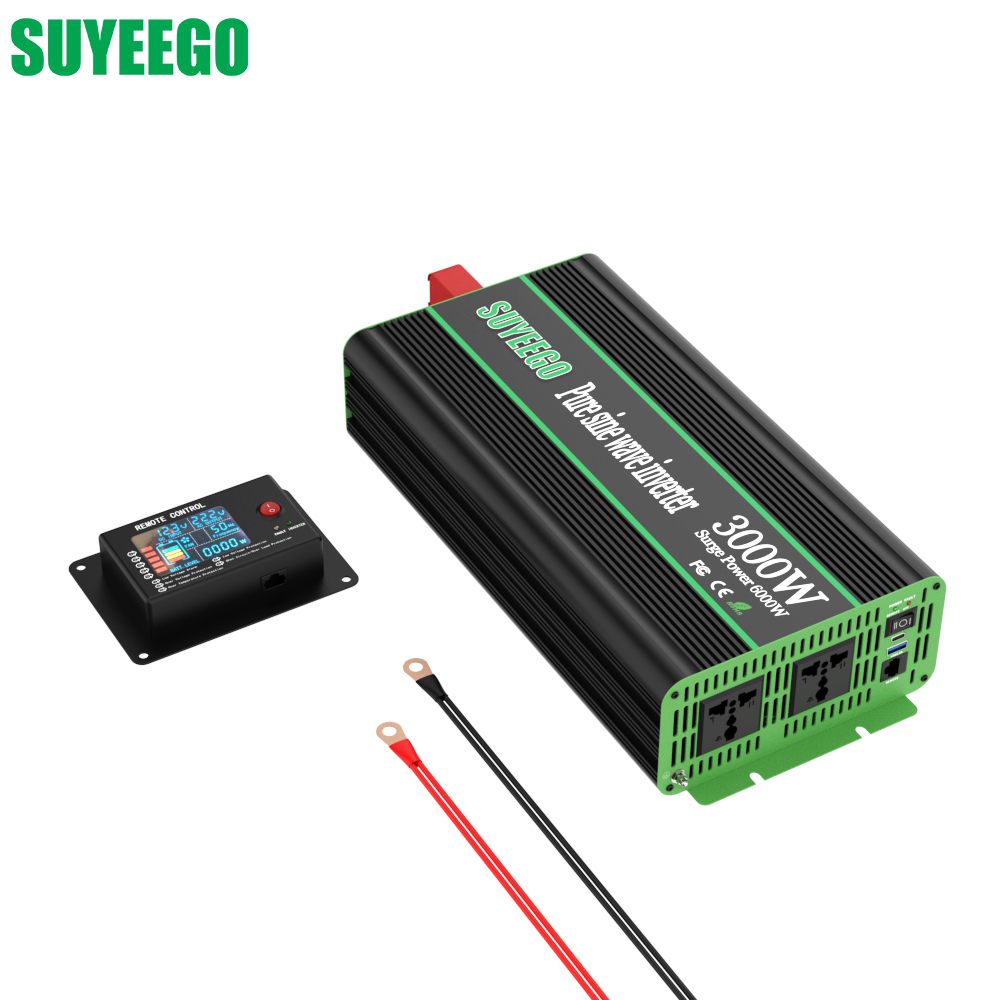
An inverter is not a transparency. The pure sine wave range on this site publishes an efficiency above 95%, which means a small share of everything drawn through it is lost as heat before it reaches the appliance. That figure describes operation at a sensible fraction of the rating; at light loads the proportion lost is larger, which is why running a single phone charger from a large inverter is about the least efficient thing a system can be asked to do.
There is a second cost that has nothing to do with efficiency: current. A 1000W load at 230V is only a little over 4A on the AC side, but the same 1000W taken from a 12V battery is more than 80A once the conversion loss is included. The DC side of an inverter is where the cable, the fuse and the battery's own current limit are decided — not the AC side.
The split, appliance by appliance
| Appliance | Better side | Why |
|---|---|---|
| Compressor fridge | 12V | Made as a DC appliance, and it cycles all day and night, so it would run the inverter continuously. |
| LED lighting | 12V | Native DC, small loads, and the wiring is already in the van. |
| Water pump, extractor and ventilation fans | 12V | Small DC motors that are routinely available in 12V. |
| Phone and tablet charging | 12V | USB outlets run straight from the battery; through an inverter they would need the inverter awake. |
| Laptop charging | 12V | DC-DC laptop chargers exist and skip the double conversion. |
| Microwave, induction hob, coffee machine, kettle | Inverter | Only made as mains appliances, and all of them draw heavily while they run. |
| Air conditioner | Inverter | A mains appliance in almost every case, and the battery has to carry the running current. |
| Power tools, hair dryer, vacuum | Inverter | Occasional, high-power, mains-only loads that the inverter is there for. |
The loads people get wrong
- Heating with electricity. A kettle, a space heater or a hair dryer converts energy at full rate for as long as it is on, which is the most expensive thing a battery can be asked to do. These are the loads that empty a bank fastest, whatever the inverter is rated for.
- Leaving the inverter on for small loads. Standing losses accumulate over a whole day, and a 12V USB outlet does the same job without waking the inverter.
- Assuming a large inverter makes a large load possible. The inverter's rating is only one of the limits; what the battery can deliver, and what the cable and fuse are rated for, come first.
- Forgetting the peak. Motors and compressors draw several times their running current for a moment at start-up, which is what the peak rating covers. The range publishes continuous and peak together, for example 1000W and 2000W on the smallest model.
What this means for the equipment you choose
Once the split is decided, the equipment follows from it. If everything that matters is 12V, the only mains equipment in the van may be a small inverter for occasional use. If the AC side carries the fridge, the microwave and the air conditioner, then the inverter, its cable and its fuse become the centre of the design, and the DC side has to be built for the current they need.
- Inverter input: the range is built for 12V or 24V banks, so the bank voltage has to be settled before the inverter is chosen.
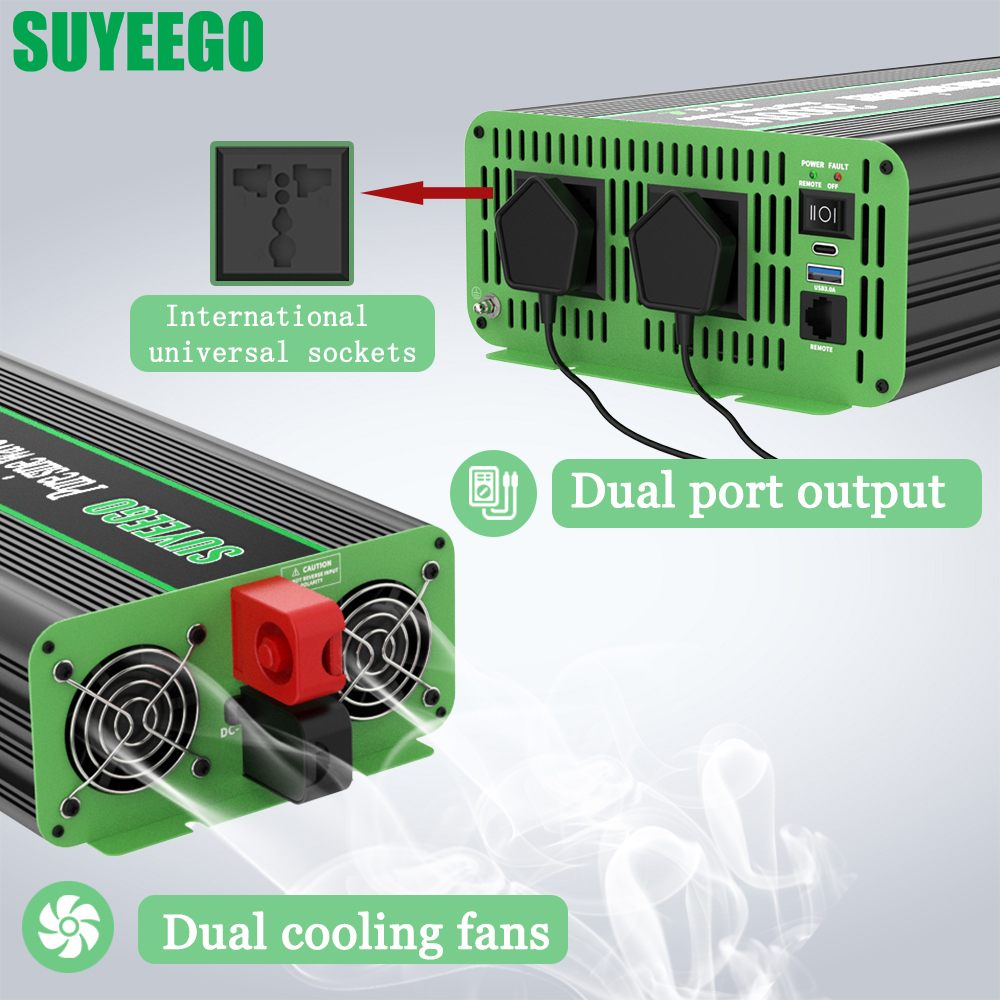
- Inverter output: 110V or 220V, with 50Hz or 60Hz on request, so the model has to match the country the van is used in.
- Continuous against peak: take the continuous figure from the loads you will run at the same time, then check that the peak covers the appliances with motors in them.
- DC distribution: the controller's own load output can feed a small 12V circuit, with a default limit of 10A and up to 45A on the larger models. Anything bigger needs its own feed from the battery.
The figures the range publishes
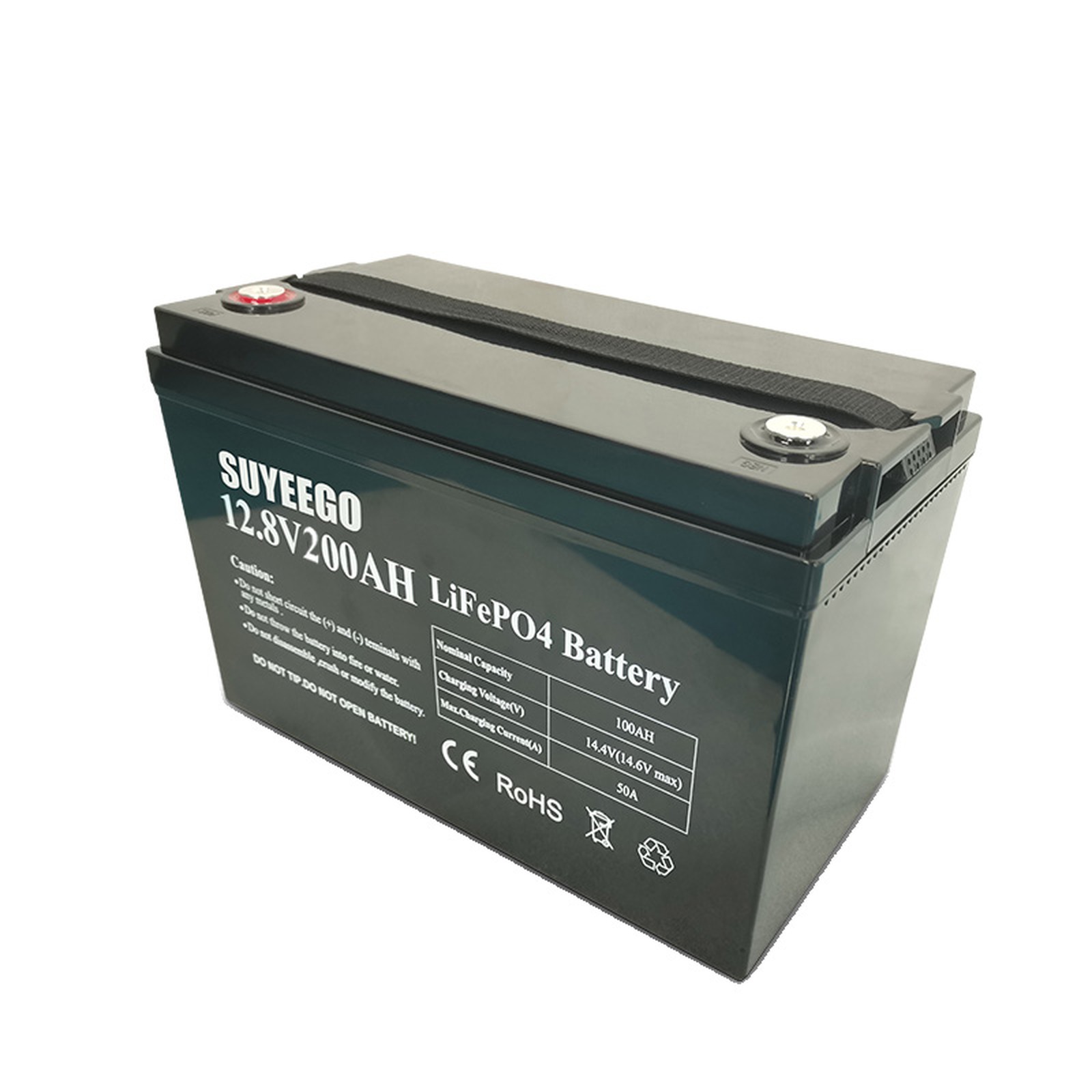
SUYEEGO's pure sine wave inverter range (SYGG-FSC) runs from 1000W to 3000W across five models, with a peak rating of twice the continuous figure, a pure sine wave output, 12V or 24V DC input, 110V or 220V AC output with 50Hz or 60Hz on request, efficiency above 95%, and a low voltage alarm at 10.5V on a 12V bank with cut-off at 10V. The 12.8V 200Ah LiFePO4 battery alongside it is rated for 200A of continuous discharge, which is the figure the DC side of an inverter has to stay inside.
Frequently asked questions
- Is it more efficient to run appliances on 12V?
- Yes, whenever the appliance exists as a DC product. A 12V appliance runs straight from the battery with no conversion step, so the only losses are in the cable. Through an inverter the conversion itself takes a few per cent even at good efficiency, and more than that at light loads.
- Can I run a microwave from a 12V battery through an inverter?
- Yes, if the inverter and the DC side are sized for it. A microwave draws a large current for a short time, so what matters is the continuous rating of the inverter, the cable and fuse feeding it, and whether the battery can supply that current without its voltage collapsing.
- How do I stop the inverter draining the battery overnight?
- Switch it off when the AC side is not needed. An inverter that is left on draws current with nothing plugged in, and across a whole night that energy comes out of the battery rather than the solar array.
- Do I need an inverter at all?
- Only if you want to run a mains appliance. A van built around a 12V fridge, 12V lighting and USB charging can do without one, which removes a conversion step and a device that has to be installed where it can stay cool.