Should I wire my solar panels in series or parallel?
7 min read
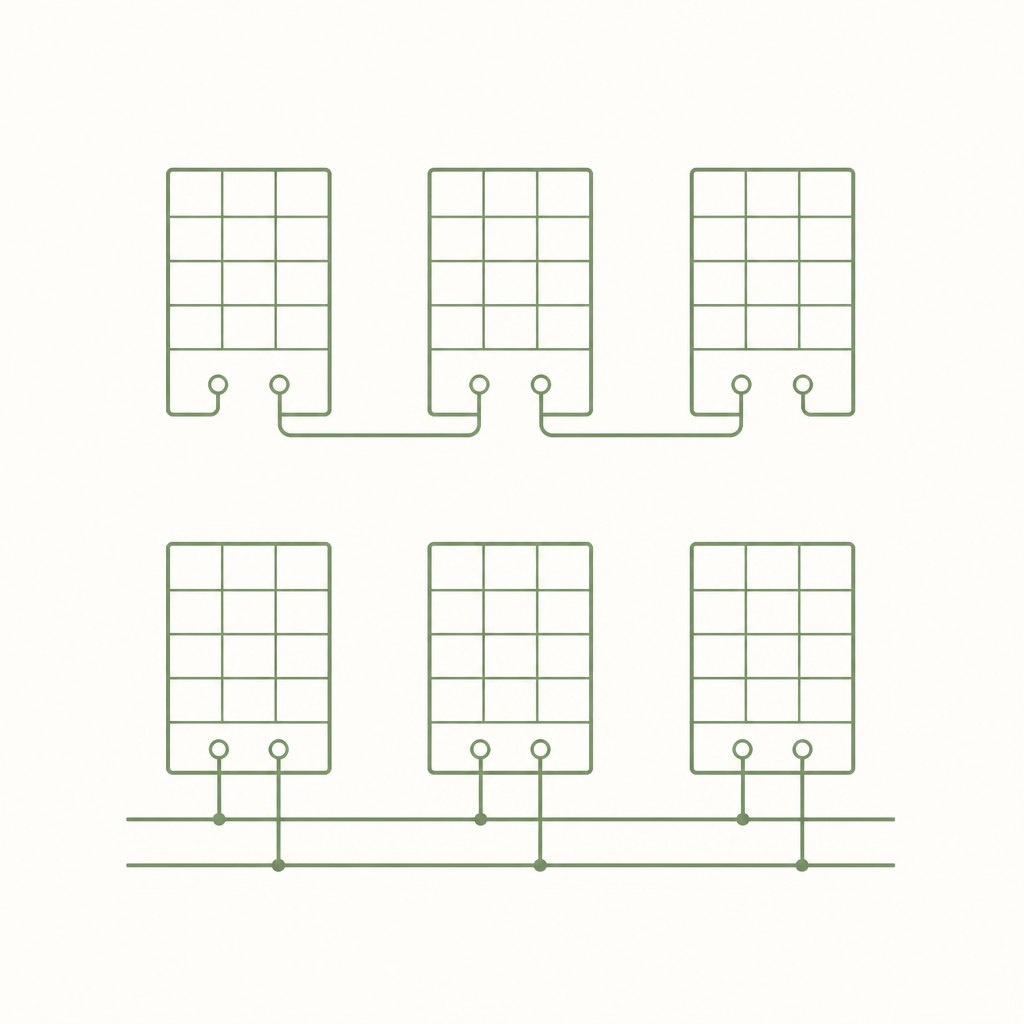
Series and parallel describe how the panels' outputs are added together. Wiring in series adds the voltages and leaves the current at one panel's level, which keeps cable and connector currents low and lets a longer run reach the controller without much loss. Wiring in parallel adds the currents and leaves the voltage at one panel's level, which keeps voltage low but raises current and cable thickness. Series is usually the better default on an RV roof, but it has one real weakness: shading one panel in a series string costs the output of the whole string, while in a parallel array only the shaded panel is affected.
What each arrangement does to volts and amps
Two panels have a rated voltage and a rated current, and the wiring decides which of the two gets added up. Series and parallel are simply the two ways of joining them, and each produces a different pair of totals at the controller.
- In series, the panels are joined positive to negative in a chain. The volts add while the current stays at the level of a single panel, so two panels in series give twice the voltage at the same current.
- In parallel, every panel's positive goes to one common positive and every negative to one common negative. The current adds while the voltage stays at a single panel's level.
Why series is usually the default on a roof
On a roof, the run from the panels to the controller can be several metres, and the longer and thinner that run is, the more voltage it drops. Because series keeps the current low, it loses far less in the cable for the same run and lets a smaller, lighter cable do the job. That is the main reason series is the usual starting point when the panels all see the same light.
Where parallel wins
Parallel pays for itself where the panels do not all behave the same way. If one panel is partly shaded, a series string is limited by the weakest panel in the chain, but in a parallel array each panel contributes independently and only the shaded one is held back. The same logic applies to panels facing different directions, which never reach their peak at the same time, and to mixed panel models, which produce different currents. In each of those cases parallel recovers more of the available energy, at the cost of thicker cable and higher currents.
Mixing the two, and the rules that matter
- Match panel models within a string. Panels in series should be the same model, because the string's current is set by the weakest panel and a mismatch wastes the difference.
- Keep the string's cold open-circuit voltage inside the controller's limit. Panel voltage rises as temperature falls, so check the figure at the coldest temperature the panels will see, not at room temperature.
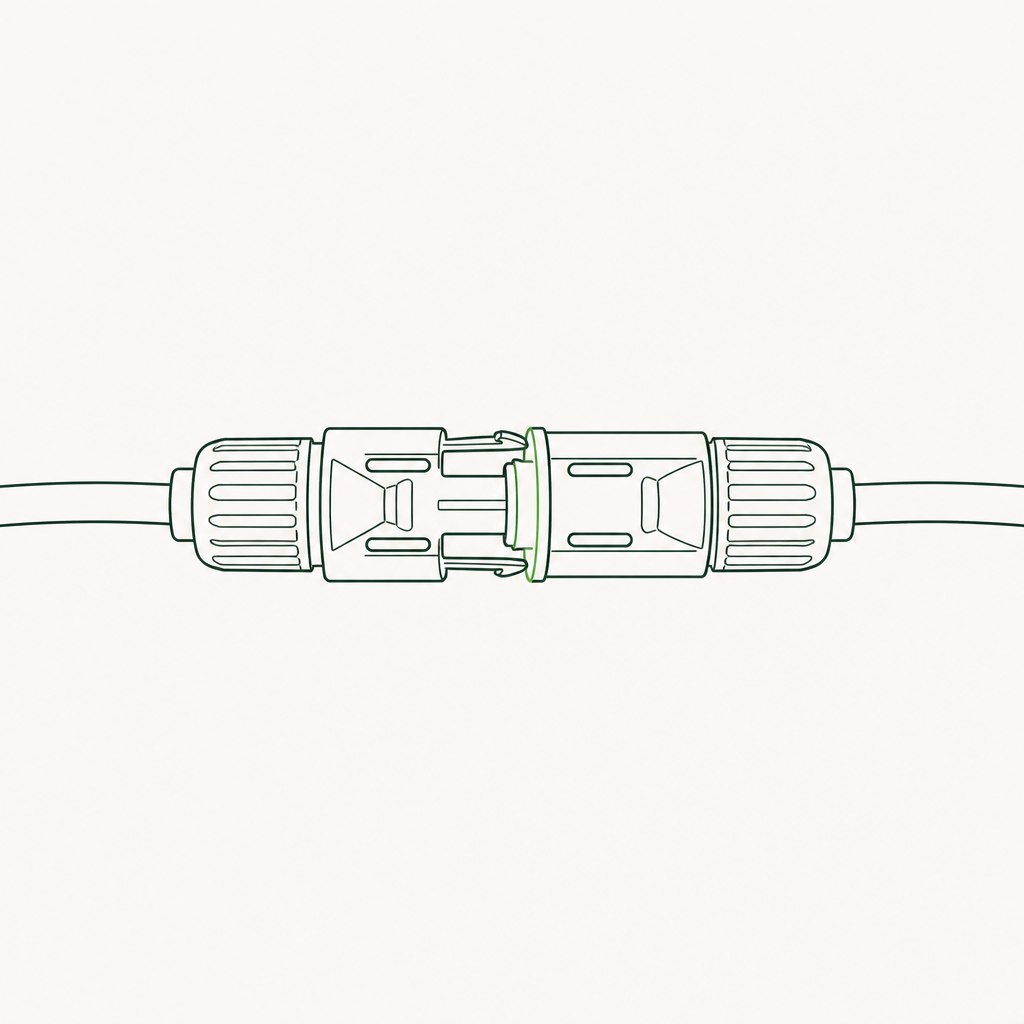
- Check the connector current rating. Parallel connections push the current up, and the connectors and cable have to be rated for the total rather than for one panel.
- Protect parallel strings. Each parallel string normally carries a fuse or a blocking diode, so that a fault in one string cannot be fed by the others.
Frequently asked questions
- Do solar panels in series or parallel charge faster?
- Neither charges faster by itself; the arrangement changes the voltage and the current, not the total energy. What usually decides charging speed is whether the controller can use the array's voltage well, and whether shade affects one panel or the whole string. A series string that is partly shaded can charge more slowly than a parallel array in the same conditions.
- Can I mix different solar panels on one controller?
- You can, but they should be matched within a string. Panels in series are limited by the weakest panel's current, so mixing models of different ratings throws away some of the larger panel's output. Panels facing different directions, or of different ages, are better wired in parallel, where each one contributes independently.
- What happens if one panel in a series string is shaded?
- The whole string's current falls to the level the shaded panel can pass, so the output of every panel in that string drops with it. In a parallel array only the shaded panel is affected. This is the main reason people choose parallel wiring on a roof where shade is unavoidable.
- How many panels can I connect in series?
- There is no fixed number; the limit comes from the controller's maximum input voltage. Add up the panels' open-circuit voltages, correct them for the coldest temperature you expect, and stop before that total reaches the controller's limit. More panels in series also mean a higher voltage at the same current, which is what keeps the cable loss low.