Do flexible solar panels last as long as rigid ones?
7 min read
No, a flexible panel does not last as long as a framed glass one, and it is worth being straightforward about that before comparing prices. A rigid panel is glass bonded to a metal frame, and panels of that construction are commonly quoted with performance warranties measured in decades. A flexible panel is a laminate of a polymer front film, cells and a back sheet, and the front film is what decides how it ages: ETFE resists ultraviolet light and abrasion far better than PET, which clouds and yellows. Heat is the other factor, because a thin panel cannot shed it as readily as an air-gapped glass one.
How a flexible panel is built

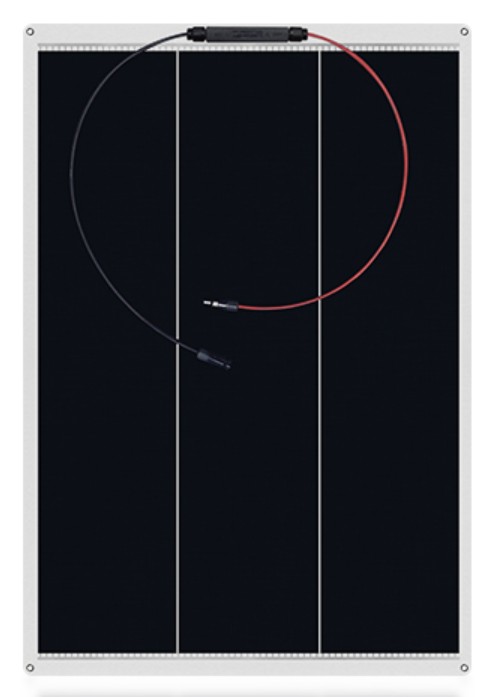
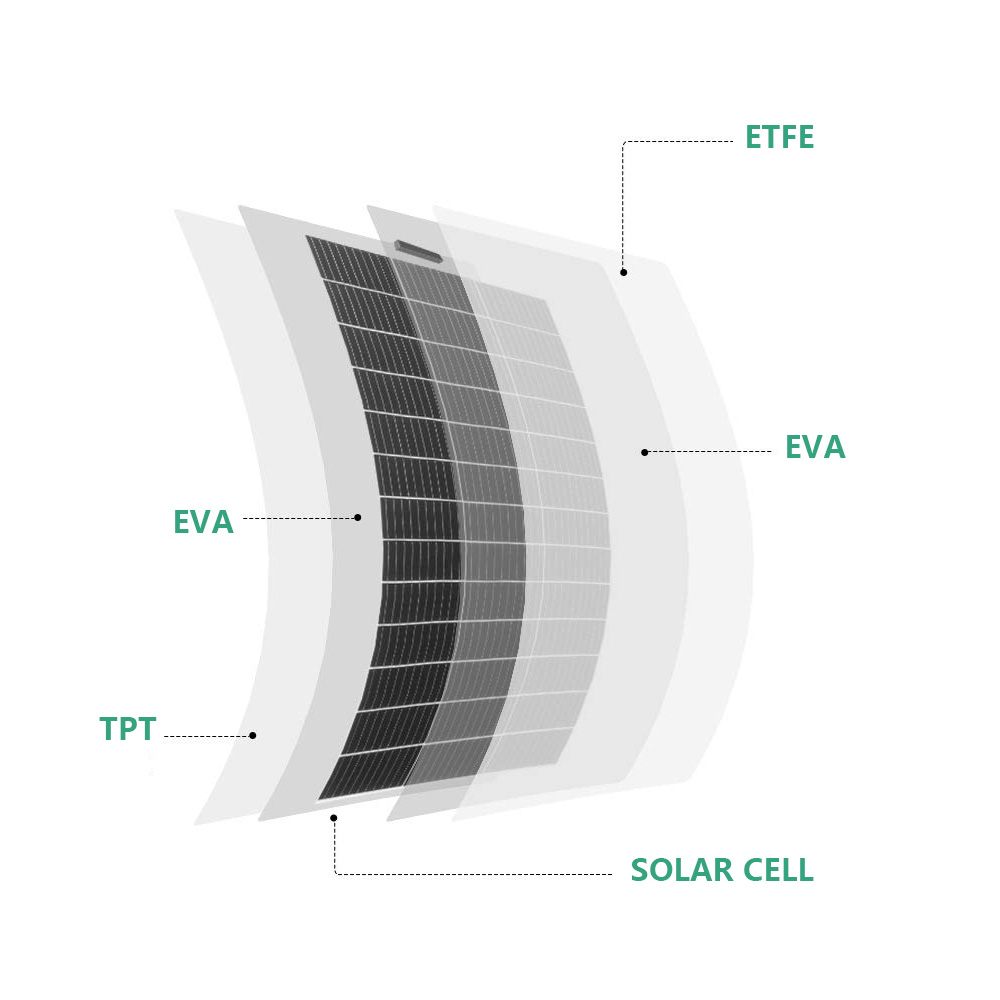
A flexible panel replaces every rigid part of a framed panel with a polymer one. The front surface is a transparent film rather than glass, the cells sit in the middle, the back is a waterproof sheet, and the whole thing is laminated into a single sheet a few millimetres thick that bends to follow a roof. The cells themselves are the same silicon cells used elsewhere; what differs is the material around them and the way the panel is mounted.
- A high-transmittance ETFE front surface, chosen because it keeps its transmission at high temperatures and in low light rather than clouding.
- Bypass diodes, so that a shaded cell does not drag down the output of the section it sits in.
- A waterproof TPT back sheet, which is what keeps moisture away from the cells from behind.
- No frame and no glass, which is where the low weight and the flexibility come from — and also what the panel gives up in durability.
What actually shortens a flexible panel's life
- Heat, which is the largest single factor. A framed panel has air moving behind it; a flexible panel bonded flat to a roof has only the roof, and a dark roof absorbs heat rather than shedding it.
- Bending tighter than the maker's radius. A flexible panel is flexible, not foldable: repeated sharp bends crack cells and stress the laminate.
- Abrasion. Walking on a panel, dragging gear across it, or cleaning it with anything harsher than a soft brush and water attacks the front film.
- Strain at the cable exit, which is where a waterproof laminate is most easily opened up by vibration.
- Adhesive or mounting failure, which matters less for the panel than for what happens when a panel leaves the roof at speed.
Note what is not on that list: the sun. Ultraviolet light is what the front film is chosen for, and the cells underneath are the same cells a framed panel uses. A flexible panel that fails usually fails at the surface, at the laminate edge or at a joint rather than at the silicon.
ETFE and PET are not the same surface
The single most useful thing to check on any flexible panel is what the front surface is made of, because it is the part exposed to everything. PET is cheaper and degrades in ultraviolet light: it clouds, its transmission falls and the panel's output falls with it, even though nothing has visibly broken. ETFE costs more to produce and holds its transmission far longer, which is why it is used on the panels intended to stay outside for years.
SUYEEGO's flexible panels use an ETFE front surface and a waterproof TPT back sheet, and the range covers 50W to 230W with a 210 × 210 mm cell. The panel is 4 mm thick, which is what makes it practical to bond to a curved van or motorhome roof.
The honest comparison
| Flexible panel | Framed glass panel | |
|---|---|---|
| Front surface | Polymer film, ETFE on this range | Tempered glass |
| Frame | None | Aluminium |
| Weight | A fraction of the equivalent glass panel | Baseline |
| Roof it suits | Curved, and roofs where payload matters | Flat roofs with room for brackets |
| Mounting | Adhesive, or bonded to the roof surface | Brackets and drilled fixings |
| Expected service life | Shorter, and decided largely by the front film | Longer, and decided largely by the frame and the glass |
| Warranty | 2 years on this range | Framed panels are commonly quoted in decades |
The warranty figures are not an accident or a marketing choice; they describe two different products. Two years on a flexible panel is a statement about the materials it is made from, and a buyer should read it that way rather than assuming the panel will fail at two years and one month.
Which one should you fit
Flexible panels exist because some roofs cannot take anything else. A curved van roof, a payload already close to its limit, or a vehicle whose owner will not drill holes in a waterproof skin are all situations where a framed panel is not really on the table, and a flexible panel delivers a usable array in a form the roof can actually accept.
Where the roof is flat and payload is not the constraint, a framed glass panel is the longer-lived choice, and it is worth saying so plainly. The decision usually comes down to which constraint is binding: roof curvature and weight point to flexible, longevity and cost per year point to glass.
SUYEEGO builds flexible panels, so we would rather you chose them for the right reason than discovered the trade-off afterwards. Tell us the roof and your daily energy figure and we will say what the array should be and how many panels from the 50W to 230W range it takes to build it.
Frequently asked questions
- How long do flexible solar panels last?
- Shorter than framed glass panels, and there is no single number. The front surface material decides most of it, with heat and the way the panel is mounted deciding the rest: an ETFE front holds its transmission far longer than PET, and a panel bonded flat to a dark roof ages faster than one that can shed heat.
- Is ETFE better than PET?
- For a panel that lives outdoors, yes. PET clouds and yellows under ultraviolet light, and the panel's output falls as its transmission does, without anything visibly breaking. ETFE resists both ultraviolet light and abrasion far better, which is why it is used on panels intended to stay outside for years.
- Can you walk on a flexible solar panel?
- No. A flexible panel is flexible, not tough: foot traffic and dragged luggage abrade the front film and can crack cells underneath it. Clean it with a soft brush and water, and keep weight off it.
- Do flexible panels get too hot?
- Heat is the main thing that ages them, because a thin panel bonded to a roof has little opportunity to shed it, and a hot panel also produces less power than a cool one. Mounting it as the maker specifies, rather than improvising, is what keeps the temperature and the panel's life under control.