How many solar panels can you connect in series?
7 min read
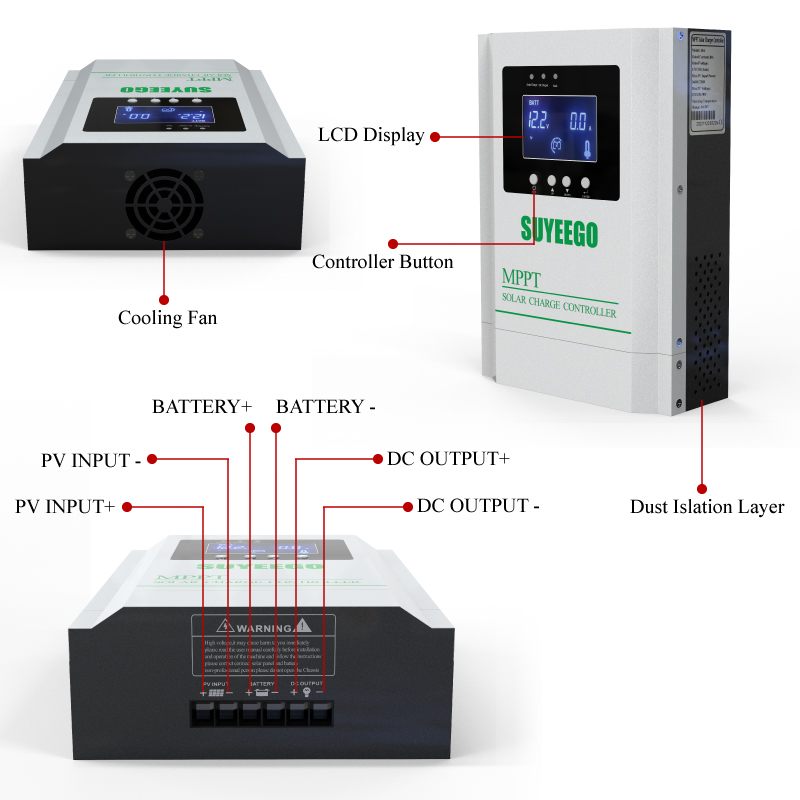
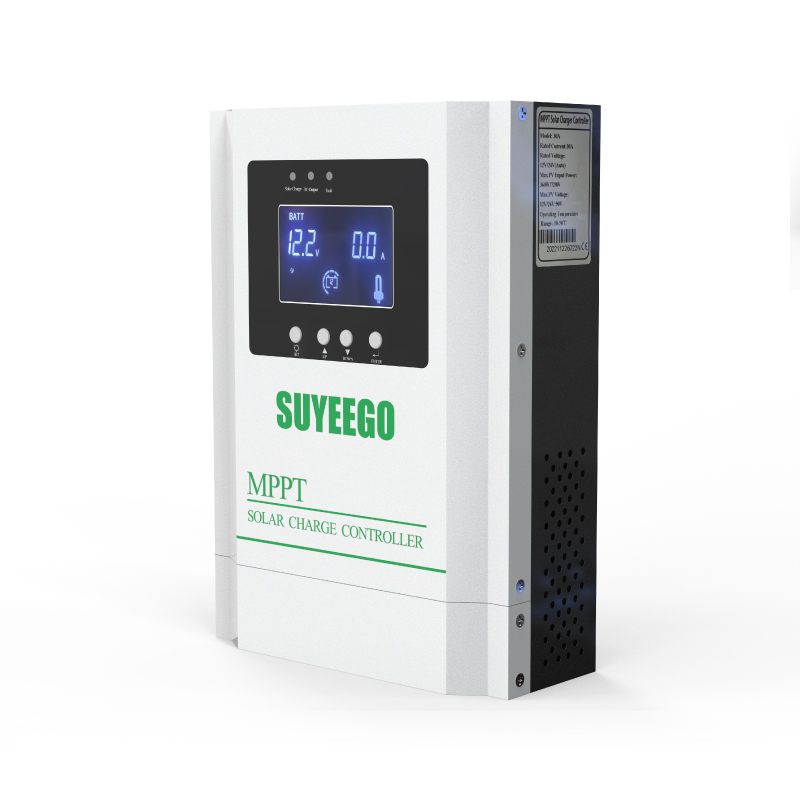
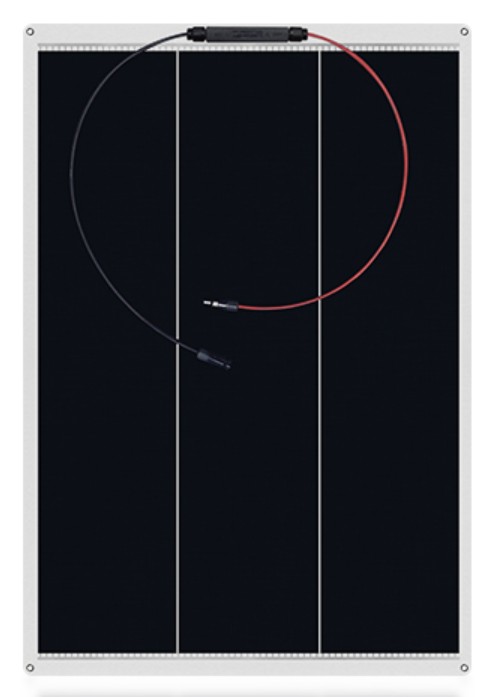
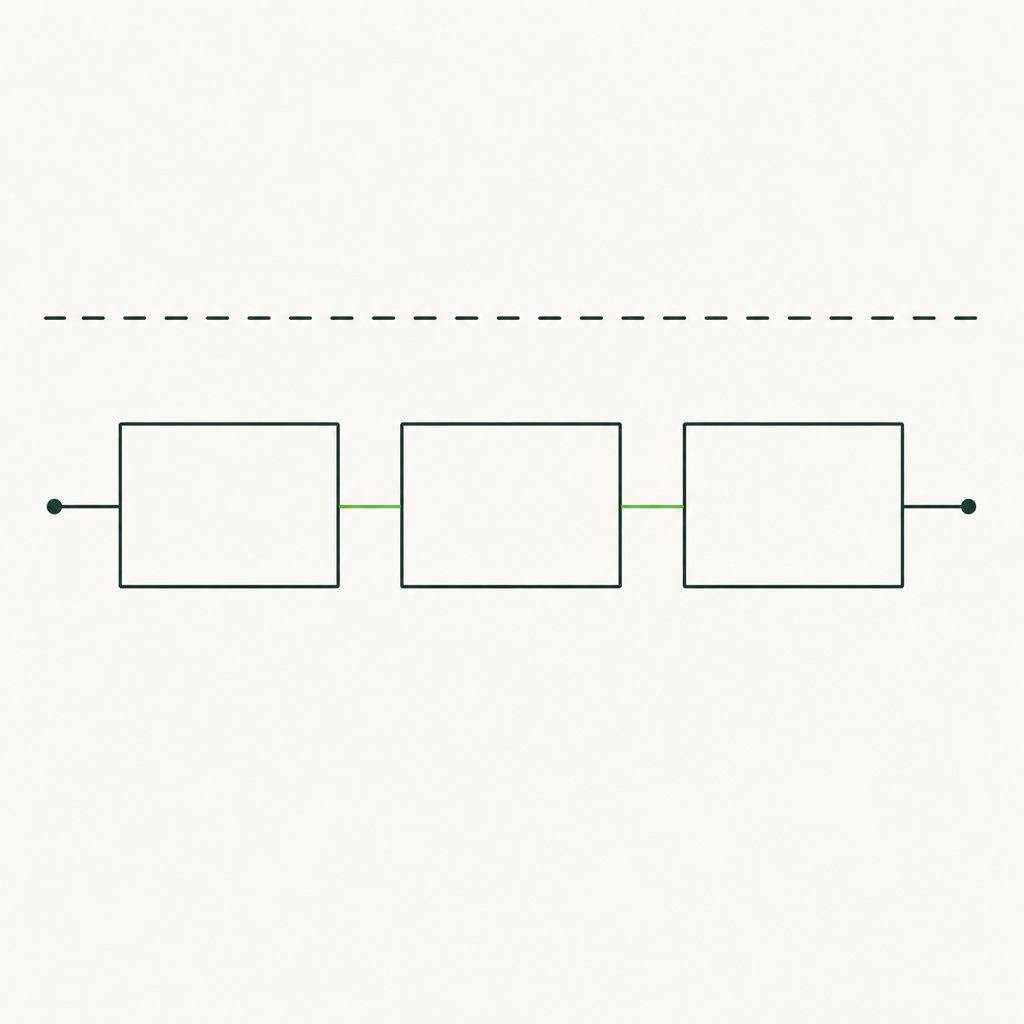
Work from the panels' open-circuit voltage against the controller's maximum PV voltage, then check the input power limit as well, because on a 12V battery it usually binds first. SUYEEGO's MPPT controllers publish 80V as the maximum open-circuit voltage on the 12–24V battery models and 180V on the 48V and 96V models; the dual input charger publishes 80V. A flexible panel in the range has a Voc of 22.3V in most sizes, so three in series come to 66.9V, inside an 80V limit, while four come to 89.2V, which is over it. But the same controller accepts only 240W of panel input on a 12V battery, so with 200W panels the power ceiling arrives before the voltage ceiling does.
Why the open-circuit voltage is the number that matters
A panel has two voltages worth knowing. Vmp is the voltage at which it produces its best power, and it is the figure that appears in the headline specification; Voc is the voltage it produces with nothing connected, and it is always higher. The controller's ceiling applies to Voc, because that is the highest voltage its input will ever see — and the moment it is most likely to see it is a cold, bright morning, before any load pulls the voltage down.
Cold raises a panel's voltage and heat lowers it, so a string that measures comfortably under the limit on a warm afternoon can exceed it in winter. Leave headroom rather than designing to the last volt, and do the arithmetic on Voc rather than on Vmp. Over-voltage is not a fault the controller recovers from.
The published ceilings
| Device | Maximum PV open-circuit voltage |
|---|---|
| MPPT controller, 12–24V battery models | 80V |
| MPPT controller, second 12–24V model | 80V–105V |
| MPPT controller, 48V battery models | 180V |
| MPPT controller, 96V battery models | 180V |
| DC-DC charger with MPPT (DD4048/DD6048) | 80V |
A worked example with the panel figures
The flexible panels in the range have published open-circuit voltages of 22.3V (50W, 100W, 150W and 200W), 21.5V (130W), 25.2V (170W) and 25.8V (230W). On an 80V controller, three 200W panels in series give 66.9V, inside the limit, and four give 89.2V, which is not. On a 180V controller, six 230W panels give 154.8V, and a seventh would take the string to 180.6V, just over.
| Battery voltage | Maximum panel input power |
|---|---|
| 12V | 240W / 360W depending on the model |
| 24V | 480W / 720W |
| 48V | 960W / 1440W |
| 96V | 2880W / 3940W |
This is the part that catches people out. On a 12V battery the power limit is 240W or 360W, so a single 200W panel is already most of the allowance and a three-panel string of 200W panels is three times over it. The voltage ceiling would have allowed that string; the power ceiling will not. If the array has to be larger than the input allows, the answer is a higher battery voltage, a bigger controller, or a second controller with its own array.
What the string voltage means for the controller
A series string has to be able to lift the controller's input above the battery it is charging, and the published figure for the dual input charger is a two-volt margin: PV voltage has to exceed the leisure battery voltage by 2V before solar charging starts. That is easy with a string of several panels and harder with one, which is one of the quiet arguments for wiring panels in series rather than in parallel on a long roof.
The other side of the trade is shading and current. A series string is limited by its weakest panel, so a shadow across one panel cuts the whole string's output; parallel strings keep the voltage low and add current instead, which moves the constraint to the controller's input current limit. Which one to use depends on the roof, and the trade-offs are set out in the series and parallel guide.
The figures from the range
SUYEEGO's MPPT controllers publish 80V and 180V maximum PV voltages across the battery voltage groups, with panel input power from 240W on a 12V battery to 3940W on a 96V one, and a minimum working battery voltage of 10.5V. The dual input charger publishes an 80V maximum PV voltage and 20A or 40A of maximum PV input current depending on the model. Tell us the battery voltage and the panels you intend to use, and we will tell you whether they fit together and how to wire them.
Frequently asked questions
- Can I connect four 200W panels in series?
- On an 80V controller, no: four panels at 22.3V of open-circuit voltage each come to 89.2V, above the limit. Three come to 66.9V and are fine on the voltage side, though on a 12V battery the 240W or 360W input power limit will have been passed long before.
- Does cold weather affect the string voltage?
- Yes. A panel's open-circuit voltage rises as the temperature falls, so a string that sits just under the limit in summer can exceed it on a cold morning. Design with headroom rather than to the last volt.
- Should I calculate with Voc or Vmp?
- Voc. It is the highest voltage the panel produces and therefore the one the controller's input has to survive. Vmp is the working voltage and is always lower, so using it would understate the string.
- What happens if the string exceeds the controller's limit?
- The controller can be damaged, and that is not a fault it recovers from. The published limit is a maximum, not a target to design up to.