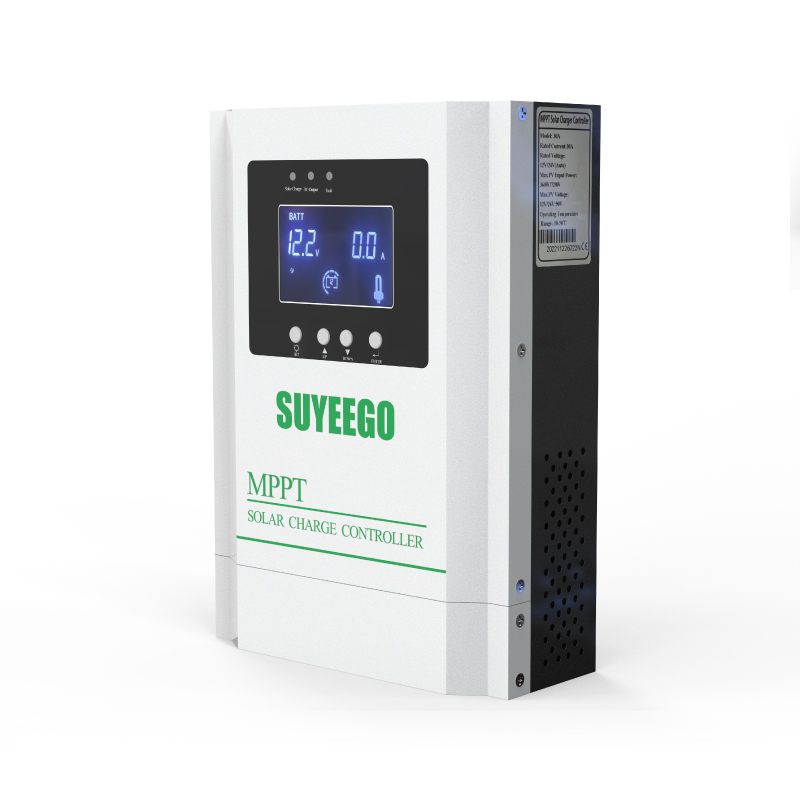
Can you use a portable solar panel with an RV MPPT solar charge controller?
6 min read
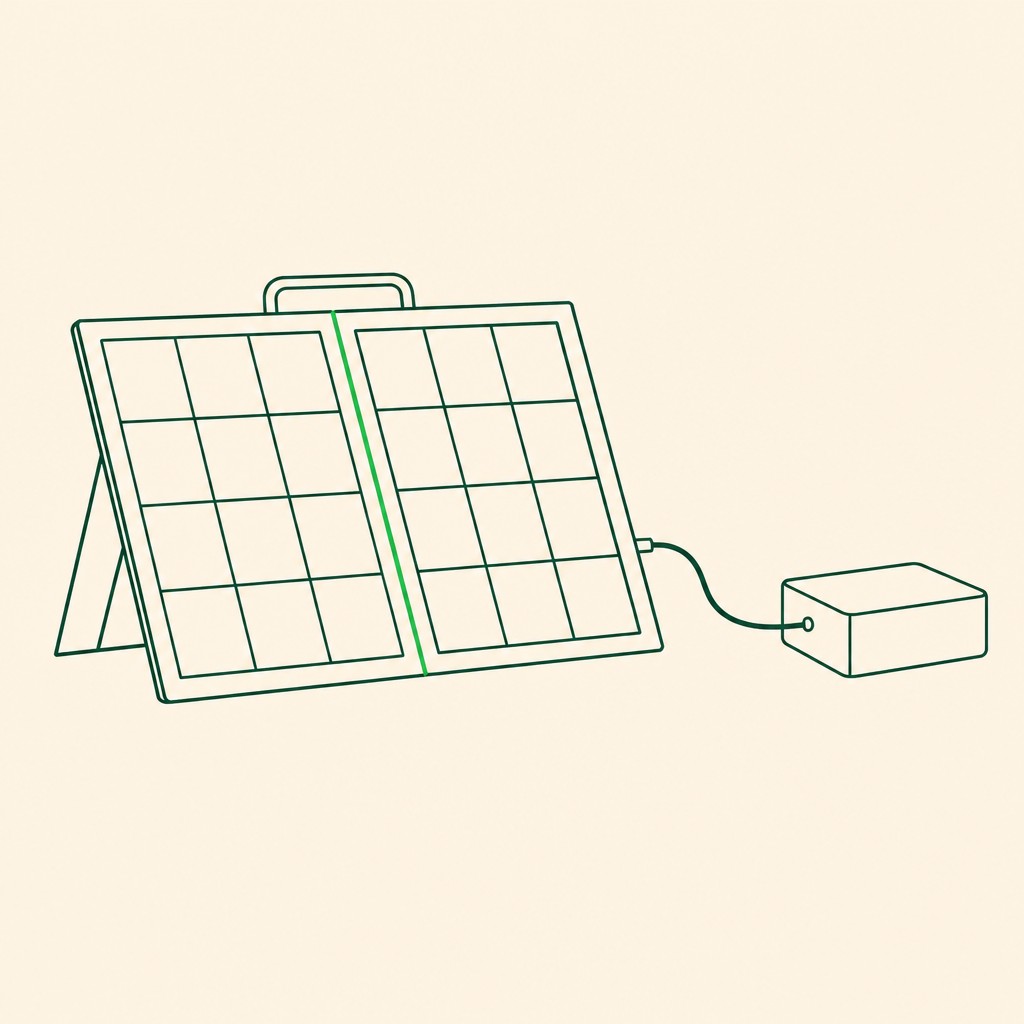
Yes, provided the portable panel does not have a charge controller of its own built in. A folding panel with its own controller is a complete charging system, and running two controllers into the same battery means both are trying to run a profile. Plug the panel straight into the RV controller's PV input and the RV controller does the work, using the wide PV input voltage range our range publishes.
The one thing to check first
Portable panels come in two forms: a bare panel with a cable, and a kit with a small controller bolted to the back. The second form is what you want to avoid connecting to your RV controller. Two charge sources on one battery will not agree about what absorption means, and the small controller on the panel is usually the least capable of the pair.
Matching it to the published limits
| Published limit | Example from the range | What to check on the panel |
|---|---|---|
| Maximum panel power | 240W on the 20A model at 12V | The panel's rated watts, remembering a portable panel rarely delivers its label in the real world |
| Maximum open-circuit voltage | 80V on the 20A model at 12V or 24V | The panel's Voc on a cold morning, not its nominal voltage |
| Battery voltage | 12V or 24V on the 20A and 30A models | That the bank matches the model you have |
Making it a practical second array
- Use one connector pair dedicated to the portable panel, so that connecting it does not mean disturbing the roof array.
- Say whether the two arrays will be connected at the same time. Both feeding one PV input is a parallel connection on the panel side, and its combined current and voltage both matter.
- Keep the portable panel's cable as short as the situation allows or accept the voltage loss; a tracker can work with a lower input, but only down to the point where the array falls below the battery.
- Remember that the controller tracks one array, not two: if the roof is in shade and the portable panel is in sun, connecting them in parallel gives the tracker a difficult average to work with.
What we do not publish
We publish the controller's input limits and the profiles it applies, not guidance about specific portable panels. If you tell us the controller model and the panel's label figures, we can check them against the published limits for your bank voltage, and the honest answer where a figure is not published is that we will confirm it rather than estimate it.
Frequently asked questions
- Can I plug a folding panel straight into my MPPT controller?
- If the panel is just a panel, yes. Check its open-circuit voltage and its wattage against the published limits for your controller and bank voltage, then connect it to the PV input. If the folding kit has its own charge controller on the back, do not connect it to the RV controller's PV input.
- Why not use both controllers at once?
- Because each one runs its own charge profile, and a battery cannot be in absorption and float at the same time. The larger controller will do the job better, so the panel's own controller adds a disagreement rather than extra charge.
- Do portable panels work well with MPPT?
- The tracker's job is the same as with a roof array, and its published wide PV input voltage range is what lets a panel of a different voltage from the roof array be connected. What limits a portable panel is the panel itself: its output in real conditions, its cable length and its angle to the sun.
- Can I connect the portable panel at the same time as the roof array?
- That is a parallel connection on the panel side, so the combined open-circuit voltage and current have to stay inside the published limits. The controller then tracks one combined array, which is worth thinking about if one of the two is shaded while the other is in the sun.