Does a DC charger need cooling?
6 min read
It needs somewhere to put its losses, because that is what the wattage it does not pass on becomes. The DD range publishes a maximum charging conversion efficiency of 98% with aluminium radiators and automatic high-temperature derating, and the 12V 20A to 60A range publishes efficiency up to 90%. At 60A into a 12V battery the second figure means tens of watts of heat, so ventilation is part of the design rather than an accessory.
Where the heat comes from
A charger is a converter, not a source. Everything it takes from the alternator or the panels that does not reach the battery leaves as heat in the electronics, the transformer and the wiring. That is what the efficiency figure describes, and it is why the same charger can be stone cold at 5A and warm to the touch at 60A.
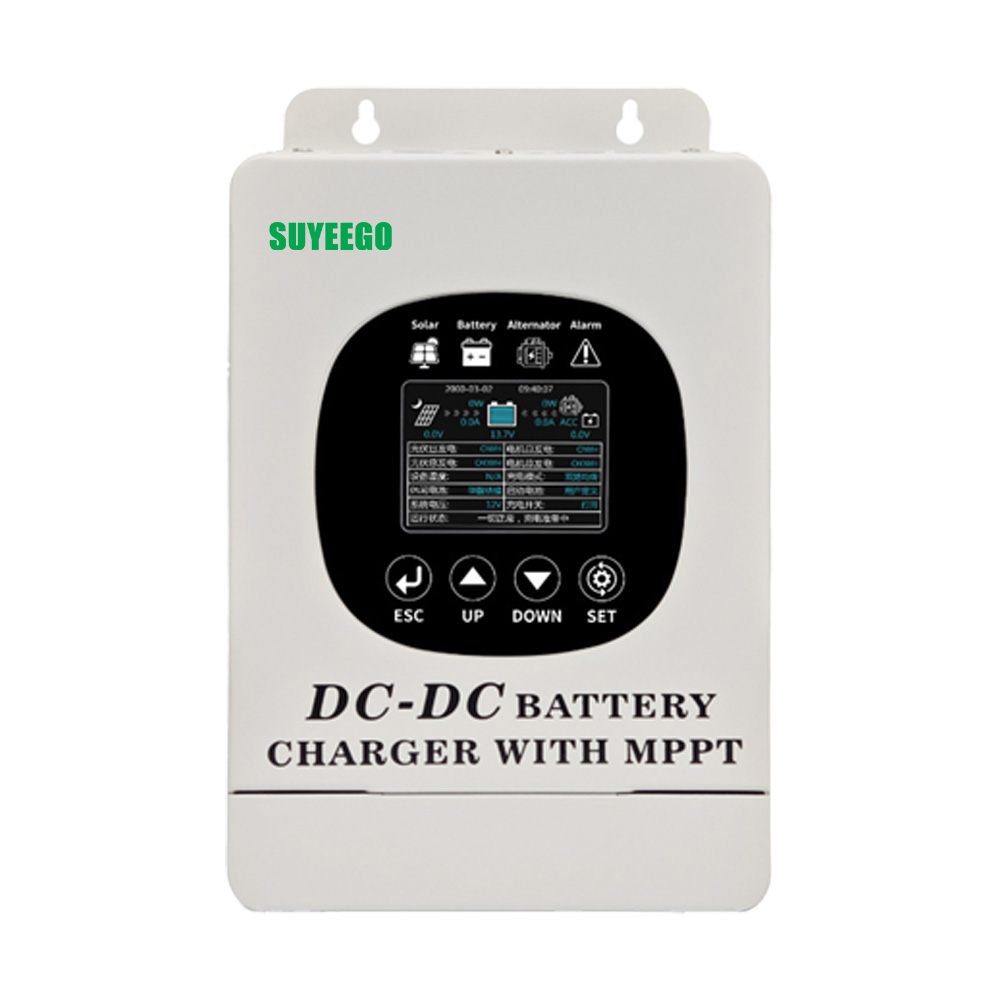
| Range | Published efficiency | What that means in practice |
|---|---|---|
| DD4048 / DD6048 | 98% maximum charging conversion efficiency | About 2% of the throughput becomes heat inside the box |
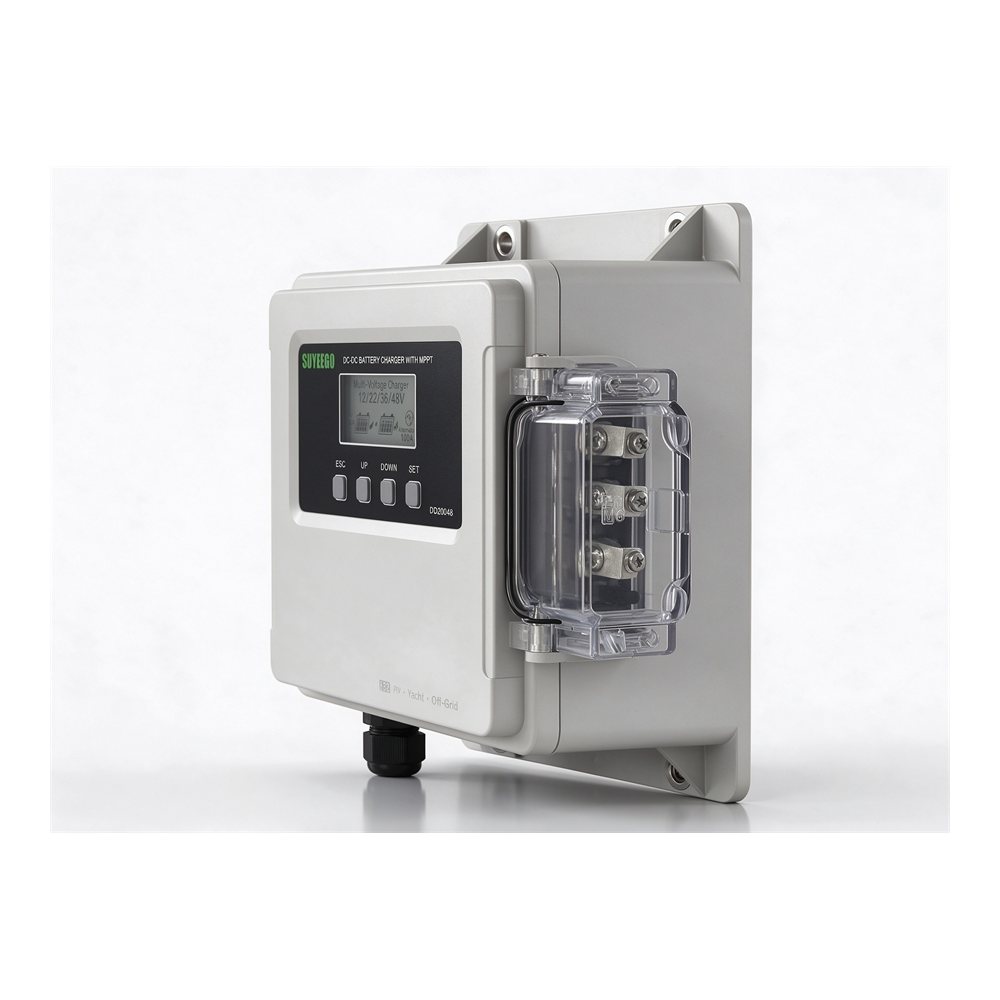
| DD20048 | 98% efficiency | Same order, at higher currents, so more watts of heat |
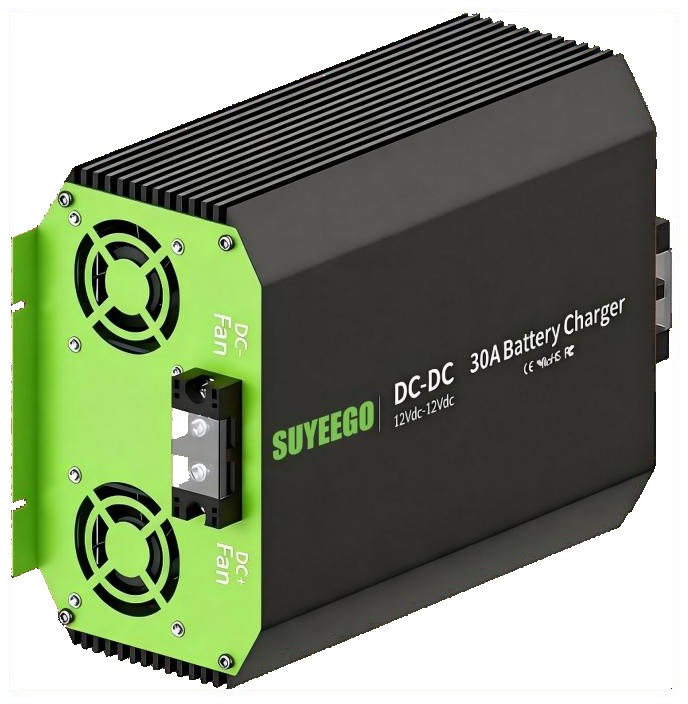
| DC-DC Battery Charger, 20A to 60A | Up to 90% | A larger share becomes heat, and the range tops out at 750W of output |
What our chargers do about it
- Aluminium radiators are a published feature of the DD range, which is the metal body doing double duty as the heatsink.
- Automatic high-temperature derating is published too: the charger reduces its output when it gets hot rather than shutting down or cooking itself.
- The published temperature windows are −20 °C to 65 °C for the DD range, −35 °C to 65 °C for the DD20048, and −20 °C to 50 °C with humidity up to 95% non-condensing for the 12V 20A to 60A range.
- The DD range publishes IP32, so the enclosure handles fingers and light rain rather than being sealed against immersion.
Mounting it so it can breathe
- Leave the finned faces clear. A radiator with a blanket over it is a heater.
- Mount it so warm air can leave the space rather than collecting at the top of a closed locker.
- Keep it out of the path of the exhaust, the engine bay's own heat and direct summer sun through a window.
- Remember the sensor reads inside the box, so an enclosure that is cool at night can still be too hot at two in the afternoon.
What the figures do not cover
The published efficiency is a conversion figure for the charger, not a promise about your installation. Cable losses, terminations and fuses all add heat outside the box, and the fastest way to find a problem is still to feel the terminations after an hour at full output. Warm is normal; hot is a fault.
Frequently asked questions
- How hot should a DC charger get?
- Warm to the touch at high output is normal, because the metal case is the heatsink. What the specification publishes is the ambient range it is rated for, up to 65 °C for the DD range, and the fact that it reduces its own output automatically when it gets hot.
- Can I mount a DC charger in a closed cupboard?
- It will work, and it will derate earlier, because the heat has nowhere to go. If the cupboard is small and the charger runs at high current for hours, give the air a path in and out rather than relying on the metal case alone.
- Does a more efficient charger run cooler?
- For the same output, yes: the published 98% on the DD range leaves less waste heat than the 90% ceiling published on the 12V range. What matters as much is the current, because the heat is a percentage of a throughput that grows with the load.
- Is the charger water resistant?
- The DD range publishes IP32, which is protection against fingers and light rain rather than a sealed unit. The 12V 20A to 60A range publishes no ingress rating at all, so treat its location as a decision you are making rather than one the specification has made for you.