How long does a DC DC charger take to charge a leisure battery?
6 min read
Divide the amp-hours you need to replace by the charge current, and you have the optimistic answer: a 60A charger puts back 60 amp-hours in an hour, on a battery willing to accept it. The honest answer is longer, because only the bulk phase runs at the charger's rated current. After that the battery sets the pace, and the charge current tapers towards the end of the profile.
The division, and why it flatters
Amp-hours divided by amps gives hours, and it is the right place to start because it tells you the best case the hardware can deliver. What it leaves out is that the charger only determines the current for part of the charge. Once the battery reaches its absorption voltage, the charger holds that voltage and the current falls away on its own.
| Charge current | Amp-hours in one hour of driving |
|---|---|
| 20A | up to 20Ah |
| 30A | up to 30Ah |
| 40A | up to 40Ah |
| 60A | up to 60Ah |
Read that table as a ceiling rather than an expectation. It describes the bulk phase, at a battery that is accepting everything the charger offers, and it is the phase that does most of the useful work on a short journey.
Three stages, and only one of them is fast
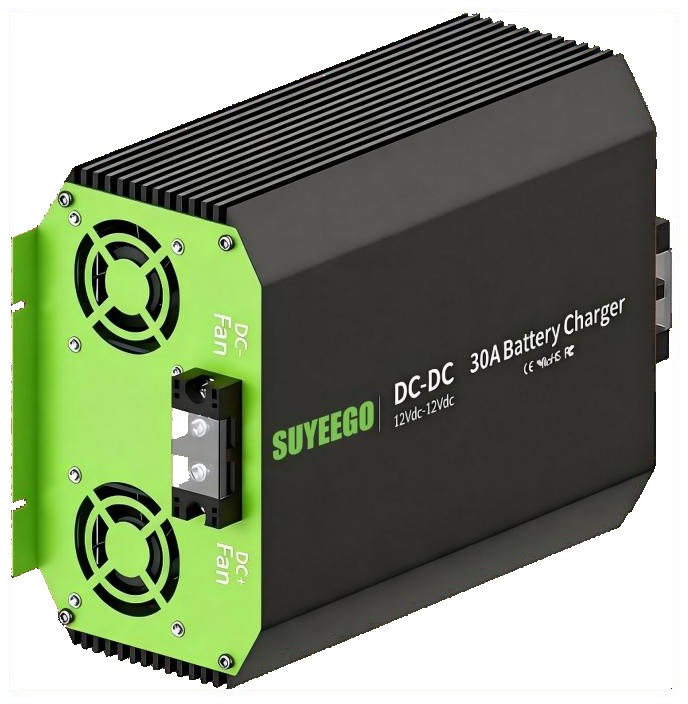
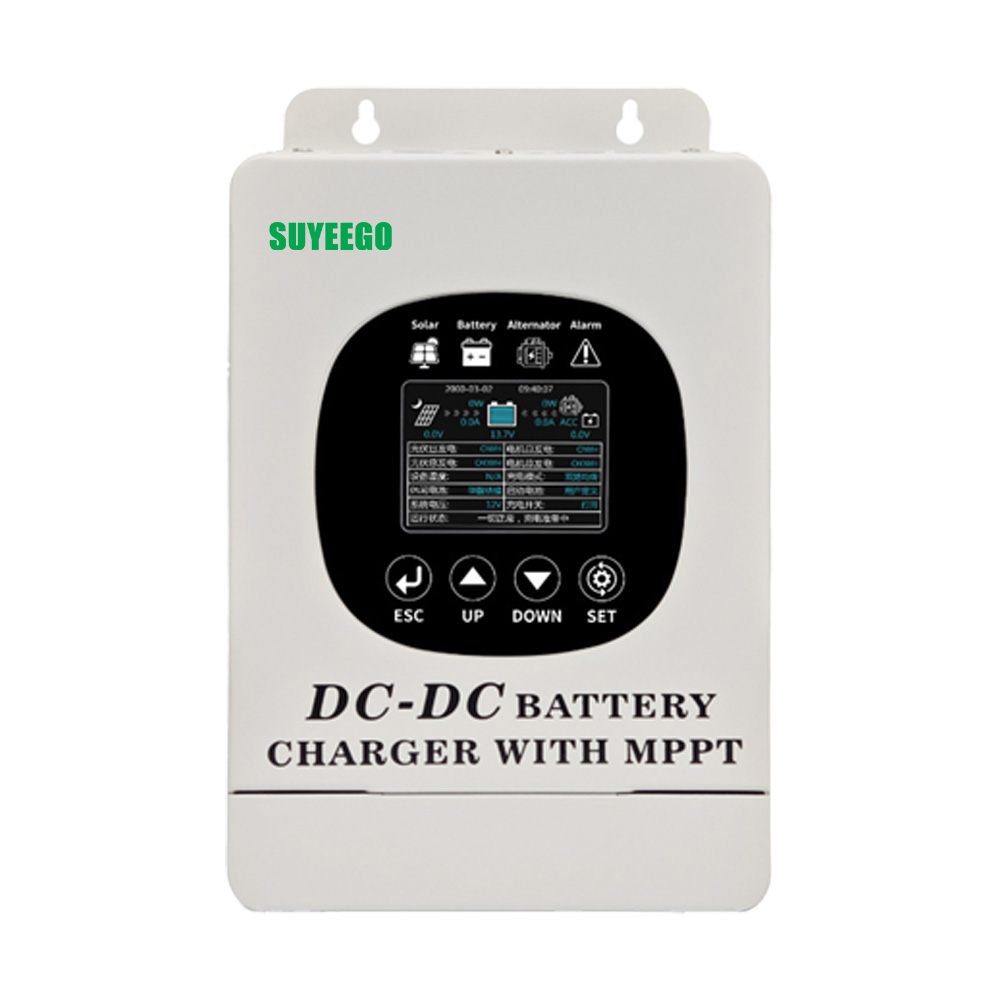
The 12V range publishes three-stage smart charging, which is the arrangement that decides the shape of the curve. Bulk is the constant-current phase and the one the charger's rating governs. Absorption is the constant-voltage phase, where the battery's acceptance rather than the charger's rating decides the current. Float is the long, low tail that keeps a battery topped up rather than filling it.
- Bulk does the majority of the work in a fraction of the total time, which is why a two-hour drive puts back far more than a quarter of what a full charge would.
- Absorption can take a surprising share of the total time while delivering comparatively little charge, because the current is falling throughout it.
- The point at which bulk ends and absorption begins is set by the battery reaching a voltage, not by a timer, so it moves with temperature and with the battery's condition.
- A battery that is cold, aged or already mostly full will spend less time in bulk and more of the journey tapering.
Driving time is the real limit
Unlike a mains charger, a DC DC charger only works while the engine runs, so the hours available are the hours you drive. Someone whose camping pattern is a long motorway run to a site will put back more in a day than someone who moves a few miles between pitches, whatever the charger's rating.
That makes the charging-time question a question about the journey. If the daily drive is short and the daily consumption is not, the alternator is the wrong source to rely on alone and no charger rating will change it.
Where solar changes the arithmetic
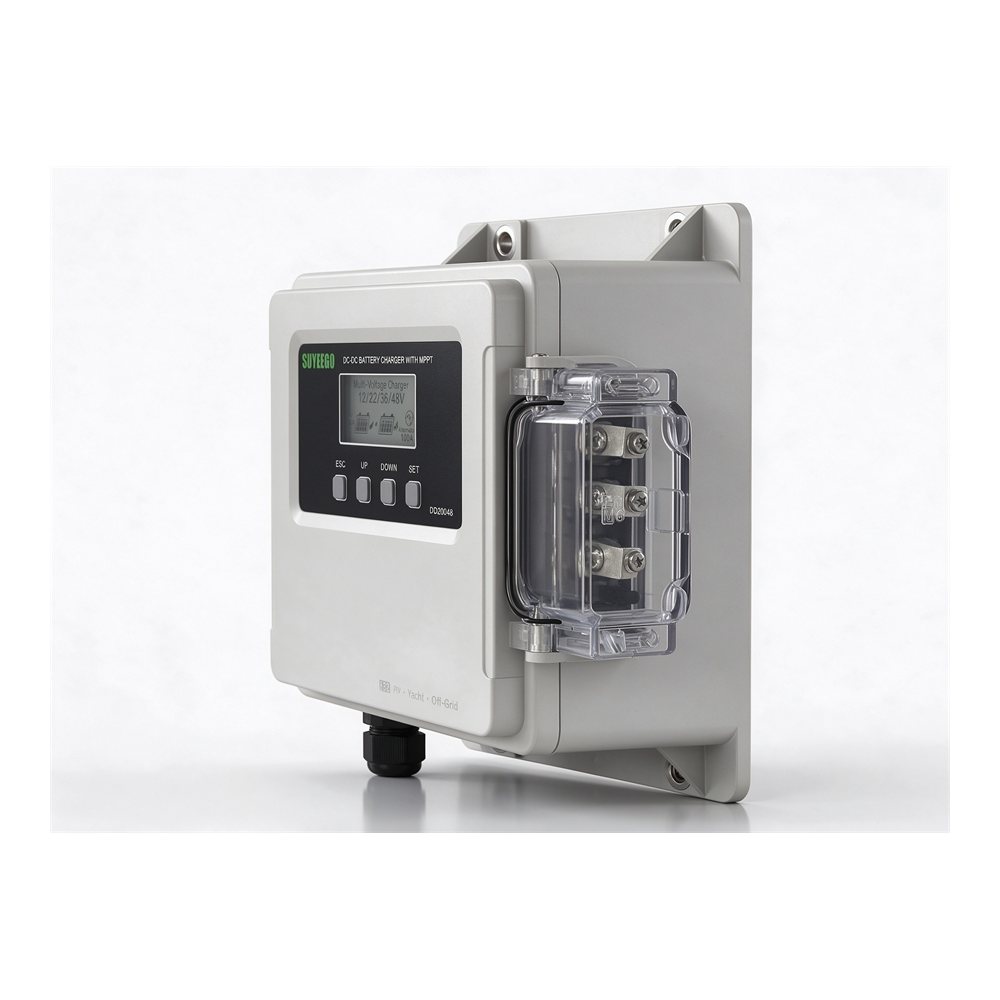
The DD range exists for the installation where driving is not the only input. It publishes dual-input operation, drawing from the alternator and the solar array at the same time, so a parked day in good sun contributes hours that a charger working only from the alternator could never have.
That does not make the charge instant. It makes the total across a trip larger, which is usually the number that matters when you are deciding whether the bank is the right size.
What we do not publish
We do not publish a charge-time curve, a time to 100% for any battery size, or a figure for how long the absorption phase takes. All three depend on the battery rather than on the charger, and a published number would be describing a battery we did not make.
Frequently asked questions
- Can a DC DC charger charge a leisure battery in two hours?
- It can put back as much as the current allows over two hours of driving, which for a 60A unit is up to 120Ah while the battery is in bulk. Whether that fills the bank depends on the bank's size and its willingness to accept current at that point. We do not publish a time to full for any battery.
- Why does my charger's current drop as the battery fills?
- That is the absorption phase of the charging profile. The charger is holding a voltage rather than a current, and as the battery approaches that voltage it accepts less. It is normal behaviour rather than a fault, and it is why the last part of a charge takes longer than the arithmetic suggests.
- Does charging while driving damage the leisure battery?
- Not when the charger is set to the right battery type, which the 12V range publishes support for across flooded, gel, AGM and lithium. Charging to a profile suited to the chemistry is what protects it.
- Is it worth charging with the engine idling?
- It takes a long time to put in much charge, because idling gives you the same limited current for many hours of fuel. The charger's remote switch control means it will work if the input conditions are met, but the economics rarely favour it over driving or over a solar input.