Can a DC charger charge a caravan battery from the tow vehicle?
6 min read
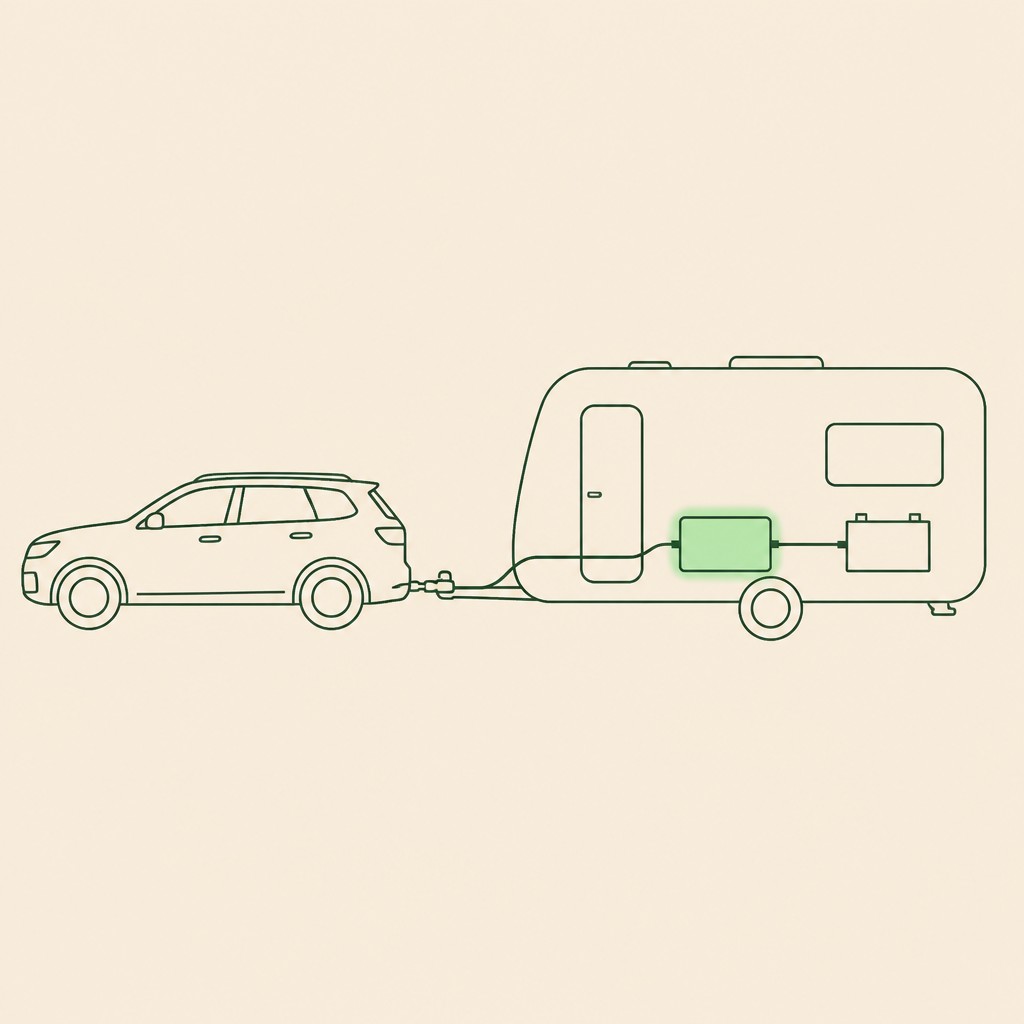
Yes, and the charger belongs in the caravan rather than in the car, so that the output run to the leisure battery stays short and the long run carries the input instead. That long run is the problem: several metres of cable under the car and through the coupling lose voltage, and a charger that publishes boost conversion can lift what arrives back up to a charging voltage.
Why the cable run decides the result
A caravan battery sits at the far end of the longest cable run in the vehicle combination. The alternator's regulated voltage leaves the engine bay, loses volts to resistance along the way, and arrives at the caravan at a figure that may not charge anything. Fitting a charger in the caravan means the input side absorbs that loss and the output side is a short, controlled run to the battery.
What the charger has to do on a tow vehicle
- Convert upwards when the input arrives low: the DD range publishes boost, buck and boost-buck operation, and the 12V range accepts an input from 8V to 16V.
- Hold a proper charging voltage at the battery: 13.2V to 14.7V is the published charging voltage on the 12V range.
- Respect its own input limit: the DD4048 and DD6048 publish a maximum generator input current of 20A, so plan the alternator's contribution around that figure.
- Work with the battery that is actually fitted. The DD range publishes a leisure battery range of 9V to 60V, covering 12V, 24V, 36V and 48V systems.
What to check on the tow vehicle
- Whether the charging pin on the tow socket is permanently live or ignition-switched. An ignition-switched feed is what lets the charger run only when it should; a permanently live one needs the control side thought through.
- The cable cross-section from the front of the car to the socket, and from the socket into the caravan. This is the run that decides how much voltage arrives.
- The fuse at the vehicle end of that run, which protects the cable rather than the charger.
- Whether the caravan already has a charging device, because two converters in series have two sets of limits and a habit of confusing each other.
If the caravan also has panels
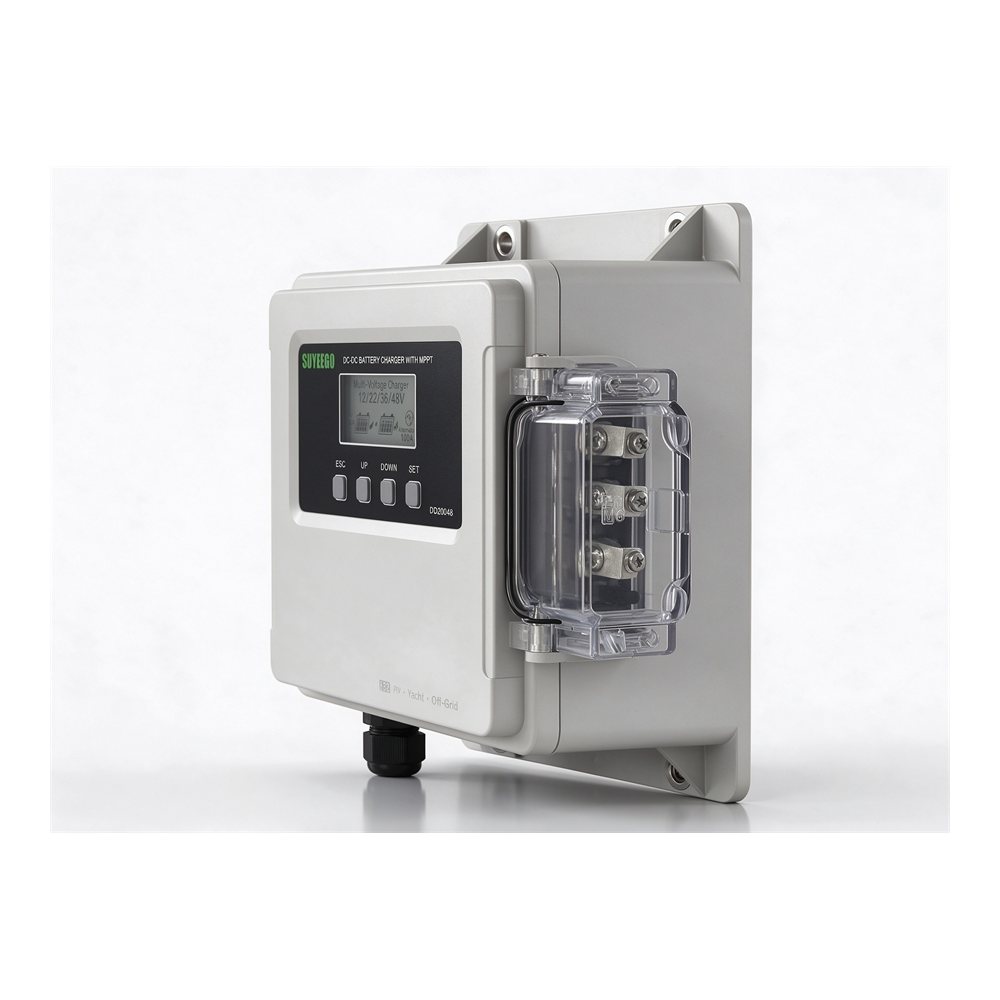
A caravan with a roof panel and a tow vehicle has two sources, and a dual-input charger handles both: the DD range publishes a panel input with MPPT and a generator input, and it can also maintain the starting battery from the panels at a published 10A or 20A. If you have only one source today, a charger with both inputs leaves the second one as a later addition rather than a replacement.
Frequently asked questions
- Does the caravan battery charge while towing?
- It can, and how well depends on the voltage that survives the run from the car to the caravan. A charger fitted in the caravan converts what arrives into a proper charging voltage, which is what makes towing a useful charging opportunity rather than a token one.
- Should the charger go in the car or the caravan?
- In the caravan. The output side carries the full charge current and should be as short as possible, which means next to the battery. The long run through the coupling then carries the input, where voltage loss is absorbed by the charger's conversion instead of being passed to the battery.
- How much can I charge through a tow socket?
- Less than the charger's headline output in most cases, because the socket and its wiring have their own limits. Check the published generator input limit for your model: 20A on the DD4048 and DD6048, and size the socket wiring to match rather than to the charge current.
- Can the same charger run from solar once parked?
- If the model has a PV input. The DD range publishes one with MPPT, so a caravan with a roof panel and a tow vehicle can charge from whichever source is available, and the panel side stops on its own at night.