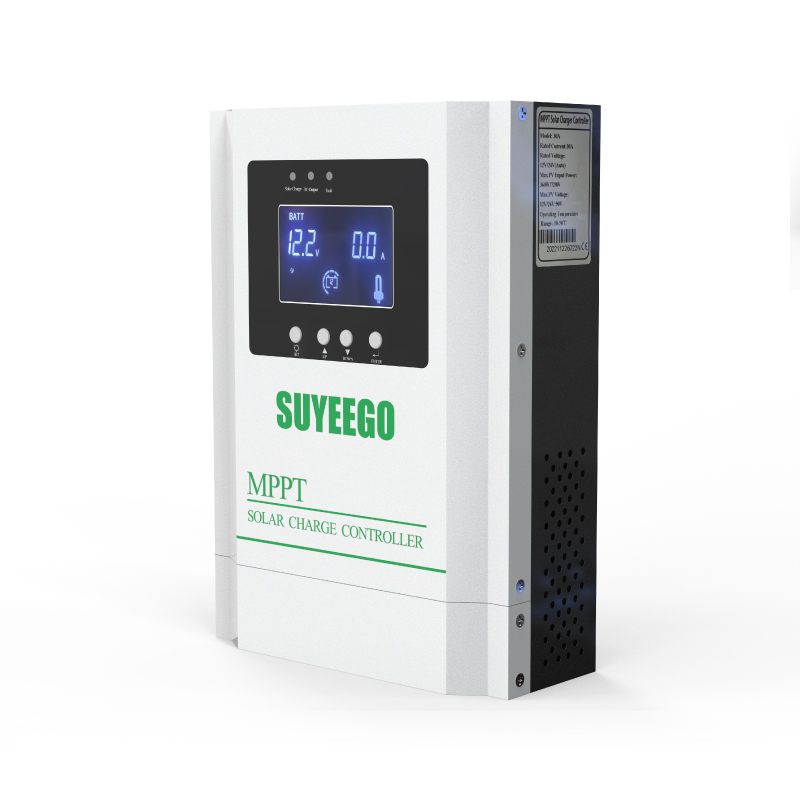
Why is my RV MPPT solar charge controller not charging?
7 min read
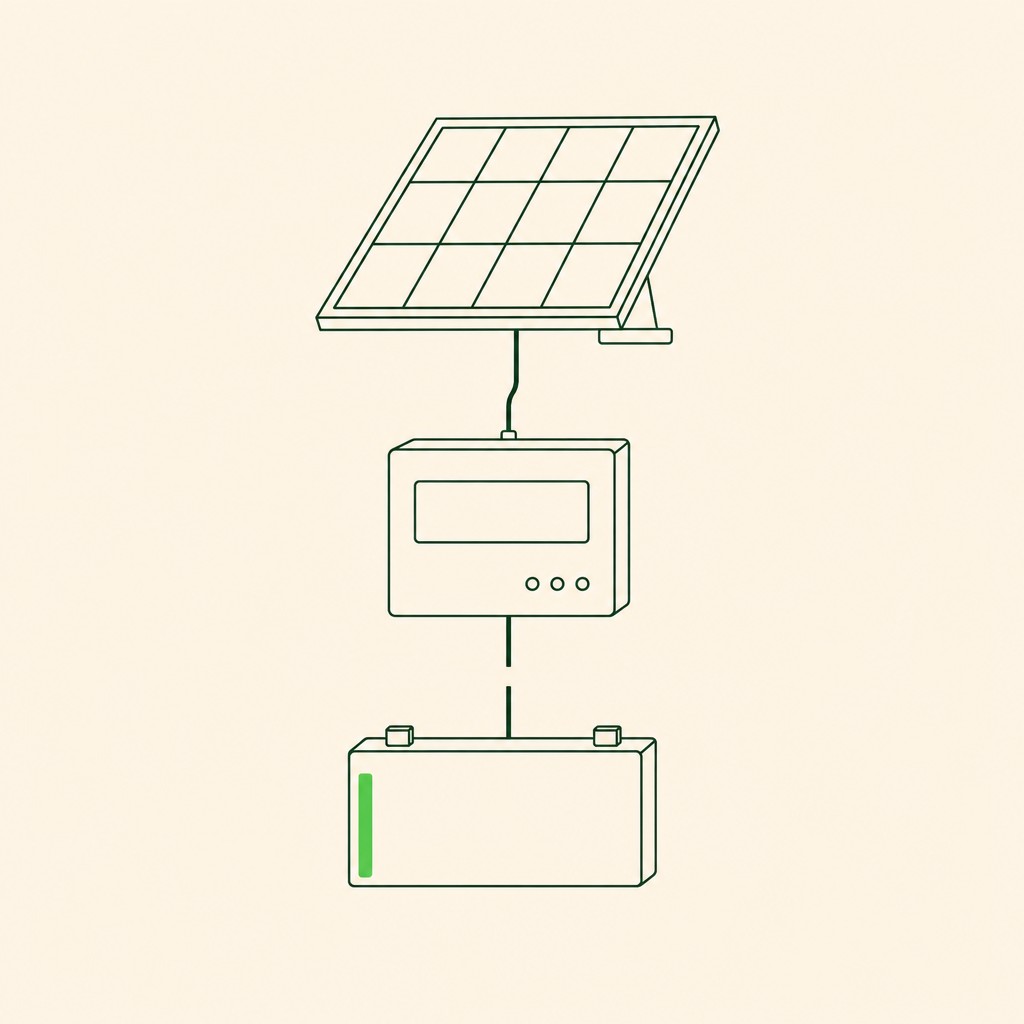
Check what the controller is being given before suspecting the controller. Our MPPT range publishes a minimum working battery voltage of 10.5V on the 12V and 24V models and 40.5V on the 48V and 96V models, a maximum panel open-circuit voltage that varies with the bank voltage, and a maximum panel power for each model, so a battery that is too flat, a string that is over the voltage ceiling or an array beyond the rating all stop charging without anything being broken.
The battery first
A charge controller needs a battery it can recognise before it will do anything. Our range publishes the minimum working battery voltage for each group of models, and a bank below that figure is not a fault to diagnose but a battery to charge by other means first.
| Model group | Published minimum working battery voltage |
|---|---|
| 20A and 30A (12V / 24V banks) | 10.5V or above |
| 40A and 60A (48V banks) | 40.5V or above |
| 80A and 100A (96V banks) | 40.5V or above |
The array second
- Panel voltage below the battery: a tracker that only reduces voltage cannot charge a battery that sits above the array's output. In poor light the array can fall below the bank and charging correctly stops.
- Over the open-circuit ceiling: the published maximum depends on the bank voltage and the model, from 80V on the 20A model at 12V or 24V up to 280V on the 40A to 80A models at 96V. A string that exceeds it on a cold bright morning is a real failure, not a shutdown.
- Beyond the published panel power: each model publishes a maximum panel input power for each bank voltage, from 240W on the 20A model at 12V to 9600W on the 80A model at 96V.
- Polarity and terminations: a reversed PV pair or a loose ferrule behaves like a broken array.
The settings third
- Battery type: our range publishes lead-acid, gel, lithium and custom profiles, and the wrong profile changes what the controller thinks finished means.
- Load output thresholds, if you are using the load terminals: a low-voltage shutdown at a published 10.0V on a 12V system will cut the loads while the battery is still being charged, which looks like a charging fault and is not one.
- Temperature: the published operating range is −15 °C to 65 °C, and the range is fan cooled, so a controller in a sealed box on a hot day can back off its output.
When it really is the controller
If the battery is above the published minimum, the array is within its voltage and power limits, the settings match the battery, the terminations are sound and there is still no charge current in clear sun, then the remaining possibilities are inside the unit. At that point the honest step is to contact us with the model, the measured battery voltage, the measured panel voltage at the controller and what the display shows.
Frequently asked questions
- Why does my controller charge in the morning but not later?
- Work through the sequence rather than the clock. A battery that has reached absorption or float takes very little current, and an array that has slipped below the battery voltage in poor light stops charging correctly. Both look like the controller giving up.
- The display is on but there is no charge current. What does that mean?
- A live display means the controller has the battery voltage it needs. The next measurement is the panel voltage at the controller's own terminals, compared with the battery: if the array is not above the bank, there is nothing for the tracker to convert.
- Can too many panels damage an MPPT controller?
- Exceeding the published maximum open-circuit voltage is the fault that matters, and it is a cold-morning problem, because panel voltage rises as temperature falls. Exceeding the published panel power is a limit rather than a failure, but it is outside the rating, so size to the published figures for your model and bank voltage.
- How do I know the battery is too flat for the controller?
- Measure it at rest. Our range publishes a minimum working battery voltage of 10.5V on the 12V and 24V models and 40.5V on the 48V and 96V models. Below that, charge the bank by other means and try again.