How do you install an RV inverter?
8 min read
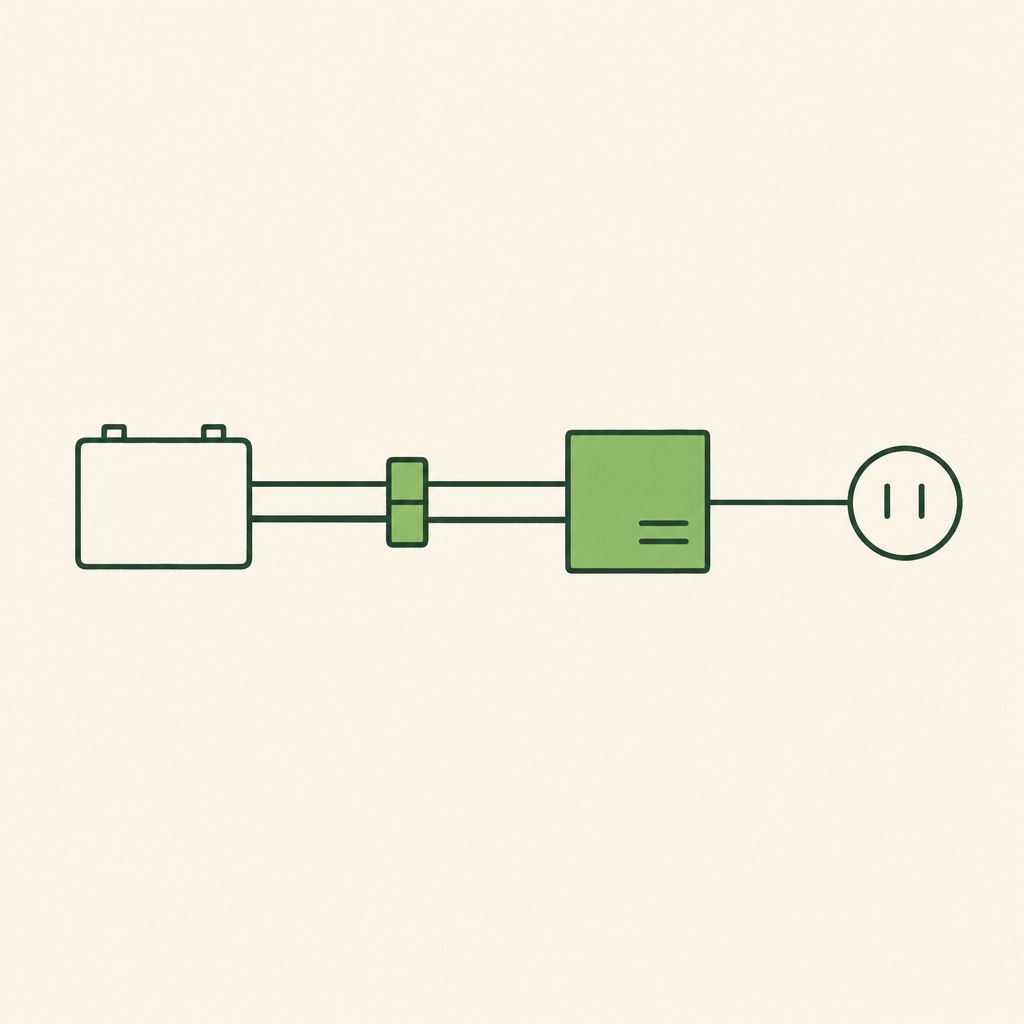
The order that works is: choose the location, mount the unit, run and fuse the DC cables, connect the AC output, then commission it with a small load before the real one. The two mistakes behind most disappointing installations are undersized DC cable and no fuse close to the battery on the positive cable. The inverter end of the job is straightforward; the DC side is where the installation succeeds or fails.
Step 1: choose the location before you drill anything
Two requirements pull in the same direction: short DC cables, because length costs voltage, and moving air, because an inverter that cannot shed heat will derate or shut down when the load is heaviest. A dry, clean locker within a metre or two of the battery, with room for air to pass the vents, is the target. Keep it away from the exhaust, the cooker and anywhere the fan's noise would keep someone awake.
Step 2: the DC cable, the fuse and the terminals
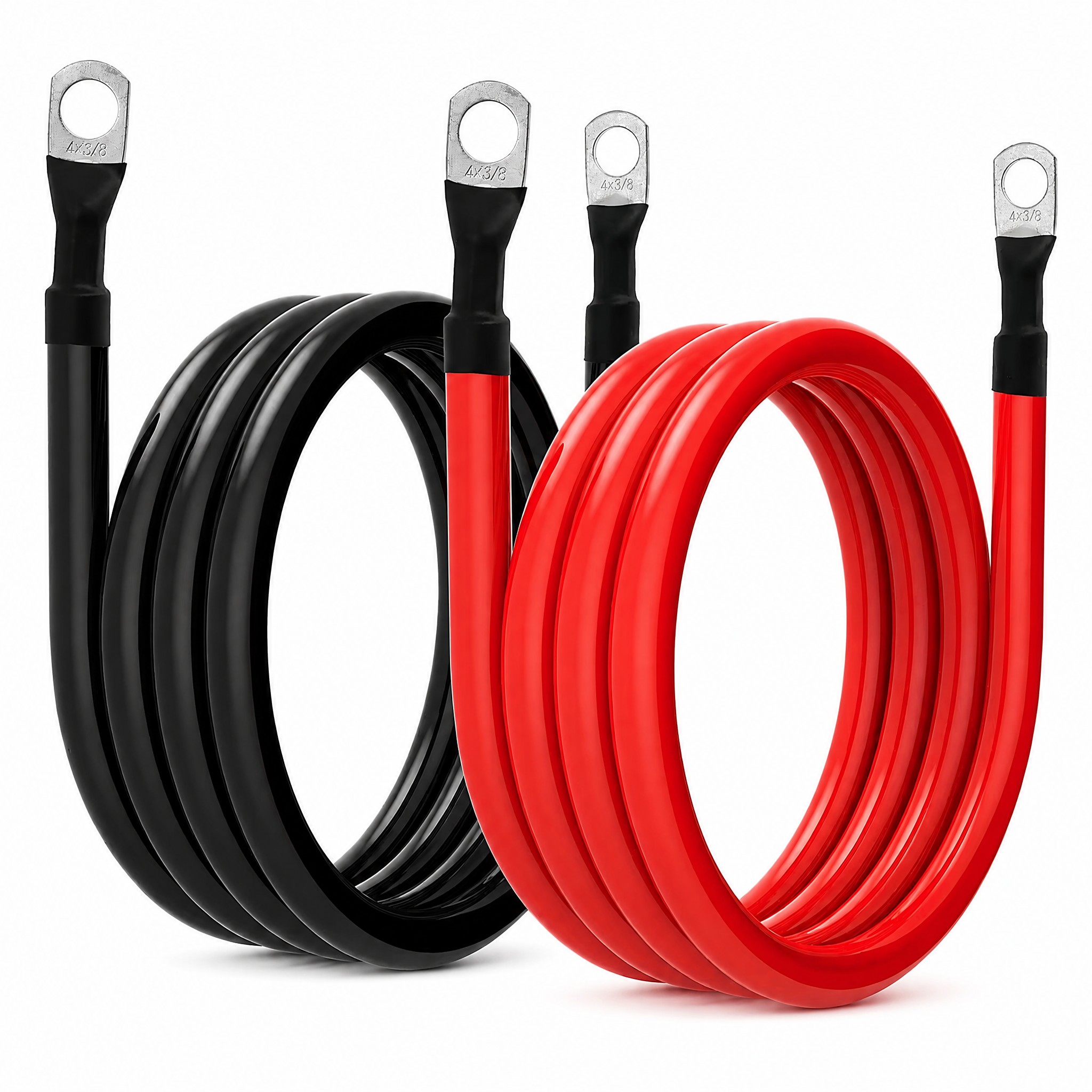
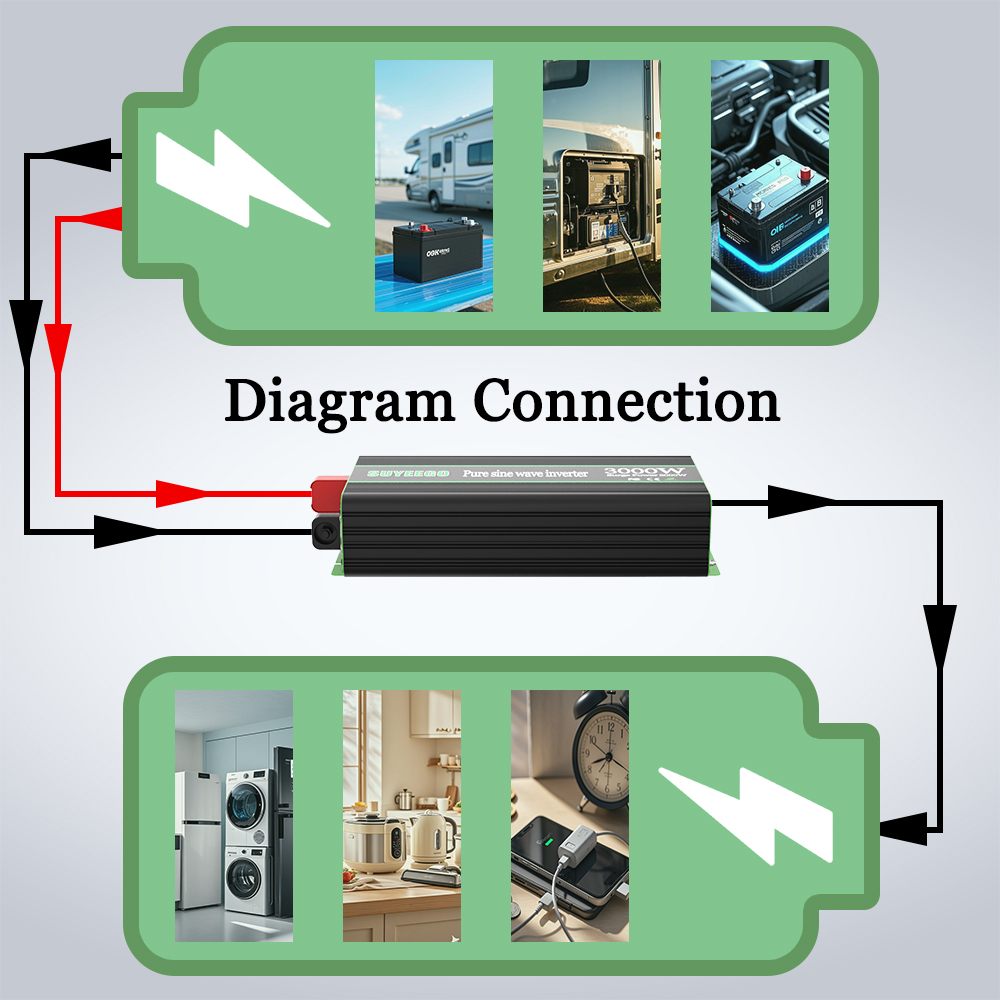
- Size the cable for the DC current, not the mains current. A 3000W inverter on a 12V bank draws over 240A at full output.
- Fit the fuse on the positive cable as close to the battery as you can reach, so the cable itself is protected along its whole length.
- Use the largest cable the terminals will take, and keep the run as short as the layout allows.
- Torque the terminals properly and re-check them after the first heavy load; a joint that was tight cold can loosen once it warms.
- Leave a disconnect within reach — an isolator makes both service work and an emergency stop possible without tools.
Step 3: the AC side
The output side is simpler than the input side because the currents are smaller, but it is the part where the arrangement matters. The usual choices are a socket fed only by the inverter, which is cheap and unambiguous, or a transfer switch so the van's existing sockets work from either shore power or the inverter. Bonding and earthing requirements differ between countries and vehicle types, so check the rules that apply where the van is used rather than copying an installation from a forum.
Step 4: commissioning
- Start with a small load — a lamp or a low-power appliance — and confirm the output is stable.
- Watch the DC voltage at the terminals while that load runs, to confirm the cable is not dropping more than you expect.
- Feel the terminals and the fuse holder after ten minutes of running. Warm is normal; hot is a problem.
- Test the alarm behaviour deliberately, for example by running the load until the low-voltage alarm sounds, so you know what it sounds like.
- Label the isolator and the fuse rating, so the next person does not have to work it out.
What the range publishes
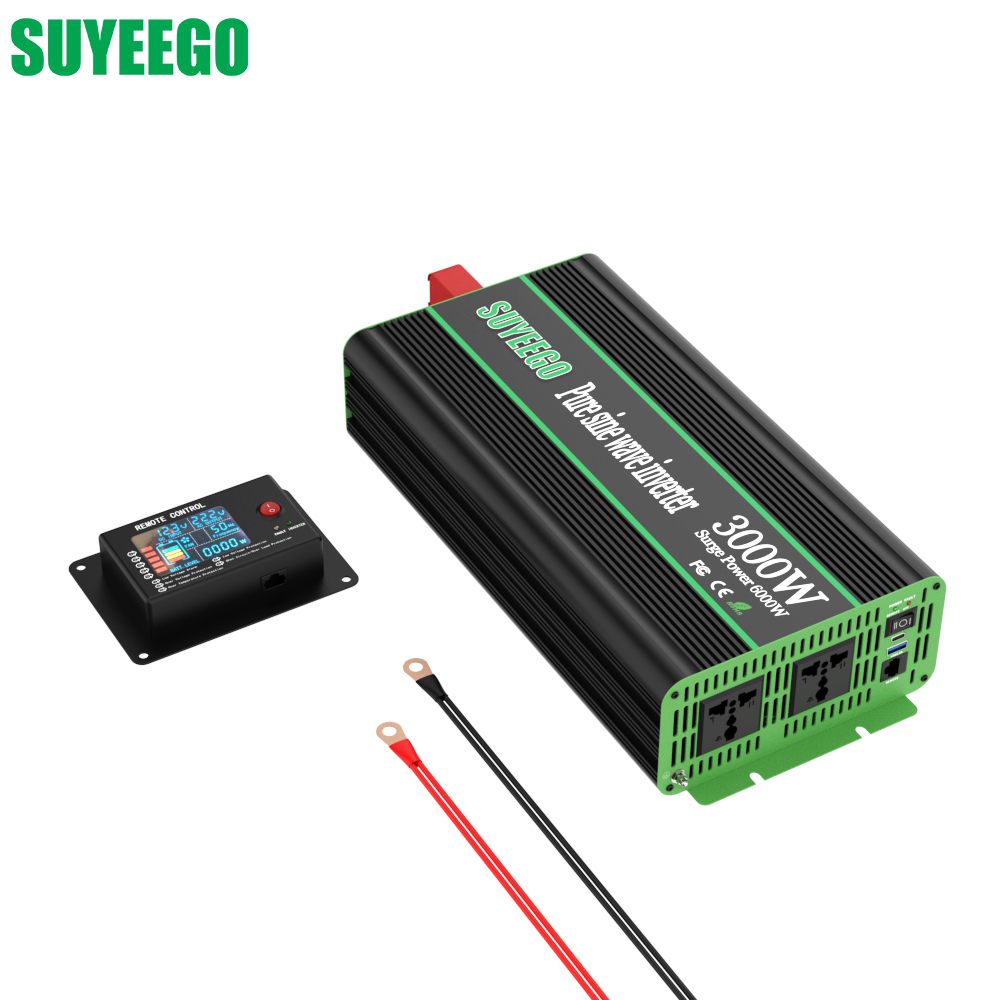
The SYGG-FSC inverter range covers 1000W to 3000W with peak ratings of twice the continuous figure, staggered battery terminals for easier wiring, a built-in radiator and cooling fan, and a maximum outer temperature of 50 °C. Input is 12V or 24V DC and output 110V or 220V with 50Hz or 60Hz on request, so the model has to be matched to both the bank voltage and the country the van is used in.
Frequently asked questions
- Can I power an inverter from the van's existing 12V socket wiring?
- No. An inverter's DC input draws far more current than any 12V socket circuit is designed for, so it needs its own cable from the battery together with its own fuse. Tapping into an existing circuit is the most common way to end up with an inverter that cannot deliver its rating.
- How long should the DC cable be?
- As short as the layout allows. Voltage drop rises with length and falls with cable size, so a long thin run is the usual reason an inverter performs below its rating and trips its low-voltage alarm earlier than expected.
- Do I need an isolator switch?
- It is good practice. A disconnect you can reach without tools makes service work safer and gives you a way to kill the DC side in a hurry. It does not replace the fuse, which protects the cable.
- Can I install an inverter myself?
- The DC side is within reach of anyone comfortable with heavy cable and correct torquing, but the AC side involves mains voltages and, in many countries, rules about who may work on it and how the system is earthed. If the AC installation is not something you have done before, that is the part to have done for you.