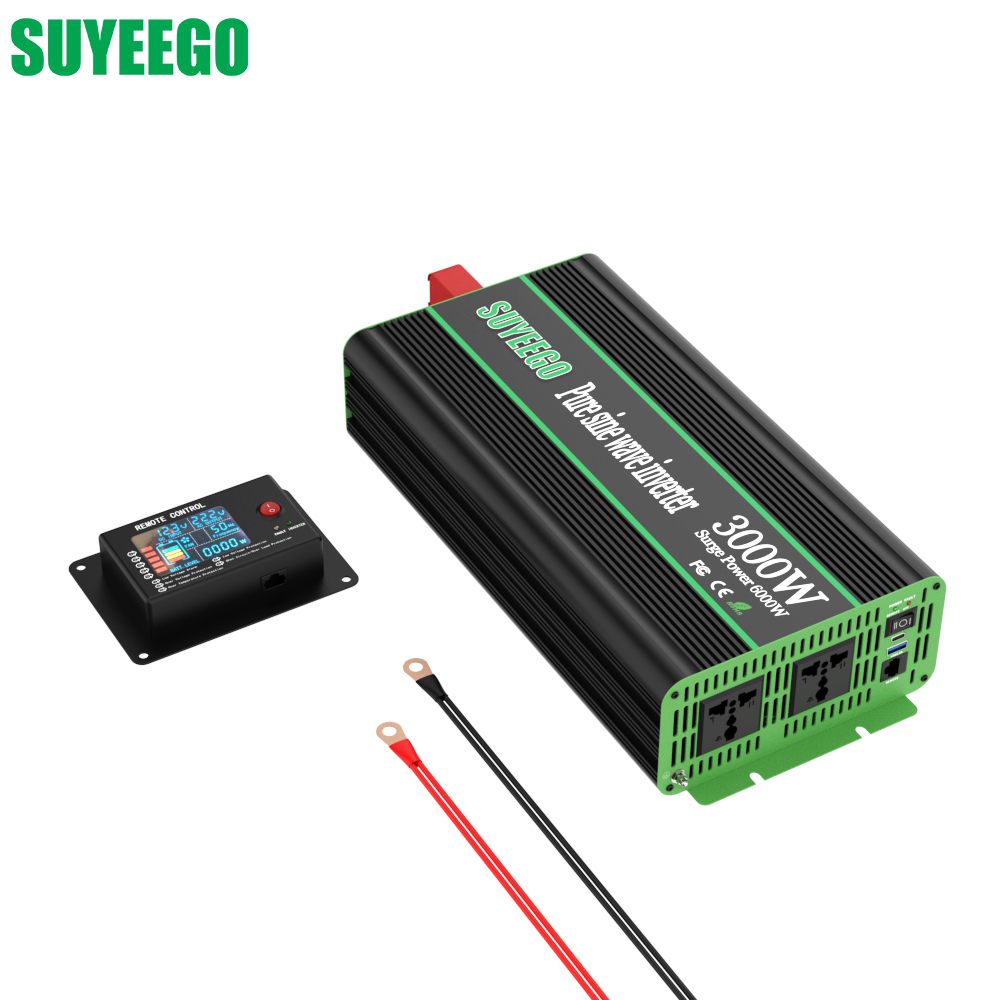
What do CE, FCC and RoHS on an RV inverter actually cover?
6 min read

CE, FCC and RoHS on an RV inverter are declarations about conformity and materials, not about performance. Our range publishes all three. None of them tells you the surge rating, the waveform or the efficiency, and none of them is a certificate for your particular installation. They answer the question of whether the product may be sold and placed on the market, not whether it will start your compressor.
What each mark is
- CE is the manufacturer's declaration that the product meets the applicable European directives, backed by a declaration of conformity the manufacturer signs and keeps.
- FCC relates to the United States, and covers the electromagnetic behaviour of the equipment rather than its power.
- RoHS is about restricted substances in the materials. It says nothing about how the unit performs.
Our inverter range publishes CE, FCC and RoHS. That is the honest extent of what is stated on the product pages: the marks are declared, and no test reports, emission figures or EMC class are published alongside them.
What they do not cover
A mark is not a warranty and not a guarantee of a particular behaviour in your vehicle. It does not promise a start-up surge figure, a distortion level or an efficiency curve, because those are performance properties and they are published separately where they exist at all.
Questions worth asking any supplier
- Is there a declaration of conformity, and does the model on it match the model you are shipping me?
- Where a supplier states FCC without more, ask which class and for which environment the declaration was made.
- Ask for the test reports if you are buying in volume or importing, rather than relying on the mark printed on the case.
- Check that the certificate names the manufacturer you are actually buying from, not a trading name.
These are ordinary supply-chain questions. A supplier who can answer them is easier to work with than one who treats a logo as the whole answer.
What matters for an RV installation
The marks travel with the product. The installation is yours: the fuse on the DC side, the earthing arrangement, the ventilation and the load are all decisions made in the vehicle. A CE mark on the inverter does not certify the wiring around it, and no manufacturer can certify a system they never see.
Frequently asked questions
- Does CE mean the inverter is safe to install in a van?
- It means the manufacturer has declared conformity with the applicable directives. It does not certify the installation. The DC fuse, the earthing and the ventilation are separate decisions.
- Is RoHS any indication of quality?
- No. It restricts certain substances in the materials. A product can hold RoHS and still have a poor surge rating or a waveform that suits nothing you own.
- Why is a distortion figure not published?
- Because the published specification for this range states the waveform as pure sine and lists the ratings it does declare. Where a figure is not published, we would rather leave the gap visible than fill it with a number we cannot stand behind.
- Can I get the test reports?
- Ask us. Test reports are a document request rather than a specification, and what is available depends on the model and the market you are importing into.