Can an RV MPPT solar charge controller charge a lithium battery?
6 min read
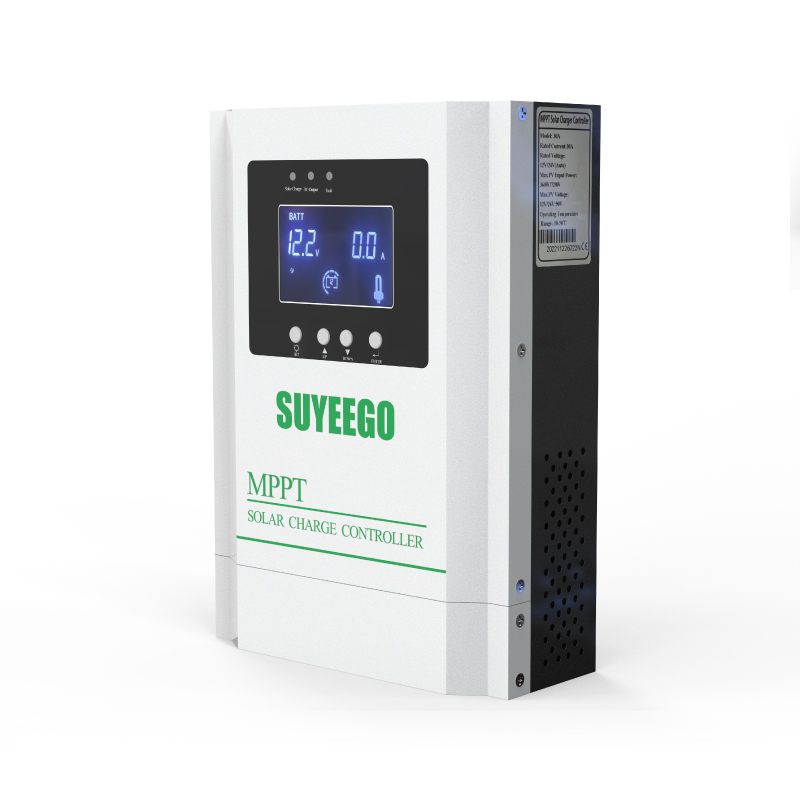
Yes. Our MPPT range publishes lead-acid, gel, lithium and custom battery profiles, and fast, absorption and float charging stages, so a lithium bank is a supported case rather than an exception. The setting is the part that matters: the controller applies whatever profile it has been given, and a lithium bank charged on a lead-acid profile is being asked to live with voltages chosen for a different chemistry.
A profile is a set of voltages
What a charge profile really is: a target voltage for each stage of the charge, and a decision about when to move to the next one. Our range publishes fast, absorption and float charging, and publishes lead-acid, gel, lithium and custom as the available battery types. Selecting the right one is the whole of the compatibility question on the controller side.
What our range publishes
| Published feature | What it gives you | What to check |
|---|---|---|
| Battery types: lead-acid, gel, lithium, custom | A profile for each chemistry, plus one you define | That the selected profile matches the bank actually fitted |
| Fast, absorption and float charging | The three stages of the charge | That the absorption voltage suits your battery's specification |
| 99% MPPT tracking, 98% conversion efficiency | What the tracker delivers to the battery side | That the array suits the published panel limits |
| Minimum working battery voltage 10.5V (12V/24V models) | Where the controller starts working | That the bank is above it before you diagnose anything |
The custom profile is there for a reason
- Lithium banks are not one specification: two batteries sold as LiFePO4 can publish different absorption voltages, and some ask for a lower float or none at all.
- The custom profile exists so the controller can be set to the battery maker's figures instead of an approximation.
- We publish the profile names rather than a set of voltages, so the numbers to enter are the ones on your battery's specification. If you are unsure, ask us with the battery model and we will work through it.
- Treat the switch to a custom profile as a commissioning step, not a preference: check the resulting charge current on the first sunny day rather than assuming.
What the controller cannot fix
Two limits sit outside the controller. One is temperature: a lithium battery's own rules about charging when it is cold belong to its BMS or its heater, not to the charge source. The other is the bank's current acceptance: a controller cannot push current into a battery that has decided it has had enough, which is why a charge that tapers off is a profile finishing rather than a controller failing.
Frequently asked questions
- Do I need a special MPPT controller for lithium?
- No. Our MPPT range publishes lithium as one of its battery types alongside lead-acid, gel and custom. What matters is that the profile you select matches the battery's own specification rather than the label on the box.
- Which charging voltage should I set for LiFePO4?
- Take it from the battery maker's specification. We publish the profile names and the charging stages rather than a single set of voltages, because lithium banks published as LiFePO4 do not all ask for the same figures. The custom profile is the one to use for those numbers.
- Will the controller overcharge a lithium battery?
- The profile is what decides where the charge stops, which is why selecting the right one matters. A lithium bank also has its own BMS watching the cells, but relying on that to correct a wrongly chosen profile is not a plan.
- Can the controller charge a lithium battery in freezing weather?
- Whether the battery accepts charge below freezing is the battery's rule and not the controller's, and it is enforced by the BMS or by a heater in the battery. The controller's published operating range, −15 °C to 65 °C, says nothing about whether the bank will accept current.