Portable solar panel or a fixed roof system?
8 min read
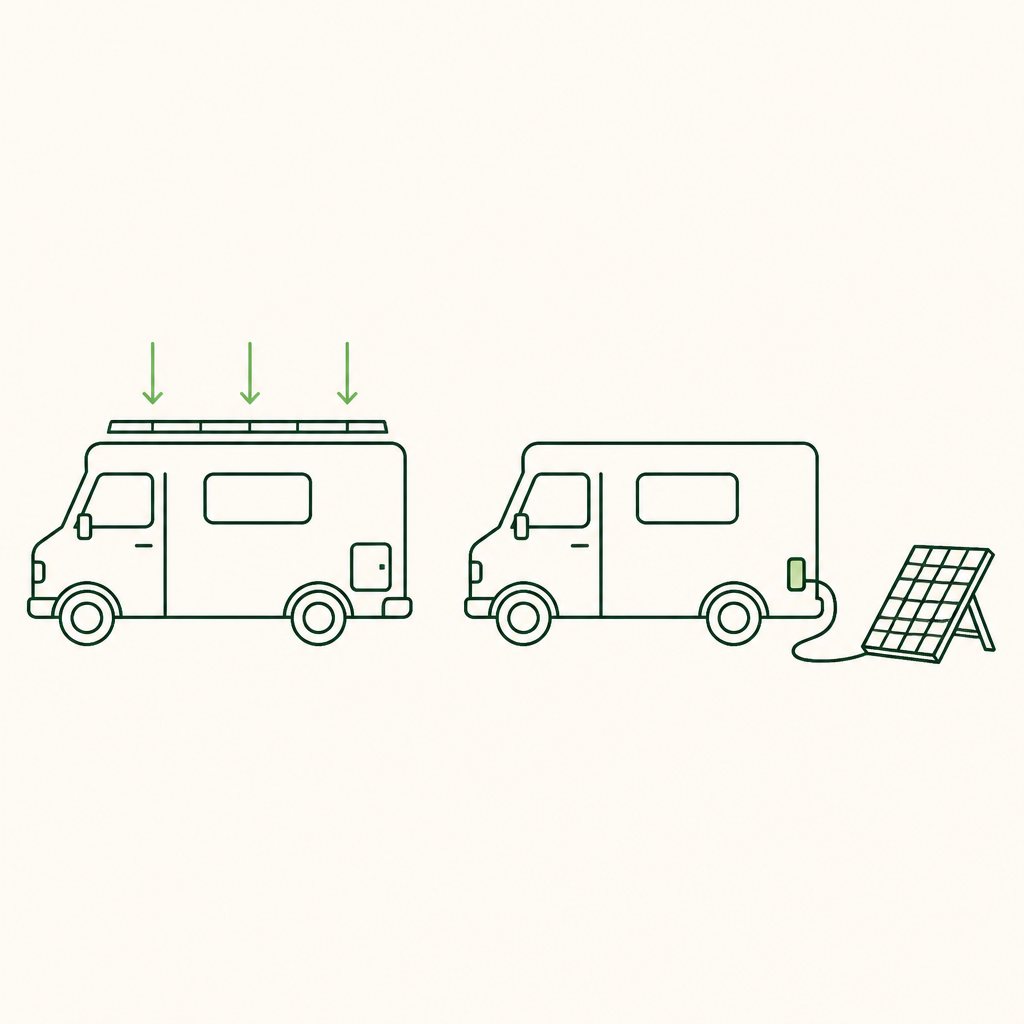
A fixed roof array needs no attention, charges while you drive and cannot be left behind, but it only ever sees the sun at whatever angle the van happens to be parked. A portable panel can be aimed at the sun and moved into a gap in the trees, and it can be left at home when weight matters, but it has to be carried, set out, secured and watched. Most full-time vans end up with both: the roof for background charging, the portable for shade and low winter sun.
What the roof buys you
The roof array works whether or not you are there. It charges while you drive, it cannot be stolen from a lay-by, and it does not need setting up after a long day. On a van that moves often and parks in the open, that combination is worth more than the extra yield a movable panel could produce.
What it cannot do is change its angle. A flat panel on a roof collects less than a panel tilted towards the sun, and in winter at high latitude the difference is not marginal. If your travel is summer and southerly, this matters less than the internet suggests.
What a portable panel does that a roof cannot
- Aiming: tilt it towards the sun and recover output that a flat roof panel loses
- Moving into light: park under trees for shade and put the panel out where the sun is
- Sharing: the same panel can charge a second vehicle, a boat or a battery box
- Leaving behind: on a trip where payload is tight, it stays at home
The cost is attention. A portable panel left out is a panel that can walk away, and one left lying flat on the ground is producing less than the label suggests. It also needs a cable long enough to reach the controller, which brings its own problem.
The comparison, side by side
| Roof system | Portable panel | |
|---|---|---|
| Setup each stop | None | Carry out, aim, secure |
| Angle to the sun | Fixed by the parking position | Adjustable |
| Shade | Whatever the parking spot gives | Can be moved into a gap |
| Theft risk | Low | Real, unless secured |
| Cable run | Short, fixed | Long, and often the weak point |
| Storage | None needed | Takes up interior space |
| Expansion | Roof area is the limit | Add another panel |
The cable run is where portables lose efficiency
A portable panel sitting twenty metres from the van carries its current through twenty metres of cable twice, and voltage drop rises with length. The fix is not thicker cable everywhere but putting the controller near the battery and running the panel's higher voltage to it, so the loss applies to a smaller current.
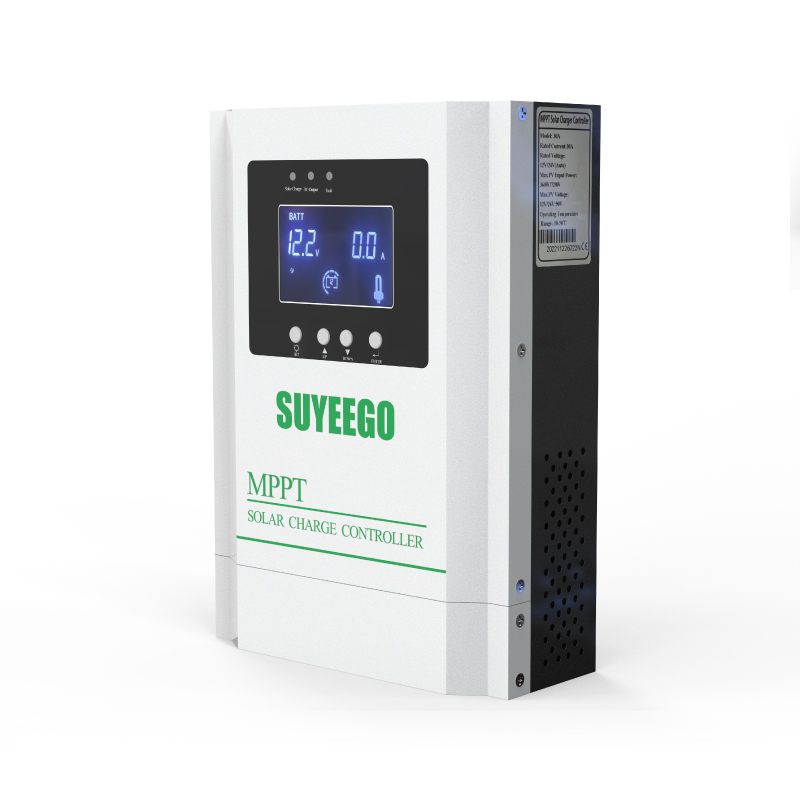
This is also why a portable panel with a controller built into the back of the panel is a compromise: it regulates at the panel end, then sends the regulated voltage down a long cable to the battery, where the drop is now a direct loss.
When to run both
A roof array sized for your average day, plus one portable panel you deploy when parked in shade or travelling in winter, covers most of the cases where either alone disappoints. If the two have different voltages or you want them to work independently, they can go through separate controllers; if they are matched, one controller can take both, provided its current rating has room for the total.
The combination also gives you a fallback. A roof panel damaged by a branch or a stone is a repair; a portable panel is a spare you already own.
Frequently asked questions
- Can I use a portable panel with my existing roof system?
- Usually yes. Either connect it to the same controller if the voltages match and the controller has current headroom, or give it its own controller and connect that to the same battery terminals. Two controllers charging one bank is normal practice.
- Is a portable panel worth it if I mostly stay on campsites?
- Less so. On a powered pitch the hookup does the work, and a portable panel becomes something to store. It earns its place when you move between unpowered stops.
- How long can the cable be?
- It depends on the current and the cable gauge, because what matters is voltage drop as a percentage. Keep the controller close to the battery and accept a longer run at the panel's higher voltage, and the length stops being the limiting factor.
- Will a portable panel charge while I drive?
- Only if it is set up, which it will not be. That is the job the roof array does, and it is the main reason the two complement rather than compete.