What are the charging stages on an RV MPPT solar charge controller?
5 min read
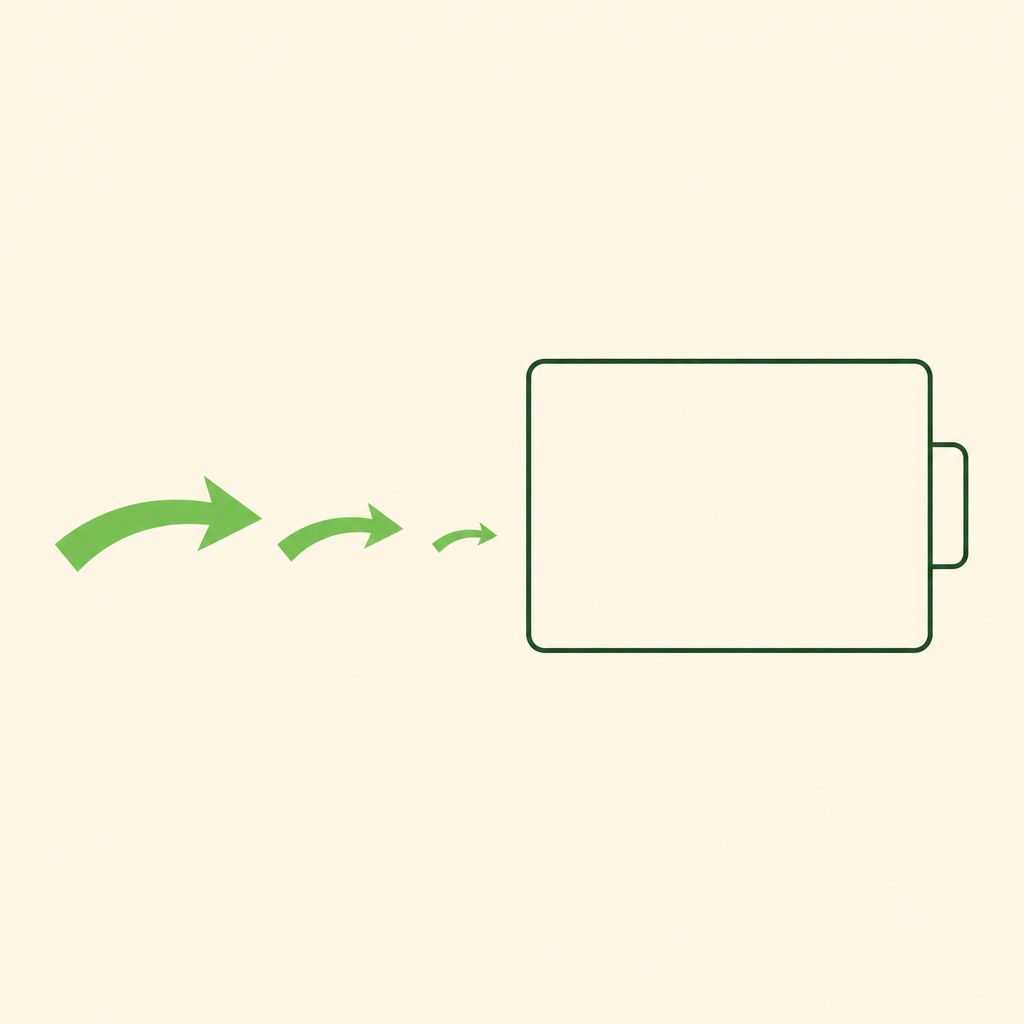
Our range publishes three charging stages: fast, absorption and float. Fast charging pushes in whatever current the array can supply until the battery reaches its absorption voltage. Absorption then holds that voltage while the current tapers off. Float drops to a lower maintenance voltage and holds there. With solar rather than a mains charger, the middle stage is often interrupted by the sun going down, which is normal and not a fault.
The three stages in order
| Stage | What the controller does | What ends it |
|---|---|---|
| Fast | Accepts the full current the array can produce and lets the battery voltage rise | The battery reaching its absorption voltage |
| Absorption | Holds that voltage while the current the battery accepts falls away | The current falling to the set threshold, or a timer |
| Float | Holds a lower maintenance voltage with a small topping current | The battery falling back to the float threshold |
The sequence exists because a battery cannot be brought to full charge by voltage alone. Pushing a fixed voltage into a partly charged battery draws a large current and heats it; the staged approach lets the current fall naturally as the battery fills, which is gentler and gets more charge in.
Why a solar array rarely finishes absorption
A mains charger holds the absorption voltage for as long as the timer says, because the mains does not set. A solar array does. In the middle of the day there may be enough current to reach the absorption voltage in an hour; by late afternoon there may be enough only to sit below it.
The result is a battery that spends the day in fast charging and only reaches absorption on a good day. This is not a controller fault, and it is not a reason to change the profile. It is the shape of solar charging, and the fix is array size and battery capacity rather than controller settings.
Where the voltages come from
The voltages each stage targets depend on the battery type, which is why our range publishes four battery selections: lead-acid, gel, lithium and custom. The controller applies the profile you select rather than a single set of numbers.
The custom profile exists for batteries that do not sit neatly in the other three. We do not publish a table of the specific voltages for each chemistry, because the correct figures depend on the battery you bought and its own datasheet. If you are setting a custom profile, take the absorption and float voltages from your battery manufacturer rather than from a general guide.
What happens overnight
When the array stops producing, the controller has nothing to charge with and the battery voltage falls back under load. In the morning, if the battery is below the float threshold, the sequence starts again from fast charging.
This daily restart is why a partly charged bank on a solar-only system can sit in fast charging for many days without ever completing a cycle, and still be perfectly healthy. It is also why a battery monitor is more informative than watching the controller's stage indicator — the stage tells you what the controller is doing right now, not how full the battery is.
Frequently asked questions
- How long does absorption charging take on solar?
- It depends on the array and the bank, and on the weather that day. We do not publish a fixed absorption time, because the stage ends when the current tapers rather than at a fixed clock point, and the array's output sets how quickly the taper happens.
- Is my controller faulty if it never reaches float?
- Not necessarily. On a solar-only system, a bank that is large relative to the array may spend every day in fast charging and never complete absorption, particularly in winter. Check the array output, the profile and the capacity ratio before concluding the controller is at fault.
- Which battery type should I select?
- Our range offers lead-acid, gel, lithium and custom. Choose the one matching the battery you actually installed. Use custom only when the battery needs voltages outside the published profiles, and take those voltages from the battery datasheet rather than adjusting them by feel.