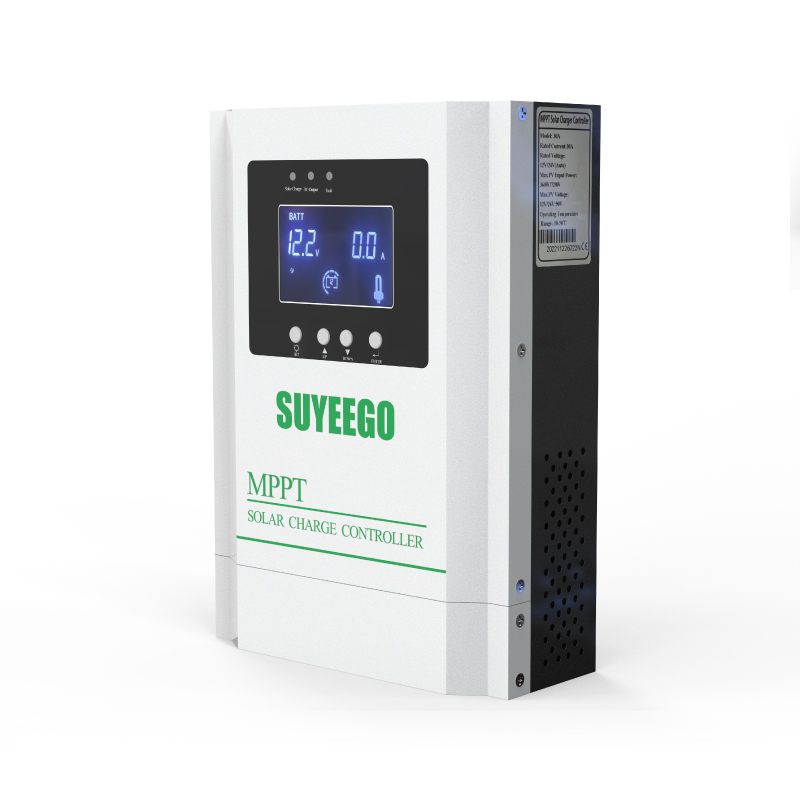
What is the load output on an RV MPPT solar charge controller?
6 min read
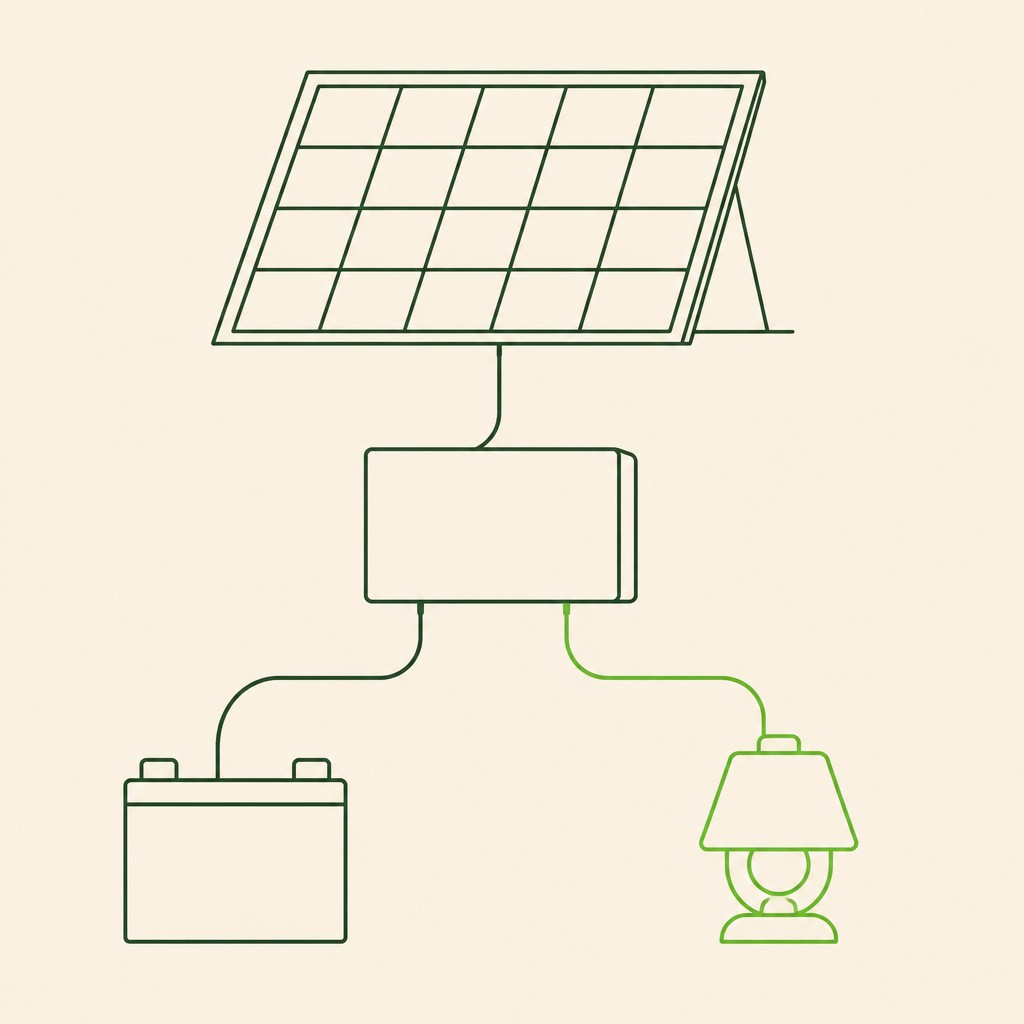
It is a second set of output terminals, separate from the battery, that feed DC loads or a distribution board directly from the controller. Its purpose is protection rather than convenience: the controller stops supplying the load when the battery falls to a published threshold and restarts it when the battery recovers, so a forgotten light cannot flatten the bank. Our MPPT range publishes a default load current of 10A with a maximum of 45A, and a default undervoltage shutdown of 10.0V with recovery at 12.6V on a 12V system.
Two outputs, two jobs
A charge controller sits between the panels and the battery, and most installations stop there. The load terminals are the third connection: they take power from the battery side of the controller and hand it to whatever you want to run. Because the controller is already watching the battery voltage, it can also decide when that supply has to stop, which is the part a plain fuse block cannot do.
What our range publishes
| Load output setting | Published default (12V model) | What it means |
|---|---|---|
| Output voltage range | 10.5–14V | The load sees battery voltage within this window |
| Maximum output current | 10A default, 45A maximum | The load current the terminals are rated for |
| Undervoltage shutdown | 10.0V | The load is cut off here to protect the battery |
| Undervoltage recovery | 12.6V | The load is switched back on once the battery has recovered |
What it is good for, and what it is not
- Good: lighting, a small fridge, USB outlets, a vent fan, or a small DC distribution board, where the point is that they switch off before the battery is damaged.
- Consider carefully: anything that pulls more than the published maximum of 45A, because the terminals have a rating whatever the battery can supply.
- Not the place for an inverter, unless its draw is small and you have checked it against the published limit. An inverter wants the battery terminals, and a low-voltage disconnect that cuts it off mid-use is a nuisance rather than a protection.
- Worth knowing: the recovery threshold matters as much as the shutdown one, because it decides when your lights come back on.
Deciding whether to use them
If your DC loads come from a fuse block wired straight to the battery, the load output replaces it and adds the disconnect you would otherwise buy separately. If they come from a distribution board with its own protection, the load terminals are optional, and leaving them unused costs nothing. What we cannot tell you is which threshold suits your battery: the published defaults are the range's settings, and the ones for your installation are a decision about how much capacity you are willing to leave in reserve.
Frequently asked questions
- Do I have to use the load output?
- No. It is an additional set of terminals, and an installation that takes its DC loads from a fuse block on the battery works perfectly well without them. The reason to use them is the built-in low-voltage disconnect.
- How much current can the load output take?
- Our MPPT range publishes a default of 10A and a maximum of 45A for the load output. That is the rating of those terminals, independent of what the battery and the solar array could otherwise supply.
- Why did my lights switch off and then come back on?
- That is the low-voltage disconnect working. The published defaults are shutdown at 10.0V and recovery at 12.6V on a 12V system, so the loads are cut when the battery is nearly empty and restored once it has charged again.
- Can I run an inverter from the load output?
- Compare its draw with the published maximum first. The terminals have their own limit, and an inverter that gets cut off by the low-voltage disconnect is not being protected so much as interrupted; the battery terminals are usually the better place for it.