Pure sine wave or modified sine wave: which inverter does an RV need?
7 min read
A pure sine wave inverter reproduces the smooth alternating waveform that mains power has, and a modified sine wave inverter approximates it with a blockier, stepped version of the same shape. Simple resistive loads — a kettle element, an incandescent lamp — do not care which they are given. Loads containing a motor, a compressor or an electronic power supply do care: they run hotter, buzz, refuse to start, or fail earlier on a modified waveform. If the installation includes a fridge, an air conditioner, a microwave, a laptop charger or anything with a motor in it, a pure sine wave inverter is the right choice, and the price difference is smaller than the cost of replacing an appliance or buying the inverter twice.
What the two waveforms actually are
Mains power is a smooth sine wave: the voltage rises and falls in a continuous curve, reversing direction fifty or sixty times a second. An inverter has to build that curve from a DC battery, and there are two ways to do it. A pure sine wave inverter reconstructs the curve properly. A modified sine wave inverter — sometimes sold as a quasi-sine, stepped or modified square wave — switches the output between a few fixed levels instead, producing a staircase that rises and falls where the curve should.
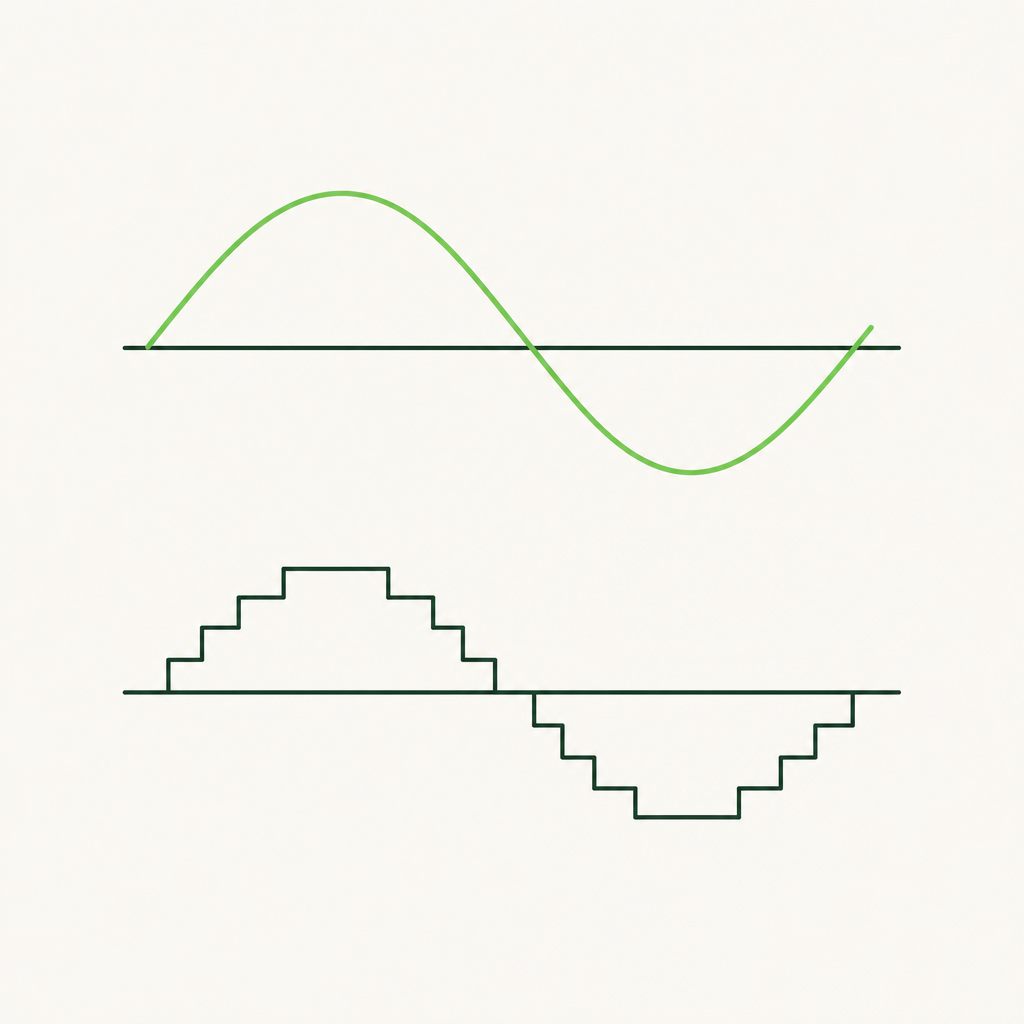
The staircase is not a defect; it is cheaper to produce, and it is genuinely adequate for a heating element, which only responds to the total energy delivered. The problem is that anything with a coil of wire or an electronic power supply responds to the shape of the wave as well as to the energy in it.
Which loads notice the difference
| Load | On a modified sine wave | On a pure sine wave |
|---|---|---|
| Kettle, heater element, incandescent lamp | Works normally | Works normally |
| Fridge or air conditioner compressor | Runs hot, may fail to start, shorter life | Runs as designed |
| Microwave oven | Often refuses to run, or runs at reduced power | Full power |
| Laptop or phone charger, television, audio | Buzzes, runs warm, some units refuse to start | Silent and normal |
| Fan, pump, other induction motor | Loses torque and overheats | Normal torque and temperature |
| Anything with a digital control board | Unreliable, may reset or misread | Reliable |
The pattern is consistent: the more a device depends on the shape of the waveform — motors, transformers and switch-mode power supplies — the more it suffers. A device that simply converts electricity into heat hardly notices at all.
The symptoms, if you already have one
- A buzzing or humming noise from the appliance or its power supply, which is the coil vibrating on the step edges of the waveform.
- A power supply or charger that runs noticeably hotter than it does at home, because it is working harder to smooth the input.
- A fridge or air conditioner that hums and struggles to start its compressor, or trips the inverter on start-up.
- A microwave that runs but heats slowly, or will not run at all.
- A device with a screen or a control board that resets, misreads or behaves erratically.
- Equipment that fails after a few months rather than immediately, which is the harder version of the same problem to diagnose.
What to look for on the specification
- The words pure sine wave, or true sine wave. Anything described as modified, quasi, stepped or approximated is the other type, however the marketing phrase reads.
- Continuous and peak power, because the waveform does not change what the inverter can supply and the surge figure is what starts a motor.
- The input voltage, which has to match the battery bank: a 12V inverter cannot be fed from a 24V bank.
- The AC output voltage and frequency, which have to match the appliances you intend to plug in.
- The protection set. Overload, short circuit, overheat and reverse connection protection are the four that matter most in a vehicle, where wiring mistakes are common.
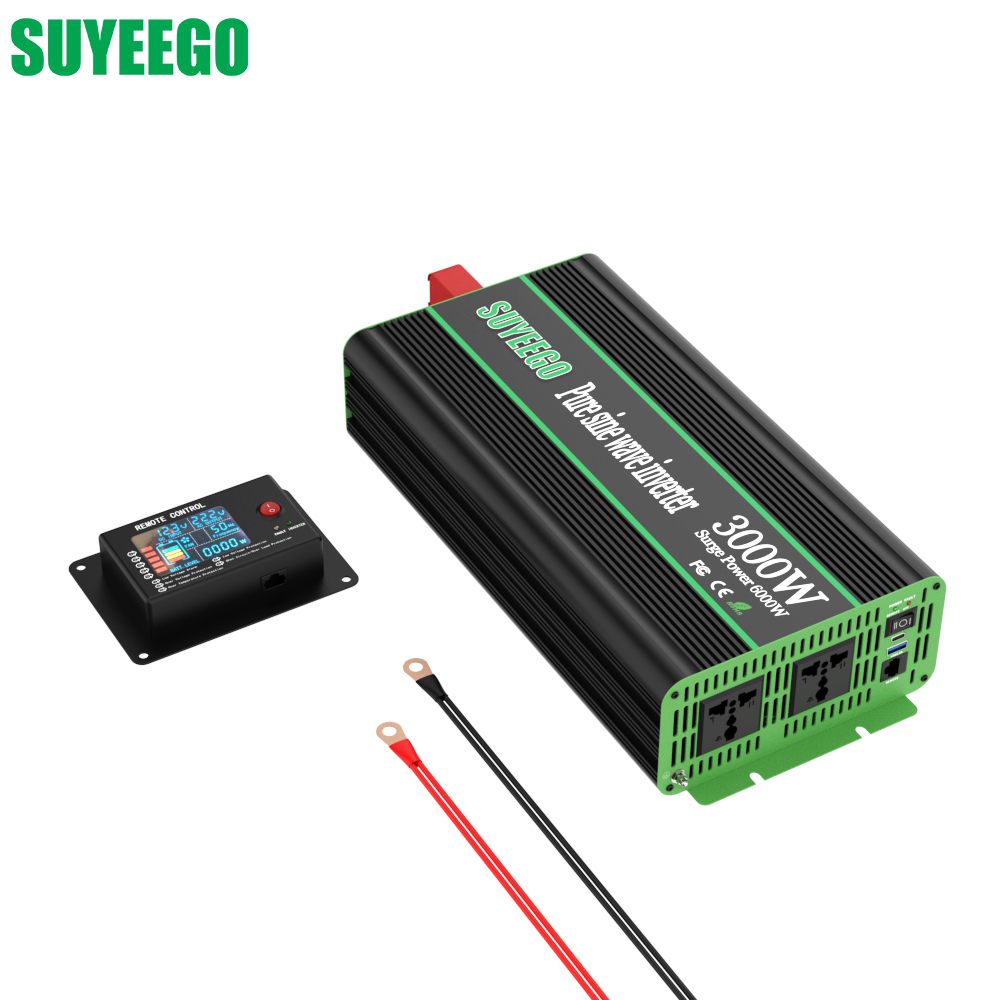
Every inverter in SUYEEGO's range is a pure sine wave unit. The range runs from 1kW to 3kW continuous, each model rated at twice its continuous figure for the few seconds a motor needs at start-up, with a DC12V or DC24V input and a 110V or 220V output, and it carries CE, FCC and RoHS certification. If you tell us what you intend to plug in, we will tell you which rating covers it.
Frequently asked questions
- Can a modified sine wave inverter run a fridge?
- It may run one, but the compressor motor is exactly the sort of load that suffers: it draws more current than it should, runs hotter, and puts more strain on both the appliance and the inverter. If a fridge is part of the plan, a pure sine wave inverter is the safer match.
- Will a pure sine wave inverter run everything?
- It will run anything within its continuous and peak ratings. The waveform is not the limit — the power rating, and the current the battery can supply, are what decide what an inverter can carry.
- Is pure sine wave worth the extra cost?
- If any of your loads contains a motor, a compressor or a switch-mode power supply, yes. The saving on a modified sine wave inverter is small compared with replacing an appliance, or with the inconvenience of equipment that only half works.
- How can I tell which waveform my inverter produces?
- Read the specification for the phrase pure sine wave or true sine wave. Inverters that produce the stepped waveform usually say modified, quasi or square somewhere in the description, though some listings avoid the words and describe only the power rating.