Does panel angle matter in an RV solar system?
7 min read

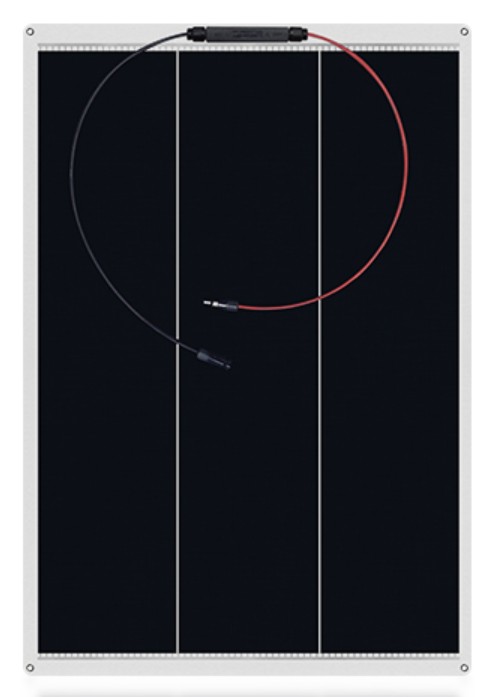
It does matter, but a van roof rarely allows you much choice. Panels are normally fitted flat, because of wind load, overall height and the roof furniture already there. Flat costs little in summer and at low latitude, and costs a good deal in winter and at high latitude, where the sun sits low for much of the day. A tilt mount buys back some of that, at the price of a structure that has to survive road speed.
Why flat is the default on a vehicle
A panel on a roof is a wing. Anything standing proud of the surface catches air at speed, and the faster you drive the more it matters. Add the height restriction of a van and the number of things already on the roof - vents, roof lights, aerials - and the flat panel becomes the obvious answer rather than a compromise.
There is a second reason. A flat panel is a fixed panel. A tiltable one has hinges and stays that a passenger has to remember to fold down before driving, and that is a failure mode no data sheet can describe.
What flat costs you, and when
A horizontal panel collects well when the sun is high and poorly when it is low. In summer and near the equator the loss is small, because the sun passes near the vertical anyway. In winter, and at higher latitudes, the sun spends much of the day low in the sky and a flat panel sees it at a glancing angle. That is the season when a solar system is already producing least and the load is highest.
If you do tilt
- The mount has to be stowed for driving, every time, without exception.
- Tilting toward the sun still means parking the vehicle to face the right way.
- A raised panel is exposed to wind while parked, which matters in open country.
- The hinge and stay become the parts most likely to fail, long before the panel does.
For most van installations the honest conclusion is that the tilt is not worth the mechanism. If more energy is needed, more panel area or more battery capacity is usually the better purchase, because neither depends on the driver remembering anything.
What the panel data does and does not say about orientation
Our panel data publishes the electrical figures at standard test conditions, the dimensions, the cell size and the construction. It does not publish a curve of output against angle, or against temperature. So we cannot tell you what a given tilt is worth in a given month - only that the effect exists and grows as the sun gets lower.
What we do not publish
We do not publish a recommended tilt angle by latitude, an output-loss figure for flat mounting, or an angle table for any month. Those numbers depend on latitude, season and the specific array, and publishing a table would invite people to trust it for a place it was never calculated for.
Frequently asked questions
- Should I tilt my van's solar panels?
- For most vans, no. The gain is seasonal and modest against the mechanical risk of a mount that has to be stowed before every drive. If you are short of energy in winter, more panel area or more battery is usually the better answer.
- How much does a flat panel lose compared with a tilted one?
- It depends on latitude and season, and we do not publish a figure for either. The loss is small when the sun is high and grows as the sun sits lower, which is why the winter case is the one that matters.
- Can I tilt panels temporarily with a portable panel instead?
- A portable panel is the usual way to get an adjustable angle without altering the roof, because it can be propped up and put away. It also has to be secured while travelling and stored somewhere.
- Does parking direction matter more than panel angle?
- For a flat array, parking direction changes very little, because the panel is not aimed at anything. For a tilted or portable panel it matters a great deal, since the panel has to be pointed at the sun to gain anything.