Should you buy an RV inverter or a portable power station?
7 min read
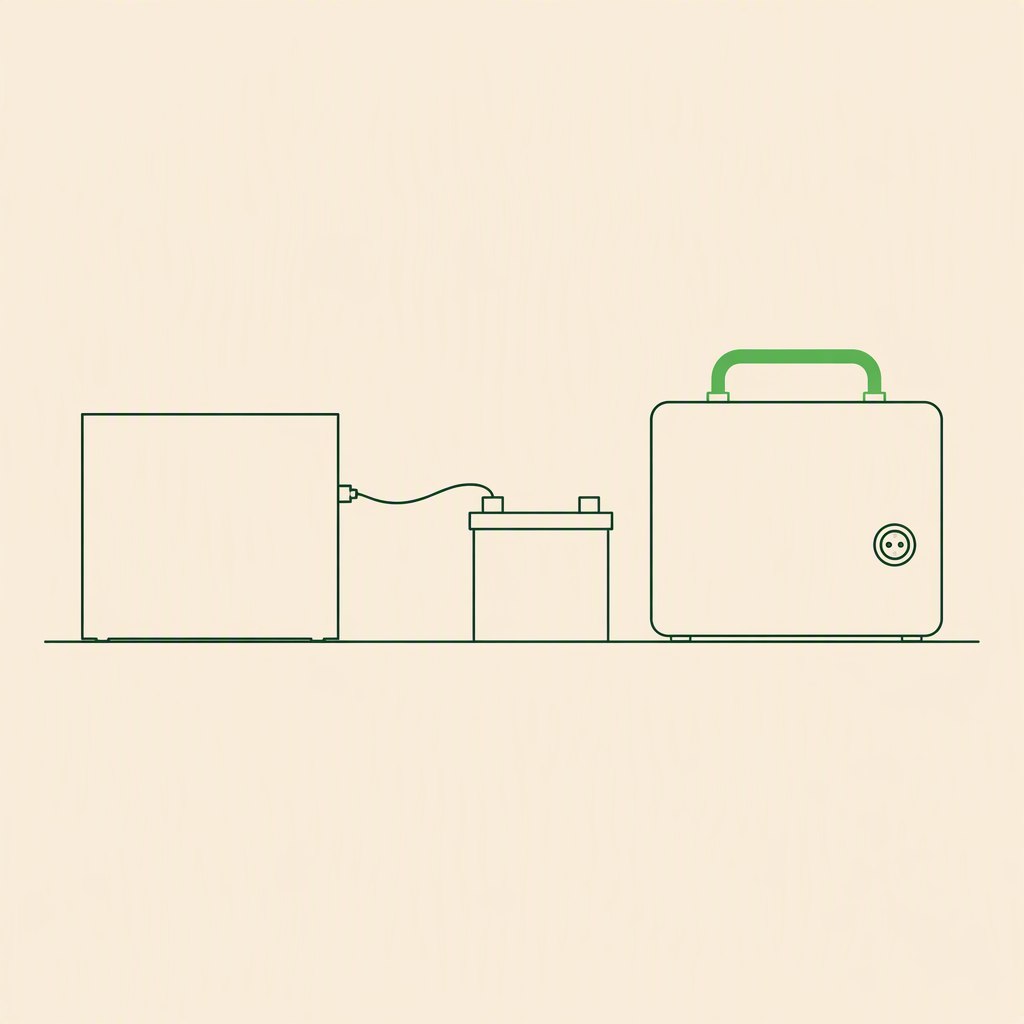
They decide different questions. A portable power station puts a battery, a charger and an inverter in one portable box, so its AC output is limited by the battery inside it. A fixed RV inverter is the AC half of a system you size yourself: the inverter to the loads, the battery bank to the energy. Choose the station for small loads, occasional use and carrying it outside the van; choose the fixed inverter when the load is large, regular and stays put.
One box against a system
A power station is measured mainly in watt-hours, because its limit is how much energy it carries. An inverter is measured in watts, continuous and peak, because its limit is how much it can deliver at any moment. That difference is the whole decision: a station can be out of energy while still having plenty of power, and an inverter can have energy available while being the wrong size for the load.
Where the station wins
- It arrives assembled: no DC cabling, no fuse, no mounting.
- It is portable, so it works in the awning, in a tent or in the car.
- For a laptop, a camera and some lights for an evening it is a reasonable answer on its own.
Where the fixed inverter wins
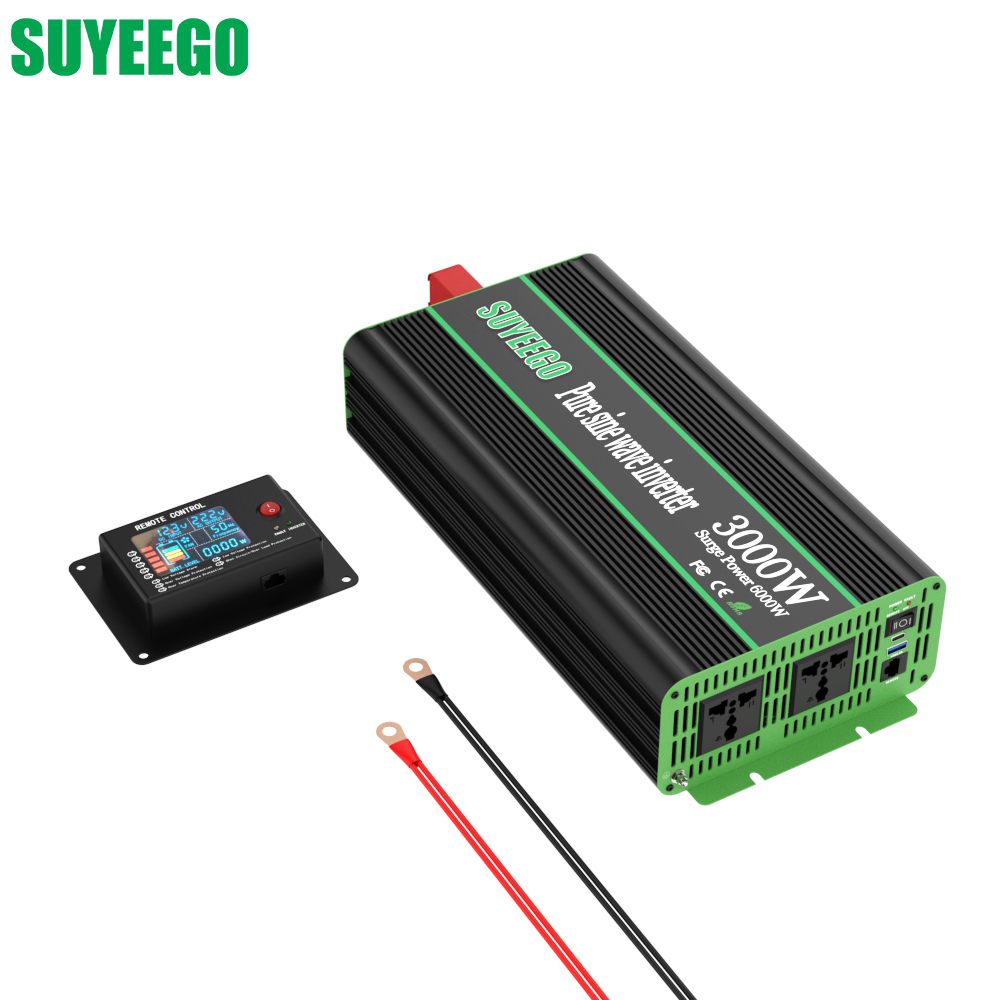
- Size: our range publishes 1000W to 3000W continuous with a peak at twice that, and you match the model to the load rather than to a box.
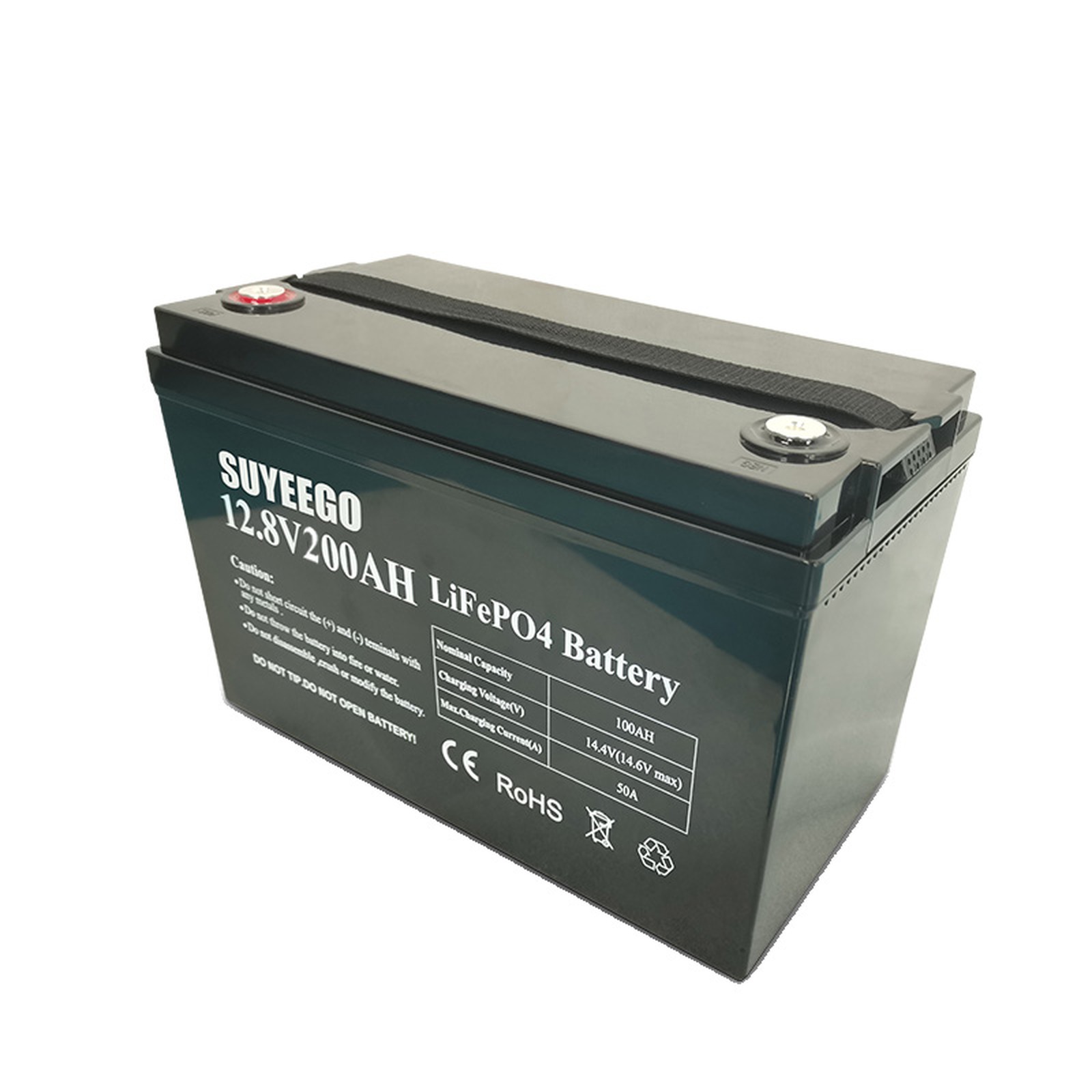
- Duration: the inverter runs until the bank is empty, and the bank is as big as you choose to make it.
- Expansion: the same bank that feeds the inverter can be charged by an MPPT controller from panels and by a DC-DC charger from the alternator, which our range publishes at up to 100A of alternator input.
- Permanence: it stays wired in the vehicle, on its own fuse and breaker, and it does not walk off.
The awkward middle
Portable stations run into their own arithmetic with bigger loads. A kettle or a compressor is decided by power rather than by energy, and the station's inverter has to be able to deliver it, which fixes a floor on how large and heavy the box has to be. That is the point at which a fixed installation starts to make more sense than a heavier box.
The two are not exclusive. A common arrangement is a fixed inverter for the regular loads and a small station for what you carry away from the van.
A short way to decide
| If this is true | Lean towards |
|---|---|
| The load is small and the need is occasional | A portable power station |
| A compressor or a heating appliance is involved | A fixed inverter and a bank |
| You need it outside the van | A station, or both |
| The load runs for hours at a time | A fixed inverter and a bank |
Frequently asked questions
- Can a power station run a van's air conditioner?
- It is a power question rather than an energy question, and a compressor's start-up is the hard part. Check the station's continuous and peak output against the appliance's start-up current, and compare them with our published pair as a reference point.
- Can I charge a power station from the van's alternator?
- That depends on the station and is not something we publish. Our DC-DC chargers are specified for charging a battery bank, with alternator inputs published at 40A, 60A and 100A depending on the model.
- Is an inverter plus a battery cheaper than a station of the same usable energy?
- That is a price question and prices are not published on this site, so we will not guess at it. The structural difference is what matters here: one is sized to your loads, the other is sized in a box.
- Do the two interfere if both are connected?
- They are separate supplies with their own outputs, so run them as separate systems. Do not tie two AC outputs together, which is the subject of the article on running two inverters.