How much does an RV solar system weigh?
7 min read
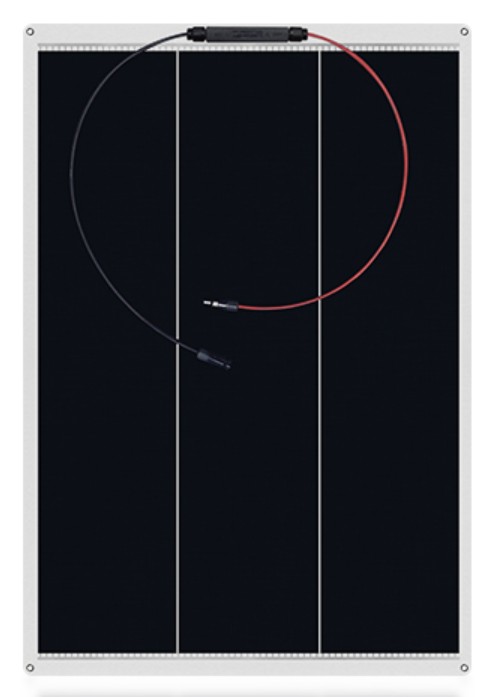
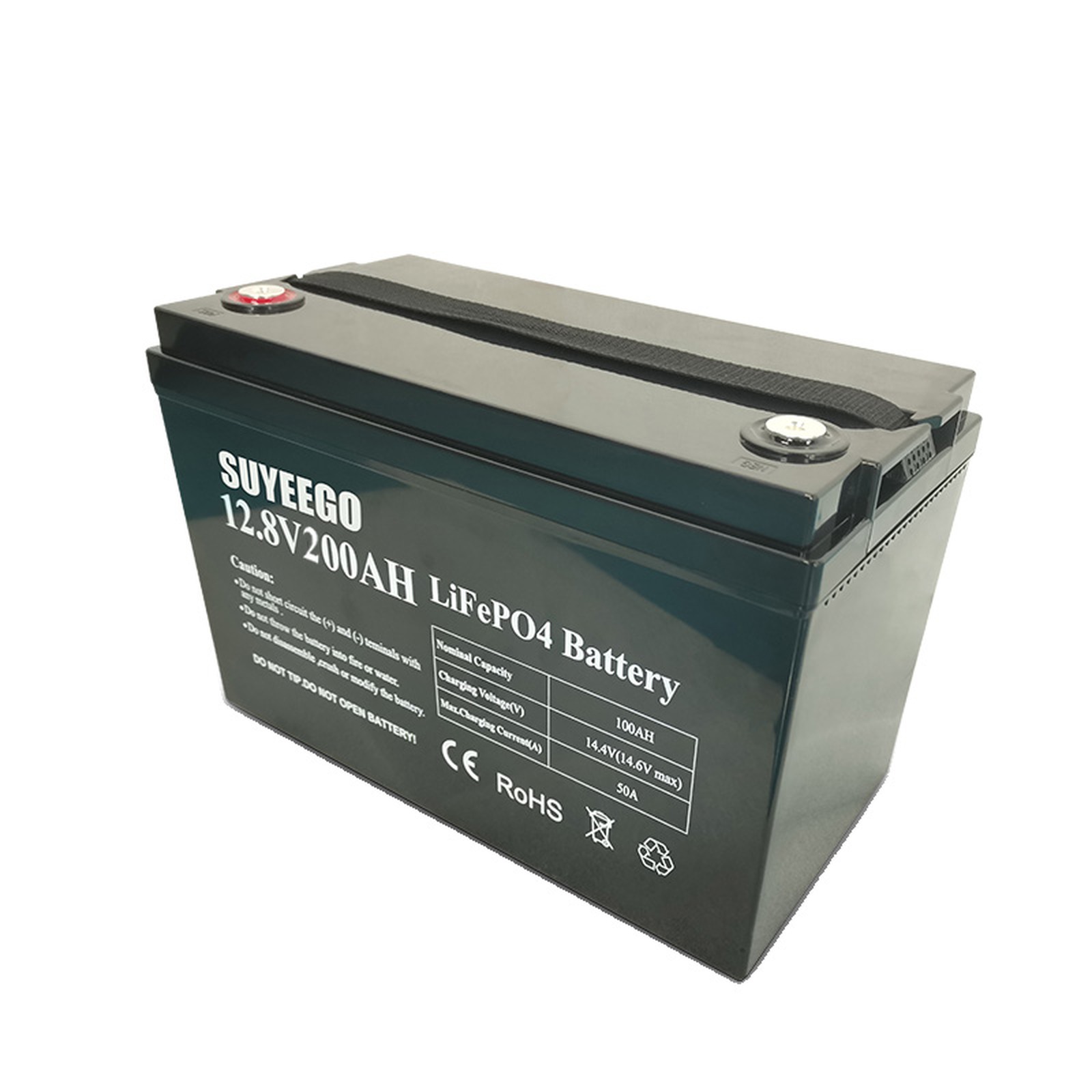
The battery is usually the heaviest single item, and the roof array is usually lighter than people expect. A flexible panel bonded directly to the roof omits the aluminium frame and the mounting rails, so the same rated watts cost noticeably less payload than a framed panel on brackets. What matters is not the system's total on its own but what is left of the vehicle's payload after it.
The battery is the part that surprises people
A lithium battery of a given capacity is lighter than the lead-acid bank it replaces, which is one of the reasons the swap is popular, but it is still a dense block of cells in a steel or ABS case and it usually sits inside the living space rather than low and central. The array that charges it may weigh less than the battery it charges.
This inverts the usual mental picture. People budget weight for the panels on the roof and forget the box under the bed, which is the heavier of the two and the one that moves the centre of gravity.
Framed panel on rails against flexible panel bonded down
A framed panel arrives with an aluminium frame, a glass front and a rigid backing, and it needs rails or brackets plus the fasteners and sealant that hold them. A flexible panel is a laminate a few millimetres thick that bonds to the roof surface, so there is no frame, no rail and no bracket — the mounting hardware that disappears is a real part of the weight, and it sits at the highest point of the vehicle where it does the most harm to handling.
The trade is not one-sided. A framed panel runs cooler because air passes underneath, is more resistant to hail and foot traffic, and can be replaced without disturbing the roof surface. A bonded panel has to be fitted to a surface that is actually flat, and removing one later means removing the adhesive.
Where the rest of the weight sits
- Cable: copper is heavy, and a long run of thick cable can weigh more than the controller it connects
- Inverter: mass scales with continuous rating, and the transformer-based types are the heaviest
- Controller: modest on its own, but it needs a mounting surface and often a heatsink gap
- Fuses, holders, busbars and switches: small individually, not negligible together
- Water and waste tanks, which are not part of the system but compete for the same payload
How to find out what you have left
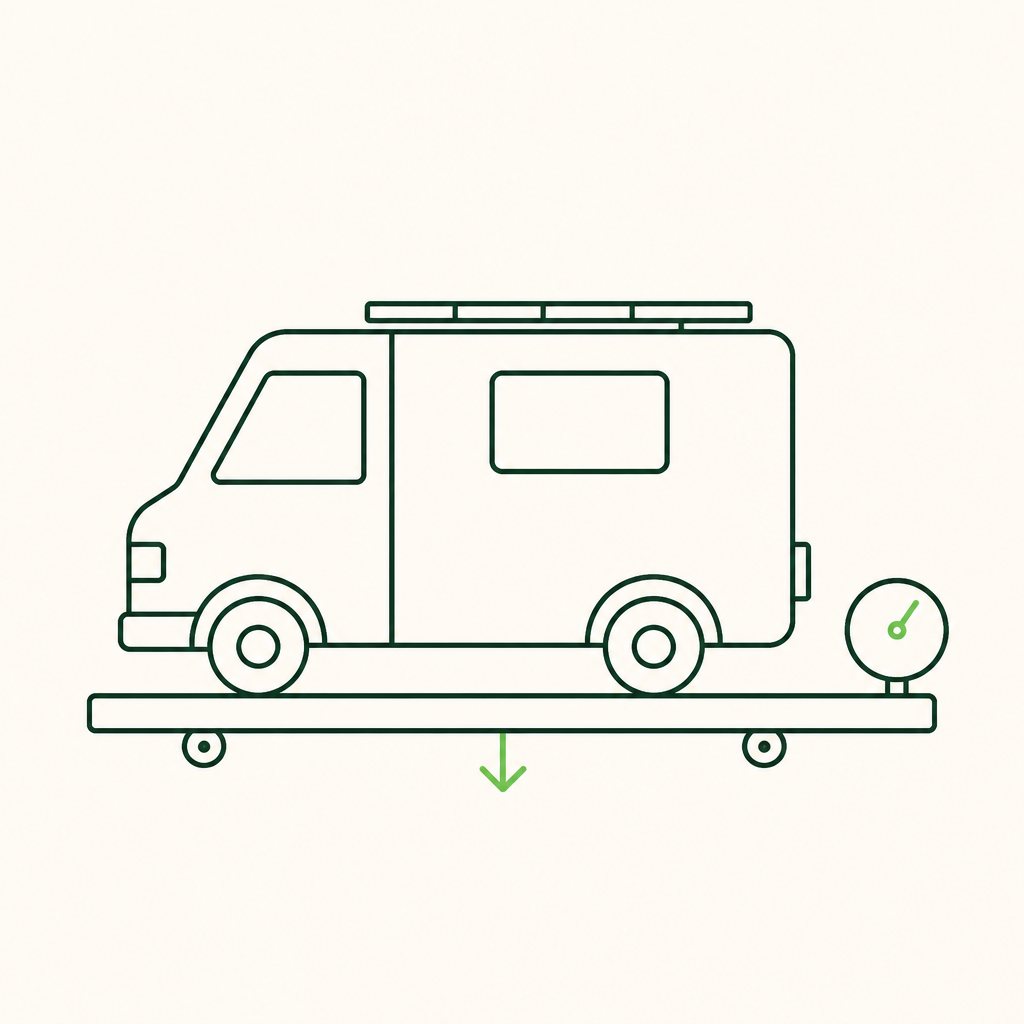
The vehicle's plate gives a gross vehicle weight and often an axle limit; the handbook gives a kerb weight. The difference is your payload, and it has to cover passengers, water, luggage and the system. Kerb weight figures are frequently quoted for a base vehicle without options, so the honest way to settle it is a weighbridge with the van loaded as you travel.
Do that before ordering, not after. A system that pushes the van over its plate is not a smaller problem than one that does not charge; it is a legal and insurance problem, and it is the one modification that cannot be argued with.
Lighter is not automatically better
Weight is one constraint among several, and chasing it can cost you durability. A bonded flexible panel is the lighter choice, but it needs a flat substrate, it runs hotter, and it cannot be lifted off for a repair. Where the roof is curved or the van is used in hail country, the framed panel on rails may be the better engineering decision even though it weighs more.
Frequently asked questions
- Does a flexible solar panel weigh less than a rigid one?
- For the same rated power it generally does, because it has no aluminium frame, no glass and no mounting rails. The saving is in the frame and hardware as much as in the laminate itself, and it is concentrated at the top of the vehicle.
- Does the battery have to go inside the living space?
- No, but it usually does, because a lithium battery prefers a stable temperature and the living space is drier and warmer than a locker under the floor. Where it goes affects both the centre of gravity and how much cable you need.
- How do I know my remaining payload?
- Gross vehicle weight minus kerb weight, with the caveat that published kerb weights often exclude factory options. A weighbridge reading with the van loaded is the only figure that settles it.
- Does a heavier roof affect how the van drives?
- Yes. Weight at roof height raises the centre of gravity, which shows up as more body roll and longer braking distances before it shows up on a scale. It is one of the reasons a bonded panel is attractive on a tall van.