How should the system differ for weekend trips and full-time living?
7 min read

The difference is not the size of the system but which part has to carry the gap. A van used at weekends usually drives between trips, so the alternator does much of the charging and the battery only has to cover a night or two; a van lived in full time has to be refilled every day by the array, and has to survive several sunless days from the battery, so autonomy and array size matter far more than peak output. Work out which of those two is normal for you before choosing parts, because the same budget buys a very different system depending on the answer.
The pattern decides which part carries the gap
Every system is a balance between what goes in and what comes out, and the way the van is used decides which side of that balance is under pressure. Drive regularly and the alternator becomes the largest source in the system, which changes what the array and the battery are there to do. Stay parked for days and the array becomes the only source, which makes its worst-case output rather than its rated output the number that matters. The same components can serve either life, but not with the same priorities.

Weekend trips
A weekend trip is a short, deep discharge followed by a long idle period, and usually a drive at each end. The battery has to cover two nights of fridge, lighting and charging, which sits comfortably inside the usable capacity of a single 200Ah lithium battery, while the array's job is to have the bank full again before the next trip rather than to keep up hour by hour. If the van is driven for an hour or two each way, a DC-DC charger moves a surprising amount of energy in that time: an hour at 40A into a 12V battery is roughly 500Wh before losses, which is comparable to two or three hours of good sun on a 200W panel.
Full-time living
Full-time use reverses the priorities. Consumption happens every day, so the array has to cover the daily figure on an average day rather than on a good one, and the battery has to carry the days when the array does not. That is where autonomy comes from: not from a bigger inverter, and not from a larger array, but from capacity that is left unused on a normal day so it is there on a dull one. In practice this is the case that pushes towards a larger bank, more panel, and more than one charging source, because a single overcast day should not be an event.
- Plan the array around the worst month you actually travel in, not the annual average.
- Treat the alternator as a second source rather than a backup, and use a charger designed to feed a leisure battery properly.
- Size the inverter from the loads that run at once, then check the DC side can carry the current that implies.
Nights on a hook-up
If most nights are spent plugged in, the system changes shape a third time. Mains charging becomes the main source, the array becomes a top-up for the days between sites, and the battery's real job is to cover the hours when the van is not connected. A hook-up delivers far more power than a van's array can, so attention shifts to the charger and to how much charging current the battery will accept, rather than to panel area.
Where to spend the money first
| How the van is used | Spend first on | Can stay modest |
|---|---|---|
| Weekends, driven in between | A DC-DC charger and one well-sized battery | The array, which has all week to refill the bank |
| Full time, mostly parked, sunny climate | The array and the battery bank together | The alternator charging path |
| Full time, winter or cloudy climate | Battery capacity for autonomy, plus a second charging source | Peak inverter output |
| Mostly hook-up with occasional off-grid | A charger matched to the battery, and enough capacity for the hours unplugged | The array |
The figures the range publishes
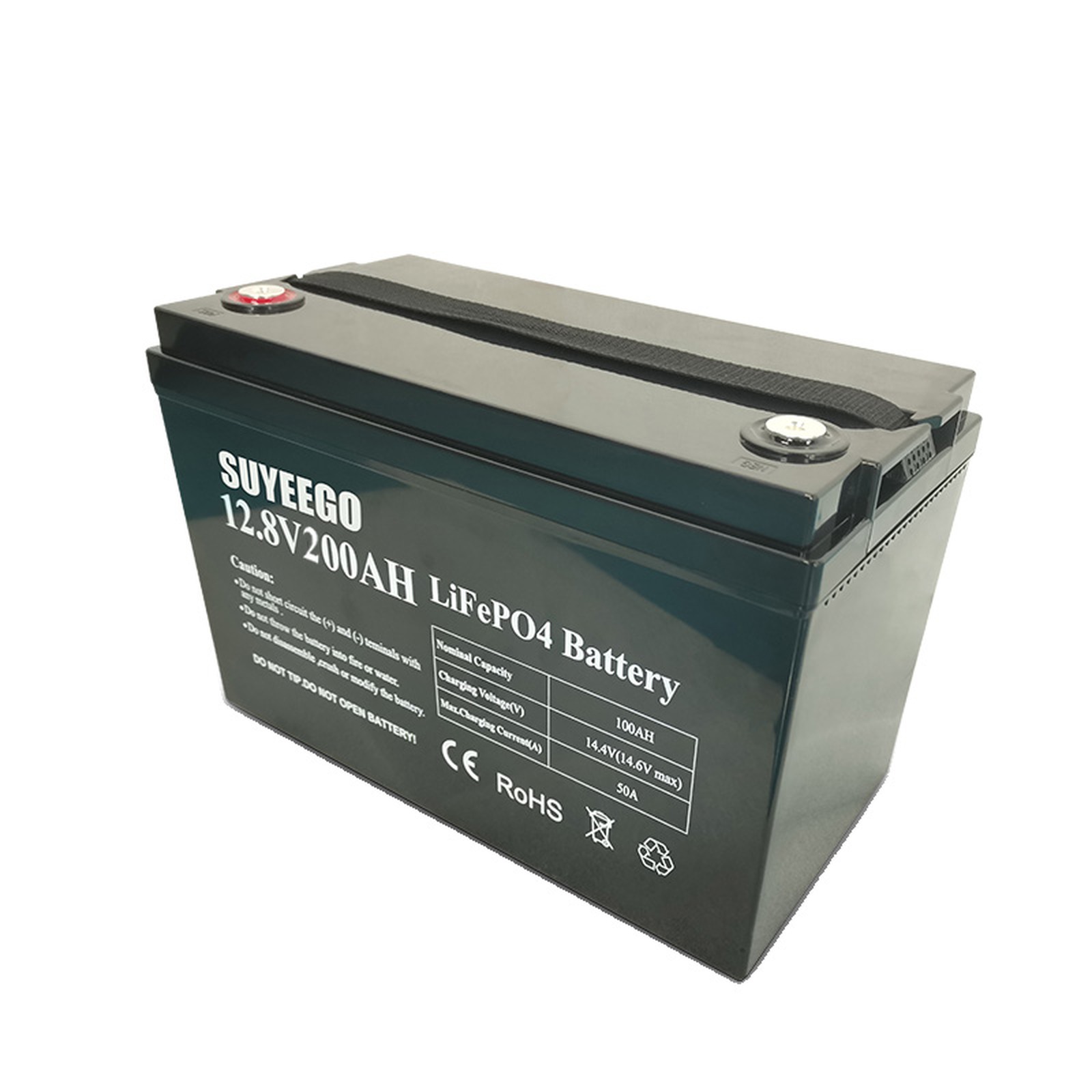
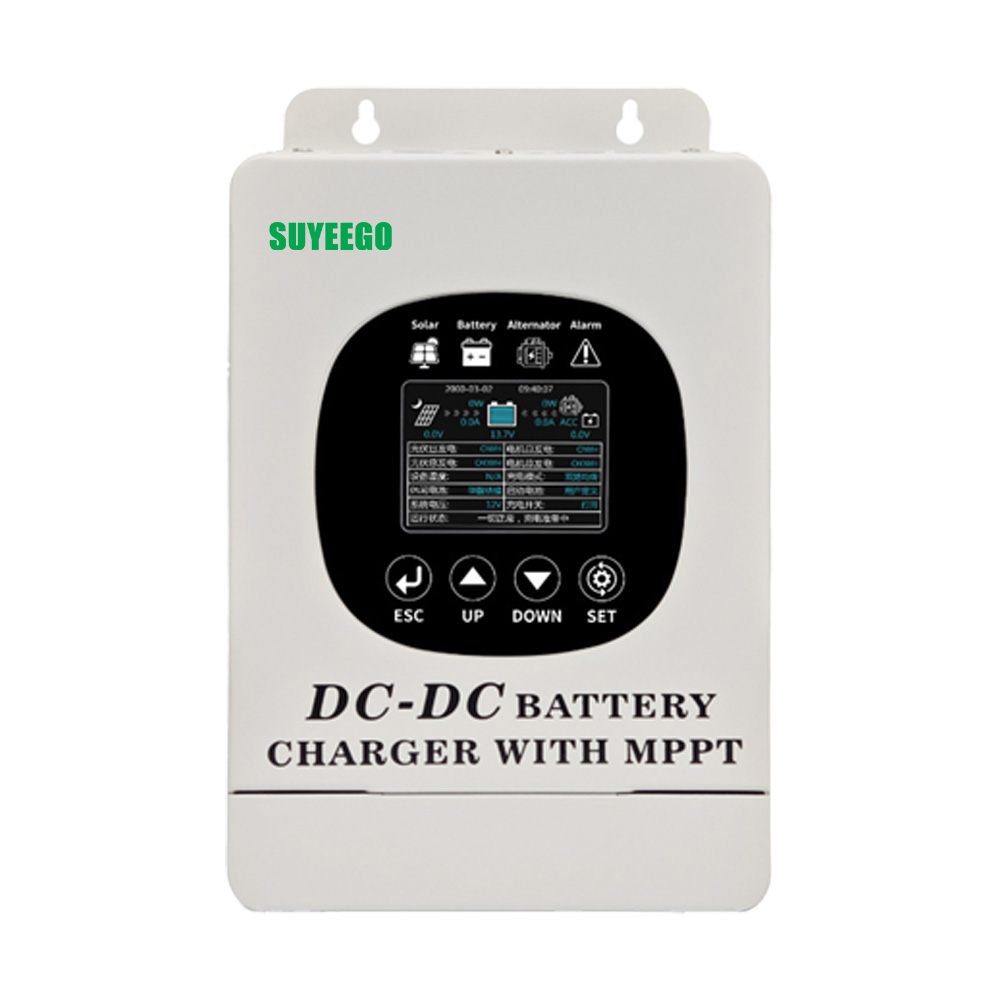
SUYEEGO's 12.8V 200Ah LiFePO4 battery stores 2.56kWh, accepts up to 100A of charging current and is rated for 6000 cycles at 100% depth of discharge, with an IP55 case and M8 terminals. The DD4048 and DD6048 DC-DC chargers pass 40A and 60A to the leisure battery with 98% charging conversion efficiency, taking up to 20A or 40A from a solar array at the same time and up to 20A from the alternator. The MPPT controller range covers 20A to 100A, which is the part that decides how much of the array's output actually reaches the bank.
Frequently asked questions
- How much battery do I need for weekend trips?
- Enough for the nights you are away, plus a margin. Two nights of fridge, lighting and charging normally fits inside the usable capacity of a single 12.8V 200Ah battery, which stores 2.56kWh. The number worth calculating is your own load list, not a rule of thumb.
- Is more solar always better for full-time living?
- Only up to the point where something can accept the energy. Panel beyond what the battery takes in and the controller passes on is not stored anywhere; on a full-time van the useful ceiling is usually set by the bank and the controller, which is why they are planned together with the array rather than after it.
- Does driving really charge the leisure battery?
- Only through something built for the job. An alternator's regulator is designed around the starter battery, and its output does not follow the charging profile a lithium leisure battery wants. A DC-DC charger takes that output and turns it into a proper charging profile, and the models in this range pass 40A or 60A to the leisure battery.
- What if we use the van both ways?
- Build for the harder case and accept that the other one is easy. A full-time system used at weekends is simply under-used for most of its life; the reverse is not true, and a weekend system asked to live full time will run short.