Can a camper van power a house?
6 min read
Not the way an electric car can, and the difference is the direction of the power. Vehicle-to-load systems in cars export through the charging port, typically around 2 to 2.4 kW, because the car's electronics are built to work both ways. A camper's inverter is normally one-way: it takes 12V from the battery and produces mains at its output, with no path back in. A van can still supply a house through that inverter, up to its continuous rating and for as long as the battery lasts, but nothing flows back into the van through the same connection — and the battery, not the inverter, is nearly always what runs out first.
Two different arrangements
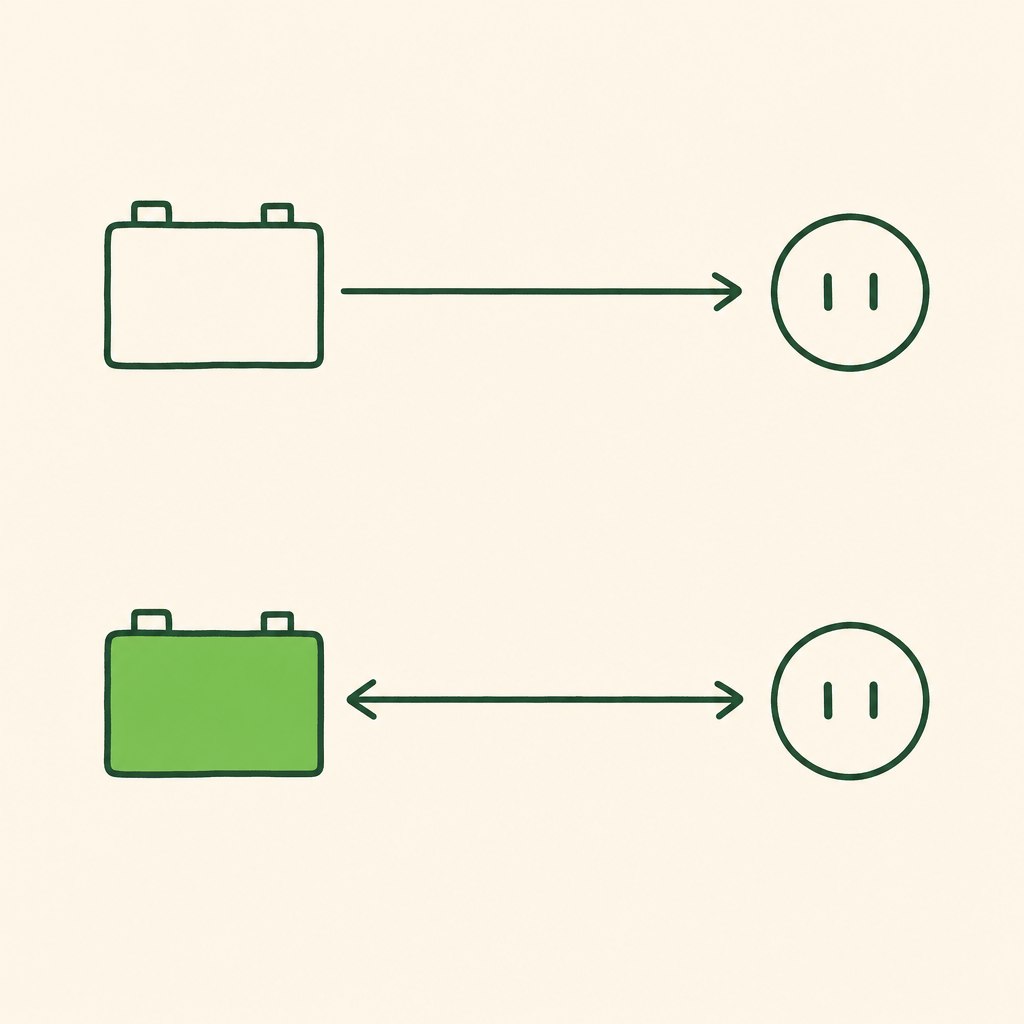
In a van, the inverter sits at the end of the DC system and converts one way: 12V or 24V in, mains out. In a vehicle-to-load car, the same power electronics are reversible, so the battery can be discharged through the charging port into an adapter. The camper arrangement can run appliances perfectly well; what it cannot do is act as a battery that the grid or the house can charge from or draw from on demand.
What a camper can actually supply
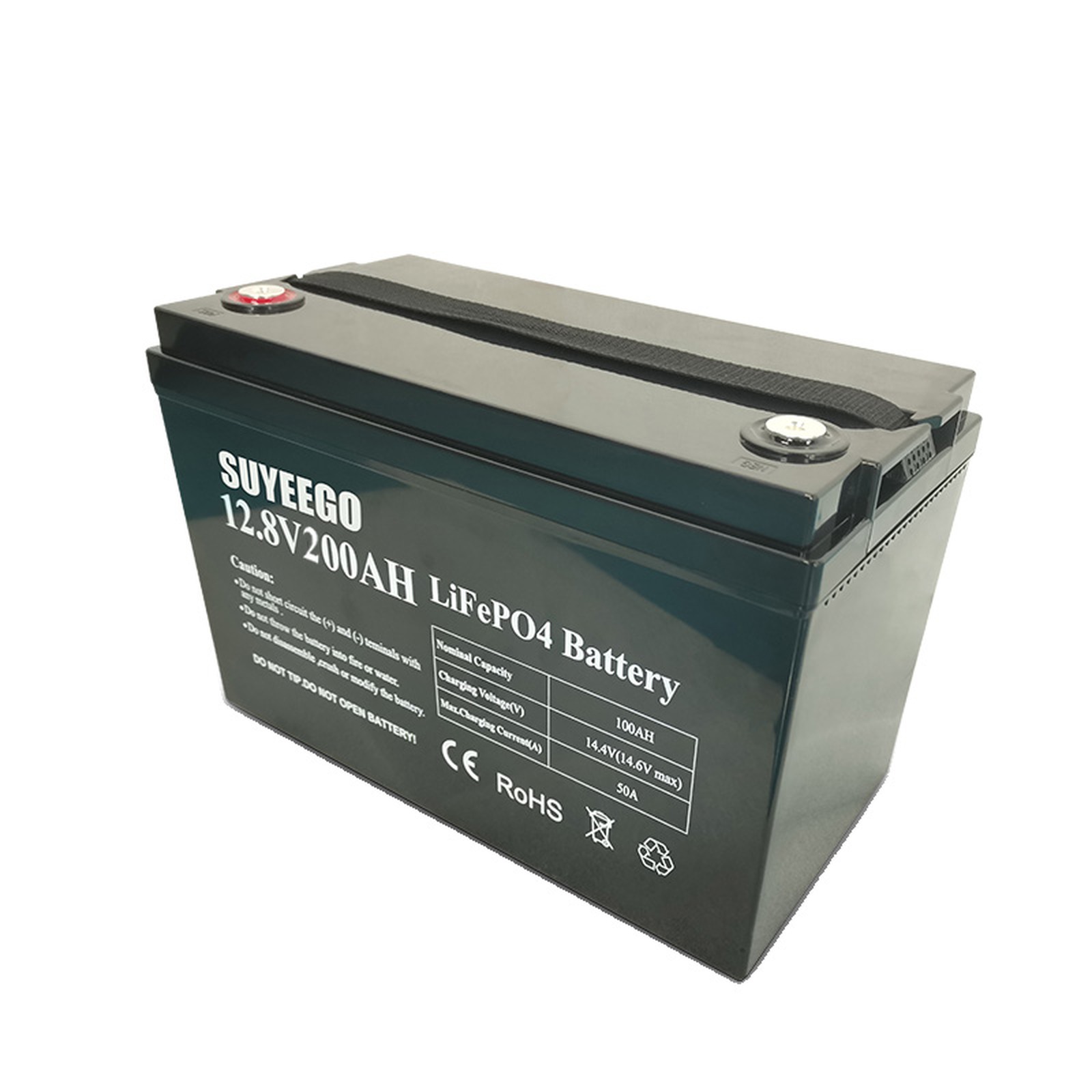
The honest way to think about it is in kilowatt hours rather than kilowatts. A single 12.8V 200Ah battery holds 2.56kWh, so a 1kW load runs for roughly two and a half hours before the battery is empty, and a 3kW load for well under an hour. That is a useful amount of power for a fridge, a freezer, a laptop and lighting through an outage; it is a fraction of what a house uses in a day.
Why the DC side decides, not the inverter
- At 12V, a 3kW load draws over 240A from the battery once conversion losses are included.
- A single 12.8V 200Ah battery is rated for 200A of continuous discharge, so the largest inverter in the range at full load already asks more than one battery can give.
- The cable and the main fuse have to be rated for that current, which is why the DC side is designed before the inverter is chosen.
- Two batteries in parallel raise the available current and the stored energy at the same time, which is the usual answer for a van that expects to run big loads.
What to do instead
- Decide which appliances you actually want to run, and size the inverter from that list rather than from the total of everything in the van.
- Accept that a van supplies a few circuits, not a house: heating, hot water and cooking are the loads that make the difference in scale.
- Treat export as a car feature. If powering a house is the goal, the tool for it is a vehicle with bidirectional charging, not a camper inverter.
The figures the range publishes
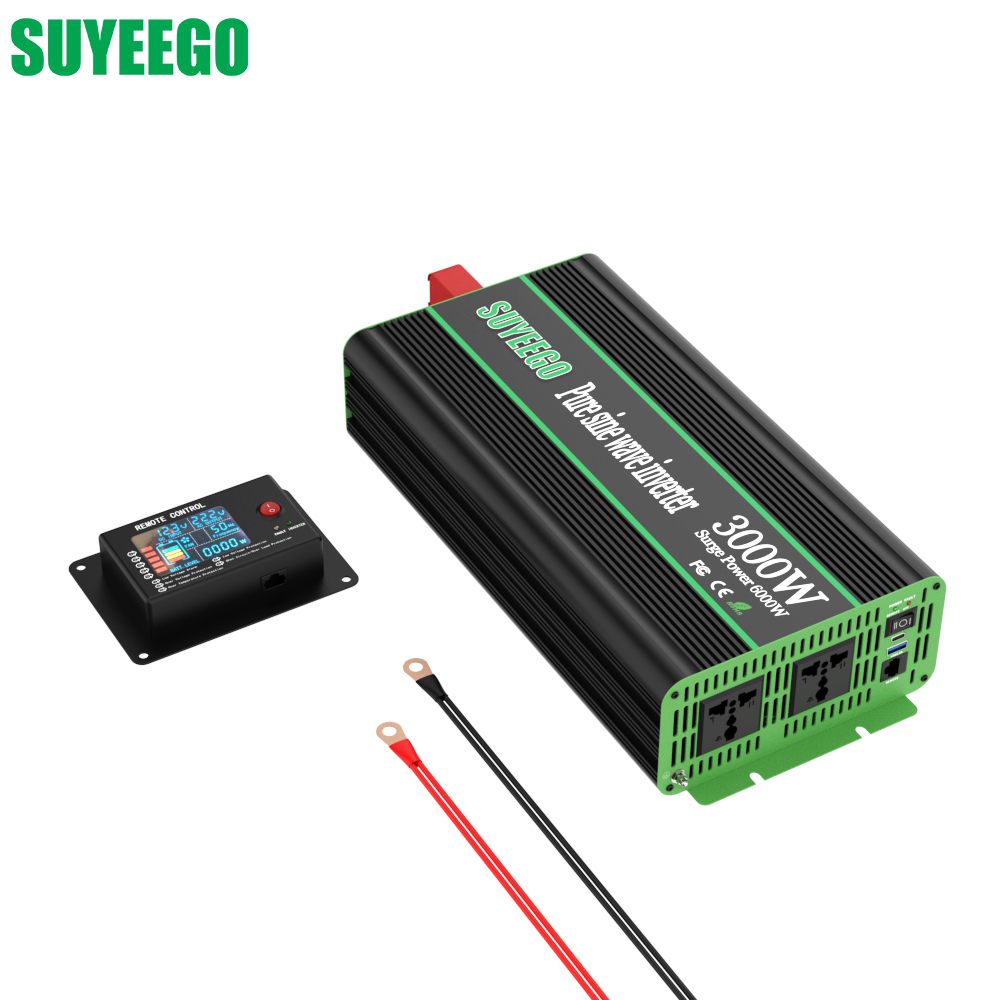
SUYEEGO's pure sine wave inverter range (SYGG-FSC) runs from 1000W to 3000W in five models, each with a peak rating of twice its continuous figure, a 12V or 24V DC input, a 110V or 220V AC output with 50Hz or 60Hz on request, efficiency above 95%, and a low voltage alarm at 10.5V with cut-off at 10V on a 12V bank. The 12.8V 200Ah LiFePO4 battery alongside it is rated for 200A of continuous discharge and stores 2.56kWh, which is the figure that decides how long any of those loads can run.
Frequently asked questions
- Can I run my house from the van in a power cut?
- You can run some appliances, within the inverter's continuous rating and the battery's capacity. A whole house, with heating or an oven, is a different order of scale and needs a generator or a storage system sized for it.
- What is the difference between vehicle-to-load and my inverter?
- Vehicle-to-load exports power out of a car through its charging port and is built into the vehicle. A camper inverter converts the battery's DC into mains for the van's own sockets; the output is not a route back into the battery.
- Can a big inverter damage the battery?
- Only if the DC side is asked for more current than it is rated for. A 3kW load at 12V draws over 240A, so the bank's continuous discharge rating, the cable and the fuse have to support it before the inverter's rating means anything.