Where does a battery monitor's shunt belong?
6 min read

A shunt is a calibrated resistor, and a battery monitor works out state of charge by counting every amp that passes through it. That only means anything if it sees all of them. The shunt belongs on the battery's negative terminal, with every other negative connection in the system made on the far side of it, so the battery has exactly one path to the rest of the installation and that path runs through the shunt. Fit it to a branch, to the charger side alone, or between the battery and a busbar that other things also bypass, and the monitor reports a fraction of the traffic as though it were the whole.
What the shunt actually measures
The shunt is a piece of metal with a known, very small resistance. Current through it produces a tiny voltage across it, and the monitor reads that voltage, converts it to amps, multiplies by time and adds the result up. State of charge is that running total compared with the capacity you told it the battery has.
There is nothing clever in the measurement itself. Everything clever is in the counting, and the counting is only correct if every amp is in the same place at the same time, which is why placement is the whole subject.
The one arrangement that works
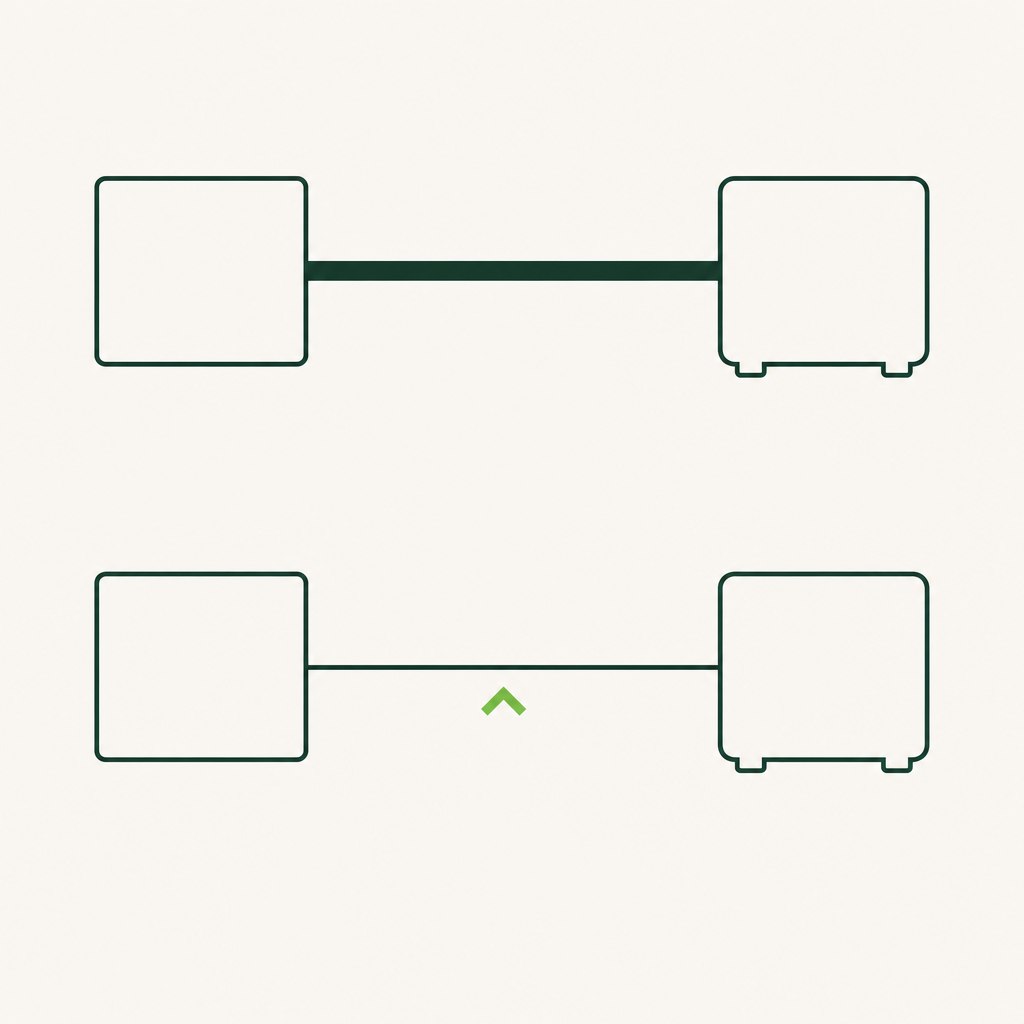
- The battery's negative terminal connects to the shunt, and to nothing else.
- Every other negative connection in the installation is made on the far side of the shunt.
- That includes the charger, the controller, the inverter, the distribution point and any chassis bond.
- The battery therefore has exactly one route to the rest of the system, and the shunt is in it.
What a partial shunt looks like from the outside
It looks like a monitor that is roughly right and occasionally absurd. The classic pattern is a battery that reads full and then collapses under load, because the charging was measured and the discharge was not, or the reverse. Another is a state of charge that climbs while the vehicle is parked, which means something is feeding the battery around the shunt.
The error is one-directional: a shunt that sees part of the current always under-counts. It never over-reports, so the reading drifts in the direction of optimism, which is the wrong direction for a battery you are trying to protect.
Voltage alone cannot tell you state of charge
A voltmeter is a useful instrument and a poor fuel gauge. Lithium iron phosphate holds its voltage almost flat across the middle of its range and then falls away quickly at the end, so a resting voltage that looks healthy can sit above a battery with very little left. Voltage tells you when you are nearly empty; it does not tell you how full you are in between.
That is the argument for counting coulombs rather than reading volts. It is also why a monitor needs to be told the battery's real capacity, and why it should be re-set to full when the battery is genuinely full.
Resynchronising, and why drift is normal
Counting has two sources of error that accumulate: the measurement itself, and the capacity figure the monitor is dividing by. Over weeks the total drifts. The fix is a periodic full charge, at which point the monitor is told that the battery is at 100 percent and the counter restarts from a known place.
A system that never reaches a genuine full charge will drift further every cycle, so if the reading becomes steadily less believable, the question to ask is when the battery last spent long enough at absorption to actually fill.
Sizing the shunt
The shunt has to carry the largest current that will pass through it without heating, and that is the sum of what can flow at once: a big inverter drawing while a charger is working. On a system built around the 12.8V 200Ah LiFePO4 battery, published at 200A of continuous discharge, the shunt is in the path of that 200A plus whatever the charging side adds, so it is not a part to size at the average load.
Its sense leads are separate thin wires to the display, and they should be fused at the battery end like any other small conductor, because they run the length of the vehicle and they are the one part of the installation nobody thinks of as carrying current.
The parts this range uses
The 12.8V 200Ah LiFePO4 battery is published at 200A of continuous discharge, and the battery cable in this range is 4 AWG pure copper with 3/8 inch (9.5 mm) ring terminals, which is what the shunt's own terminals have to accept. The inverters run from 1kW to 3kW with a peak rating twice their continuous figure, so the shunt sits in a path that sees a large current briefly and a moderate one for hours.
Frequently asked questions
- Can the shunt go on the positive side instead?
- Monitors are built for the negative side, and it is the safer side to work on. The requirement that matters is the same either way: every current in and out of the battery has to pass through it, and only one path may exist.
- Why does my state of charge climb when nothing is running?
- Something is charging the battery around the shunt, which means there is a second connection to the battery negative or a charger landing on the wrong side of it. The monitor sees the load but not that current, so the count moves the wrong way.
- How often should the monitor be reset to full?
- Whenever the battery actually reaches a full charge, and the system should be arranged so that happens regularly. If it never does, the count drifts a little further every cycle and the reading becomes steadily less useful.
- Does a shunt replace a BMS?
- No. A BMS protects the cells and can disconnect them; a shunt measures the current in and out of the whole battery. They answer different questions, and a system can reasonably have both.