RV inverter or a generator: which should you choose?
6 min read
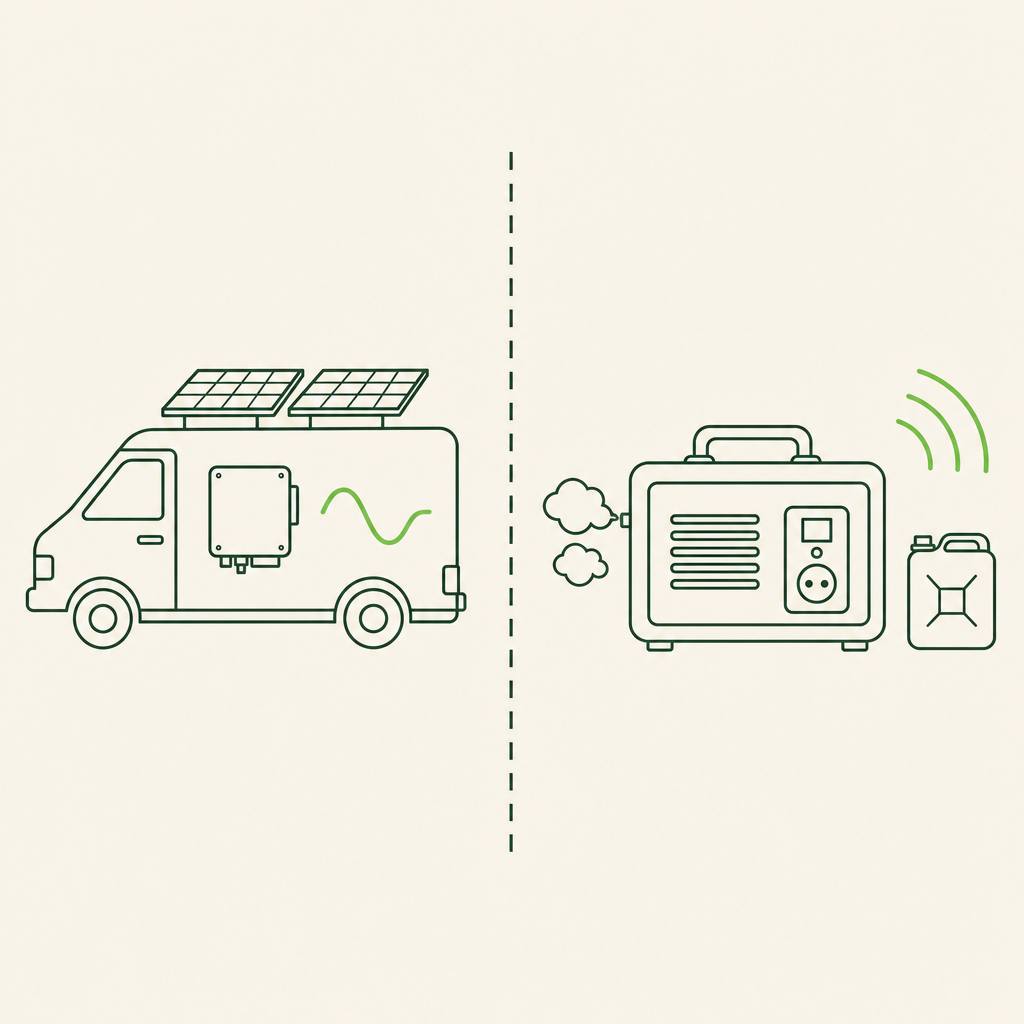
They are two ways of solving the same problem. An inverter turns energy stored in the battery into AC, so its runtime is set by the battery; a generator makes electricity from fuel, so its runtime is set by the fuel you carry. An inverter is silent, needs no fuel and no servicing schedule, and can run wherever a generator is banned — but it cannot deliver more than the battery can store and the cables can carry. A generator will hold a heavy load all afternoon, at the cost of noise, exhaust, weight, fuel storage and maintenance. Most vans that end up with both bought the inverter first.
Stored energy against generated energy
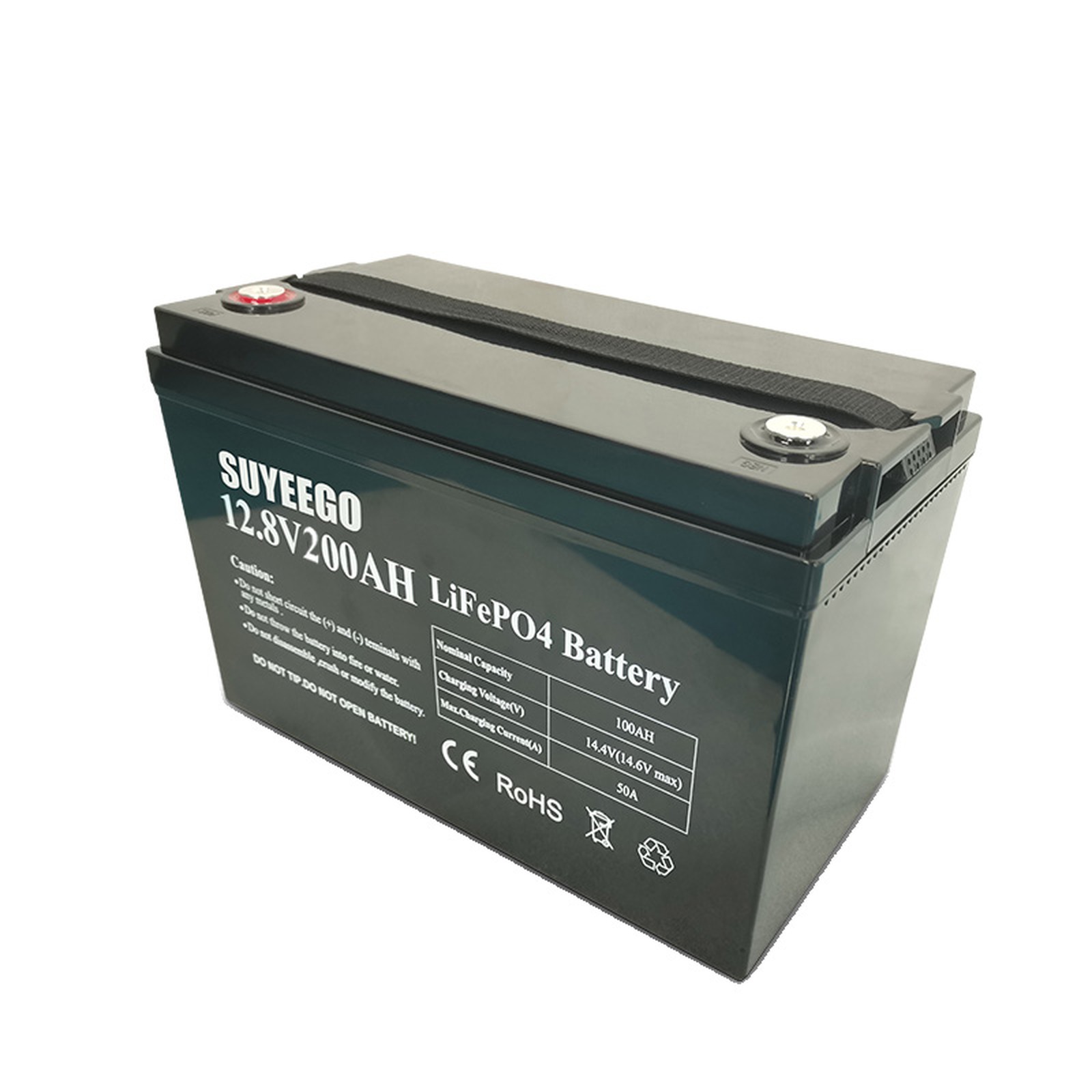
That distinction decides almost every practical question. An inverter draws from a finite store, so 2kW for four hours is about 8kWh, roughly three times the 2.56kWh held by our 12V 200Ah lithium battery, and the bank has to deliver the current while it does it. A generator does not care how large the battery is: it converts fuel at a rate, and as long as you can carry fuel it keeps going.
What the inverter wins on
- It is silent, which matters at night and on sites with a generator curfew.
- No exhaust to place and no fuel to store or carry.
- Nothing to service: no oil, no filters, no exercise schedule to remember.
- It starts instantly and draws on the same battery the solar array already charges.
- It can be installed inside the vehicle, where a generator cannot run at all.
What the generator wins on
- Sustained heavy loads, such as air conditioning through a hot afternoon, without a battery bank far larger than most vans can carry.
- Runtime that is limited by fuel rather than by storage, and refuelling takes a minute.
- It can also recharge the battery through a charger, which is how a small generator serves a system built around an inverter.
- Independence from solar yield, which matters most in winter.
Where the generator's costs sit
Purchase price is the beginning rather than the end: fuel, oil and filter changes, somewhere safe to carry fuel, and a place to put the exhaust that is not a window or an awning. Portable generators are also not quiet, and many produce a waveform that varies with load and engine speed, which sensitive electronics tolerate poorly.
The test that decides it
Write down the loads you would run away from shore power, and for how long, then convert to kilowatt-hours. If the answer is a few hundred watt-hours a day — a laptop, a coffee machine, a phone charger, a television in the evening — the inverter plus the battery you already have is the whole answer. If the answer is several kilowatt-hours a day, the honest comparison is between a battery bank you may not have the room or the payload for and a generator you will have to listen to.
What the range publishes
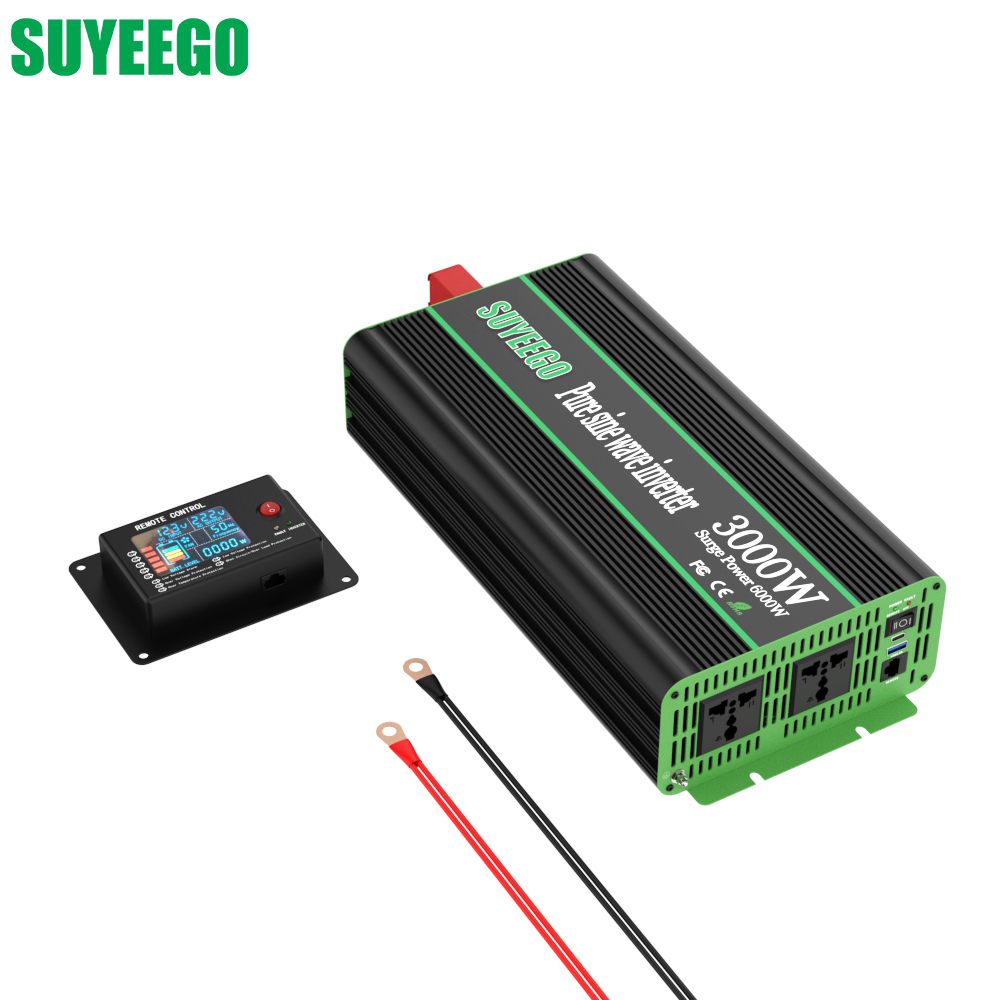
Our range contains inverters, not generators. The SYGG-FSC models run from 1kW to 3kW continuously with double that as peak, from 12V or 24V DC input, with 110V or 220V output at 50Hz or 60Hz on request, over 95% efficiency at load, and protection against overload, short circuit, overheat and reverse connection. If you already have a generator and want it to charge the battery, the missing piece is a battery charger, because the inverter on its own only converts in one direction.
Frequently asked questions
- Can an inverter replace a generator completely?
- For everything except long, heavy loads, usually yes. An inverter is limited by how much energy the battery holds and how much current it can deliver; a generator is limited by fuel. If your daily consumption is modest and the array can refill the battery, the generator has nothing to do.
- Which is cheaper to run?
- It depends on how you use it and on whether you count the battery you had to buy. Solar is free once installed but thin in winter; fuel is bought every time and servicing adds to it. Compare them over the loads you actually run rather than over a purchase price.
- Can I run the generator to charge the battery and then use the inverter?
- Yes, that is a common combination and it is how a generator serves a system otherwise built around an inverter. It needs a battery charger in the chain; the inverter alone cannot charge anything.
- Is generator power as clean as inverter power?
- Not usually. A conventional portable generator produces a waveform that moves with load and engine speed, while an inverter fed from a battery produces a stable pure sine wave. Sensitive electronics are happier on the second kind.