Do shaded panels on a van roof need DC optimisers?
6 min read
Only if the shade is persistent and you cannot move what is causing it. A shaded panel drags down the others wired in series with it, and optimisers work at panel level to stop that, but the numbers have to justify the hardware. The US National Renewable Energy Laboratory puts partial-shading losses at 10 to 20% of annual production in shaded residential systems and reports that module-level electronics recover roughly 30 to 40% of what shade takes; one manufacturer's dataset across more than 100,000 sites reports an average gain around 9%. On a van the same logic applies, but the array is two or three panels on one small roof, so the amounts are small and each optimiser is another electronic device on a surface that is hard to reach.
What shade actually does to a string
Panels wired in series carry the same current, so the string is limited by whichever panel is producing least. A shadow falling across one panel therefore reduces the output of every panel in that string, not just the shaded one. Bypass diodes inside the panel break it into sections and let the shaded section be skipped, which limits the damage, but they protect the panel rather than recovering what the shade has taken.
What module-level electronics recover
- NREL puts partial-shading losses at 10 to 20% or more of annual production in shaded residential systems.
- The same work reports that module-level power electronics recover about 30 to 40% of the power lost to partial shading.
- Across 542 systems analysed, average losses from partial shading measured 8.3%, which would have been 13% without panel-level electronics.
- One manufacturer's global dataset of over 105,000 sites reports an average 8.7% energy gain from mismatch recovery.
Why a van roof is a special case
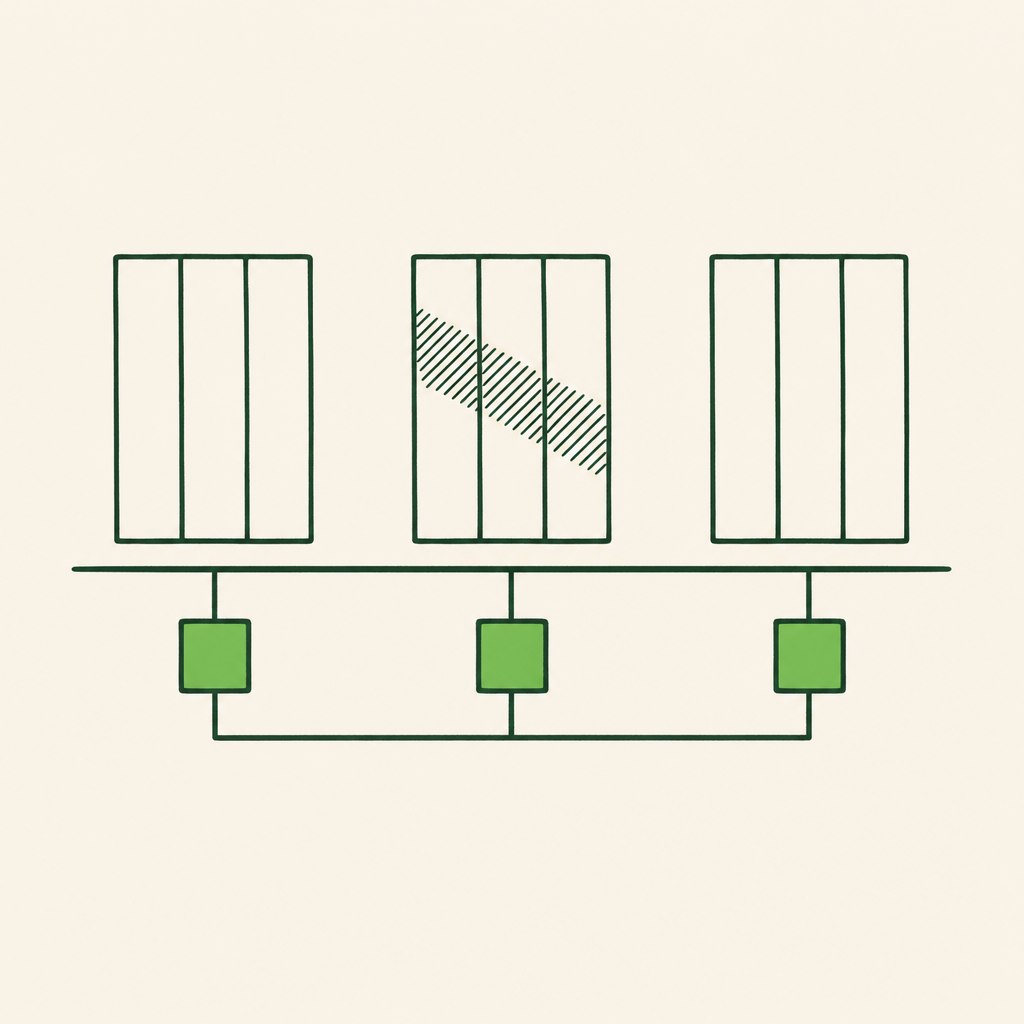
On a house, the shade often comes from a chimney or a tree that cannot be moved, and the array is large enough that the recovered energy pays for the hardware. On a van, the usual culprits are a roof vent, an aerial, a roof box or an awning rail, and the array is small. Moving the panel, moving the obstruction or accepting a slight loss is often the cheaper engineering answer, especially because an optimiser costs about as much as the module it sits under and adds electronics to a roof that is expensive to get back onto.
When they are worth fitting
- Shade that is persistent across several panels rather than a moving shadow at one hour of the day.
- An obstruction that genuinely cannot be moved, such as a permanent roof structure.
- A large van or trailer array where one compromised panel would otherwise set the limit for the whole string.
- A wish for per-panel monitoring, which is a legitimate reason in its own right.
The figures the range publishes
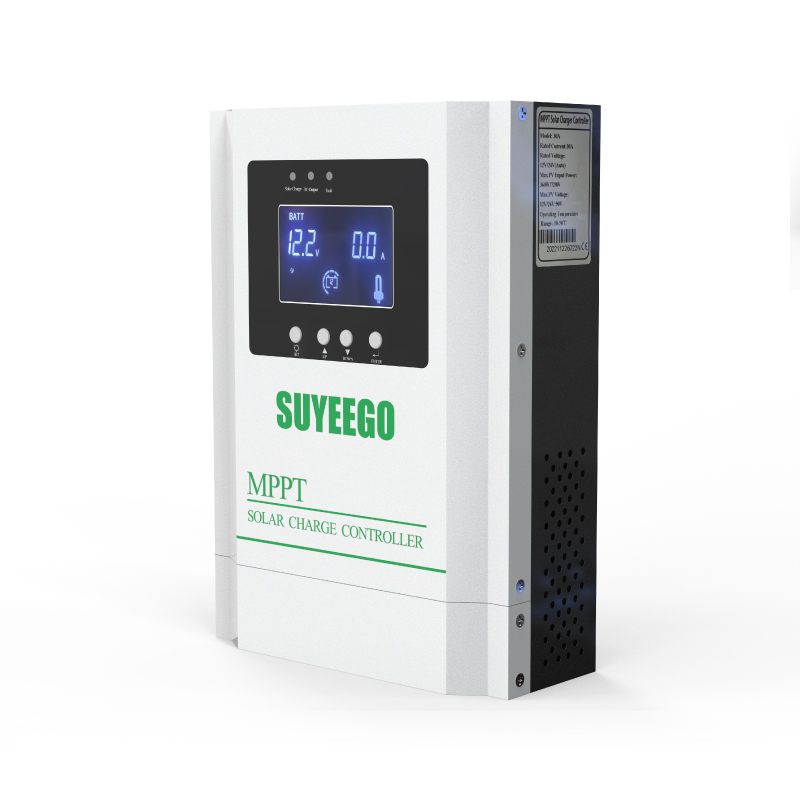
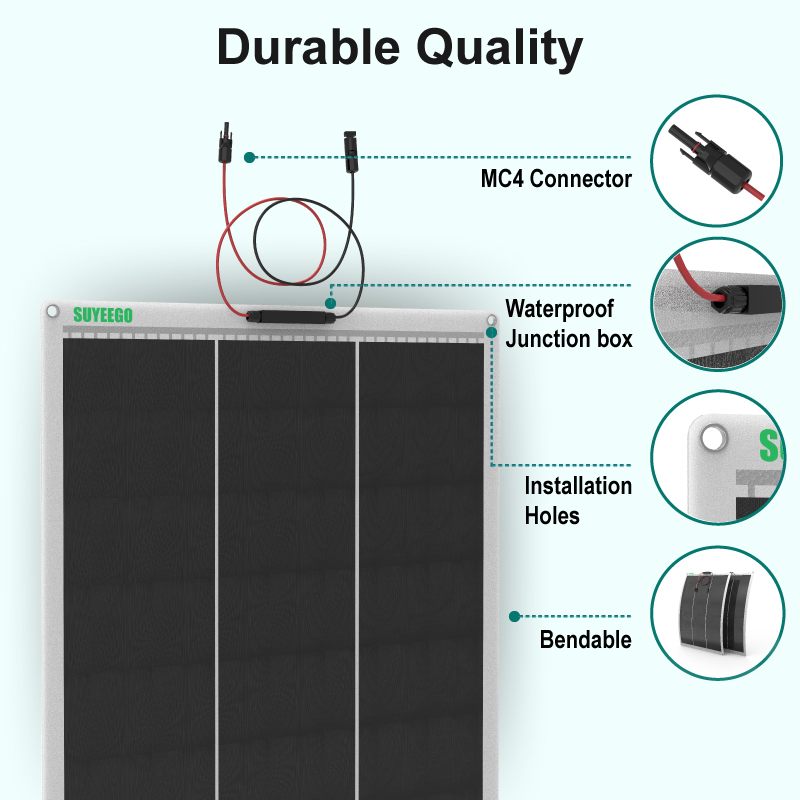
SUYEEGO's flexible panels (SYGSP-F) are built with bypass diodes and run from 50W to 230W with open-circuit voltages between 21.5V and 25.8V. The MPPT controller range accepts up to 80V or 130V of PV open-circuit voltage depending on the model, and up to 1200W of panel on a 12V bank. Those limits describe a straightforward series or parallel array; relying on bypass diodes and sensible series or parallel choices is the simpler route, and it is the one the range is designed around.
Frequently asked questions
- Can I not just add a diode?
- Panels already contain bypass diodes, and they protect the shaded section rather than recovering its output. They are a reliability measure, not an optimiser, and adding more of them does not change what the string does with the shade.
- Is it cheaper to add another panel than to add optimisers?
- Often, yes. Extra panel area produces power in every condition, while an optimiser only recovers part of what shade removes, and only when the shade is there. If the roof has space, the panel is usually the better money.
- Do optimisers work with any charge controller?
- They sit between the panels and the controller, so the two have to be chosen as a system. Some controllers have their own shade-handling behaviour, and combining two approaches can cancel out the gain you were buying.