Does a DC charger charge the starter battery too?
6 min read
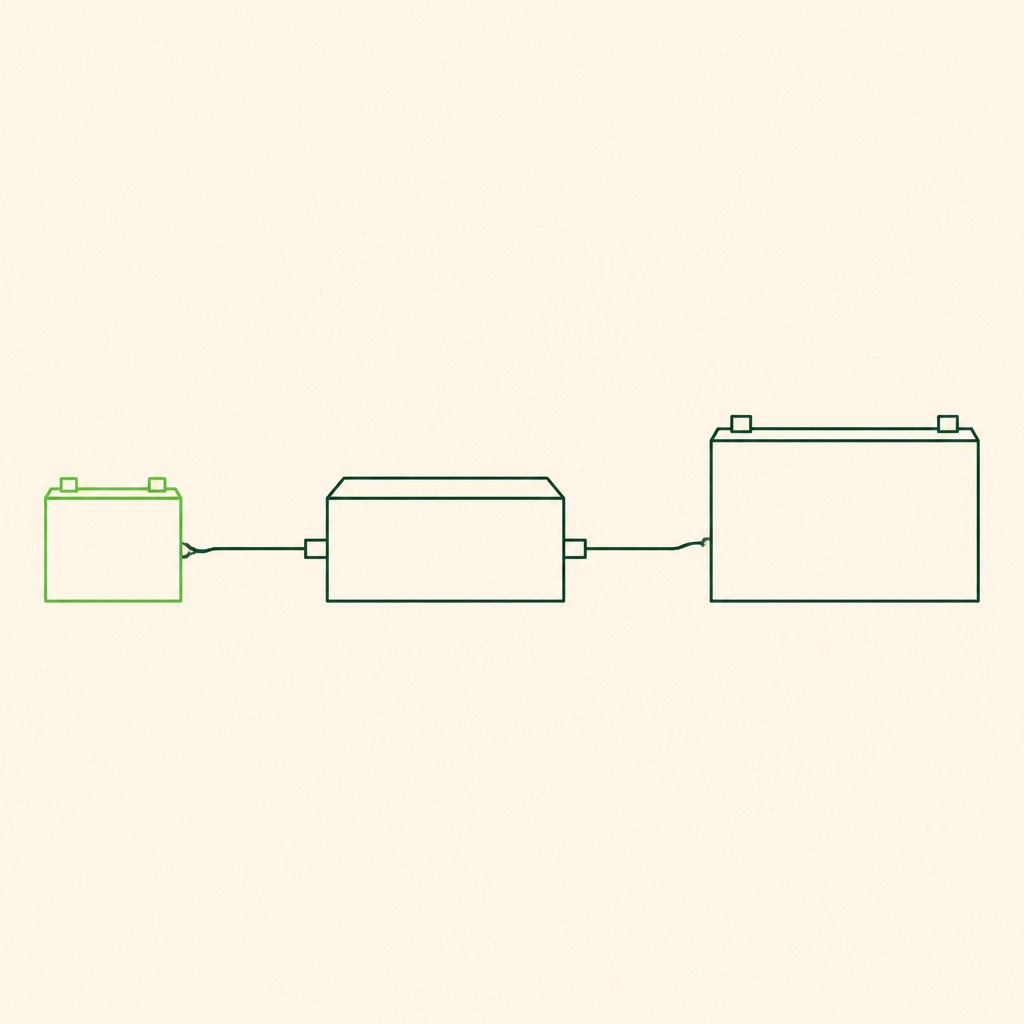
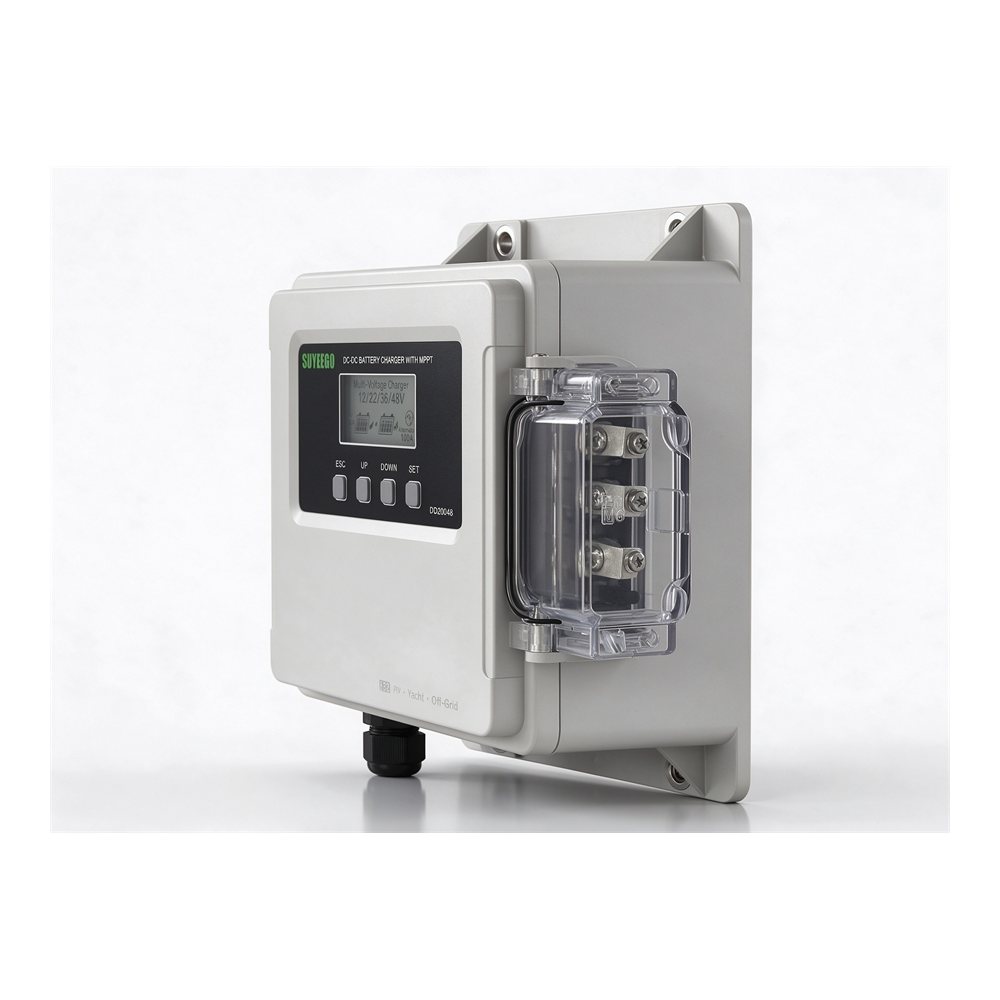
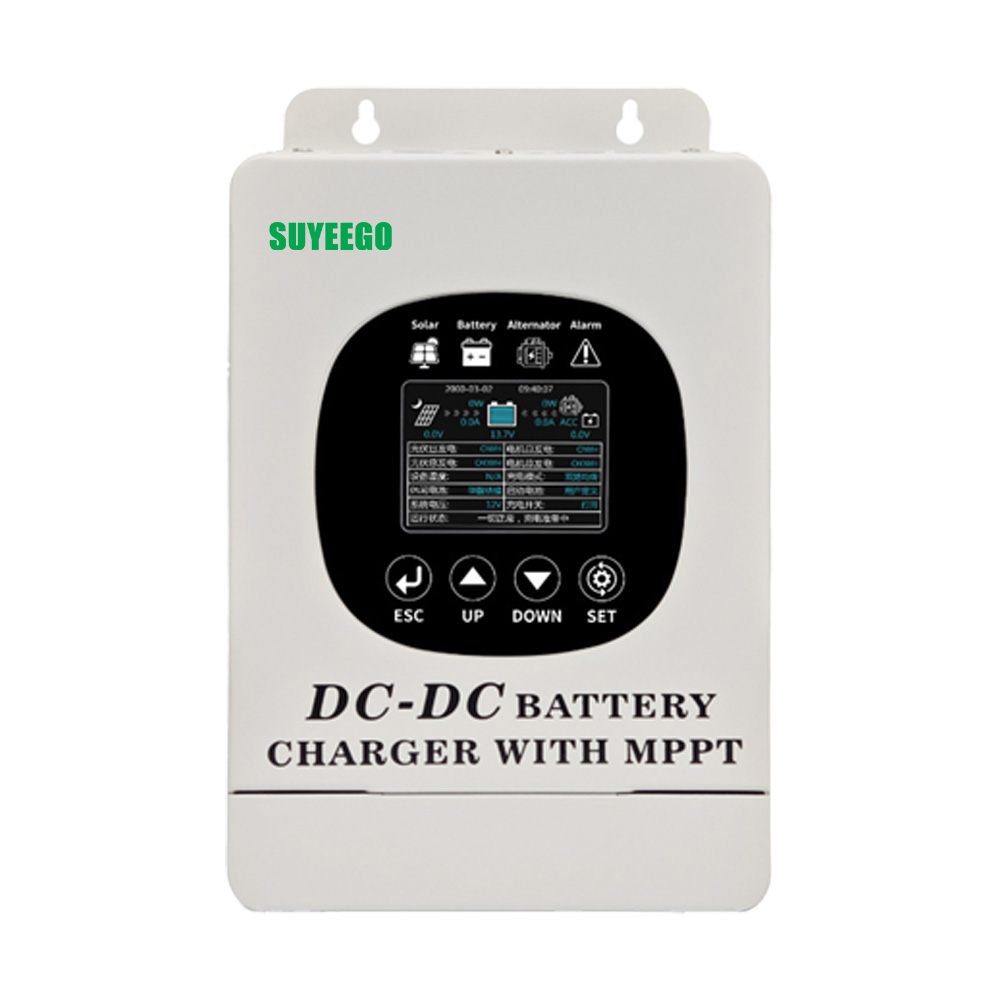
On our dual-input models, yes. The DD20048 publishes reverse charging at up to 50A, and the DD4048 and DD6048 publish a PV charging current for the starting battery of 10A or 20A, so the vehicle battery can be maintained from the same box that charges the leisure bank. The 12V 20A to 60A range publishes a single output for the leisure battery, so on that range the starter battery is not part of the job.
Two batteries, two different jobs
A campervan has a battery that starts the engine and a bank that runs the fridge, and they have different lives. The starter battery is charged by the alternator and discharged by almost nothing; the leisure bank is charged only when something charges it and is discharged every night. A charger whose only output goes to the leisure bank is doing the important half of the job, but a long winter parked up can leave the starter battery flat while the leisure bank is pampered.
What our range publishes
| Charger | Starter battery | Leisure battery |
|---|---|---|
| DD20048 | Reverse charging published at up to 50A | Up to 80A from panels and 100A from the alternator |
| DD4048 / DD6048 | PV charging current for the starting battery, 10A or 20A | 40A or 60A of charge current |
| DC-DC Battery Charger, 20A to 60A | No published output for the starter battery | 20A to 60A of charge current, three-stage |
Why the starter battery is worth maintaining
- A lead-acid starter battery that sits partly discharged sulphates, and a van that sits for months is the classic way to lose one.
- The starter battery runs the electronics, the alarm and the immobiliser even when the vehicle is parked, so it is being drained slowly all the time.
- If the vehicle has a smart alternator, the alternator may not even top it up fully on short journeys, which the DD range's published intelligent-generator window of 12V to 16V anticipates.
- A charger that can look after both batteries removes the need for a separate maintenance charger and its own mains lead.
What to check before relying on it
- Read the published figures for your model rather than assuming the feature exists across the range.
- Check which source feeds the starter battery on your model: the DD20048 publishes reverse charging, while the DD4048 and DD6048 publish a PV charging current for the starting battery, which means the panels do that work.
- Remember that maintaining a battery is not the same as charging a flat one. A starter battery that is already flat needs a proper charger on it, not a maintenance current.
- Keep an eye on the leisure bank's own charge: a charger sharing its output with a second battery has less to give the one that matters, so check the profile rather than assuming.
Frequently asked questions
- Can a DC charger keep the vehicle battery topped up while parked?
- On the models that publish it. The DD20048 publishes reverse charging at up to 50A and the DD4048 and DD6048 publish a PV charging current for the starting battery of 10A or 20A, so on those models the vehicle battery can be maintained without a separate charger.
- Will the charger flatten the starter battery?
- It should not be able to. Charging is meant to happen only with the engine running, which the DD range's external remote switch control exists to enforce. A charger left able to run with the engine off is an installation problem rather than a design one.
- Does the 12V 20A to 60A range charge both batteries?
- It publishes one output, for the leisure battery, with 20A to 60A of charge current and a three-stage profile. There is no published starter-battery output on that range, so plan a separate solution if the vehicle battery needs maintaining.
- How do I check that the starter battery is being maintained?
- Measure its voltage before and after a period parked with the panels in the sun, on a model that publishes the feature. A maintained battery holds its resting voltage; one that is not being charged slowly falls.