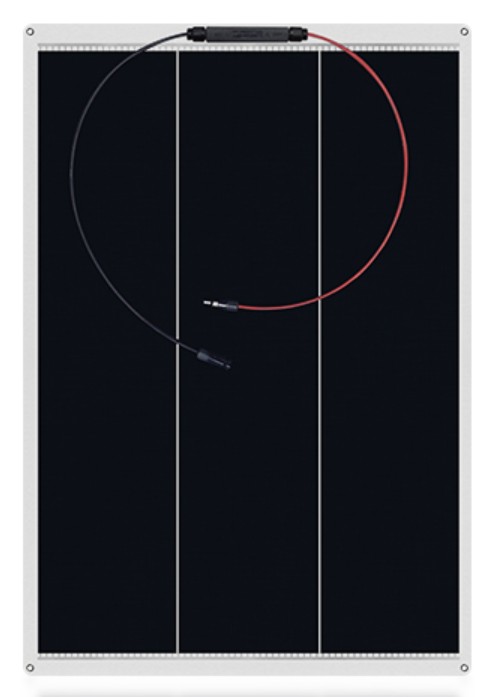
What causes hot spots in an RV solar system?
7 min read

A hot spot is a cell that has stopped generating but is still in the circuit, so current from the rest of the string is forced through it and dissipates as heat. It comes from a cracked cell, a failed interconnect, or persistent partial shading. Our panels publish bypass diodes, which give the current a path around a shaded section, but a diode cannot help a cell that has physically failed.
Why a shaded cell gets hot
Cells in a string are in series, so the same current passes through all of them. A cell in shade produces almost nothing, but the current from the lit cells still has to get through it. Instead of generating a small voltage, that cell is driven backwards and dissipates the difference as heat.
The hotter it gets, the worse it behaves, so the effect can run away in a small area. That is why a hot spot is a localised burn mark rather than a general warming, and why it is worth looking at rather than assuming shade is harmless because the output recovered.
The three routes to one
- Persistent partial shading. A roof vent, an aerial or a branch laying one narrow shadow across a panel is the classic cause, and the reason shading deserves fixing rather than tolerating.
- A cracked or failed cell. Micro-cracks from handling or from a roof that flexes can open up over time; the cell stops contributing but stays in the string.
- A failed bypass diode. Its whole job is to route current around a shaded or failed section. When it fails open, protection is gone; when it fails short, the section is out of the circuit entirely.
What the published data does and does not cover
Our flexible range publishes bypass diodes as a feature and gives a 2-year warranty. It does not publish a cell-level thermal specification, a reverse-breakdown figure, or a hot-spot test result, because those are manufacturing tests rather than product attributes.
How you notice it before it fails
The first sign is usually a fall in yield that is out of proportion to the weather, or one panel in an array underperforming its neighbours. A thermal camera makes it obvious, but a hand on the panel after it has been in sun will find a spot that is noticeably warmer than the rest.
Visual signs come later: discoloured laminate, a brown patch, or a bubble under the surface. By that point the cell has been cooking for a while, so catching it at the yield stage is worth the trouble of comparing panels against each other.
What we do not publish
We do not publish a temperature threshold for damage, a hot-spot endurance rating, or a service procedure for a panel with a suspected hot spot. A panel that shows the signs should be taken out of the array and referred back through the warranty route rather than repaired in place.
Frequently asked questions
- Is a warm panel normal?
- Yes. A panel in sun gets warm across its whole surface, and output falls a little as it does. A hot spot is different: it is a small area markedly warmer than the rest, often with a fall in output that the weather does not explain.
- Do bypass diodes prevent hot spots?
- They limit the damage a shadow can cause by giving current an alternative path around an affected section. They cannot protect a cell that has cracked or failed internally, which is the other main cause.
- Can I keep using a panel with a hot spot?
- It is not a good idea. The affected cell is dissipating energy rather than producing it, the damage tends to progress, and a panel under a 2-year warranty is better referred back than run until it fails completely.
- Does mounting the panel flat make it worse?
- Flat mounting changes what the panel collects and how well it cools, but it is not a cause of hot spots in itself. The cause is a cell that has stopped contributing while remaining in the circuit.