Are solid-state batteries coming to camper vans?
6 min read
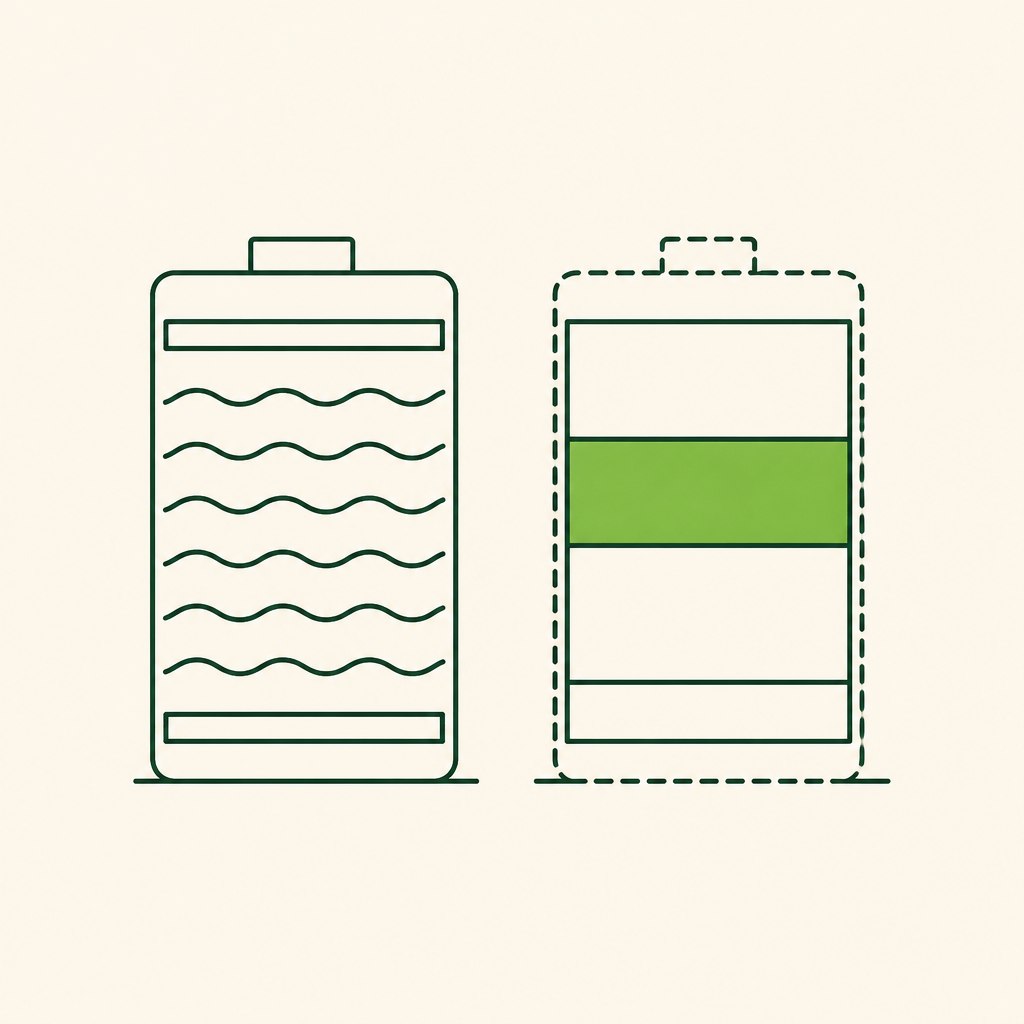
Not yet, and the first distinction that matters is semi-solid against all-solid. Cells that are only partly solid are already appearing in vehicles, while genuinely all-solid cells are still being industrialised, and the market forecasts for them describe growth across the next decade rather than the next season. For a van, the two things solid-state would change are weight and safety: more energy per kilogram, and no liquid electrolyte to leak or burn. Neither is available in a 12V leisure battery today, so the practical answer is to build with LiFePO4 and treat solid-state as something to watch rather than something to wait for.
Two different things are sold as solid-state
- Semi-solid, or semi-solid-state: the electrolyte is a gel or a paste rather than a liquid. These cells are already used in some vehicles and are the nearer-term option.
- All-solid-state: a solid electrolyte throughout, which is the version that promises the step change in energy density and safety.
- Marketing shortens both to solid-state, which is why the same word appears on very different levels of maturity.
The distinction is worth keeping, because it decides whether you are looking at a product that exists or at a roadmap. A semi-solid cell still contains a liquid-like medium that has to be managed; an all-solid cell does not, and that is the whole point of the design.
What it would change in a van
- Weight for a given capacity. Manufacturers have announced all-solid production lines with cell figures in the region of 350 to 380 Wh/kg, which is well above what a finished 12V pack achieves.
- Safety. A solid electrolyte removes the flammable liquid, which is the failure mode the industry has spent decades designing around.
- Charge behaviour. Higher tolerance of fast charging is one of the claims, though it depends on the cell and on the management system around it.
- Cost, eventually. The argument is scale rather than raw material, so it is a manufacturing problem rather than a mining one.
Where the technology actually stands
Market forecasts for solid-state batteries describe compound annual growth of roughly a third to a half through the next decade, which is the language of a technology entering industrialisation, not of one on a shelf. Production lines have been announced, some with impressive energy density figures, but an announced line is not a 12V leisure battery with a charge profile, a case, a warranty and a spare part number. In a van the deciding question is not the cell, it is all the other things around it.
What to do meanwhile
- Buy LiFePO4 for the system you are building now. It is the mature chemistry, with published cycle life and chargers that support its profile.
- Keep the compartment, the cable and the fuse sized for the battery you have, not oversized for a hypothetical one.
- Expect a future battery swap to be a system change, not a drop-in: charge profile, communication and physical shape all differ between chemistries.
- Ignore announcements of manufacturing. What matters to a van build is a product you can buy with a warranty and a datasheet.
The figures the range publishes
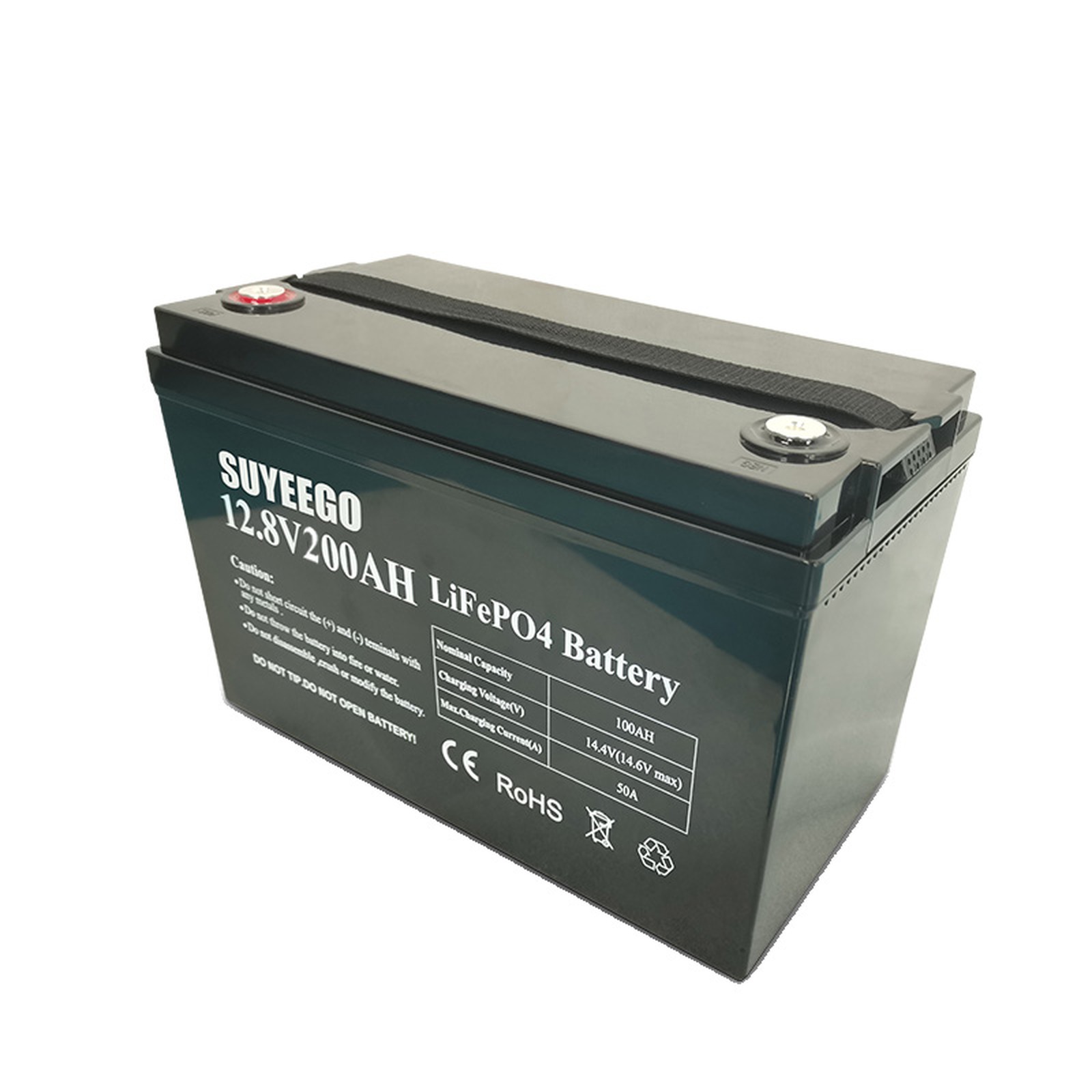
SUYEEGO's 12.8V 200Ah LiFePO4 battery stores 2.56kWh, is rated for 200A of continuous discharge and accepts up to 100A of charging current at 14.40V to 14.60V, with end-of-charge at 10A at 25 °C. It is quoted for 6000 cycles at 100% depth of discharge, measures 525 × 238 × 220 mm, weighs about 18.5 kg and publishes a charge window of 0 °C to 60 °C, with the heater available as an option for cold-weather charging. Those are the numbers a solid-state leisure battery would eventually be compared against, and the weight is the one people notice first.
Frequently asked questions
- Are solid-state batteries safer than LiFePO4?
- The solid electrolyte removes the flammable liquid, which is the main safety argument for the technology. LiFePO4 is already a thermally stable chemistry, though, so in a van the gain over a well-built LiFePO4 pack would be smaller than the headline suggests.
- When will I be able to buy one for a van?
- No reliable date exists for a 12V leisure battery. Semi-solid cells are in vehicles, all-solid production has been announced, and neither has reached the van accessory market with a warranty and a datasheet.
- Should I wait for solid-state before building my system?
- No. A LiFePO4 bank fitted now will still be working when the first leisure solid-state batteries appear, and the parts around it — cable, fuse, controller and compartment — stay the same when the battery is eventually replaced.