Does an RV inverter drain the battery when it is switched off?
6 min read
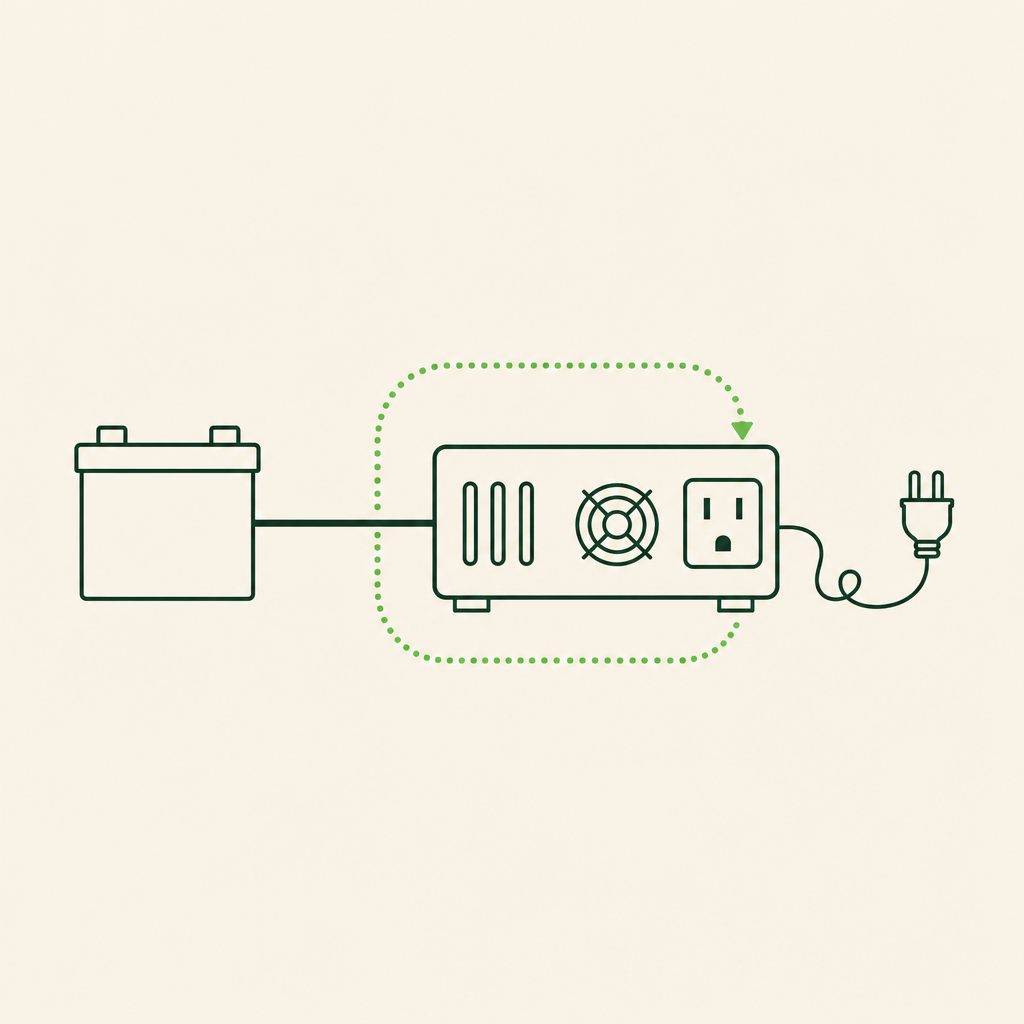
Yes, in one specific sense: an inverter that is switched on keeps drawing current for its own control electronics, display and protection circuits even when nothing is plugged into it, and that standing draw is what flattens a battery over days rather than hours. A unit that is genuinely switched off, or isolated at a battery disconnect, draws nothing. Independent RV sources commonly quote around 1.5A of standing draw for a 1kW-class unit and 3A to 4A for a 3kW-class unit, which is why whether the inverter is on matters more than what is plugged into it.
What is actually drawing the current
It is the electronics that run the conversion rather than the load. A switched-on inverter holds its control board live, drives whatever display or remote panel is fitted, and keeps its protection circuits watching the output, so current flows even at zero output. The published efficiency of this range, over 95%, describes conversion at load; it is not a statement about consumption at idle, and the two figures answer different questions.
What that costs in practice
| Standing draw | Power at 12.8V | Energy per day | Share of a 2.56kWh battery |
|---|---|---|---|
| 1.5A | about 19W | about 0.46kWh | about 18% |
| 3.5A | about 45W | about 1.08kWh | about 42% |
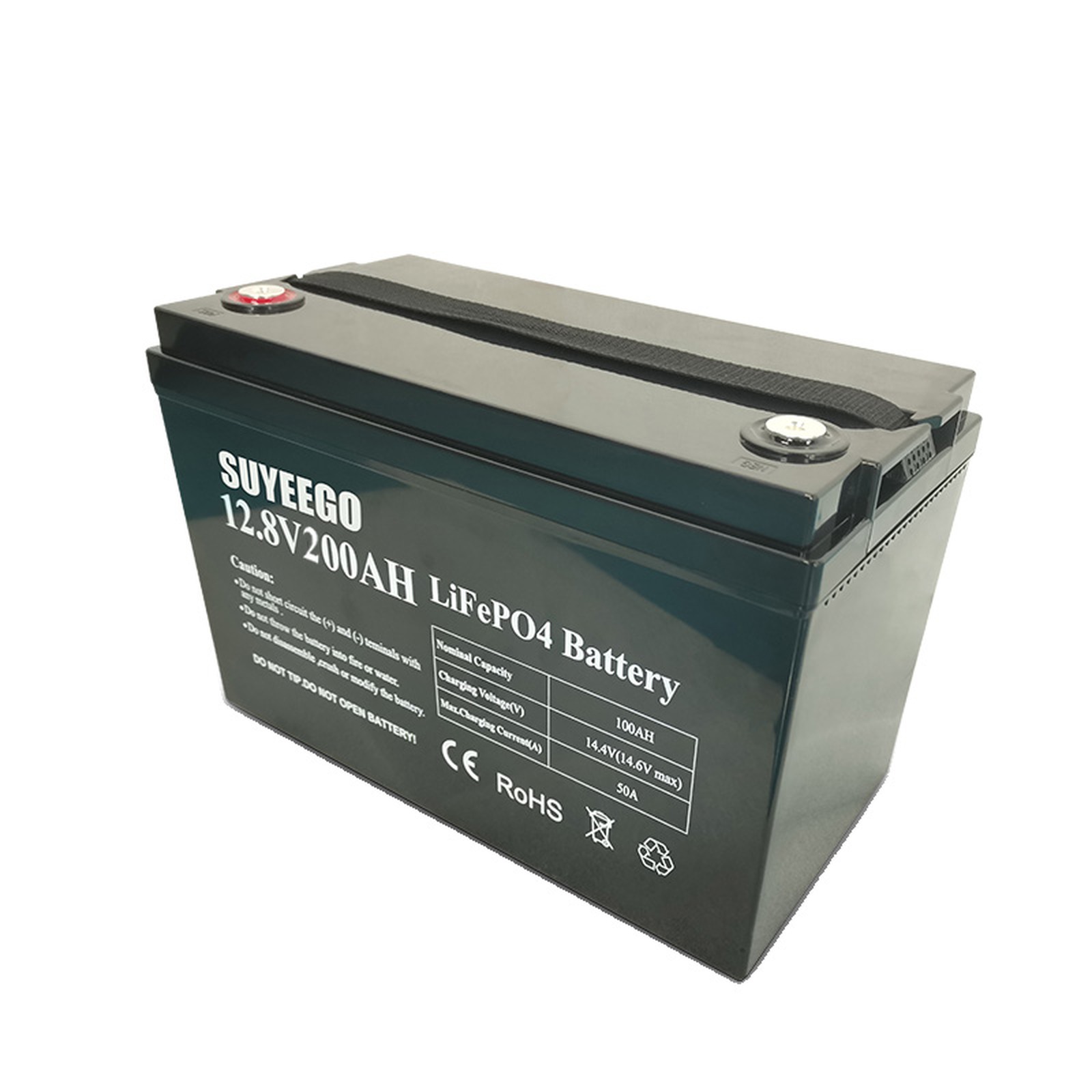
The rows use the third-party standing figures quoted above and a 12.8V lithium battery, so they illustrate the arithmetic rather than a published figure for any of our models. The point they make is the one that matters: a standing draw measured in watts becomes a daily cost in kilowatt-hours, and 2.56kWh is the capacity of our 12V 200Ah LiFePO4 battery, which is enough headroom for the cost to be easy to overlook for a week and impossible to ignore for a month.
Why it matters more in winter
In summer a solar array refills the battery long before the standing draw matters. In winter the daily harvest falls to a fraction of its summer value at the same latitude while the standing draw does not fall at all, so an inverter that was harmless in July can be the difference between a full battery in the morning and a half-empty one in February. The same applies to a van in storage, where nothing is charging and the draw continues.
Not the same as leaving a load connected
The standing draw is the inverter's own consumption. Anything still drawing power on the AC side sits on top of it: a television on standby, a laptop charger left plugged in, or a device running from the inverter's own USB port. When you are hunting a battery that empties faster than the numbers say it should, both of these have to be counted.
How to stop it
- Switch the inverter off at its own switch when it is not needed. That is the only thing that removes the draw completely.
- Use the remote control where one is fitted, so the unit can be switched off without reaching into a locker. This range offers a remote controller with a colour screen.
- Isolate the DC side at a battery disconnect for long storage rather than trusting a standby state to be a switched-off state.
- If the inverter has to stay on, size the battery and the array for the standing draw as well as for the loads: the draw runs for 24 hours a day and the loads rarely do.
- Do not use the low-voltage cut-off as a switch. It stops the inverter at 10V on a 12V bank and 20V on a 24V bank, which protects the equipment but leaves the battery deeply discharged.
What the range publishes
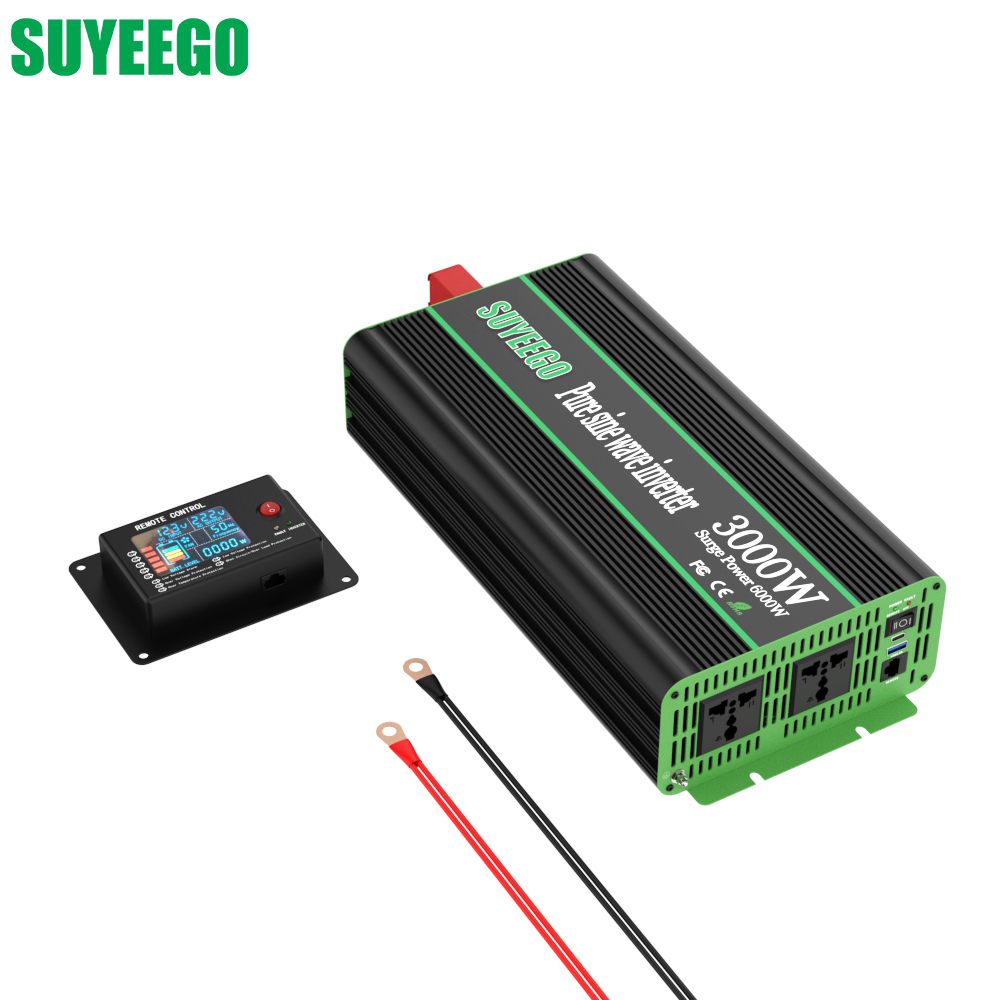
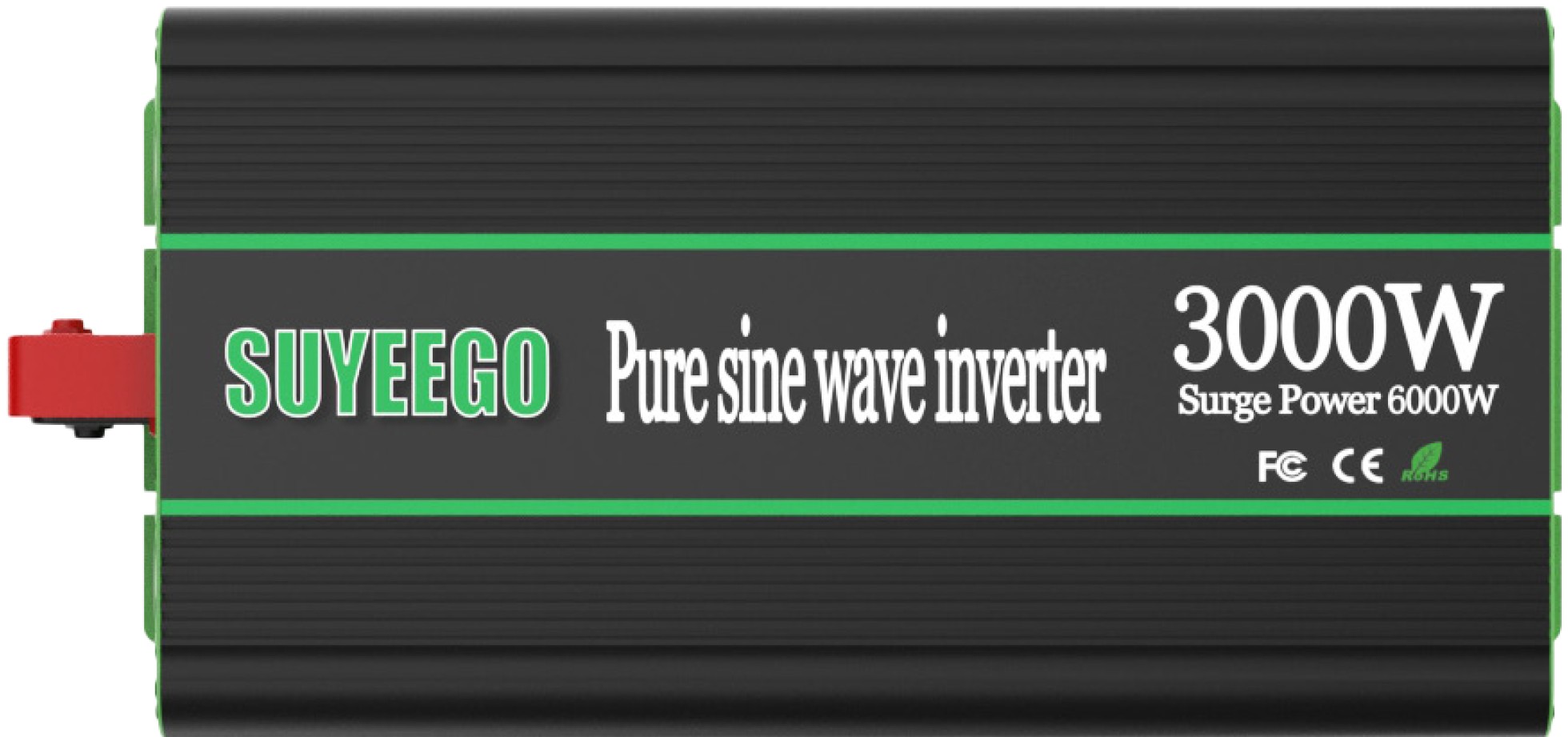
The SYGG-FSC range is a straight inverter rather than an inverter-charger: 1kW to 3kW of continuous output with double that as peak, 12V or 24V DC input, 110V or 220V AC output at 50Hz or 60Hz on request, over 95% efficiency at load, a low-voltage alarm at 10.5V and cut-off at 10V on a 12V bank, and protection against overload, short circuit, overheat and reverse connection. A remote controller is available, and the models carry CE, FCC and RoHS certification.
Frequently asked questions
- Does an inverter use power when nothing is plugged in?
- Yes, if it is switched on. The control electronics, the display and the protection circuits all draw a small standing current, so the unit is consuming something at zero output. Switch it off at the unit or isolate it, and the draw stops.
- Will an inverter flatten a battery overnight?
- Rarely overnight from the standing draw alone, unless the bank is small. A couple of amps of standing draw takes roughly 0.5kWh a day, about a fifth of a 2.56kWh battery. Add a load that is left running and the picture changes quickly.
- Is it better to switch the inverter off at night?
- If nothing needs AC overnight, yes. The inverter restarts in seconds, and the energy saved over a season is often the difference between covering your daily consumption and not covering it.
- Does the low-voltage cut-off protect the battery from being drained?
- It stops the inverter at 10V on a 12V bank, which protects the equipment connected to it, but it does so by allowing a deep discharge. Treat it as a backstop rather than a battery management strategy.