Where should a solar controller or charger be mounted?
6 min read
In a dry, ventilated space, as close to the battery as the cable run allows. Every one of these devices converts power and therefore produces heat, and the specification that decides where it can live is not only its operating temperature but its protection grade: an IP32 enclosure is protected against fingers and light water spray rather than against being soaked, so it belongs in the living space or a dry locker rather than an open external compartment. Keep the high-current cable runs short, give the case air above and below it so heat can rise out of the space, and keep it out of the battery box, where heat and corrosive gas both work against it.
Three things decide the location
- Heat. These devices run warm under load, and the space they are in has to let that heat out. A sealed locker with no vents is the single most common mistake.
- Water. The protection grade on the specification sheet is the honest answer to whether a compartment is suitable. It is not the same as being weatherproof.
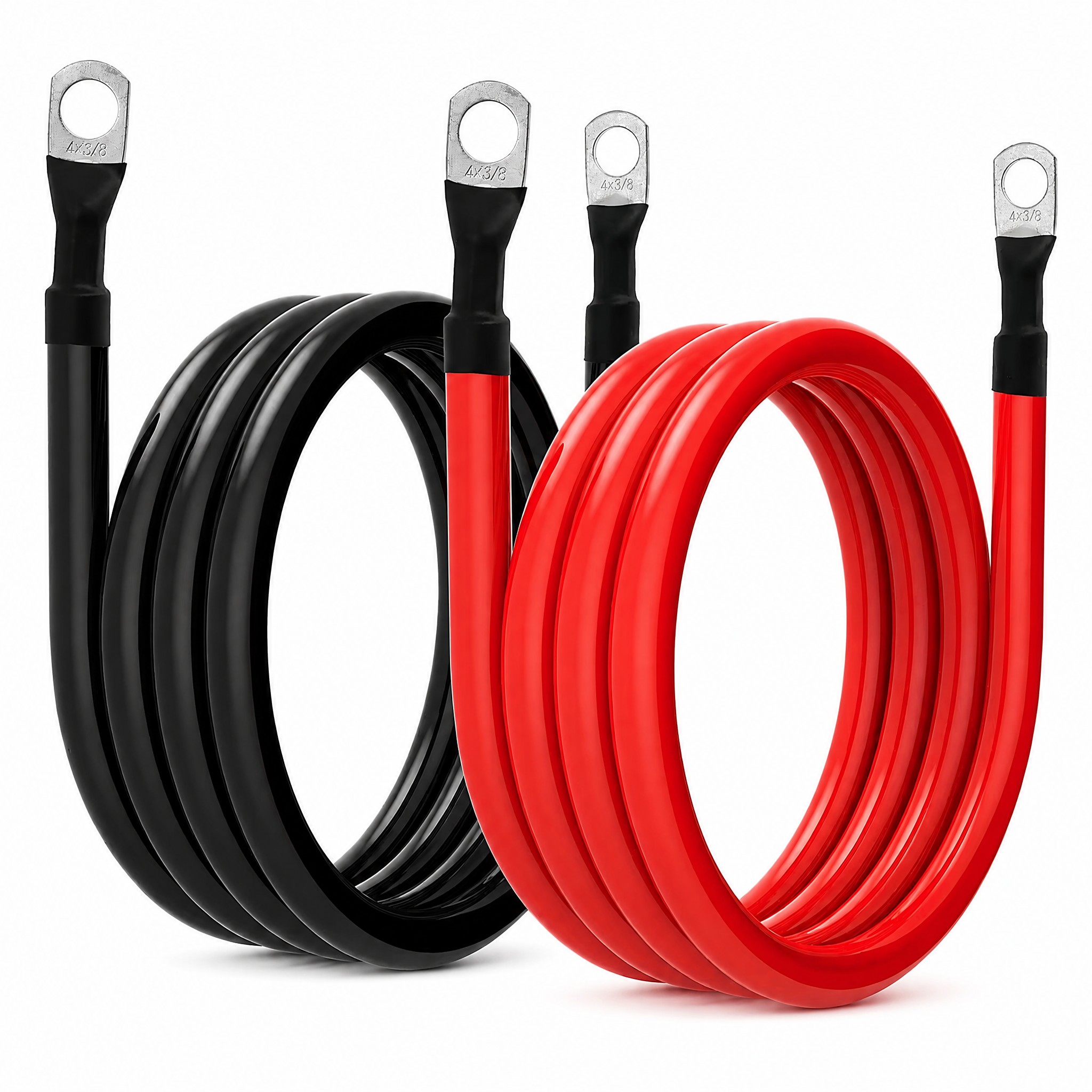
- Cable length. The battery side carries the highest current, so it suffers most from a long run, and the array side is limited by the voltage drop the controller can tolerate before it starts losing harvest (see the cable and fuse guide).
What the ratings on the box actually mean
Two figures in the specification decide where a device can be fitted, and they are easy to read past. The first is the operating temperature range, which says what the unit can work in, not what it can be stored in. The second is the protection grade, which says what the enclosure keeps out.
| Device | Protection grade | Operating temperature |
|---|---|---|
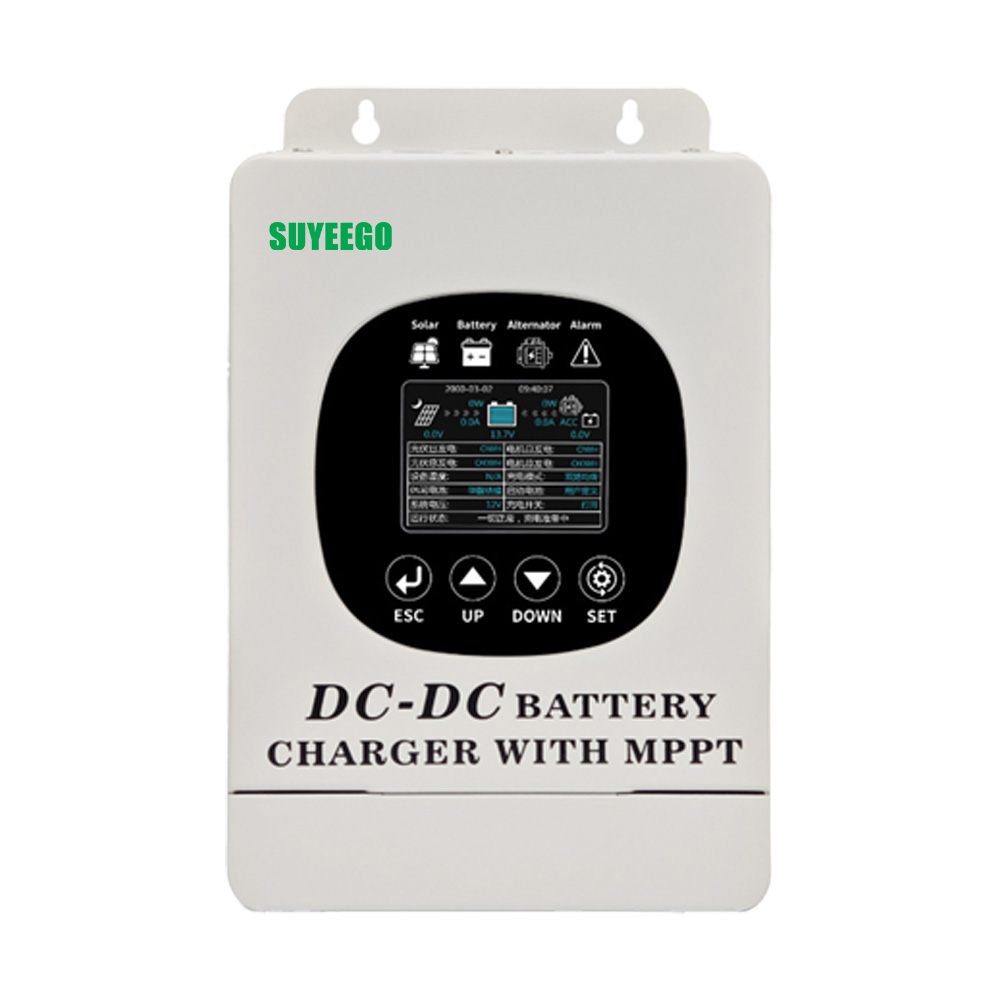
| DC-DC charger with MPPT, DD4048 / DD6048 | IP32 | −20 °C to 65 °C |
| DC-DC Battery Charger, DC-DC range | Not declared on the specification | −20 °C to 50 °C |
IP32 is a modest rating: protection against solid objects larger than 2.5 mm and against water falling as a light spray. It is enough for a locker inside a vehicle and not enough for a compartment open to the road or to rain. Where the specification sheet does not declare a grade at all, the honest reading is that the unit is for a dry interior space, and it should be treated that way rather than fitted into a wet locker and hoped for.
Ventilation goes low to high
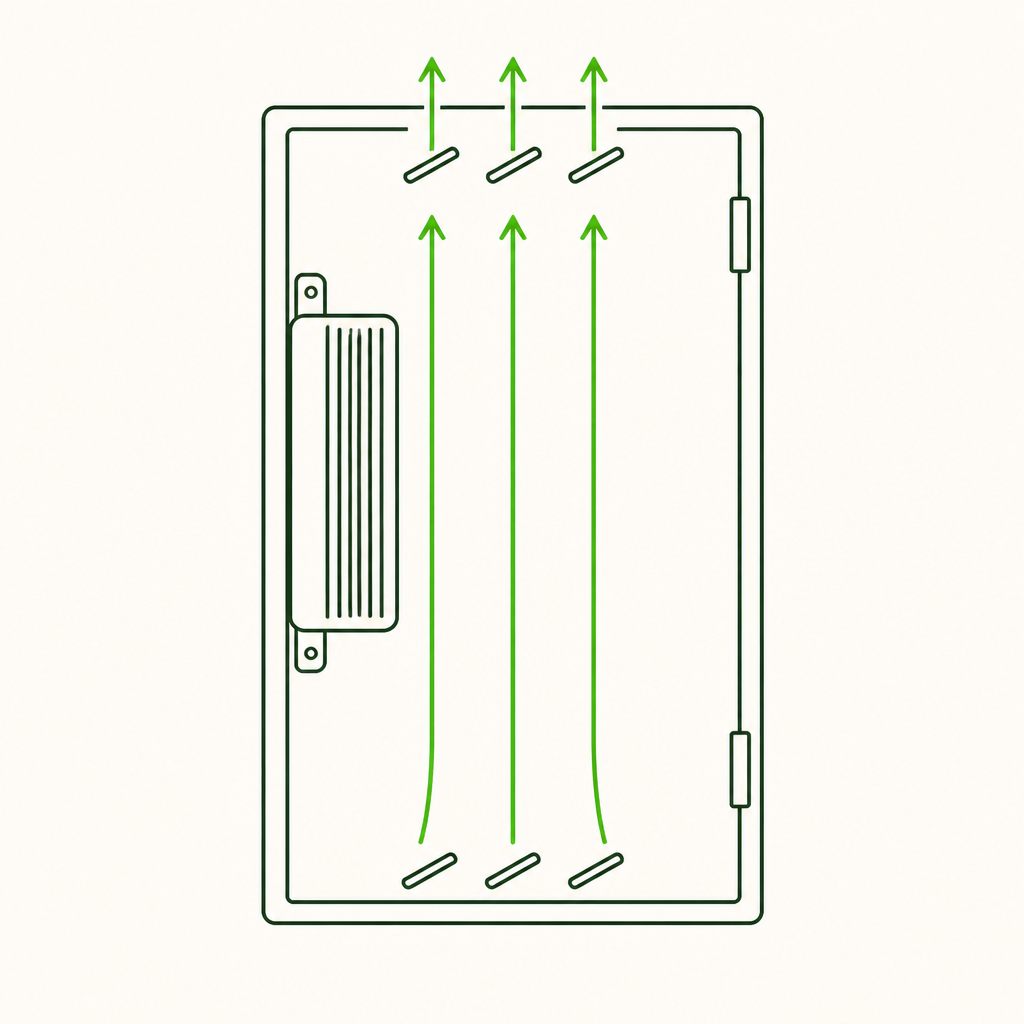
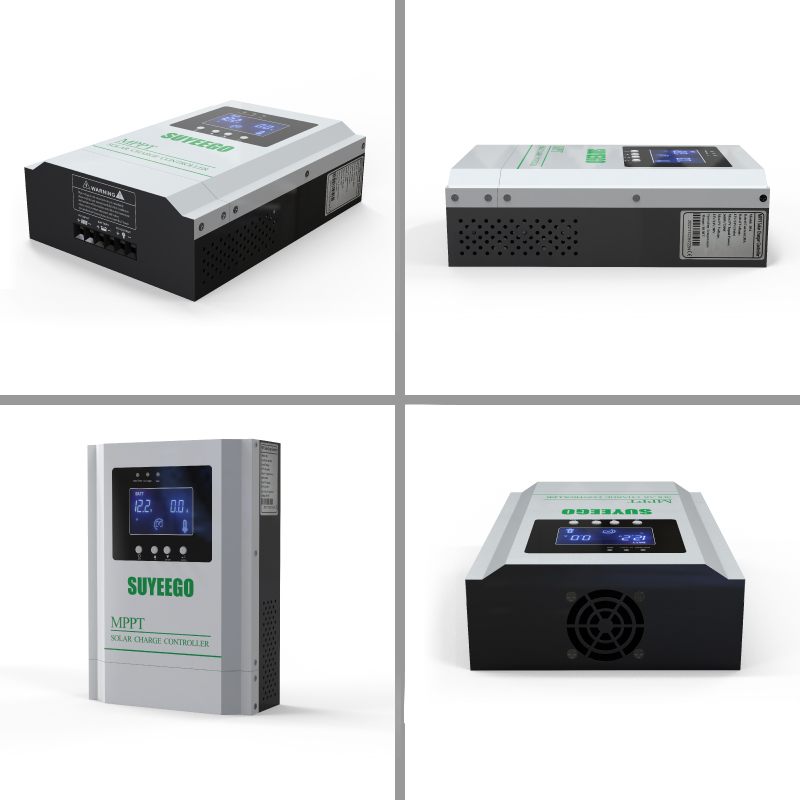
Heat rises, so the useful arrangement is an opening low in the compartment and a second one high, forming a chimney across the device. Two small vents in the right places beat one large vent in the wrong place, and neither needs a fan.
- Mount the unit on a flat, solid surface with the cooling surfaces clear of anything soft that would blanket them.
- Leave a hand's width of space above and below the case rather than boxing it in against a shelf.
- Do not mount two heat-producing devices face to face in the same small space; the second one gets the first one's hot air.
- Keep the ribs and fins clean. Dust on a case is insulation.
Where not to fit it
- Inside the battery box. A lead-acid battery vents corrosive gas, and the space is deliberately enclosed and often the hottest place in the vehicle.
- In a closed storage locker with no vent at all, however tidy the cable run looks.
- In an external compartment exposed to spray, on a unit whose grade is IP32 or undeclared.
- Anywhere the cable can chafe against a panel edge or a metal lip, since a chafed battery cable is a fuse waiting to happen.
- On a surface that will vibrate or flex, where the fixings will work loose over a season.
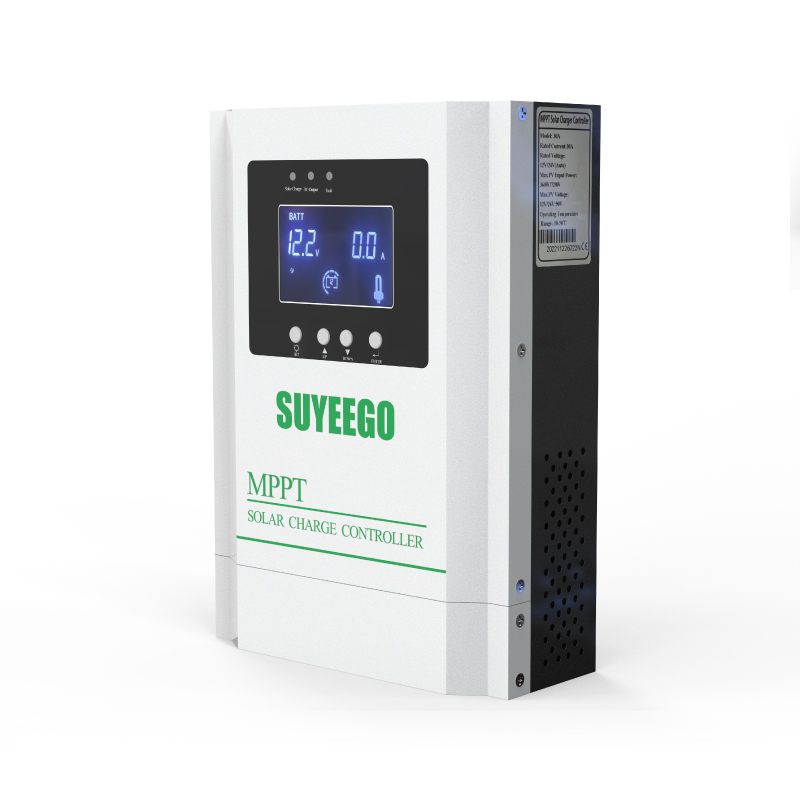
For reference, the dual input charger measures 218.1 × 154 × 72 mm with 80 mm mounting hole spacing, and the DC-DC charger range measures between 170 × 146 × 83 mm and 242 × 146 × 83 mm depending on the model, weighing 1.19 kg to 1.87 kg. Both are rated down to −20 °C at the cold end, which is comfortable for a vehicle interior and a reminder that the space, not the device, is usually what decides whether an installation survives the summer.
SUYEEGO publishes the protection grade and the temperature window for its controllers and chargers precisely so this decision can be made from the specification rather than by trial. Send us a photograph of the space you intend to use and we will say whether it is a sensible home for the unit.
Frequently asked questions
- Can a solar charge controller be mounted outside?
- Only if the enclosure is rated for it. IP32, which is what the dual input charger carries, covers light spray and not rain, so it belongs in a dry interior space.
- Does a solar controller need ventilation?
- Yes. It converts power and sheds heat while doing it, and a sealed locker runs it hotter than its temperature rating assumes, which shortens its life quietly rather than failing outright.
- How far can the controller be from the battery?
- As short as practical. The battery side carries the highest current, so a long run costs voltage and heat; the cable should be sized from the current and the length rather than chosen by habit.
- Can I mount a controller in the battery box?
- It is best avoided. Lead-acid batteries vent corrosive gas, and the box is usually enclosed and hot, which is the opposite of what the controller needs.