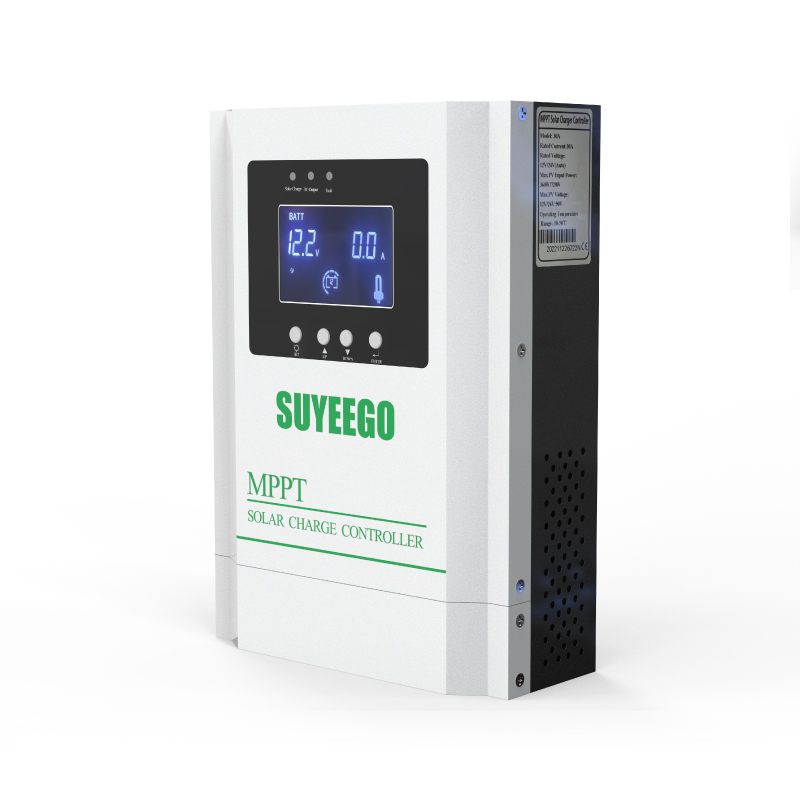
Is a DC charger the same as a solar charge controller?
6 min read
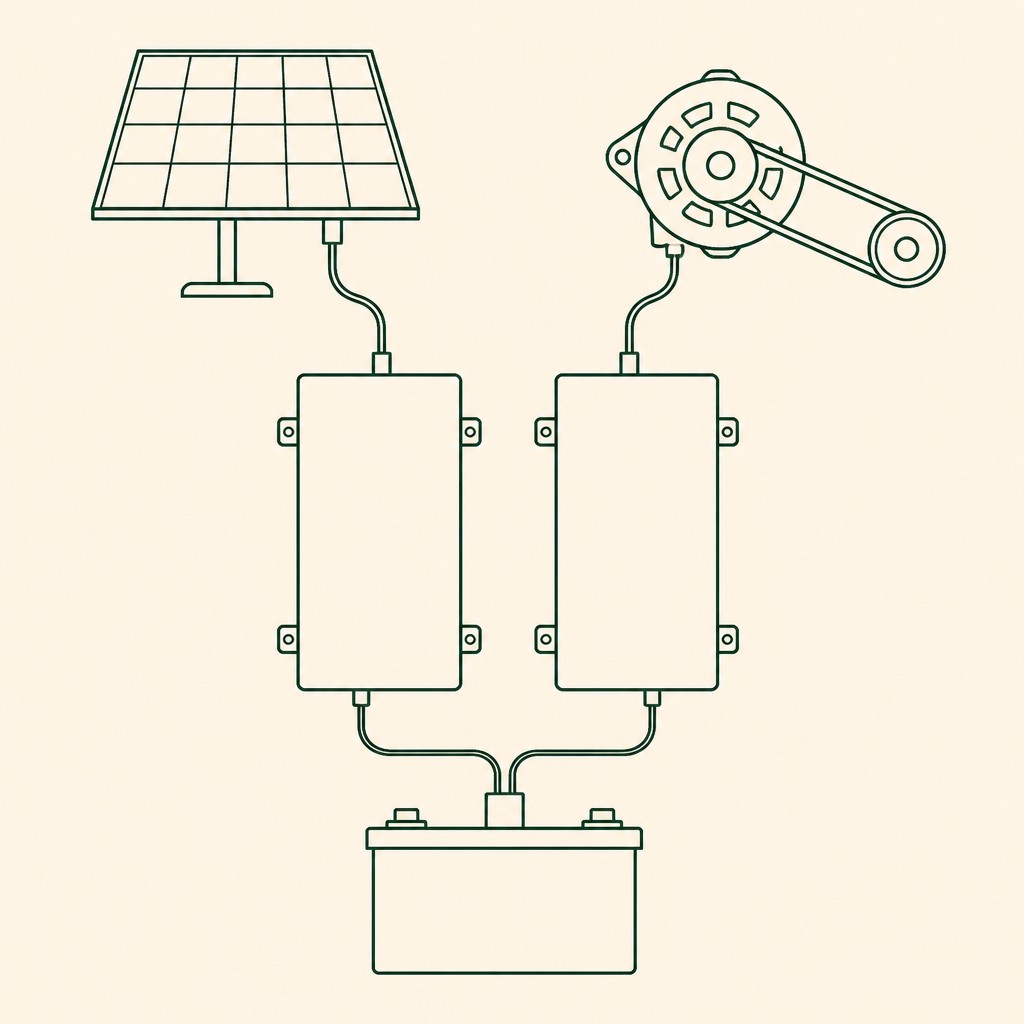
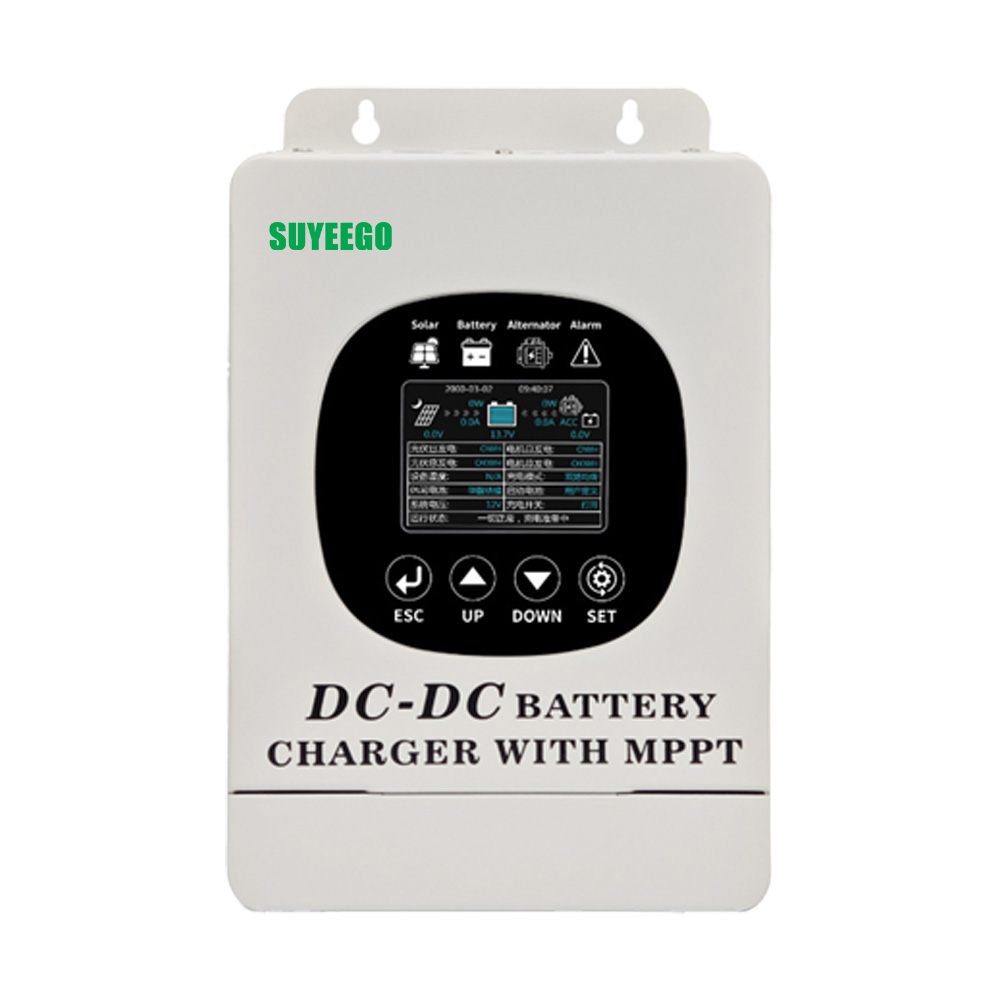
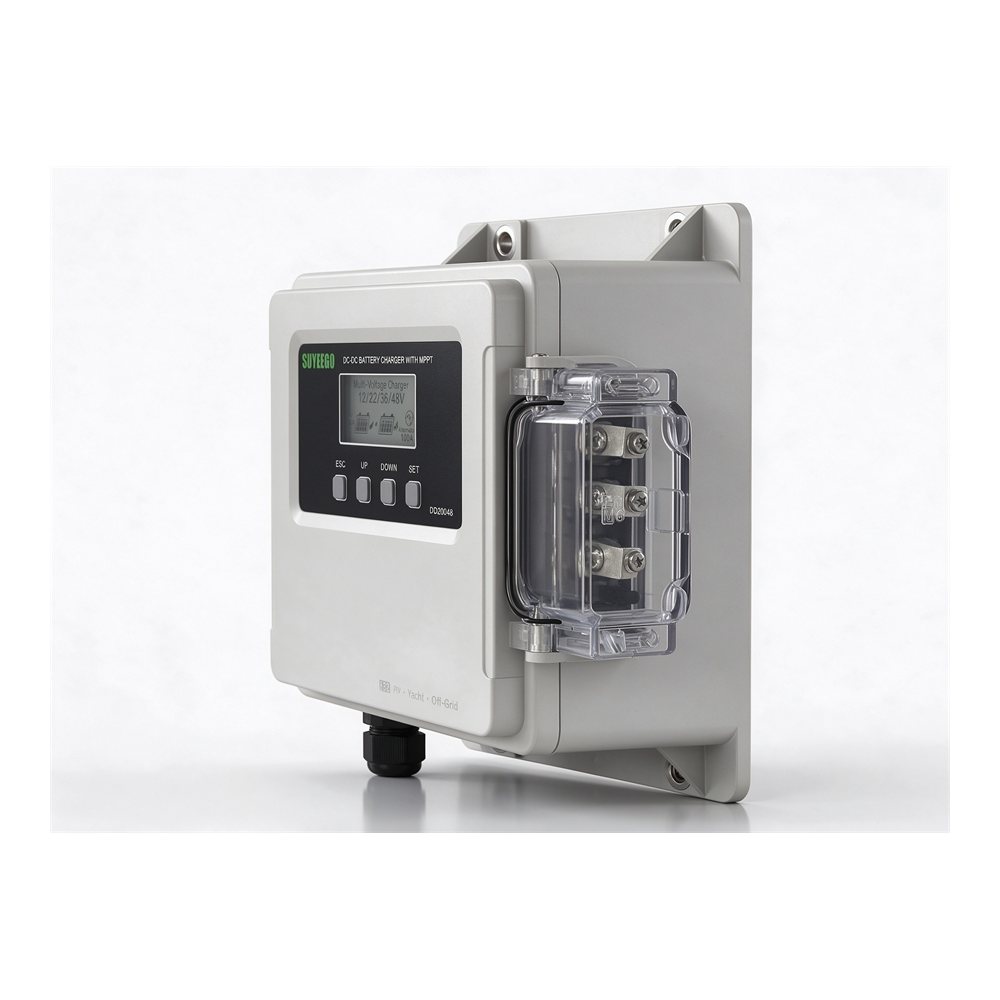
No, though they do the same job. A solar charge controller takes its energy from panels and tracks them; a DC charger takes its energy from the alternator and converts the voltage. Both apply a proper charge profile to the leisure battery, and a dual-input charger such as our DD range does both in one box, publishing a PV input with MPPT alongside a generator input.
Two sources, one destination
The battery does not care where the electrons came from; it cares about the voltage and current profile it is given. That is why the two devices look similar from the battery's side of the circuit and completely different from the source's side. A panel needs tracking, because its output collapses under load. An alternator needs conversion, because it is regulated and may sit at a voltage that will not charge anything.
What each one is built around
| Solar charge controller | DC charger | |
|---|---|---|
| Energy source | Panels, so it works only in daylight | Alternator, so it works only with the engine |
| Main job | Track the array's maximum power point | Convert the input up or down to a charge voltage |
| Published on our DD range | Voltage reduction MPPT, over 99% tracking, 80V maximum panel voltage | Boost, buck and boost-buck conversion, up to 80V input |
| Output | A charge profile for the leisure battery | A charge profile for the leisure battery |
When one box does both
- A vehicle with panels on the roof and an alternator underneath has two sources, and the DD range is built for both at once: 20A or 40A of panel current on the DD4048 and DD6048, and up to 80A on the DD20048.
- The two inputs do not fight. The charger decides where the energy comes from, and the solar side stops at night on its own, which the DD range publishes as night anti-reverse charging protection.
- A dual-input unit can also look after the starter battery: the DD range publishes a PV charging current for the starting battery of 10A or 20A.
- The advantage is one box, one set of terminations and one place to look when something stops working.
Choosing between them
- Panels only, no alternator charging wanted: a solar charge controller is the whole job.
- Alternator only: a DC charger, and note that the 12V 20A to 60A range is published as an alternator charger with no PV input at all, so it cannot take panels.
- Both sources, or a plan to add panels later: a dual-input charger saves the second installation.
- Check the voltage windows before buying either. The DD range publishes an 80V ceiling on the panel input and an 80V, 20A limit on the generator input, and both have to suit your system.
Frequently asked questions
- Can a solar charge controller charge from the alternator?
- Not the ones we publish. A solar charge controller's input is designed around a panel, and its tracking expects a source whose voltage moves with load. An alternator presents a regulated voltage instead, which is the job a DC charger's conversion stage is built for.
- Do I need both a DC charger and a solar controller?
- Not necessarily. If you have panels and an alternator, a dual-input charger covers both. Two separate units work as well, but they are two installations, two sets of fuses and two places to look when charging stops.
- Which one charges faster?
- It depends on the source rather than the device. A charger's output is limited by what its input can supply, which is why the DD range publishes a maximum generator input current of 20A on the alternator side while the panel input can go higher when the sun is out.
- Can the charger charge both batteries at once?
- The DD range publishes a PV charging current for the starting battery of 10A or 20A, so the starter battery can be maintained from the panels. The main charge current is reserved for the leisure battery, which is the one that gets discharged.