Can a DC DC charger be used on a 24 V system?
6 min read
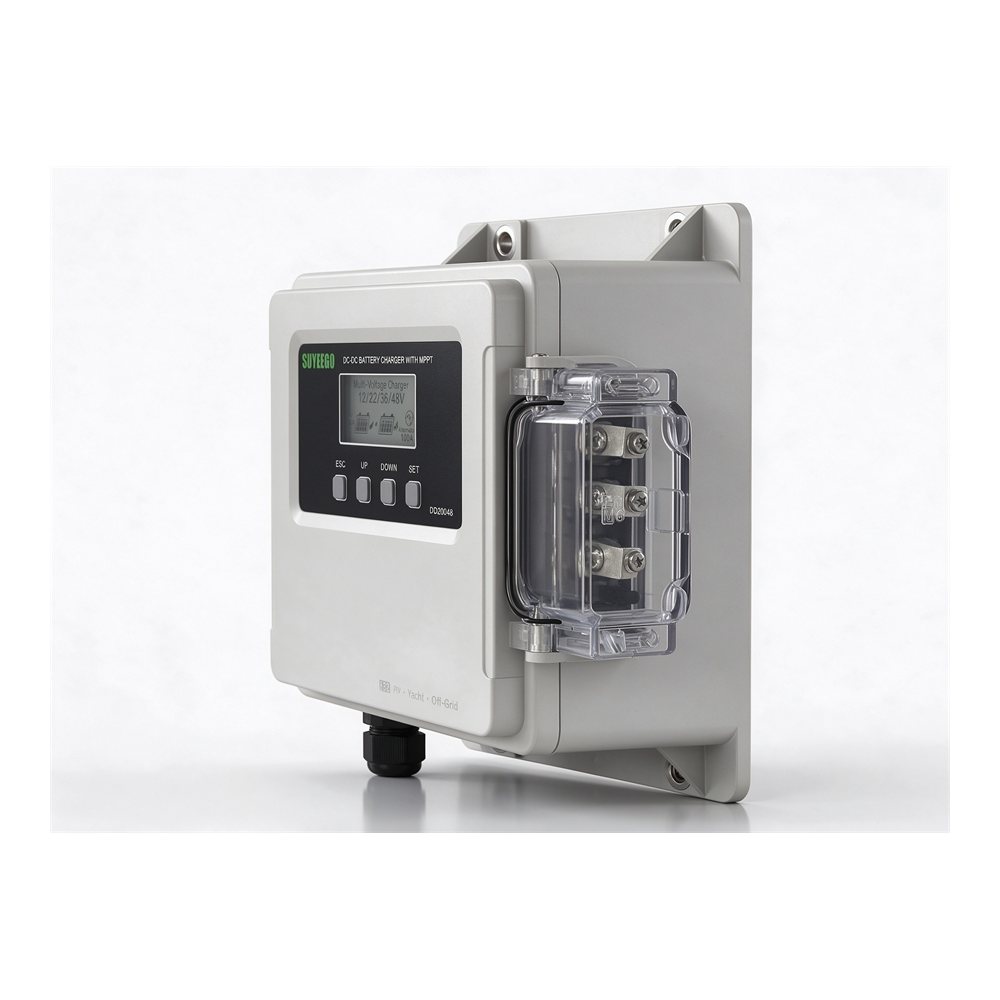
It depends which range. The 12V range publishes a nominal input of 12V with an input window of 8V to 16V, so it is a 12V vehicle product. The DD range publishes generator system voltages and leisure battery voltages of 12V, 24V, 36V and 48V, with a leisure battery voltage range of 9V to 60V, so a 24V system is squarely within what it is built for.
Two ranges, two answers
The two ranges are not distinguished by output current so much as by which systems they are designed to sit in. Getting the range right is the first decision and the one that matters most, because no amount of correct wiring makes a 12V product suit a 24V vehicle.
| 12V range | DD range | |
|---|---|---|
| Nominal input | 12V | 12V / 24V / 36V / 48V |
| Input window | 8V to 16V | generator up to 80V |
| Battery side | 12V | 9V to 60V |
| Charge current | 20A / 30A / 40A / 60A | 40A / 60A |
What the DD range publishes for the vehicle side
The generator figures are published in two sets, because modern vehicles do not hold a single charging voltage. A traditional generator is published across 13.2V to 16V on a 12V system, 26.4V to 32V on 24V, 39.6V to 48V on 36V and 52.8V to 64V on 48V. The intelligent generator window is published slightly wider at the bottom and top of each band, from 12V to 16V on a 12V system up to 48V to 64V on a 48V one.
On the battery side the range publishes a maximum charge current of 40A or 60A, and a list of battery types covering sealing, colloid, water addition, lithium iron phosphate and ternary lithium. A 24V bank built from any of those is within the published description.
Converting up, down, or straight through
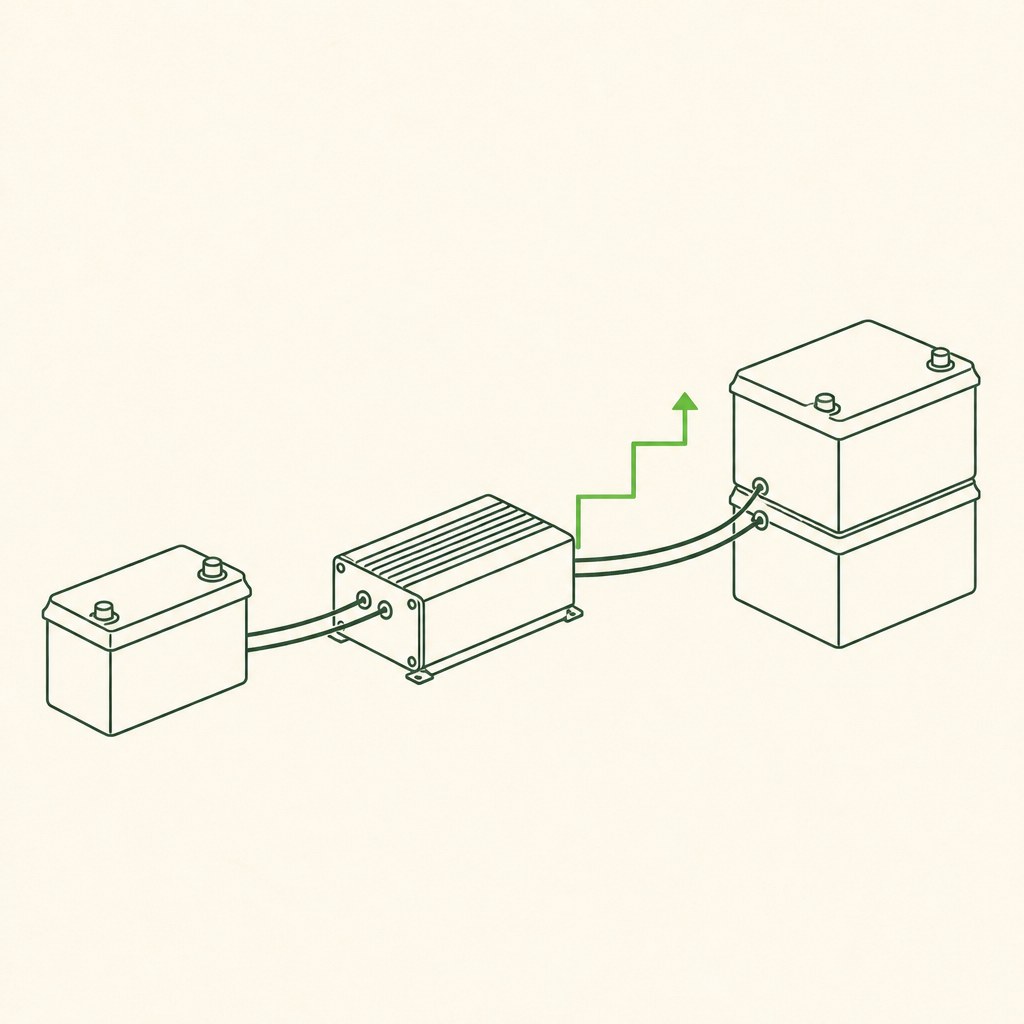
A 24V vehicle charging a 24V bank does not need the voltage moved far, but the charger is not simply passing it through. The DD range publishes its generator charging method as boost, buck, or boost and buck, which means the unit is designed to move voltage in either direction depending on what the two sides need.
- A 12V vehicle charging a 24V bank needs the voltage raised, which is the boost case.
- A 24V vehicle charging a 24V bank needs a controlled charging profile more than a large voltage change, with the conversion absorbing the difference between the vehicle's charging voltage and the profile.
- A 24V vehicle charging a 12V bank needs the voltage brought down, which is the buck case.
- Higher system voltages mean lower current for the same power, which is easier on every cable and every connection in the run.
Why 24V is worth considering in the first place
The case for 24V is rarely about the charger and usually about the cable. Doubling the system voltage halves the current for a given power, and the current is what makes a long run troublesome and what forces a conductor size up. On a large vehicle where the charger is far from the alternator, that difference is felt in the size and cost of the copper rather than in the charger.
The trade is that 24V puts restrictions on what you can run directly from the bank and brings its own regulations and equipment, so it is a system decision rather than a charger decision. We cover the bank-side comparison in the 12V or 24V battery bank guide.
What we do not publish
We do not publish an efficiency figure per voltage combination, a maximum conversion ratio, or a table listing which input and output voltage pairings are supported. The published figures describe the envelope, and a specific pairing should be confirmed with us rather than inferred from the ends of the range.
Frequently asked questions
- Will the 12V range work on a 24V vehicle?
- No. It publishes a nominal input of 12V with an input window of 8V to 16V, so a 24V charging system sits well outside what it is designed for. A 24V vehicle needs the DD range, which publishes 24V among its generator system voltages.
- Can a DC DC charger charge a 12V battery from a 24V vehicle?
- Yes, on the DD range, which publishes a leisure battery voltage range of 9V to 60V alongside generator system voltages from 12V to 48V. Bringing voltage down is the buck case in its published generator charging method.
- Does 24V mean a smaller cable for the charger?
- For the same power, yes. Doubling the voltage halves the current, and it is the current that drives the conductor size on a long run. The cable still has to be sized for your actual current and distance.
- Is 24V a 12V battery with a converter added?
- No. A 24V system is built as a 24V system, either from a 24V battery or from two 12V batteries in series, and the appliances and protection have to match it. The charger only has to suit the voltage it sees on each side.