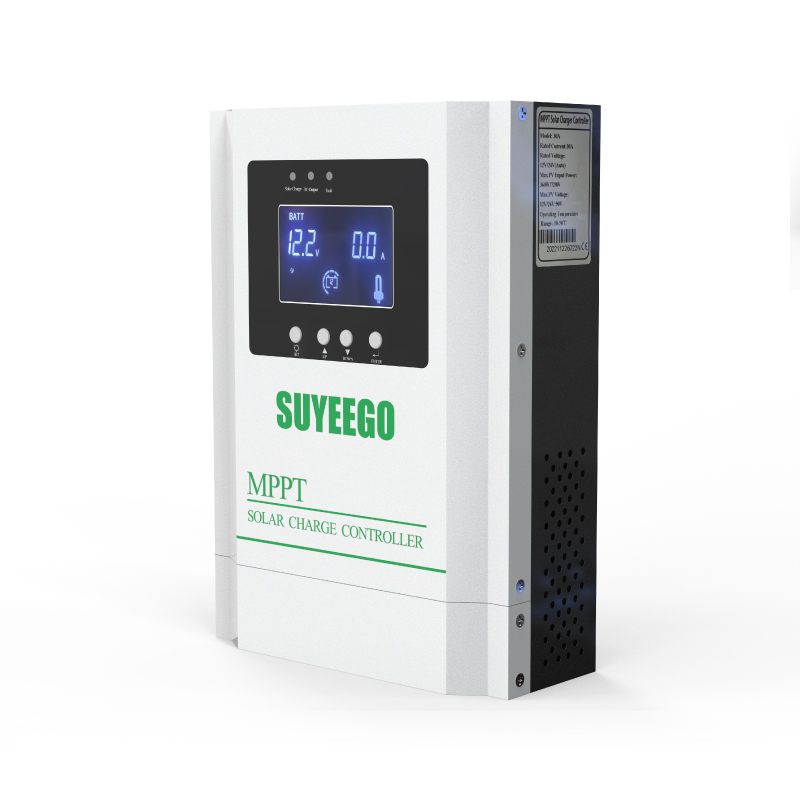
How much of my solar array's output reaches the battery on an RV MPPT solar charge controller?
6 min read
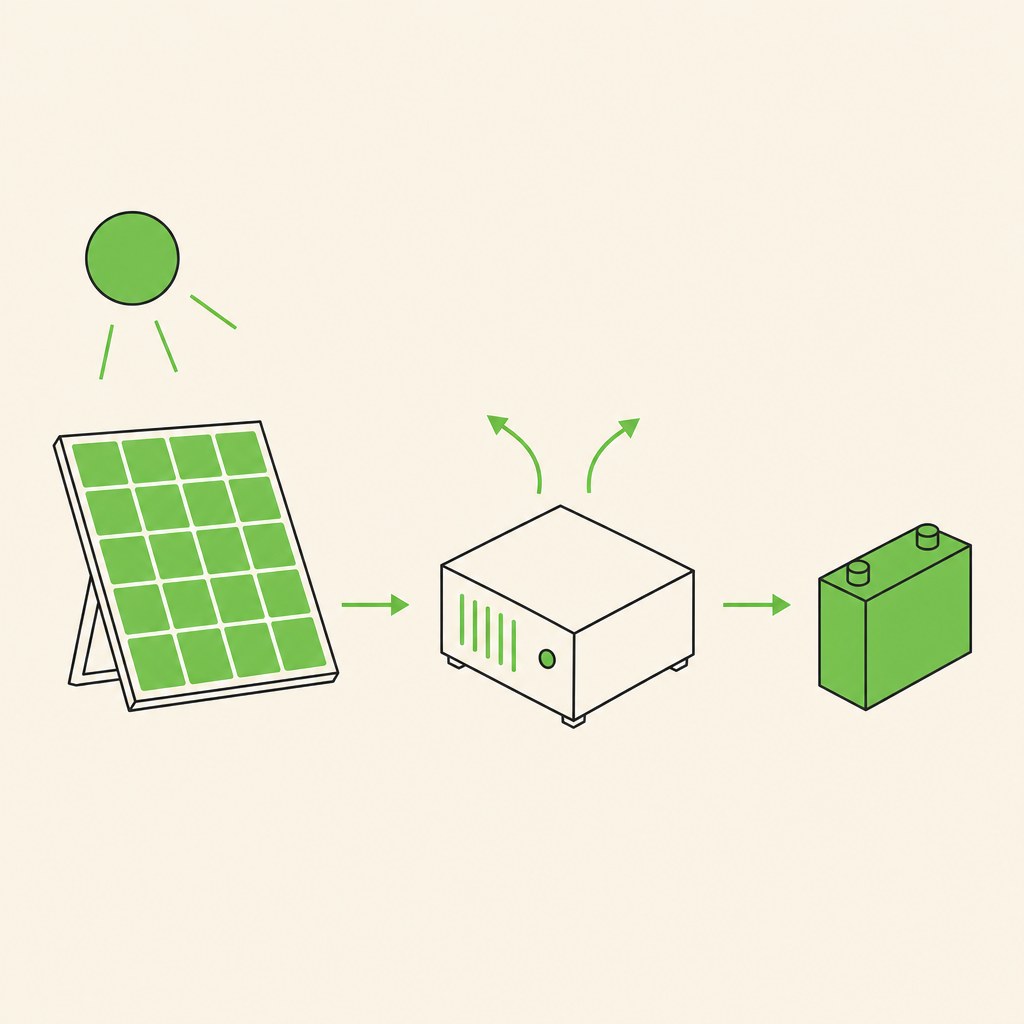
Two published figures describe it, and they are not the same figure. Our MPPT range publishes 99% MPPT tracking and 98% conversion efficiency. Tracking describes how closely the controller keeps the array at its maximum power point as light and temperature move; conversion describes how much of the power it takes in reaches the battery. Neither figure tells you how much power your array produces in the first place, and that is where most of the real variation lives.
Two figures, two different losses
It is easy to read two efficiency numbers as one number stated twice. They are losses at different places in the chain, and confusing them makes both seem worse than they are.
| Published figure | What it measures | What it does not cover |
|---|---|---|
| 99% MPPT tracking | How closely the tracker sits on the array's maximum power point as conditions change | Any loss after that point in the circuit |
| 98% conversion efficiency | How much of the power taken in reaches the battery side | Whether the array was being run at its best point |
The controller's published control electronics are described as a 12-bit DSP, which is the resolution it has to work with when hunting for that operating point. Precision helps the tracker do its job; it does not change what the array can produce.
What the two figures add up to, and what that is worth
Multiply the published figures and you get roughly 97%, which is a fair order of magnitude to carry in your head for the controller's own contribution. Be clear about where that number comes from: it is our arithmetic on two separately published figures, not an end-to-end figure the specification states, and it assumes both are achieved at the same time.
Where the rest of your yield goes
- Light. A panel's rating is measured under a standard test condition, and a day that does not meet it gives you less, whatever the controller does with it.
- Temperature. Panel voltage falls as the cells heat up, so a hot roof in summer delivers less than the same roof on a cold bright morning.
- Orientation and shading. A flat-mounted panel on a van roof is rarely square to the sun, and a single shaded cell in a series string can cost more than the shading itself.
- Array voltage against bank voltage. A tracker reduces voltage; it cannot raise it. An array that is not above the battery's voltage has nothing for the controller to work with, which is why poor light stops charging altogether rather than merely slowing it.
The figure that actually limits the result
Efficiency percentages are the last thing to look at. The first is the bank voltage, because the controller's amp rating is a battery-side current and the power it can pass at that current depends on the bank voltage: the same model that publishes a ceiling of a few hundred watts on a 12V bank publishes several kilowatts on a higher-voltage one. The second is the array's open-circuit voltage against the published ceiling for your model and bank voltage, checked at its coldest expected temperature.
Get those two right and the controller will do its part. Get them wrong and no efficiency figure rescues the build, because the limit is not how well the controller converts but how much it is allowed to pass.
Frequently asked questions
- What does 99% MPPT tracking efficiency mean?
- It is the published figure for how closely the controller holds the array at its maximum power point while light and temperature change. The array's power output varies with conditions along a curve, and the tracker's job is to keep working at the best point on it rather than drifting away as the day changes.
- What is the difference between tracking efficiency and conversion efficiency?
- They are losses at different points. Tracking is about running the array at its best operating point. Conversion is about how much of the power taken in at that point reaches the battery side. Our range publishes 99% for the first and 98% for the second.
- So will I get about 97% of my array's output?
- That figure is our arithmetic on two separately published numbers, assuming both are achieved at once; the specification does not state an end-to-end figure. More importantly, it describes the controller's contribution only. How much the array produces in the first place depends on light, temperature, orientation and shading, and that is the larger variable.
- Why does my system produce less than the panels are rated for?
- Because the rating is measured under a standard test condition that a van roof rarely meets, and because panel output falls as the cells heat. The controller's conversion losses are a small part of the difference. Compare your harvest against the array's rating under real conditions rather than against the label.