Can an RV solar system run a fridge?
7 min read
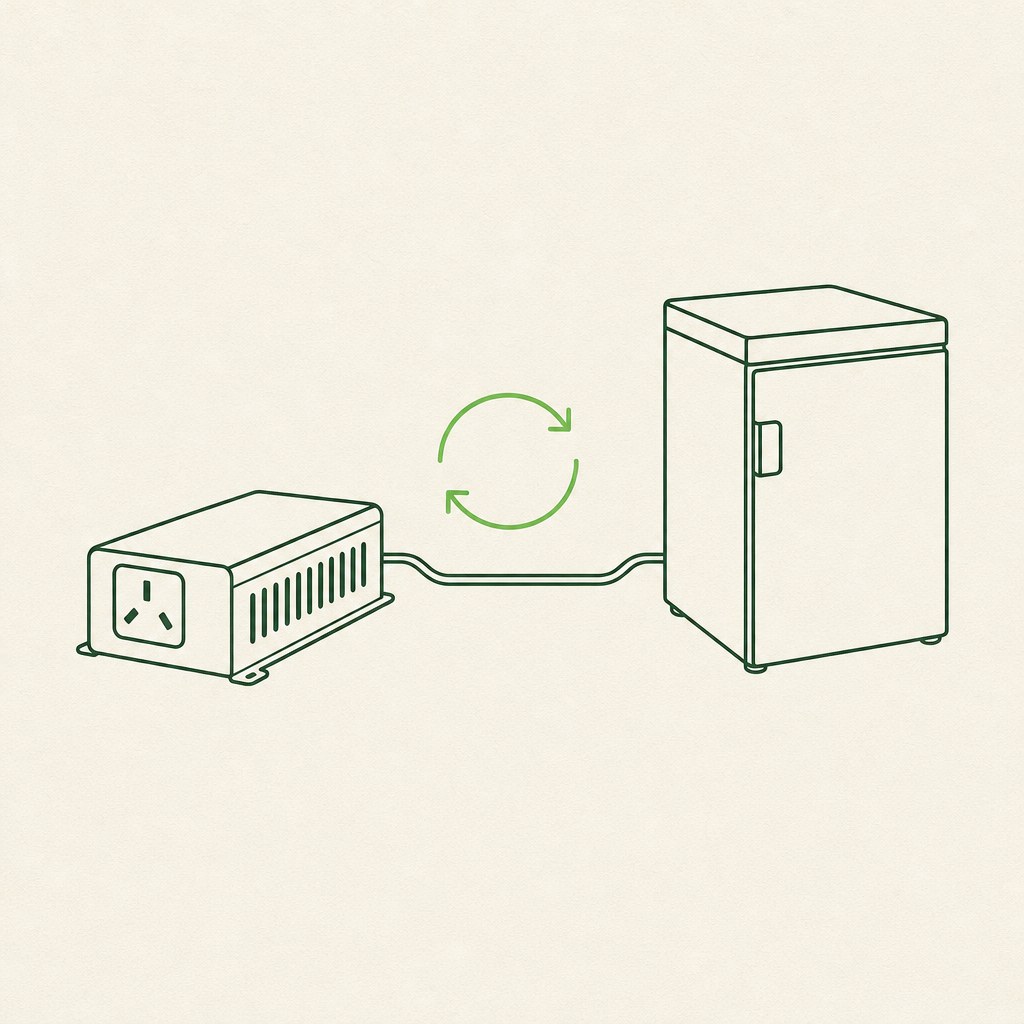
Yes. A fridge is one of the more forgiving loads on a solar system, because a compressor runs intermittently rather than continuously: its average draw over a day is a fraction of its peak. Two numbers decide whether your system can carry it - the fridge's daily energy consumption, and what the array replaces on a typical day.
Daily energy, not watts
A compressor fridge is rated by how hard it works when it is running, but it is not running all the time. It pulls down the cabinet, switches off, warms slowly, switches on again. The duty cycle is what makes a fridge practical on a modest array, and it is why quoting the running wattage and declaring the system too small is the wrong arithmetic.
The figure that matters is the energy the fridge takes over 24 hours. That is the number to compare against what the array puts back over the same 24 hours. One is measured with a meter in the supply, the other comes from the sizing calculation.
The peak is a start-up question
Compressor motors draw a surge as they start. This is where an AC fridge meets the inverter, and it is the one place a fridge can surprise you: the steady load looks comfortable and the start is what trips the inverter's overload protection. It is also why an inverter should be chosen on the surge, not on the running figure.
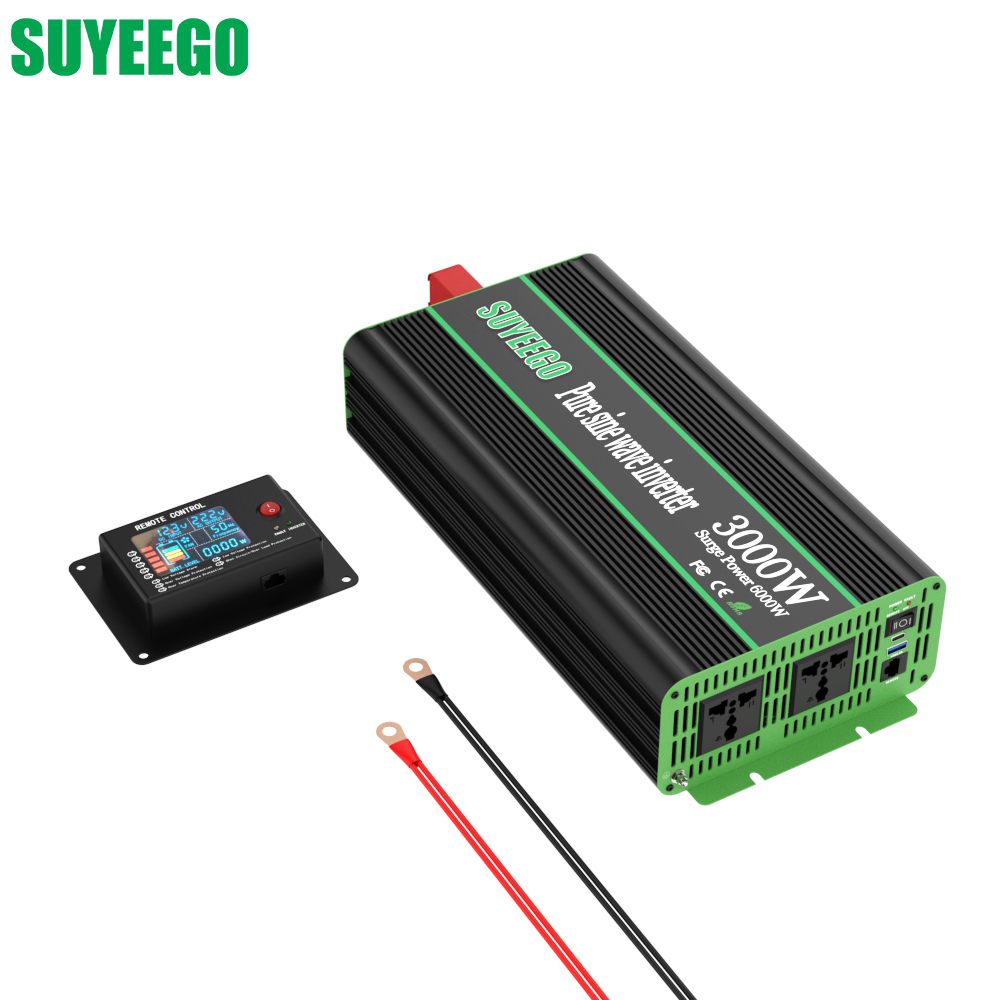
The published inverter data states continuous and peak power per model, with peak at twice continuous throughout the range - 1000W and 2000W on the smallest, 3000W and 6000W on the largest. That published headroom is what a compressor start has to fit inside, along with anything else running at the same moment.
Compressor or absorption matters more than anything else
Before any of this, check which kind of fridge you have. A compressor fridge is efficient and cycles. An absorption fridge - the three-way type that also runs on gas - is far less efficient when run on electricity, and on 12V it is usually a poor match for a solar system of any modest size. The distinction changes the answer more than the array size does.
What the array has to replace
The fridge is rarely the only load. It runs overnight, alongside lights, a pump and whatever charges from USB, and it runs in winter when the array produces least. That combination - a 24-hour load against a seasonal minimum - is what the sizing calculation is for, and it is the reason a system that looks adequate in July can be marginal in January.
What we do not publish
We do not publish an appliance consumption table, a fridge duty cycle, or a list of fridges the system will run. Appliance consumption varies by model, by ambient temperature and by how often the door opens, so the honest source for it is the appliance's own label and a meter.
Frequently asked questions
- How much solar do I need to run a fridge?
- That depends on the fridge's daily energy rather than on a rule of thumb. Measure or read the 24-hour consumption, add the other loads, and size the array against the season with the least sun.
- Will a fridge drain my battery overnight?
- It will take energy overnight, which is why the battery has to cover the dark hours and the array has to replace them the next day. Whether it drains the bank depends on the bank's usable capacity against that overnight figure.
- Can I run a fridge on 12V without an inverter?
- Compressor fridges designed for 12V do exist and avoid the inverter entirely, which removes the conversion loss. The published inverter efficiency is above 95%, so the saving is real but modest - the bigger factor is whether the fridge itself is efficient.
- Why does the inverter cut out when the fridge starts?
- Because the compressor's start-up surge is larger than its running load and can exceed the inverter's published peak. Compare the surge against the peak figure for the model, not against the continuous one.