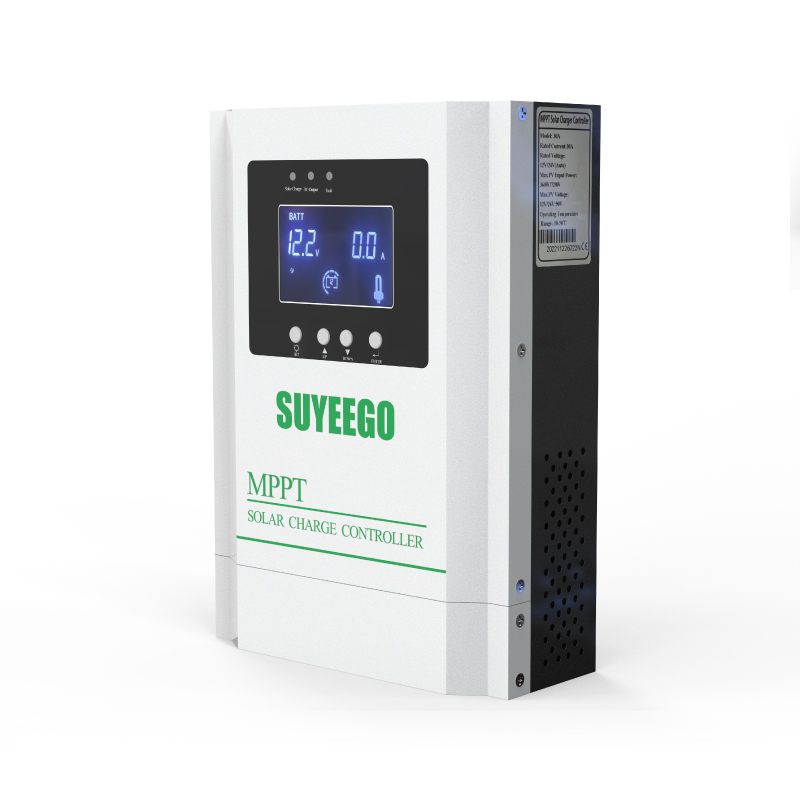
Why does an RV MPPT solar charge controller stop working when the battery is flat?
5 min read
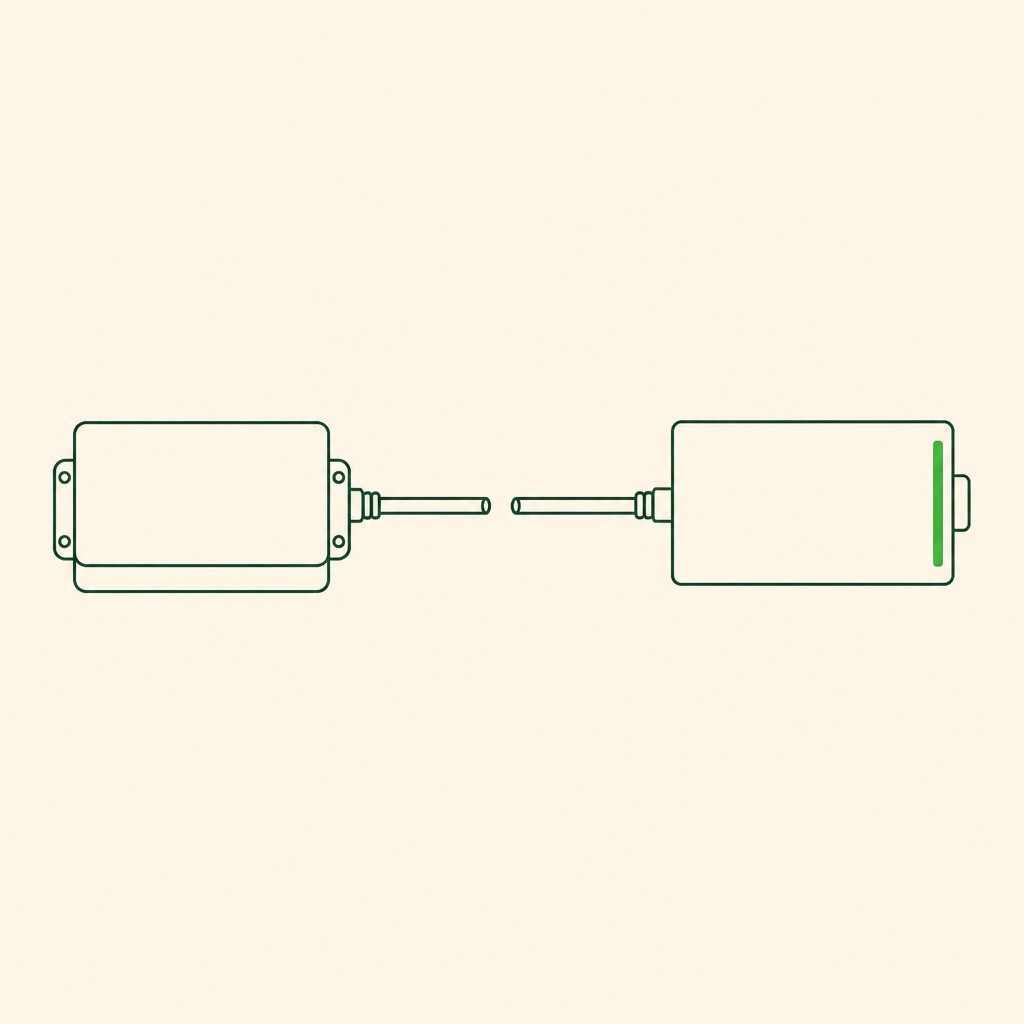
Because the controller is powered from the battery, not from the solar array. Below its published minimum working battery voltage it cannot start, so a flat bank leaves the controller looking dead — no display, no output — even with the panels in full sun. Our range publishes that minimum as 10.5V on the 20A and 30A models and 40.5V on the 40A model and above. Recovering from it needs an external charging source, because the array alone cannot get the controller started.
The controller runs off the battery
It is easy to picture the array as the thing that powers the controller, since the array is what produces the energy. In most controllers it is not: the control electronics take their supply from the battery, and the array is the thing being managed. So a completely flat battery takes the controller down with it, and the panels cannot bring it back on their own.
| Model | Published minimum working battery voltage |
|---|---|
| 20A, 30A | ≥10.5V |
| 40A, 60A, 80A, 100A | ≥40.5V |
The figure is the battery voltage the controller needs in order to operate, not a battery state of charge. A 12V bank sitting at 10.4V is below the threshold for the 20A and 30A models, and the controller will not run regardless of how much sun is on the roof.
What it looks like when it happens
The symptom is a controller that appears completely dead: no display, no output, no response. Because the array is producing, it is tempting to conclude the controller has failed, and people often replace a unit that was working correctly.
- Measure the battery voltage at the terminals before assuming anything about the controller.
- If the bank is below the published minimum, the controller is behaving as specified rather than failing.
- Check the wiring between controller and battery as well — a loose or corroded connection produces the same symptom as a flat bank.
Getting it started again
The bank has to be brought back above the minimum working voltage from a source other than the controller; the array on its own will not do it. A mains charger or a DC-DC charger from the vehicle alternator are the usual options, run until the battery is comfortably above the threshold and then left to the solar.
The DC load output has its own thresholds
The DC load output is a separate circuit with its own separately published disconnect and recovery voltages. On a 12V bank the published default is undervoltage shutdown at 10.0V and recovery at 12.6V. The equivalent figures for other bank voltages are 20.0V and 25.2V on a 24V bank, 40.0V and 50.4V on a 48V bank, and 80.0V and 100.8V on a 96V bank.
Those thresholds are there to protect the battery from being run flat by whatever is on the load output. They do not protect the controller from a bank that has already gone flat. If deep discharge is a recurring risk in your build, they are worth setting deliberately rather than leaving at the default — the load output's disconnect is the cheapest protection you have.
Frequently asked questions
- Why does my controller show nothing when the panels are in full sun?
- The controller is powered from the battery rather than the array. If the bank is below the published minimum working voltage — 10.5V on the 20A and 30A models, 40.5V on the 40A model and above — the controller cannot start, so it stays dark even with full sun on the panels.
- Can the solar panels bring a flat battery back on their own?
- Not if the bank is below the controller's minimum working voltage, because the controller is not running and nothing is connecting the array to the battery. An external charging source is needed to lift the bank back above the threshold before the solar can take over.
- Does the DC load output protect the battery from going flat?
- It can, within its published thresholds. On a 12V bank the default is undervoltage shutdown at 10.0V with recovery at 12.6V. Set those deliberately for your battery rather than leaving them at the default, and note that they protect against the load output draining the bank, not against the bank being flat for some other reason.