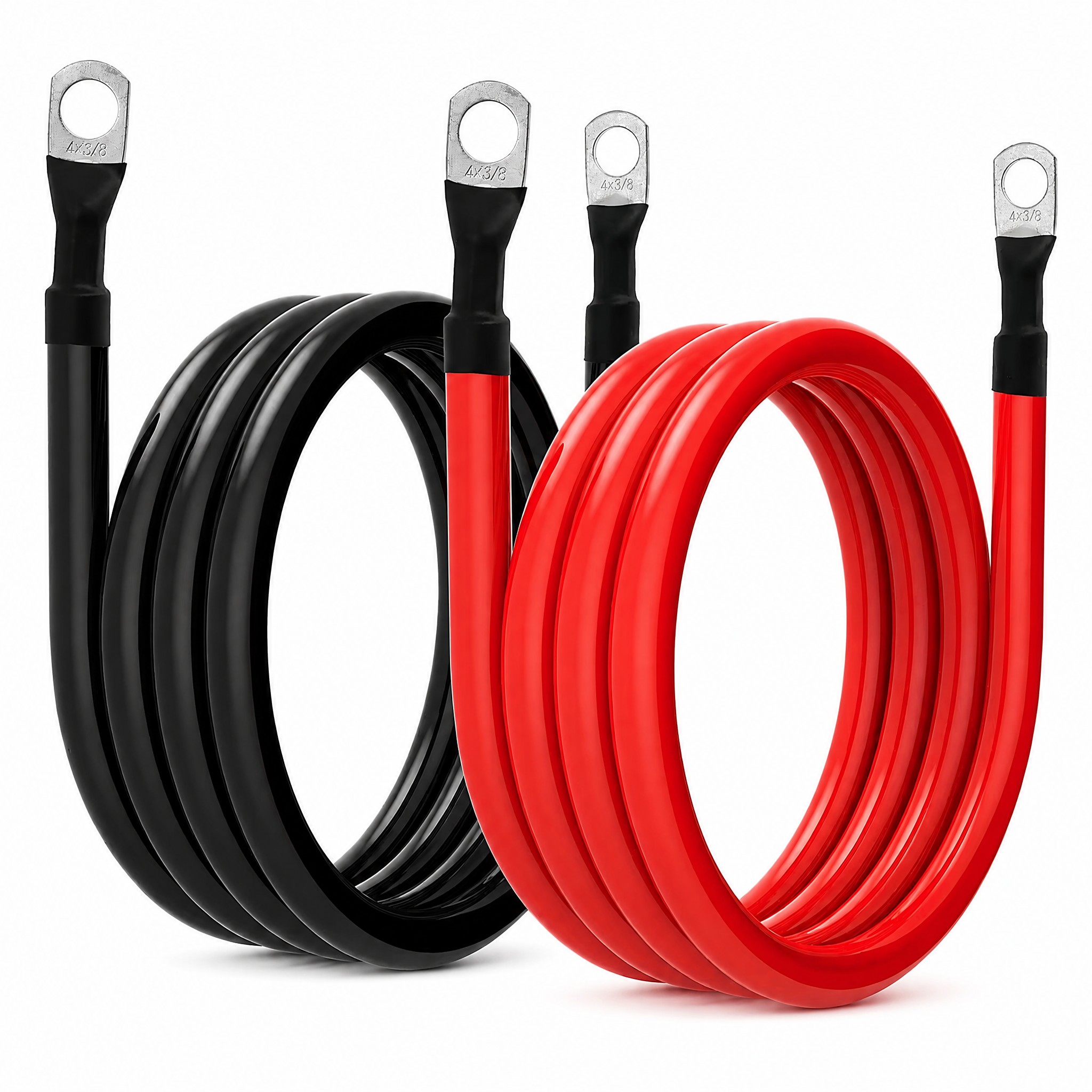
What size cable and fuse does a 12V system need?
6 min read
Cable is sized by the current it must carry and by the length of the run, because voltage drop grows with both; the fuse is then sized to protect that cable. Work out the current first — for a 2000W inverter on a 12V battery that is roughly 185A once inverter losses are counted — then choose a gauge whose rated capacity exceeds it and whose voltage drop over the run stays acceptable. The fuse goes above the load's maximum draw but below the cable's capacity, so that the fuse fails before the cable does. Fitting a fuse rated for the appliance rather than for the cable is the common mistake.
Current first, then length
Everything starts with the current the cable will carry. Work that out from the load and the system voltage, then look at how far the current has to travel and back: at 12V, both the current and the length of the run decide how much voltage is lost on the way. A cable is chosen so that its rated capacity comfortably exceeds the current and the voltage drop over the run stays small enough for the appliance to work properly. Only once the cable is settled does the fuse come into it.
Voltage drop is why low-voltage systems need thick cable
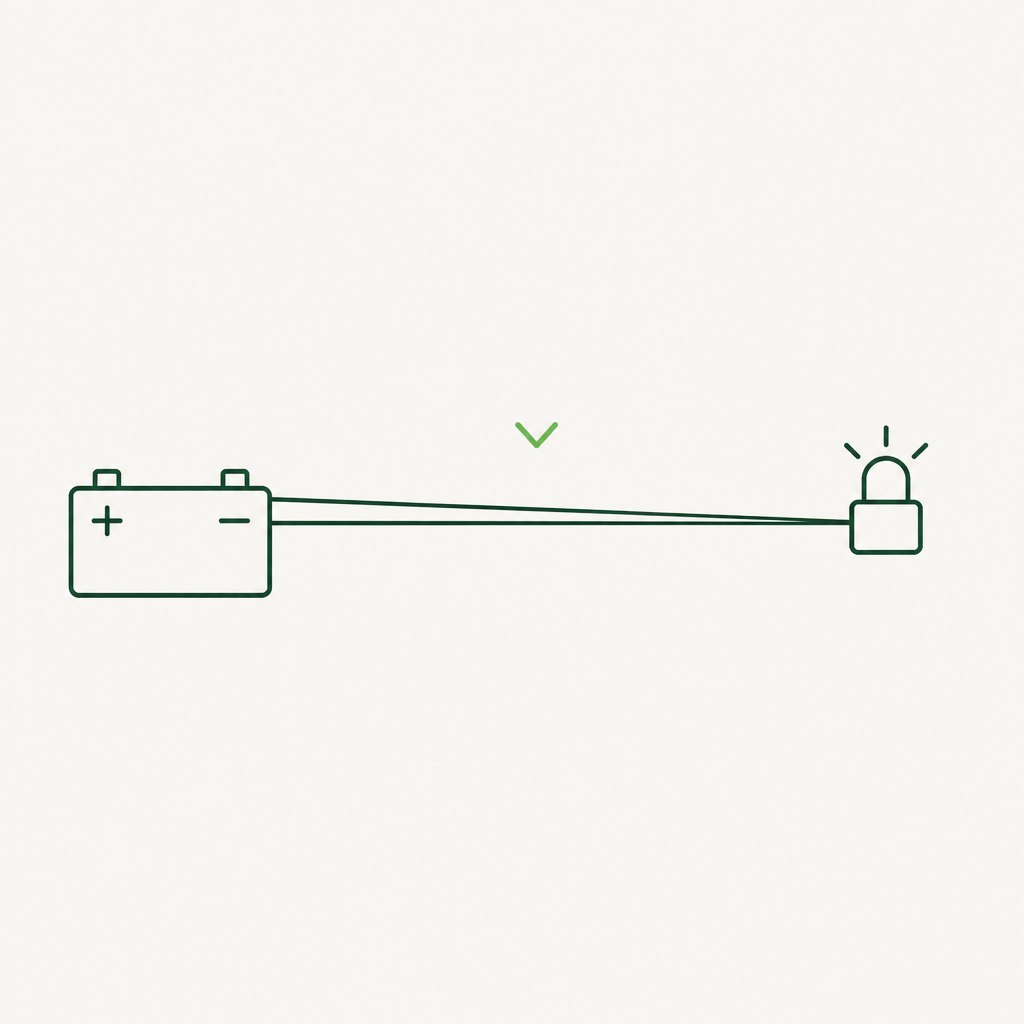
Voltage drop grows with current and with length, and at 12V even a small drop is a large fraction of the supply. Take a 2000W inverter on a 12V battery: dividing 2000 by 12 gives a large current at the terminals, and once the inverter's own losses are counted the draw is roughly 185A. That is a very large current, and a run of a few metres at that current drops enough voltage to matter, which is why the cable feeding a large inverter is short and thick rather than merely adequate.
The fuse protects the cable, not the appliance
A fuse is a deliberate weak point that fails before the cable does. Its rating goes above the maximum current the load can draw, so it does not blow in normal use, but below the current the cable can carry continuously, so the cable is never asked to take more than it is rated for. Fitting a fuse sized for the appliance instead of for the cable is the common mistake, because the appliance can draw far more than its label suggests for a moment, while the cable is the part that actually overheats.
Lugs, terminals and the joints that quietly heat up
- Crimp high-current joints rather than soldering them. A crimp is a mechanical connection that stays tight under load; solder can soften under sustained heat.
- Fit heat-shrink over the barrel of the lug, so the strands cannot move and moisture cannot reach the joint.
- Treat a loose terminal as a resistance. A terminal that is not properly tightened heats up under load and the heat loosens it further, which is how a joint fails.
- Check the torque after the first heat cycle. A heavy load warms the joint and the metal settles; a terminal that was tight when cold can be loose afterwards.
Frequently asked questions
- What size cable do I need for a 2000W inverter?
- A 2000W inverter on a 12V battery draws roughly 185A once its own losses are counted, so the cable has to be rated comfortably above that and kept as short as the installation allows. Use the manufacturer's recommended gauge as the starting point and check the voltage drop over your actual run; a cable that is only just large enough will drop enough voltage to matter.
- Can I fit a bigger fuse than the cable is rated for?
- No. The fuse exists to protect the cable, so its rating must stay below the current the cable can carry continuously. A fuse larger than the cable's capacity removes the protection entirely: an overload that the cable cannot survive would simply pass through the fuse and overheat the cable instead.
- Does cable length really matter at 12V?
- Yes, more than at higher voltages. Voltage drop is proportional to the current and to the length of the run, and at 12V a loss that would be negligible elsewhere can be a significant share of the supply. That is why long runs need thicker cable than the current alone would suggest.
- Why do my cable terminals get warm?
- Heat at a terminal is a resistance. Either the terminal is not tightened to its specified torque, the connection is not properly crimped, or the cable is too small for the current, so the joint is dropping voltage and turning it into heat. A warm terminal should be tightened, re-crimped or upgraded, not left to run.