Does a DC charger need MPPT?
6 min read
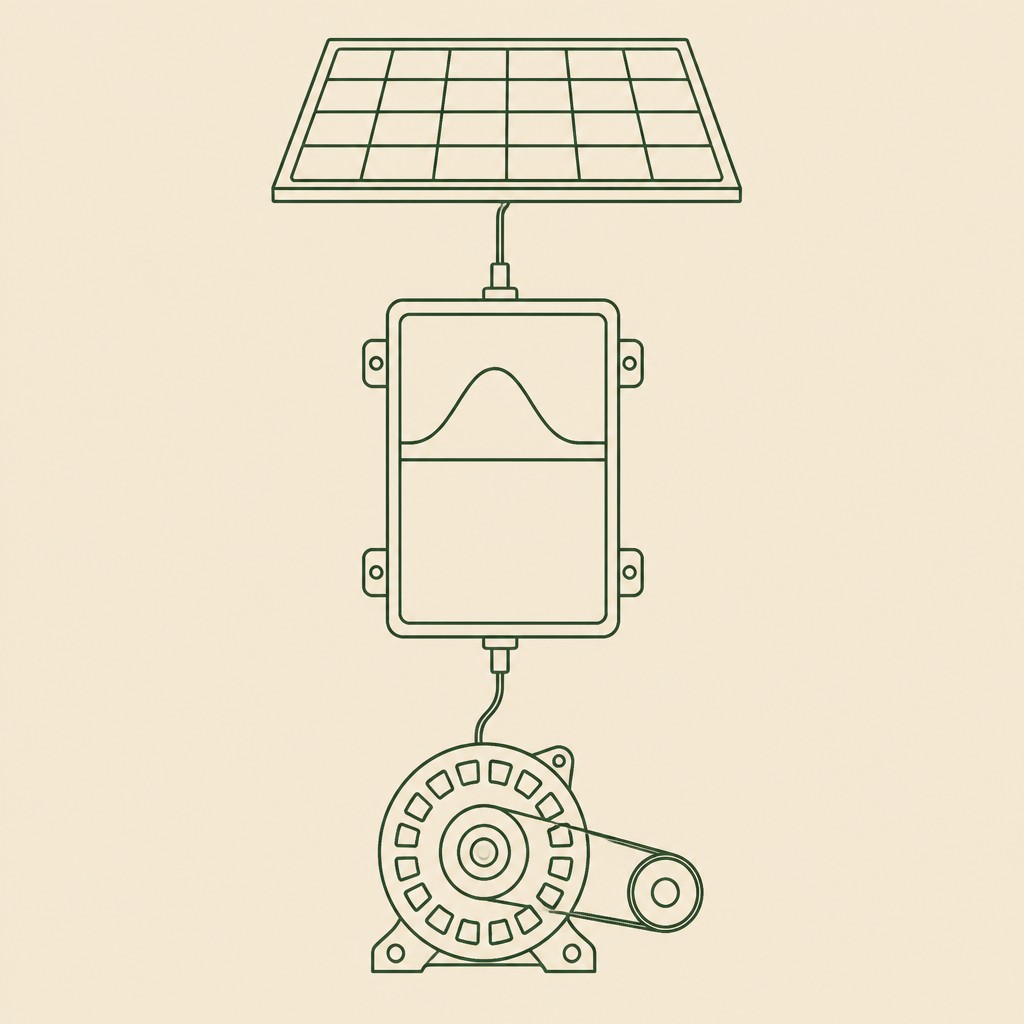
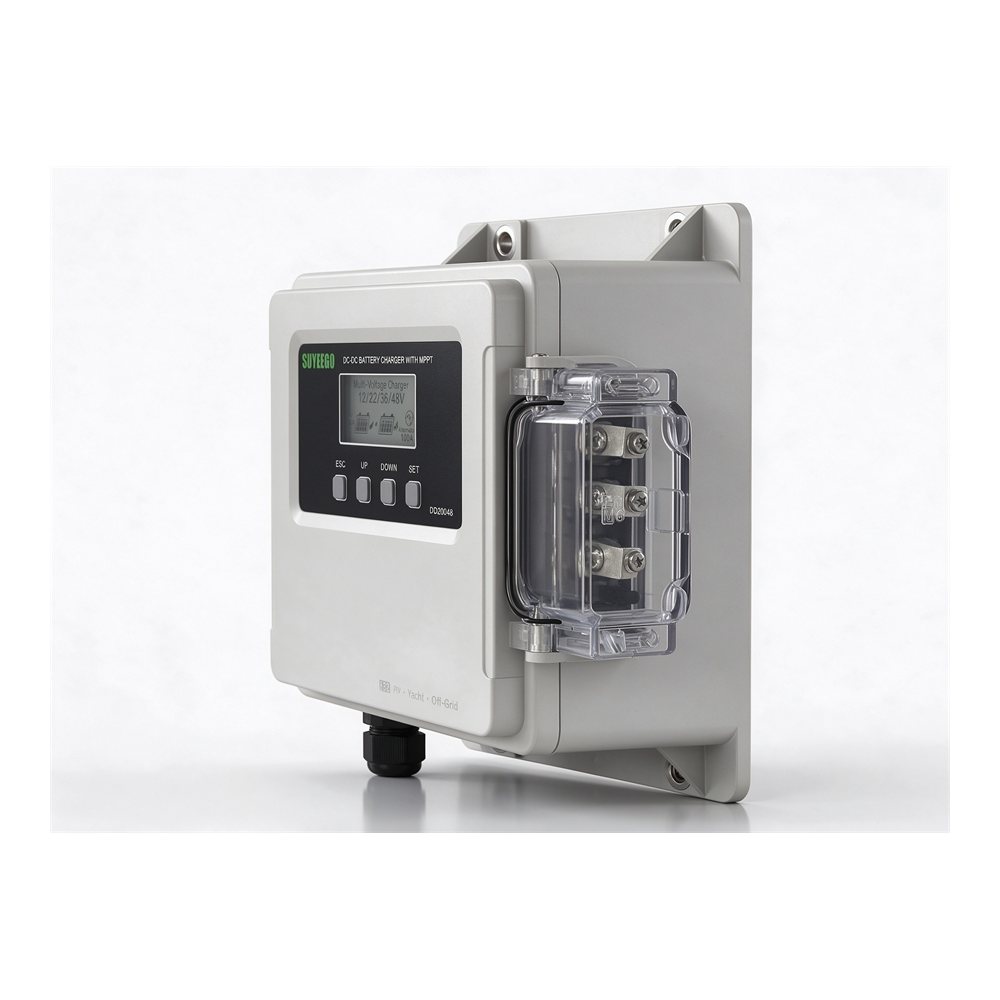
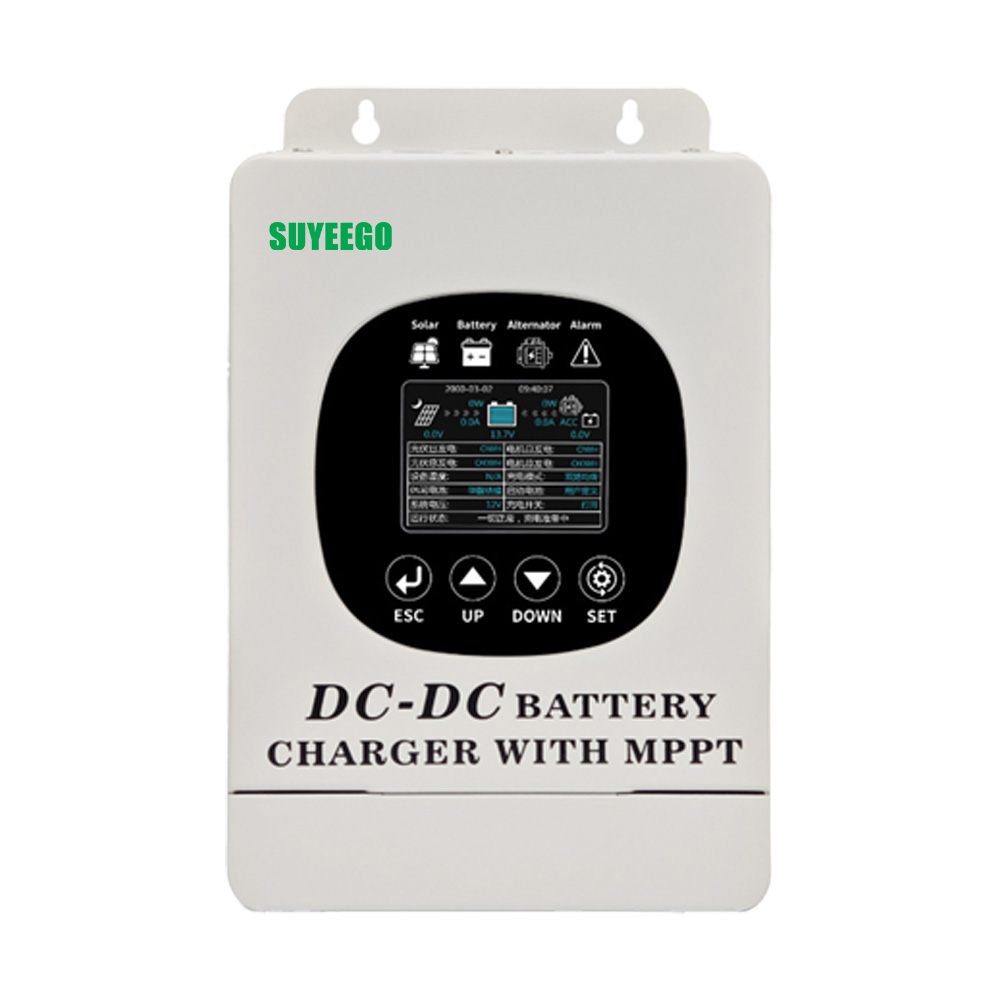
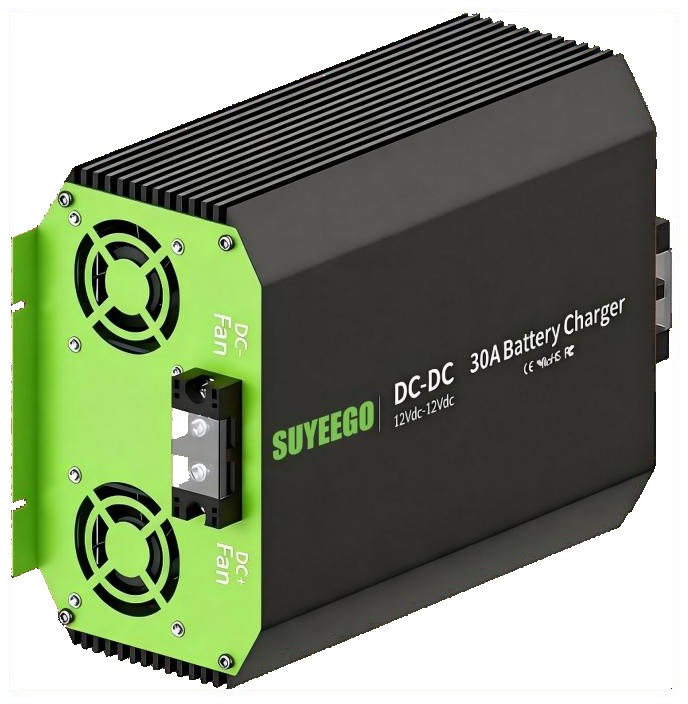
Only on the solar side. Maximum power point tracking is a way of getting the best out of a panel, whose voltage collapses as it is loaded, and there is nothing to track on an alternator that already holds a regulated voltage. That is why our range splits cleanly: the DD4048, DD6048 and DD20048 publish a PV input with voltage reduction MPPT, while the 12V 20A to 60A DC-DC Battery Charger has no PV input at all and is an alternator charger only.
What MPPT is actually for
A solar panel is a current source with a knee in its curve. Draw a little current and the voltage sits near open circuit; draw more and the voltage falls away, and the power you get depends on where along that curve you are working. MPPT is the electronics that keeps hunting for the knee as light and temperature change. Our dual-input chargers publish it as voltage reduction MPPT with a tracking efficiency above 99%.
An alternator is the opposite kind of source. It is regulated: the regulator holds a target voltage whether the load is small or large. A charger fed from the alternator does not hunt for a maximum power point, because there is no knee to find. Its job is conversion — stepping the input up or down to the voltage the leisure battery needs, which our DD range publishes as boost, buck and boost-buck operation.
Which of our chargers has it
| Charger | Solar input | Alternator input |
|---|---|---|
| DD4048 / DD6048 | Yes — voltage reduction MPPT, over 99% tracking, 80V maximum open-circuit voltage | Yes — boost / buck / boost-buck |
| DD20048 | Yes — buck MPPT, 80A of panel current | Yes — up to 100A, 80V maximum input |
| DC-DC Battery Charger, 20A to 60A | None — the range has no PV input | Yes — 8V to 16V input, three-stage output |
Where the two sides meet
- A panel needs the charger to find its knee, and to start only when it can do something: the DD range publishes a start-up condition of panel voltage above the leisure battery voltage by 2V.
- A panel also needs a voltage ceiling respected: 80V maximum open-circuit voltage is the figure the DD range publishes, so string the panels accordingly.
- The alternator side needs conversion rather than tracking, and a window wide enough to accept a variable-voltage source: 12V to 16V on a 12V system for the DD range.
- A charger with both inputs does both jobs at once, which is why a dual-input unit can be a single box where a system would otherwise need two.
How to check a charger before you buy it
- Look for a PV input group in the specification. No PV group means no solar charging, whatever the marketing says.
- If there is a PV group, read three numbers: the maximum panel current, the maximum open-circuit voltage and the tracking efficiency.
- Read the alternator side separately. The generator input has its own current and voltage limits, and on the DD range they are published as 20A and 80V.
- Ask whether the charger can top up the starter battery too: the DD range publishes a PV charging current for the starting battery of 10A or 20A.
Frequently asked questions
- Can I add a solar panel to the 12V 20A to 60A DC-DC Battery Charger?
- Not to that range. Its published input is 8V to 16V from the alternator, with no PV input group, so there is nowhere to connect a panel and no MPPT to track one. Charging from panels needs either a solar charge controller of its own or a dual-input charger from the DD range.
- Is MPPT worth paying for on the alternator side?
- The alternator side does not use it. MPPT describes tracking a variable source, and an alternator is regulated. The alternator side of a DC charger is judged by its conversion ability and its input window instead.
- Does MPPT matter if the panels are small?
- It matters less in absolute terms, because the loss it recovers is a percentage of a smaller number, but the mechanism is the same: the charger still has to work at the knee of the curve as the light changes.
- Why does my dual-input charger stop charging from the panels at night?
- The DD range publishes a night anti-reverse charging protection, which stops the battery discharging back into the panels in the dark. Losing the solar input after dark is that protection working, not a fault.