What goes into a complete RV solar system?
7 min read
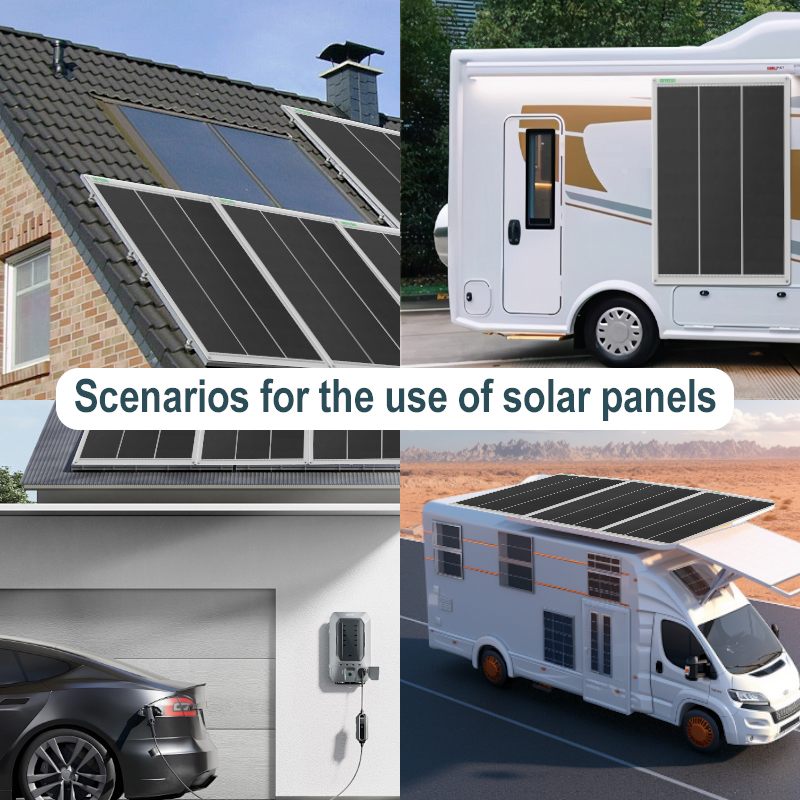
A complete RV solar system is a chain of five parts, and each one has to match the next. The panels collect energy, the charge controller regulates what reaches the battery, the battery stores it, the inverter turns DC into AC for household appliances, and the cable and fuses carry the current safely between them. Every part in the chain is sized from the same figure — your daily energy use — so the practical order is to work that out first and then choose parts to fit it, rather than buying parts and hoping the arithmetic works out.
The chain, in order
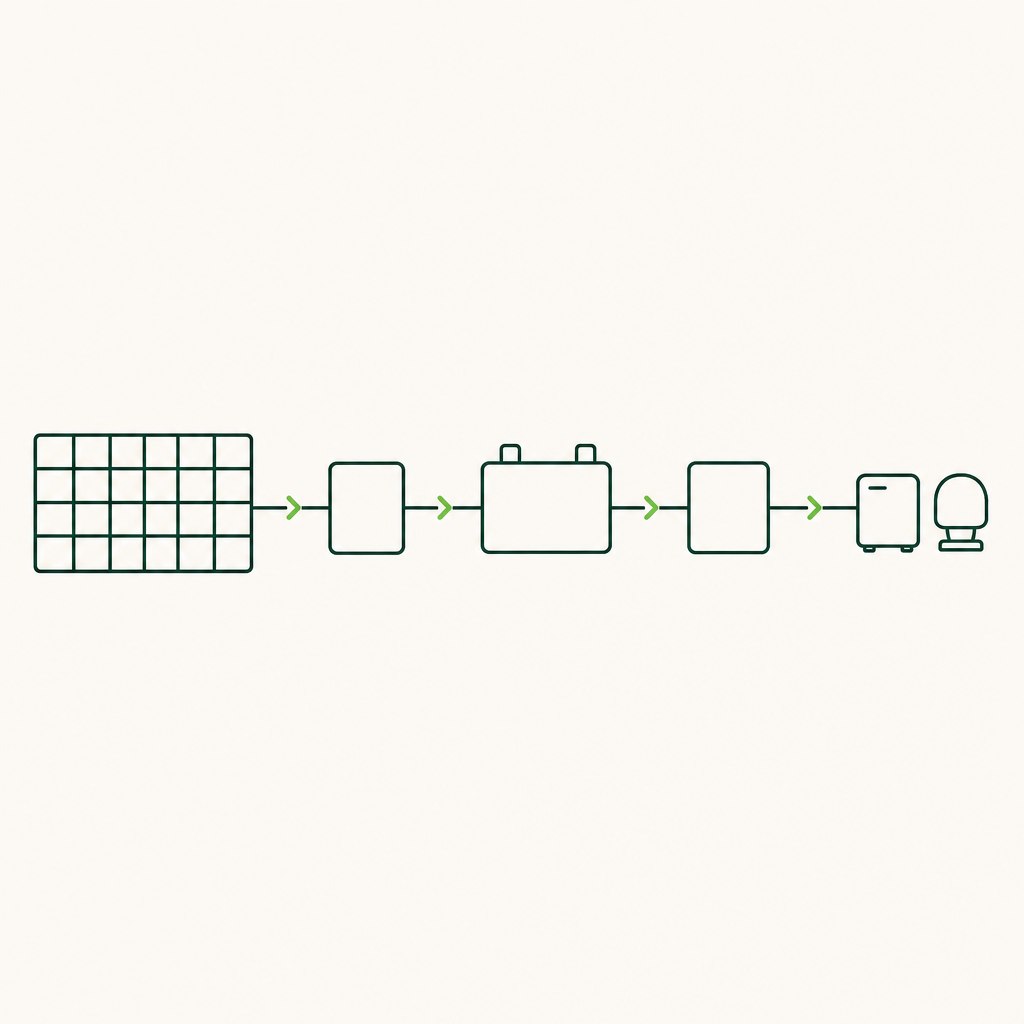
Read left to right, the chain answers a different question at each step. The panels ask how much roof you have. The controller asks what voltage and current the array will produce. The battery asks how long you need to run without sun. The inverter asks which appliances you refuse to give up. Only one of those is really a choice, and it is the last one.
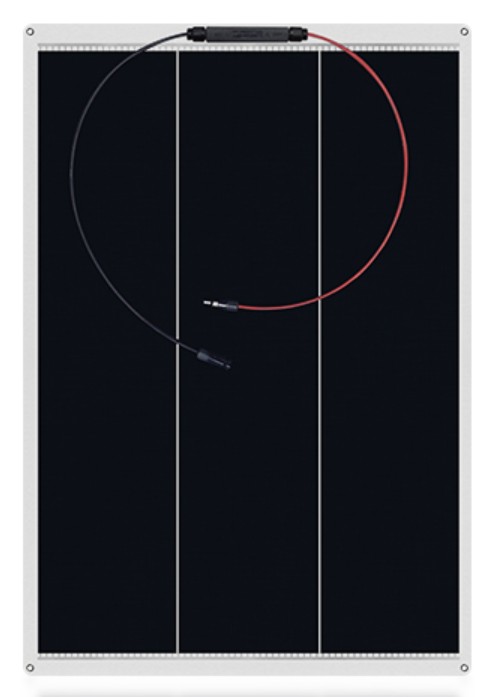
- Solar panels collect the energy. Flexible panels bend to a curved van roof and weigh far less than framed glass, which is why they are the usual choice on a camper.
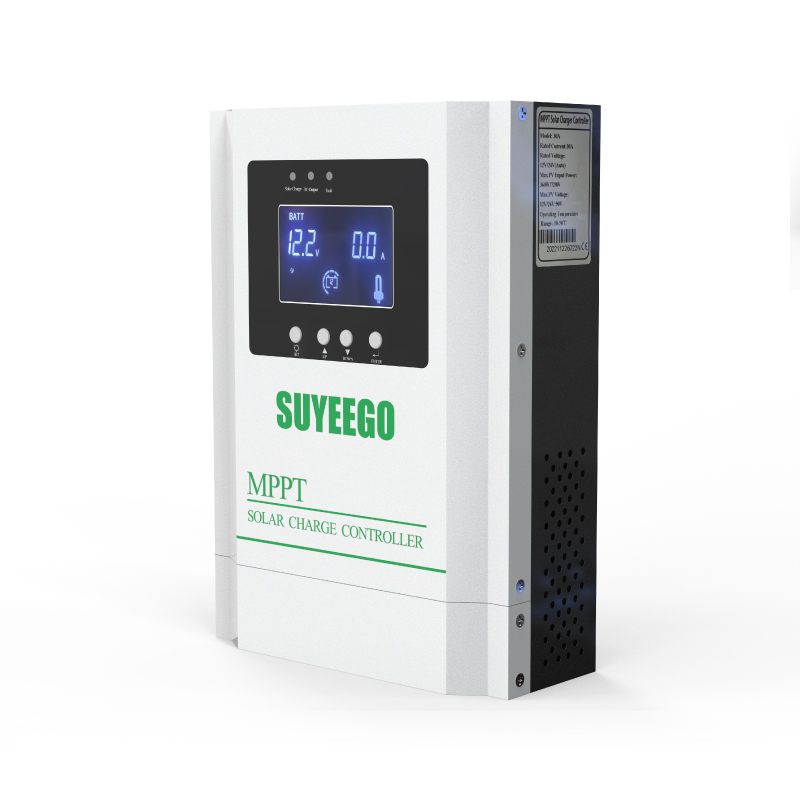
- The charge controller sits between the array and the battery and regulates the charge, so the battery fills without being overcharged.
- The battery stores what the panels collected, and it is the part that decides how long the system runs in the dark.
- The inverter converts stored DC into the AC that laptops, coffee machines and other household appliances expect.
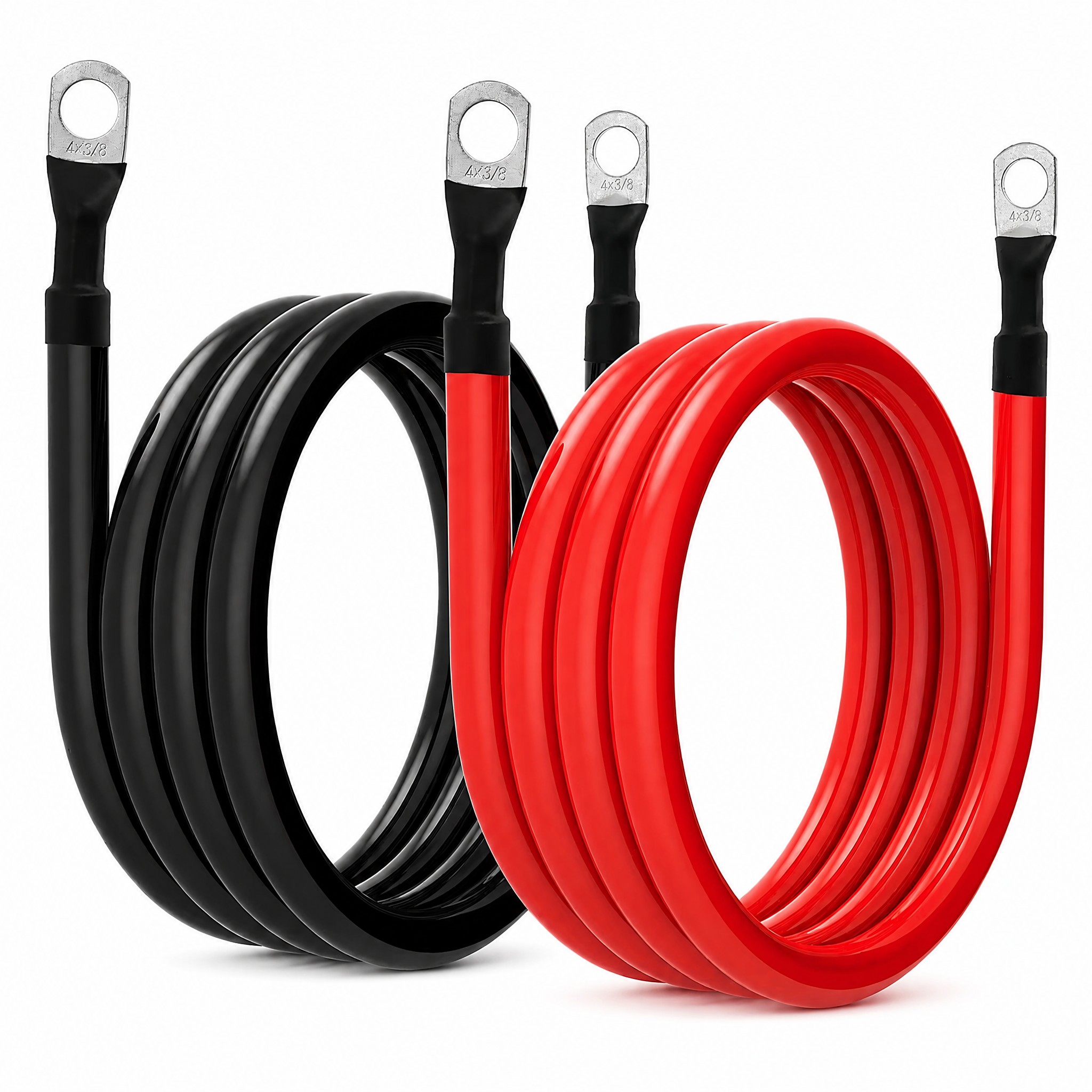
- Cable, fuses and connectors carry the current between all of it. They produce nothing, and they are what makes the difference between a system that works and one that fails safely or not at all.
The battery sets the voltage, and the voltage sets everything else
Almost every constraint downstream comes from two numbers: the capacity of the battery in amp-hours, and the voltage of the bank. Capacity decides how long you can run. Voltage decides how much current the same load demands, and current is what sizes the cable, the fuse and the inverter's input side.
That is why the battery is the first part to decide and the last part to change. Moving from a 12V to a 24V bank later means revisiting the inverter, the controller, the chargers and every cable between them.
Why the parts have to match, not just exist
A system assembled from parts that are each individually good can still fail, because the parts interact. A controller rated for less current than the array produces will simply clip the excess. An inverter larger than the battery can feed will shut down under load rather than damage anything, but it will not work either.
The parts people leave out
Two omissions account for most of the systems that disappoint. The first is fusing: a system with no fuse on the battery positive works perfectly until a cable is damaged, and then the cable becomes the fuse. The second is ventilation. Inverters and controllers produce real heat under sustained load, and a closed locker with no airflow shortens their life quietly.
SUYEEGO builds every part of that chain — flexible solar panels, MPPT charge controllers, DC-DC chargers, pure sine wave inverters, LiFePO4 batteries and the battery cable that joins them. If you would rather not match parts from six suppliers yourself, tell us your daily energy figure and we will size the set around it.
Frequently asked questions
- What is the minimum for a working solar system?
- A panel, a charge controller and a battery, joined with cable and a fuse, is enough to collect and store energy. The inverter is only needed if you want to run mains-powered appliances, so a van that charges phones and runs 12V lights can leave it out entirely.
- Do I need an inverter if I only charge phones and run lights?
- No. Phones, laptops and LED lighting all have 12V options that plug straight into the battery side of the system, and every conversion from DC to AC and back again loses energy on the way. The inverter earns its place when you want a normal household appliance.
- Which part should I spend the most on?
- The battery, because it sets how long the system runs and it is the part you cannot fix by adding something later. The charge controller is the second, since it decides how well the panels are used and, with an MPPT controller, typically recovers 10 to 30 percent more energy than a PWM one on cold or partly shaded days.
- Can I add parts later?
- Yes, as long as the ratings line up. Adding an inverter later is the common case, and it usually means revisiting the battery and the cable rather than the panels, because the inverter's draw is what the DC side has to carry.