How do I charge my RV leisure battery while driving?
6 min read
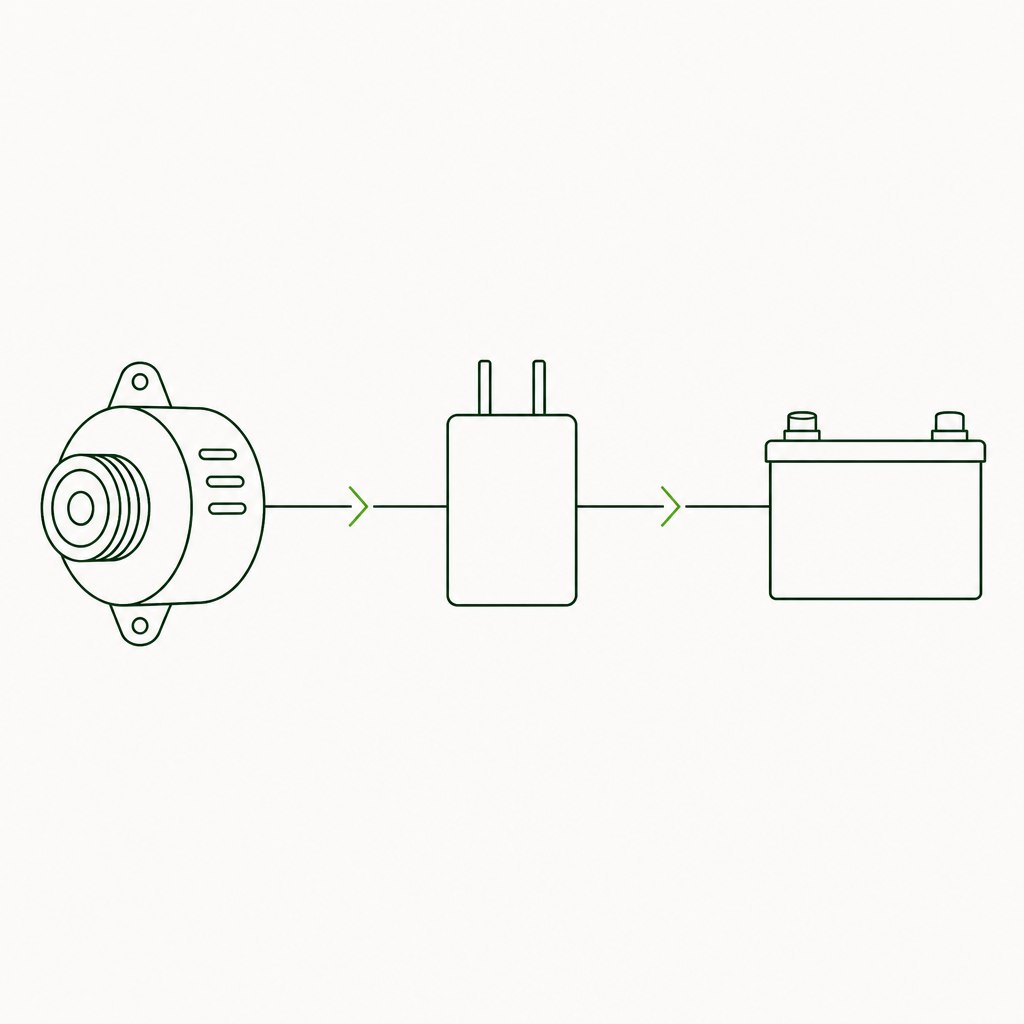
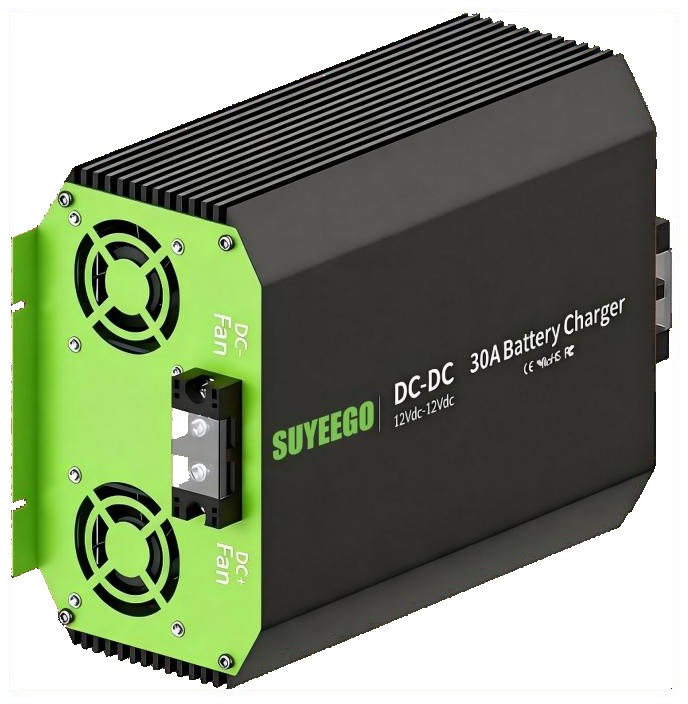
The alternator charges the leisure battery while you drive, but how you connect the two decides how quickly and how fully it charges. A DC-DC charger is the most effective method: it takes the alternator's output, converts it to the voltage the leisure battery actually needs, and applies a proper three-stage charge profile. A split-charge relay is cheaper but simply parallels the two batteries when the engine runs, so the leisure battery charges at whatever voltage reaches it and rarely reaches full. On a modern vehicle with a smart alternator, a DC-DC charger is usually the only method that works reliably.
Why the alternator is not a battery charger
An alternator is built to keep a starter battery topped up, not to recharge a deeply discharged leisure battery. Its regulated output sits close to the starter battery's resting voltage, and the long cable run to a leisure battery mounted at the back of the vehicle loses more voltage on the way.
- Voltage drop. Cable resistance over several metres costs volts, and a battery that only ever sees 13.2V charges very slowly and never reaches full.
- No charge profile. A leisure battery needs a staged profile — bulk, absorption, then float — to charge fully without being damaged. An alternator simply holds a fixed voltage.
- Smart alternators. To meet emissions rules, many modern vehicles vary the alternator voltage deliberately, sometimes dropping as low as 12.0–12.5V when the starter battery is already charged. That is below the voltage a leisure battery needs, so charging can effectively stop.
- Lithium's appetite. A lithium battery will accept a very high current if it is offered, which can overheat or overload an alternator that was never sized for the job.
Split-charge relay or DC-DC charger?
A split-charge relay (also sold as a voltage-sensitive relay, or VSR) joins the starter and leisure batteries once the engine is running and separates them when it stops. A DC-DC charger does the same job but actively converts the voltage and limits the current.
| Aspect | Split-charge relay | DC-DC charger |
|---|---|---|
| Cost | Lower | Higher |
| Charge profile | None — a fixed voltage is passed through | Three-stage: bulk, absorption and float |
| Voltage at the leisure battery | Alternator voltage minus cable losses | Regulated to the correct charging voltage |
| Smart alternator | Charges poorly, or not at all | Works, because the charger raises the voltage |
| Lithium batteries | Risky — current is not limited | Current is limited by the charger's rating |
How to size a DC-DC charger
Two numbers decide the choice: the charger's output current and the battery voltage it is built for. Matching the battery chemistry matters more than the headline rating, because the profile the charger applies is what actually fills the battery.
- Start from the battery's amp-hour capacity. As a rule of thumb, a charger rated at roughly 10–30% of that capacity will refill a depleted battery over a day of driving without working the alternator too hard.
- Check the input side as well. A charger draws more current from the alternator than it delivers to the battery, so a 40A charger can pull close to 50A from the vehicle's electrical system.
- Match the output voltage to the battery. A 12V system needs a 12V charger; a 24V bank needs a 24V unit.
- Allow for the cable run. A long run to a battery mounted at the rear needs heavier cable, and voltage drop grows with distance and current.
Charging while driving when you already have solar
Solar and alternator charging solve different halves of the same problem. Solar produces most of its output when the vehicle is parked in the sun and almost nothing on a shaded or wintry drive; the alternator does the opposite, producing most when you are moving. Running both means the battery is being topped up in more of the situations you actually encounter.
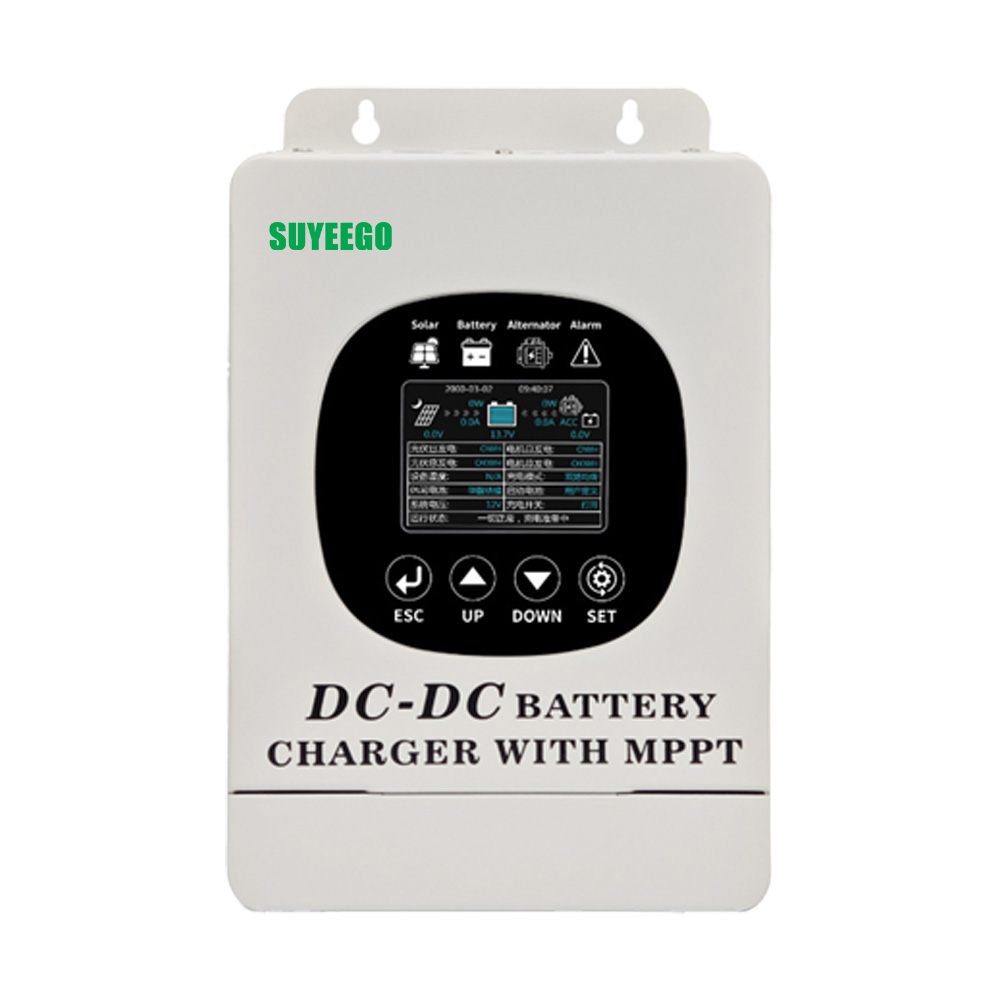
If you would rather have both sources handled by one unit, a dual-input DC-DC charger accepts the alternator and the solar array at the same time and decides which to draw from, which avoids two devices competing to charge the same battery.
Frequently asked questions
- How long do I need to drive to recharge a leisure battery?
- That depends on how deeply the battery is discharged and how much current the charging source delivers. A 100Ah battery taken to 50% depth of discharge needs roughly 50Ah returned, which a 30A source can do in a couple of hours of driving, while a split-charge relay on a smart alternator may struggle to reach full at all.
- Can I charge a lithium battery from the alternator?
- Yes, but not directly. A lithium battery will accept a very large current if it is offered, which can overload the alternator and its wiring. A DC-DC charger limits the current to a value the alternator can supply and applies the correct lithium charge profile.
- Will a DC-DC charger drain my starter battery?
- A correctly installed one will not. It only operates while the engine is running, and most units have a configurable input threshold so they stop drawing once the input voltage falls below a set level, which protects the starter battery's ability to start the vehicle.
- Do I still need a DC-DC charger if I have solar panels?
- They are complementary rather than alternatives. Solar output is highest when parked in good light and almost zero on a shaded winter drive, while alternator charging works whenever the engine runs. A dual-input charger lets one device manage both sources.