How do you install a DC charger in a campervan?
7 min read
Mount the charger close to the leisure battery on a solid, dry surface, put the fuse at the starter-battery end of the input cable rather than at the charger, connect the control wire that lets it run only with the engine, and check the polarity before the first switch-on. Our DD range publishes a mounting hole spacing of 80mm and overall dimensions of 218.1 by 154 by 72mm, which is enough to plan the position before the unit arrives.
Before you drill anything
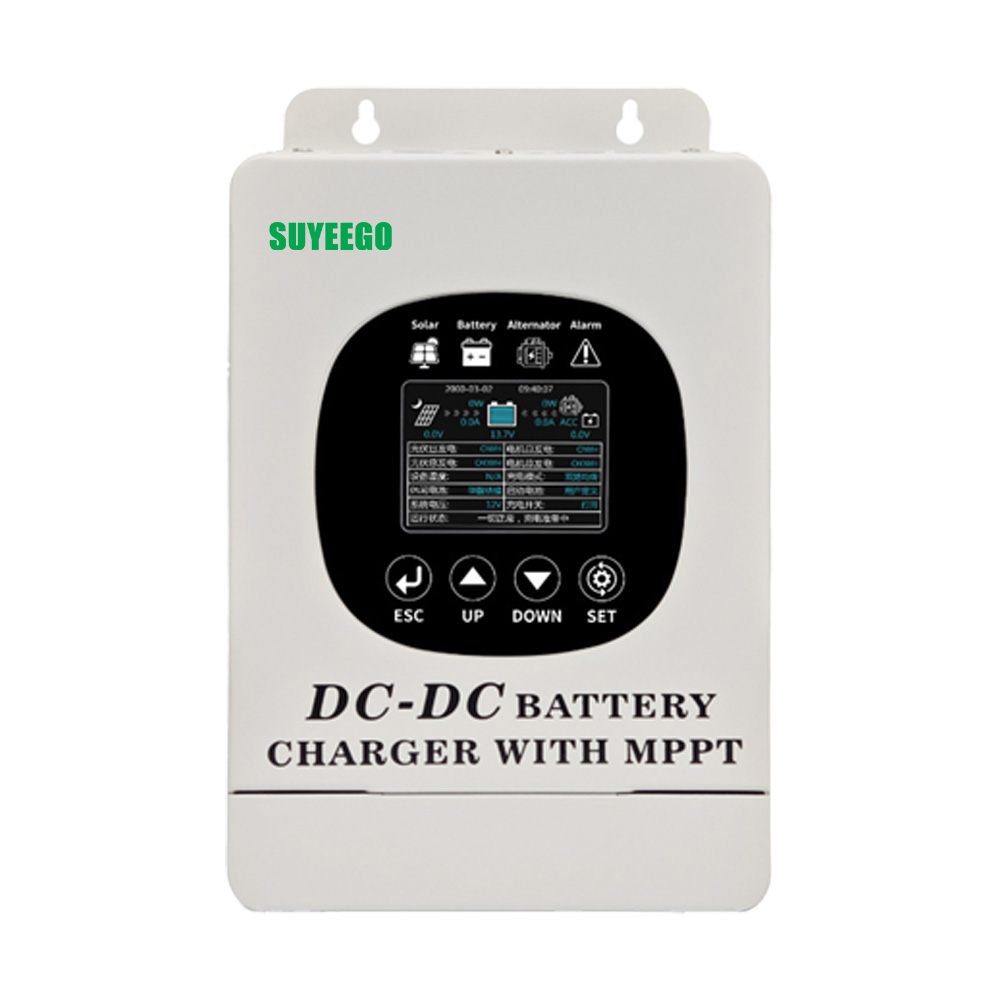
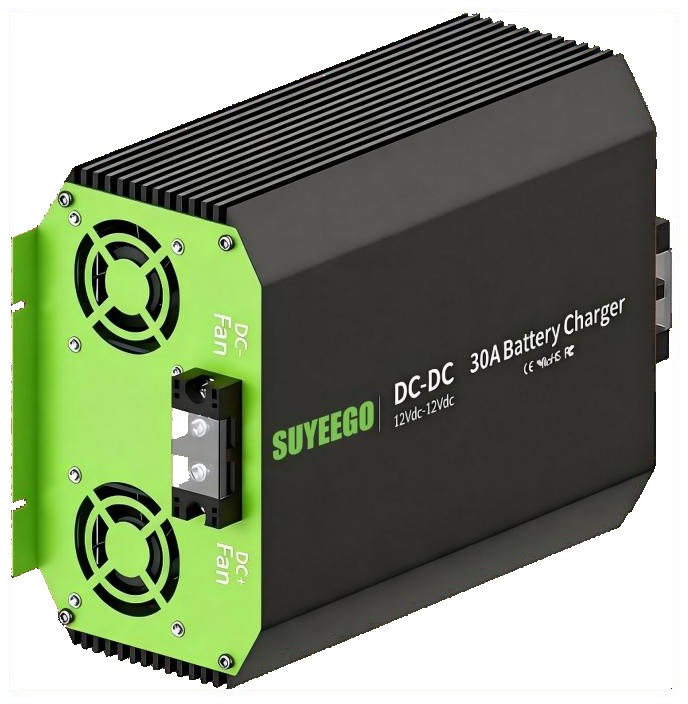
- Measure the unit, not the box. The DD range is published at 218.1 × 154 × 72mm with an 80mm mounting hole spacing.
- Check the environment it is rated for: −20 °C to 65 °C on the DD range, and −20 °C to 50 °C with humidity up to 95% non-condensing on the 12V 20A to 60A range.
- Read the ingress rating honestly. The DD range publishes IP32, which keeps fingers and light rain out rather than being a sealed marine unit. Do not mount it where it will be hosed or where water pools.
- Keep the charger near the leisure battery. The output run is the one carrying the charge current, and a short output run is what lets the charger regulate at the terminals instead of at the end of a long cable.
The input side
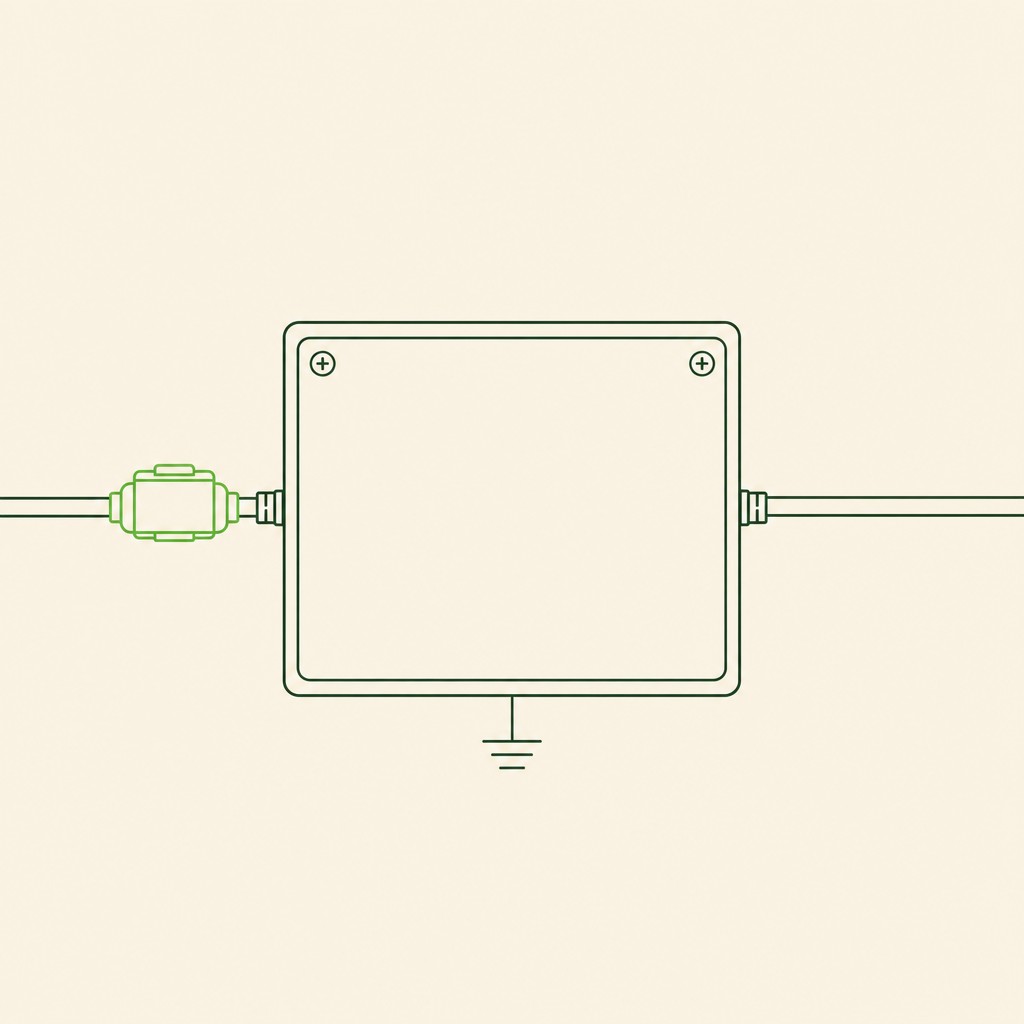
The cable from the starter battery or the vehicle's electrical system is the one that faults at both ends, so protect it at both ends. The fuse belongs at the source, as close to the starter battery as practical, so that a short anywhere along the run is cleared without the cable itself becoming the fuse.
- Fuse at the starter-battery end, sized for the cable, not for the charger's greed.
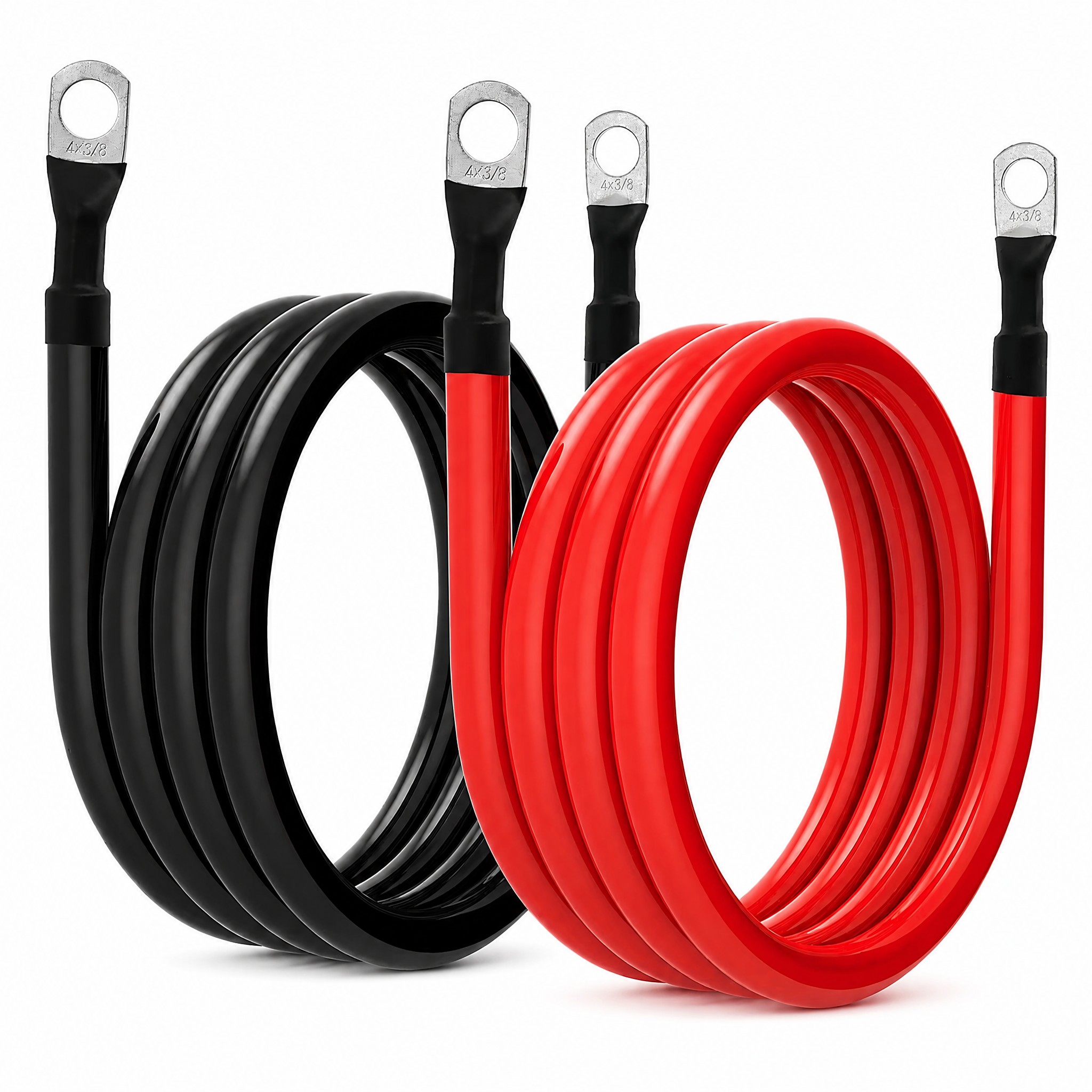
- Run the positive and negative together and keep them short where you can; a loop spread around the vehicle is a longer aerial as well as a longer resistor.
- Fit the control wire so that the charger cannot run with the engine off. The DD range publishes an external remote switch control for exactly this.
- Leave the charger's protection functions to do their own job: overcharge, overcurrent and over-temperature protection plus reverse-connection protection on the generator, panel and battery sides are all published on the DD range.
First switch-on
- Check polarity with a meter before connecting the charger, rather than relying on the reverse-connection protection to absorb a mistake.
- Set the battery type. Both ranges publish multi-chemistry support, and the DD range lists sealing, colloid, water addition, lithium iron phosphate and ternary lithium profiles.
- Watch the first run: the DD range publishes app monitoring over RS485, WiFi or Bluetooth, which is the quickest way to see the input voltage, the output current and the temperature as the engine starts.
- Feel the terminations after an hour of charging. Warm is normal; hot means a bad crimp or an undersized cable, and it is the failure that starts fires.
What the specification does not tell you
The published figures cover the charger, not your vehicle. The alternator's capability, the existing cable in the loom and the fuse already fitted are all specific to the vehicle, and the 12V 20A to 60A range publishes no ingress protection rating at all, so treat its environment as your decision rather than a given.
Frequently asked questions
- Where should a DC charger be mounted?
- Close to the leisure battery, on a solid dry surface, with the published hole spacing respected. Nearness matters because the output side carries the full charge current, and the shorter that run is, the more of the charger's regulated voltage arrives at the battery.
- Does the fuse go at the starter battery or at the charger?
- At the starter battery, as close to the source as practical. A fuse at the charger end protects the charger, while a fuse at the source protects the cable, and the cable is the part that can turn a short circuit into a fire.
- Can I leave the charger connected all the time?
- The published range is built to be installed permanently. What must not be permanent is charging with the engine off, which is what the external remote switch control on the DD range exists to prevent.
- Is IP32 enough for a campervan?
- IP32 keeps out fingers and light rain, and it is the rating the DD range publishes. It is a rating for a dry interior location, not for a wheel arch or a position that gets sprayed.