How do you crimp a battery cable so the joint does not fail?
7 min read
A crimp is a cold weld. The tool squeezes the lug barrel and the strands until the copper flows together and the joint becomes one piece of metal with no air left in it. Four things decide whether that happens: the barrel has to match the conductor size, the stripped length has to fill the barrel without strands spilling past it, the tool has to close to the correct size instead of simply squashing the barrel, and the finished joint has to be pulled hard before anyone trusts it. A crimp that looks neat but was closed in a vice has the shape of a joint without the metal-to-metal contact, so it heats under load rather than failing where you can see it.
What the crimp is actually doing
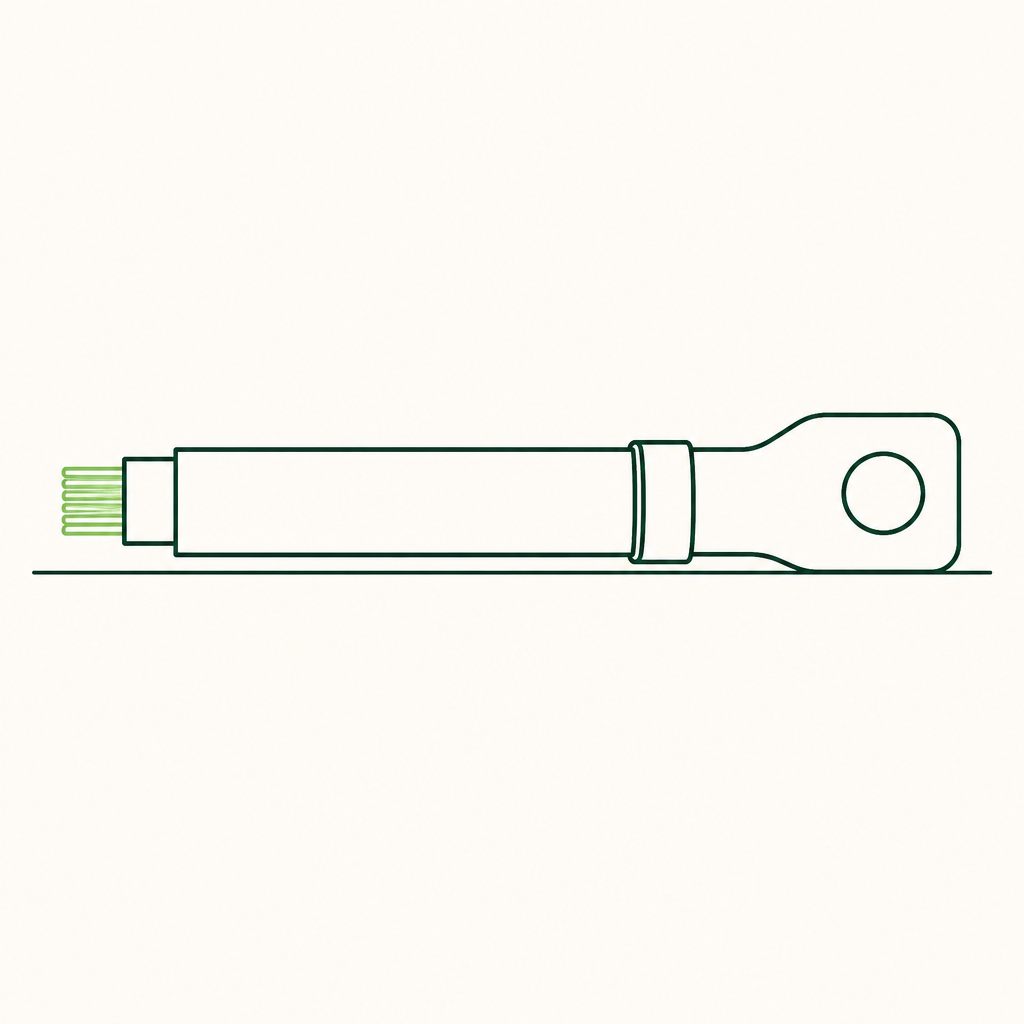
Current does not travel through the surface of a terminal, it travels through metal that is touching metal. A sound crimp removes the air between the strands and the barrel, and the contact becomes continuous across the whole compressed length. That is why the result is described as a weld rather than a grip: the two pieces stop being two pieces.
The practical consequence is that the joint is either right or it is a resistor. There is very little middle ground. A crimp with voids in it still holds the cable and still passes current, so it looks finished, but the voids are where the heat starts, and heat is what turns a marginal joint into a failed one a season later.
Match the barrel to the conductor, not to the stud
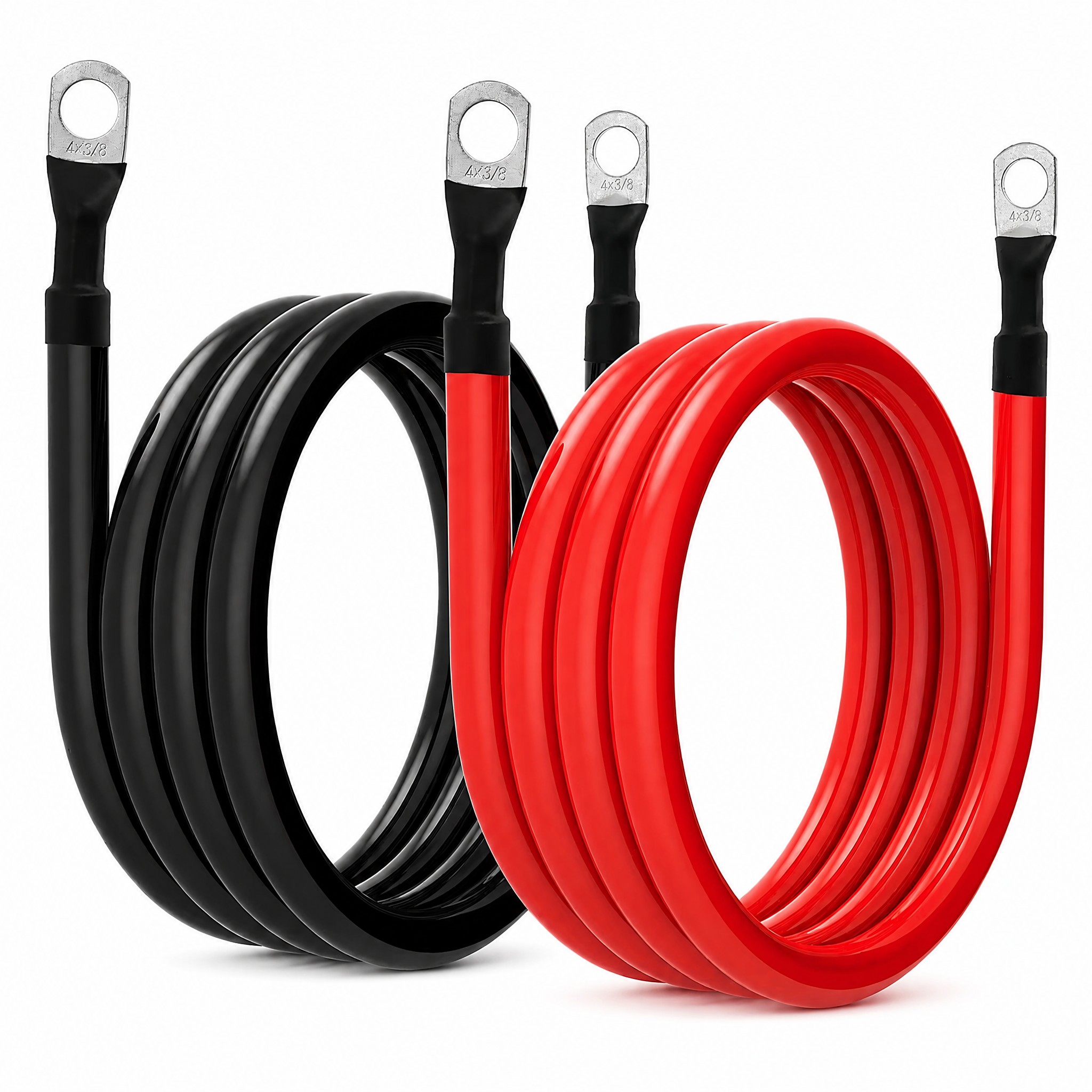
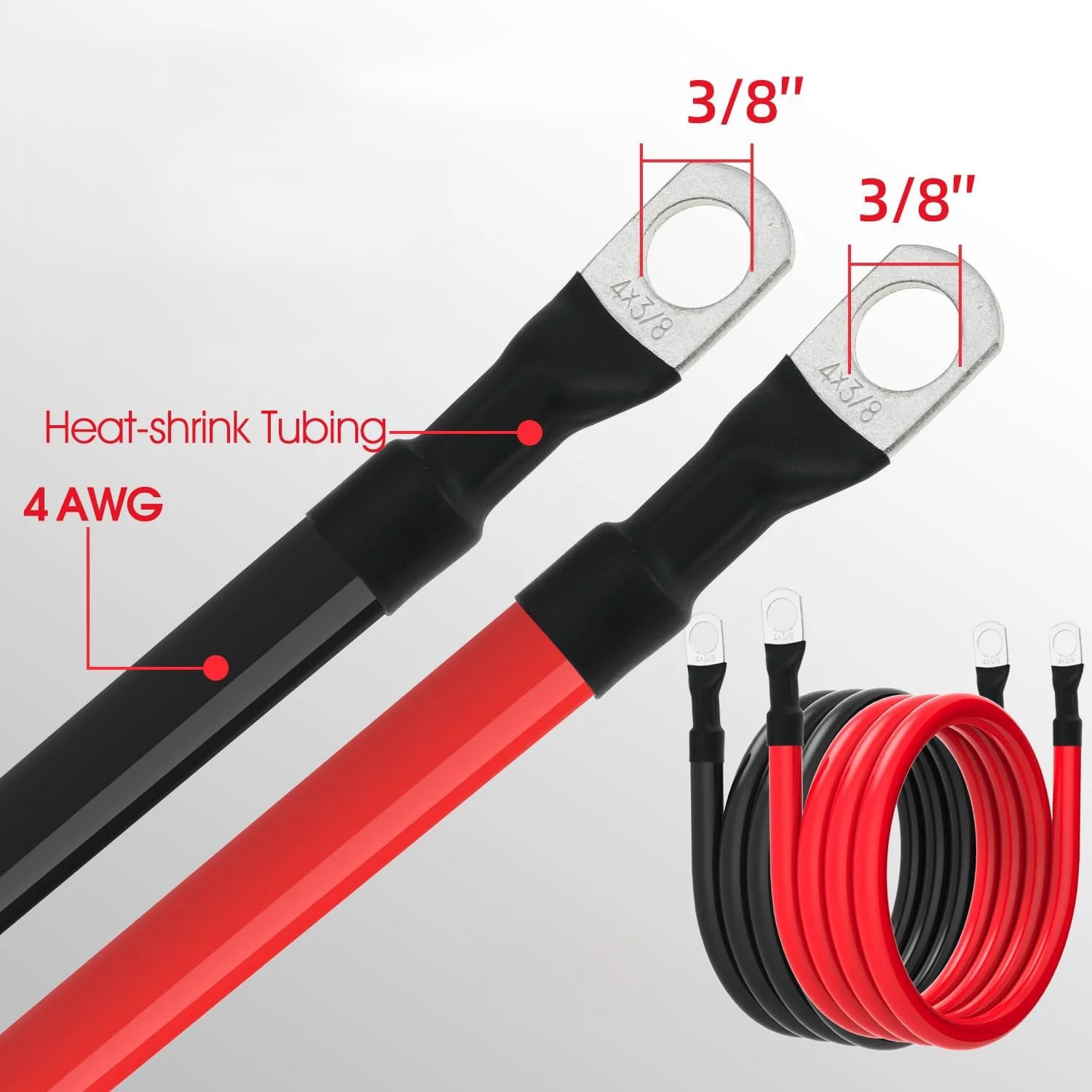
A ring terminal has two sizes and they are easy to confuse. The hole in the palm takes the stud: 3/8 inch, or 9.5 mm, on the cable in this range. The barrel takes the conductor, and it has to be the barrel for the cable size you are actually using. A lug with a 3/8 inch hole is available in several barrel sizes, and buying by the hole tells you nothing about whether it will crimp onto 4 AWG.
Stripping is where most joints are already lost
- Strip to the depth of the barrel, so the conductor reaches the far end without copper sticking out past it.
- Cut the insulation without cutting into the copper. A nick in a strand is a crack waiting for vibration.
- Do not twist the strands into a rope first. The barrel is sized for the conductor as it comes, and twisting changes its diameter.
- If strands fall out while stripping, cut the end off and start again. A cable that has already lost strands is thinner than the lug was chosen for.
- Wipe the conductor if it is dull or greasy. Oxide and handling film both sit between the metals you are trying to weld.
The tool, and why a vice is not one
A proper crimping tool closes a die to a fixed size. That is the whole point of it: the die decides how far the barrel is compressed, and it stops at the same place every time. A vice, a hammer or a pair of pliers compresses as far as the operator pushes, which is why those joints vary from one terminal to the next on the same cable.
Two die shapes are common. A hex crimp closes the barrel into a hexagonal section and is the usual choice above small cable sizes, because the compression is even around the circumference. An indent crimp drives a point into the barrel from one side and is common on smaller terminals. Either is fine on 4 AWG as long as the die is marked for that cable size and the tool is closed fully, which on most ratchet types means the handle releases only once the cycle is complete.
Seal it, then strain-relieve it
Copper that is exposed to air and moisture at the edge of a crimp will corrode, and corrosion in a joint is resistance. Adhesive-lined heat-shrink over the barrel and a little way up the insulation does two jobs: it keeps moisture out of the strands, and it takes the bend away from the point where the rigid barrel meets the flexible cable. That second job matters on a vehicle, where the cable is vibrating for hours at a time.
Support the cable so the weight of the run does not hang on the terminal. A heavy cable tied off a short distance from the lug will outlast one that is carried entirely by the stud.
What the failures look like
| What you see | What went wrong | What to do about it |
|---|---|---|
| Barrel squashed flat, no die shape in it | Closed in a vice, hammer or pliers | Cut the lug off and redo it with a die |
| Strands visible outside the barrel | Stripped too long, or barrel too large | Cut back and recrimp with the right barrel |
| Cable pulls out with a firm tug | Under-crimped, or barrel oversized | Redo it. This joint was never carrying current properly |
| Green inside the barrel after a season | Not sealed, moisture reached the copper | Cut back to bright copper and redo with adhesive heat-shrink |
| Terminal warm under load while others are cool | Voids in the crimp, or a loose stud | Check the stud torque first, then replace the joint |
Testing it before it goes into service
- Pull firmly along the cable axis. The joint should not move at all, and there should be no gap opening at either end of the barrel.
- Look at both ends of the barrel. You want to see a closed, even section with the copper fully inside it.
- Twist the lug. Any rotation on the conductor means the crimp is not biting.
- After the system has run under real load for a while, compare terminal temperature by hand or with an infrared thermometer. A joint noticeably warmer than its neighbours is a joint to redo.
The parts this range uses
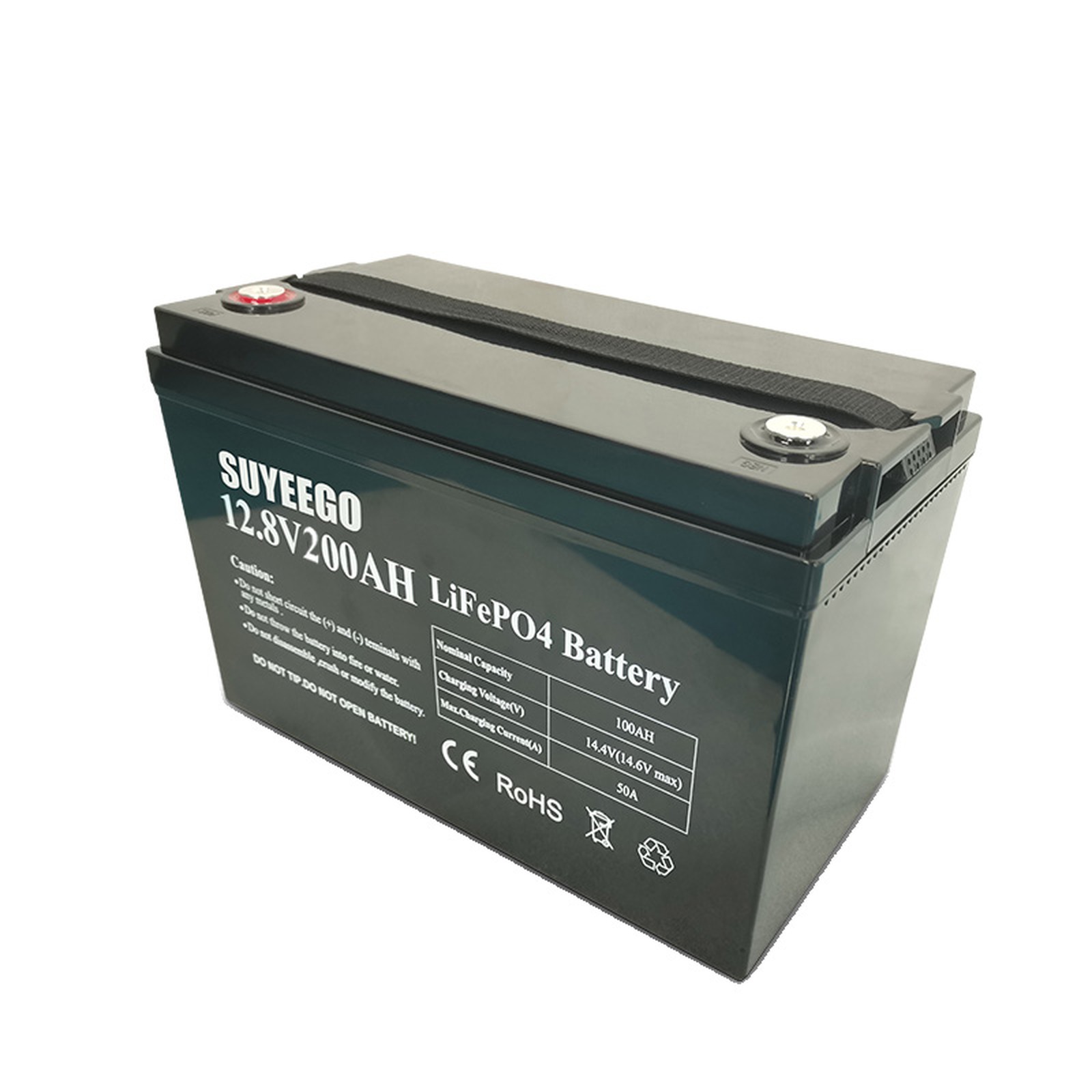
The battery cable in this range is 4 AWG pure copper with PVC insulation and a tin-plated jacket, terminated in 3/8 inch (9.5 mm) ring terminals with heat-shrink tubing already fitted, and supplied as a red and black pair in customizable lengths. The tin plating is there for the same reason the heat-shrink is: to keep the copper out of contact with air. On a system built around the 12.8V 200Ah LiFePO4 battery, which is published at 200A of continuous discharge, every joint in the main path has to be sound, and the crimp is the one part of that path that is assembled by hand, so it is the one part whose quality the specification cannot guarantee for you.
Frequently asked questions
- Can I crimp a battery cable with a hammer or a vice?
- You can close the barrel that way, but you will not get a controlled compression, and the joint will have voids in it. It will hold and it will pass current, which is what makes it dangerous: it works until it heats. Use a tool with a die marked for the cable size.
- Does the ring terminal hole size tell me the cable size?
- No. The hole takes the stud, which on this cable is 3/8 inch (9.5 mm). The barrel takes the conductor. The same hole is sold with different barrel sizes, so the barrel has to be checked against the cable separately.
- Should I solder the joint after crimping?
- A correct crimp does not need solder. Solder wicked into the strands makes the cable rigid right where it needs to flex, and it hides a poor crimp rather than fixing it. If the crimp is sound, solder adds nothing but a stress point.
- How do I know the crimp is good without cutting it open?
- Pull it hard along the axis, twist it, and look at both ends of the barrel for gaps. Then check it warm: after a period under real load, a sound joint runs at about the temperature of its neighbours, and a poor one is the warm terminal you can find by hand.