Should I build a 12V or a 24V battery bank?
7 min read
Stay at 12V while the system is small, and step up to 24V as soon as a large inverter enters the plan. The reason is current rather than capacity: the same wattage drawn at 24V needs half the amps of a 12V bank, which halves the cable size, the fuse rating and the heat produced along the way. A 12V bank is simpler and every common accessory is available for it, so most camper vans stay there. The point where it stops being convenient is usually the point where someone wants to run a coffee machine or an air conditioner.
Current is what everything else is sized for
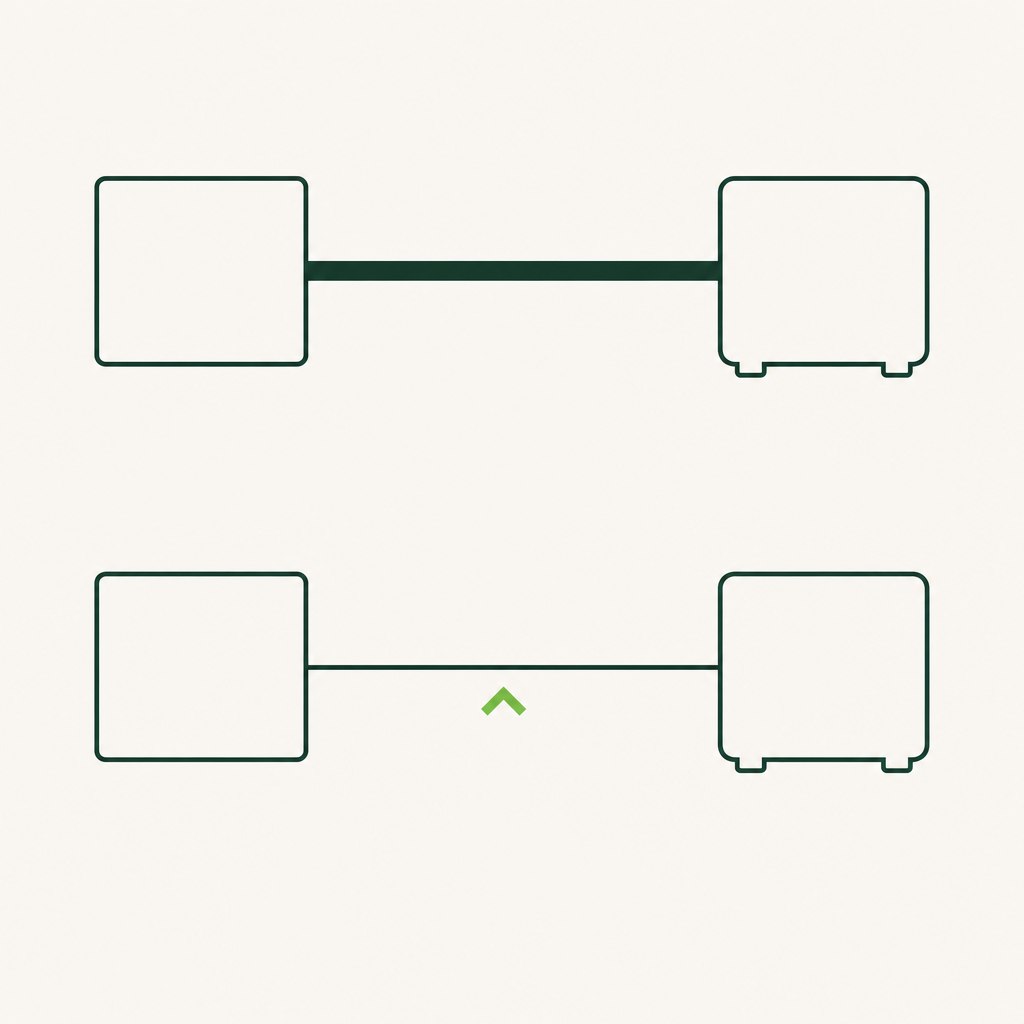
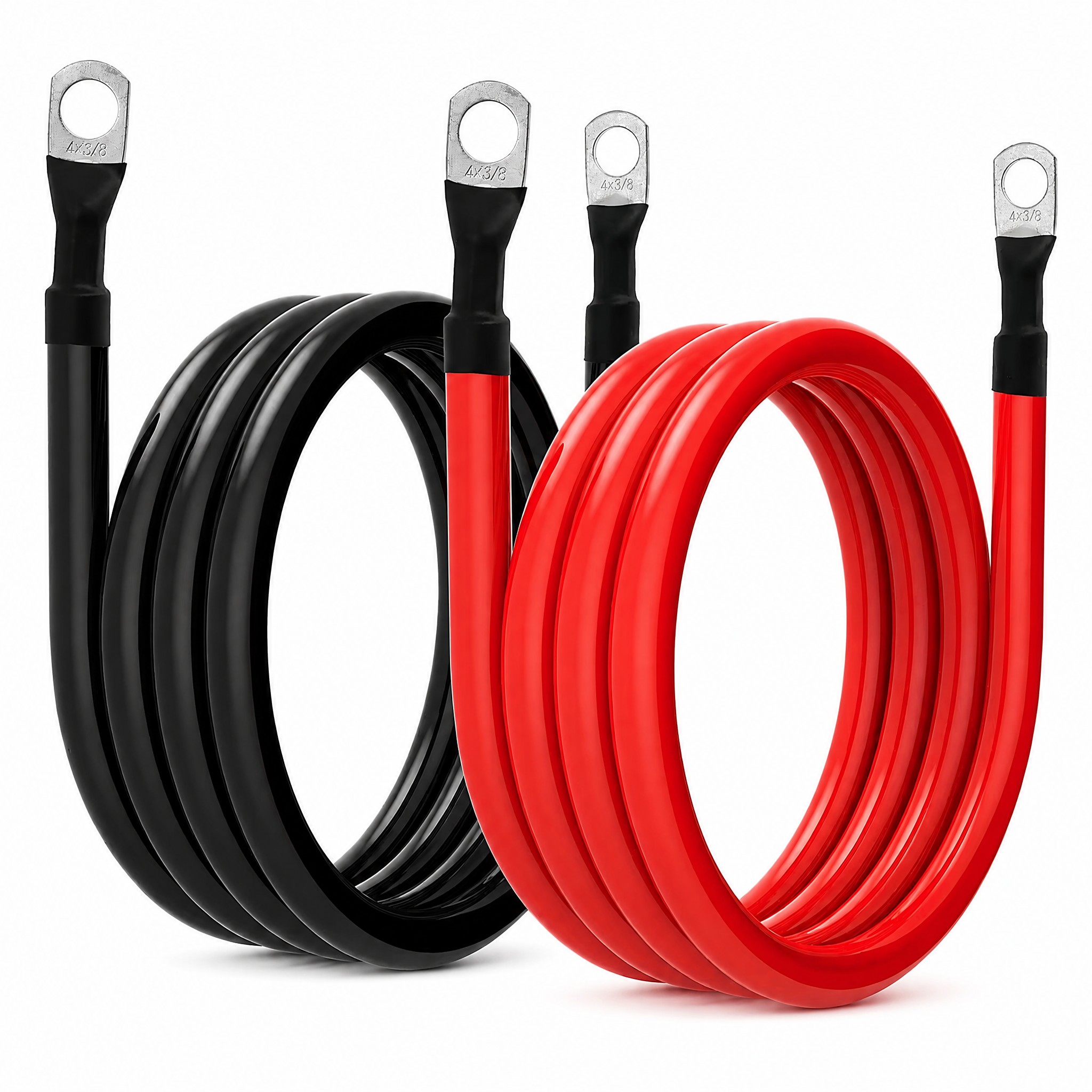
Two systems can hold the same amount of energy in watt-hours and behave completely differently, because one delivers that energy at 12V and the other at 24V. A 2000W load draws about 167A from a 12V battery and about 83A from a 24V one, once each bank's own losses are counted. The second figure can be carried by a cable roughly half the cross-section of the first.
That difference compounds. A thicker cable is heavier, harder to route, more expensive and harder to terminate properly. A larger fuse is a bigger interruption point. More current means more heat wherever the connection is imperfect, and imperfect connections are the normal case in a vehicle that vibrates.
What changes when you step up
- The cable between the battery and the inverter gets thinner, and the run becomes practical over a longer distance.
- The fuse or breaker protecting that cable goes down a rating or two.
- The inverter has to be one that accepts 24V input, which most larger models do as a separate variant.
- The charge controller has to be specified for a 24V bank, or to detect it automatically.
- Anything charging the bank from the vehicle — a DC-DC charger, for instance — has to be the 24V version.
- A few 12V accessories will need a converter, though lights, fridges and chargers are commonly available in both voltages.
What does not change
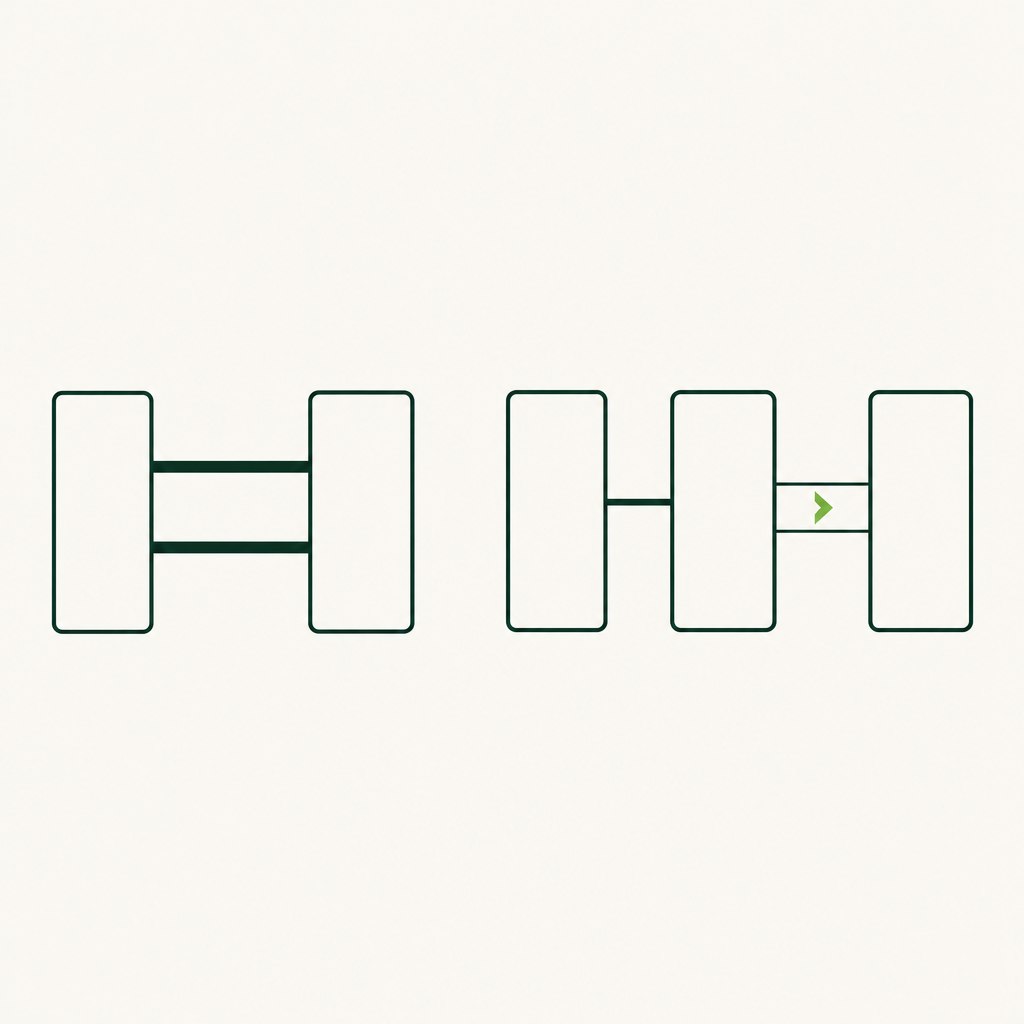
The energy in the bank does not change. Two batteries of the same amp-hour rating wired in series hold the same watt-hours as they would in parallel; what moves is the voltage and the current, not the amount of work available. The panels are unaffected as well: the array produces the same power either way, and the controller's job is simply to match it to the bank.
This is the part that catches people out. Moving to 24V does not give you more energy or more runtime. It gives you the ability to move that energy through smaller, cheaper, cooler hardware, which matters when the load is large and does not matter at all when it is small.
The practical answer
For a camper van running a compressor fridge, lights, a laptop and a water pump, 12V is the right answer and there is no reason to complicate it. Once an inverter large enough to run a coffee machine or an air conditioner is in the plan, compare the cost of the thicker 12V cable and larger fuse against the cost of moving the whole DC side to 24V. The larger the inverter, the more often 24V wins.
SUYEEGO's MPPT charge controllers are specified across 12V to 96V banks, which is the range that matters if you expect to move up later, and their pure sine wave inverters run from 1kW to 3kW. Ask us which of them suits the bank you are planning, before you buy the cable.
Frequently asked questions
- Can I run a 24V inverter from a 12V battery?
- No. An inverter's input voltage is fixed, and feeding it half of what it expects will not produce half the output — it will simply not start. If you want the option of 24V later, that decision has to be made when the inverter is chosen.
- Does a 24V system charge faster from solar?
- It charges slightly more efficiently rather than faster. The array produces the same power either way, but a 24V bank carries that power at half the current, so less of it is lost as heat in the cable between the controller and the battery. The difference is real and usually small.
- Can I have both 12V and 24V in one vehicle?
- Yes, with a DC-DC converter stepping one down to the other, and it is a normal arrangement where the vehicle's own 12V electrical system has to be preserved alongside a 24V house bank. It adds a part, and that part has its own current limit, so it is worth checking what has to run on the 12V side before relying on it.
- Which voltage is better for a large inverter?
- Higher voltage, almost always. The cable and fuse are chosen for the current the inverter draws, not the power it delivers, so doubling the bank voltage halves both and turns a cable that was awkward to route into an ordinary one.