Low-frequency or high-frequency RV inverter: does it matter?
6 min read
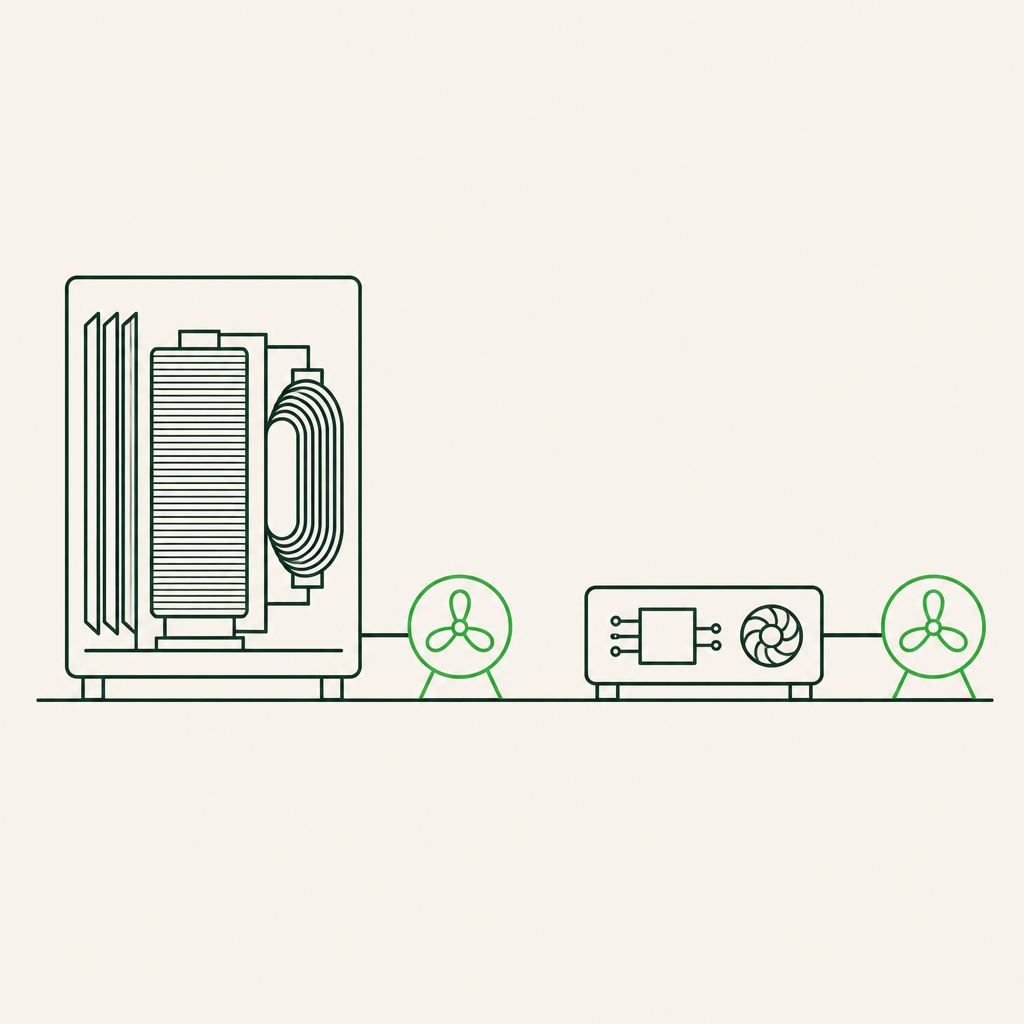
There are two ways to build an inverter and the difference shows before you connect anything. A low-frequency design uses a large iron-core transformer running at mains frequency, which makes the unit heavy and bulky but historically generous at absorbing the surge of a motor starting. A high-frequency design switches at tens of kilohertz through a small ferrite transformer, which makes it compact, light and usually more efficient at part load. Neither is automatically better: what decides whether your compressor or pump starts is the published continuous and peak rating and the overload behaviour of the exact model, not the label on the design family.
What the two designs actually are
A low-frequency inverter switches the DC input into a rough alternating waveform and then passes it through a transformer whose core is iron and whose operating frequency is the same 50Hz or 60Hz that leaves the socket. That transformer is large and heavy because an iron core at mains frequency has to be. A high-frequency inverter first converts the DC into a high-frequency alternating waveform, typically tens of kilohertz, through a small ferrite transformer, and then recreates the output waveform electronically. The ferrite core can be small because it works so much faster, and the finished unit is a fraction of the size for the same output.
Where the transformer earned its reputation
A large iron core stores magnetic energy and can deliver a brief overload current well above its continuous rating, which is exactly what an induction motor demands in its first fraction of a second. That is the origin of the rule of thumb that transformer inverters start motors better. The rule is a generalisation rather than a law, and it is worth treating it that way: compact designs vary widely in how much surge they will deliver, and some publish peak ratings several times their continuous figure while others only just exceed it. Compare the published peak figure and how long it is held, not the design family.
What the compact design buys you
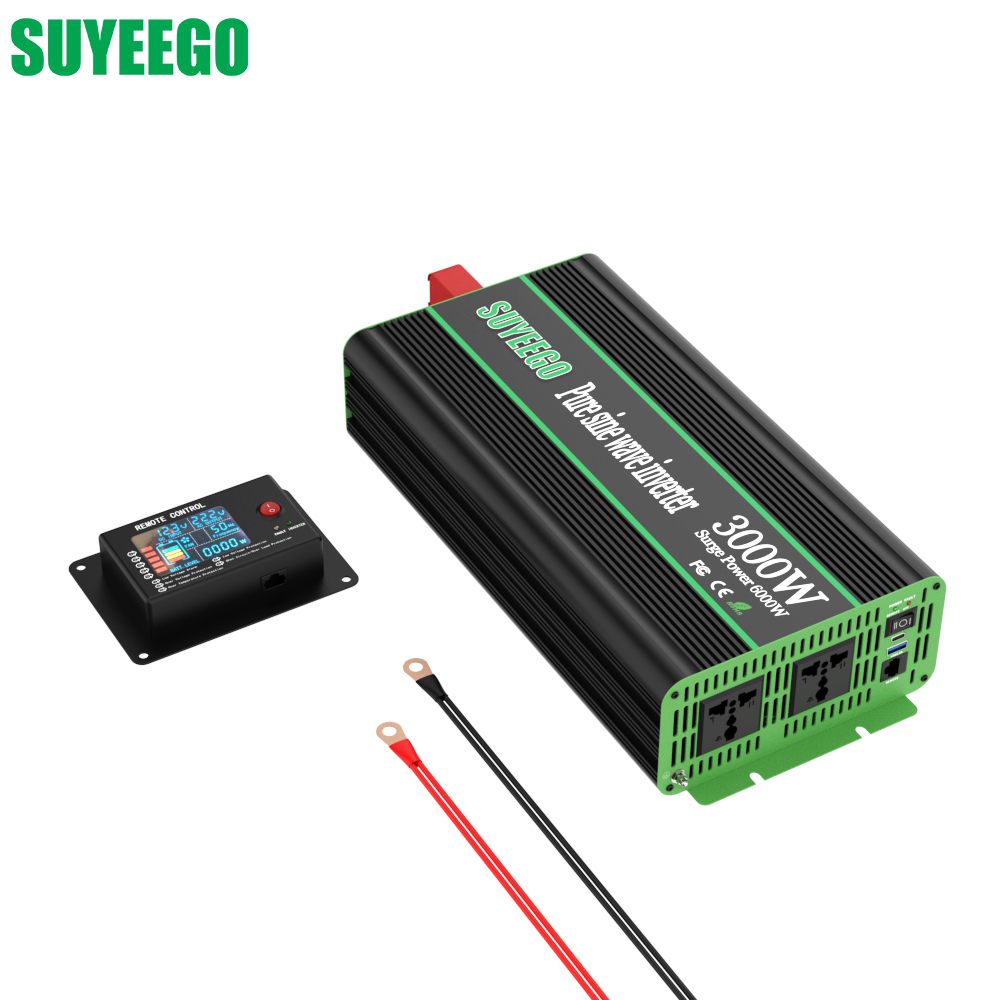
- Space and payload, which are the scarcest resources in a van. Our 3kW model is published at 43.5x18x8.6cm and 5.1kg gross.
- Efficiency at the loads you actually run, since the range is published above 95%.
- Quieter running, because there is no mains-frequency core in the unit to hum.
- Room to mount it, because a lighter unit can go in more places without reinforcement.
The range is published between 2.8kg and 5.1kg gross across the 1kW to 3kW models, with peak output at twice the continuous figure on every model. Our published specification does not state the conversion topology, so if the internal design matters for a particular load, ask us for the model you are considering rather than inferring it from the weight.
The comparison in one table
| What it affects | Low-frequency (iron core) | High-frequency (ferrite) |
|---|---|---|
| Size and weight for a given rating | large and heavy | compact and light |
| Surge capacity | traditionally generous, but varies by model | varies widely by model: check the published peak figure |
| Efficiency at part load | generally lower | generally higher |
| Audible hum | possible at mains frequency | little or none |
So what should you actually compare?
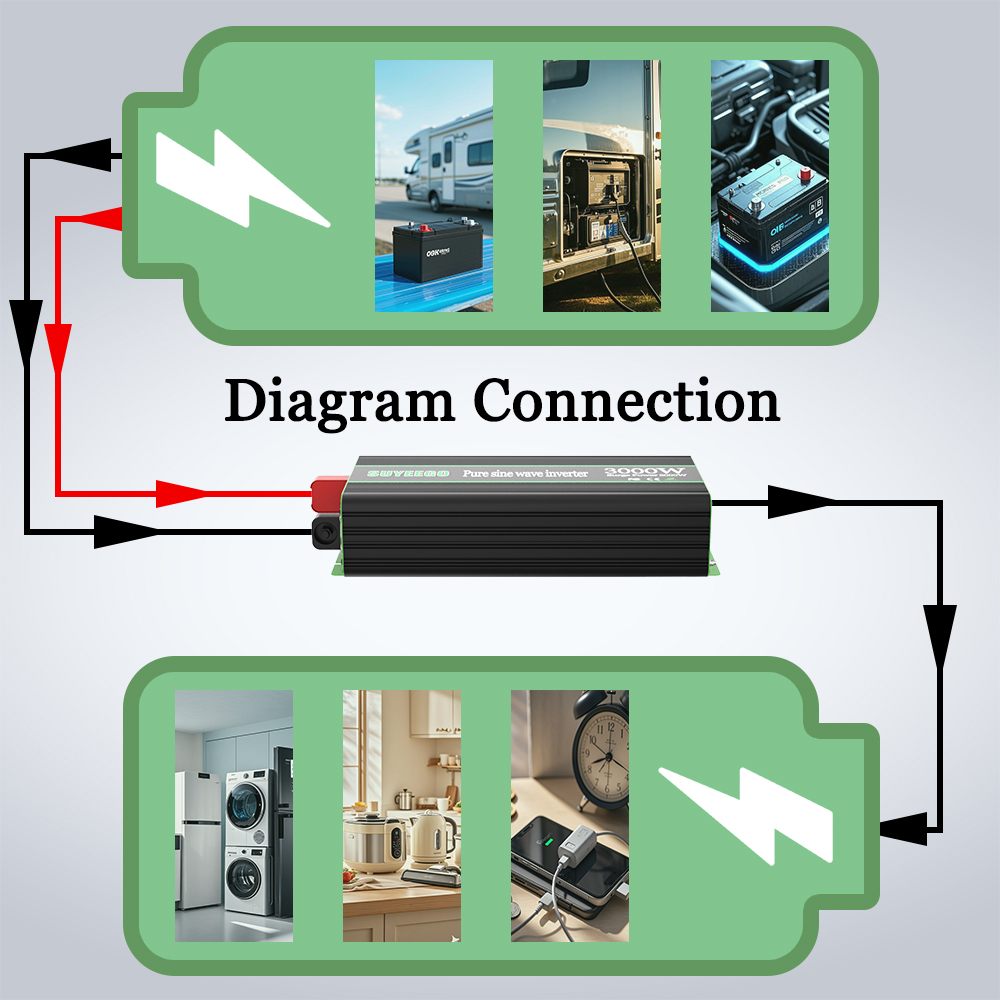
Continuous rating for the loads that run for hours, peak rating for the ones that start hard, efficiency at the load you actually run, the DC current the battery bank has to supply, and the physical space you have. If a supplier cannot tell you the peak rating or how long it lasts, the design label will not save you. Our models publish both figures for every size: 1000W with 2000W peak, then 1500W/3000W, 2000W/4000W, 2500W/5000W and 3000W/6000W.
What the range publishes
The SYGG-FSC range runs from 1kW to 3kW continuous with peak output at twice that on every model, from 12V or 24V DC input, with 110V or 220V output at 50Hz or 60Hz, pure sine wave output, over 95% efficiency, a low-voltage alarm at 10.5V and cut-off at 10V on a 12V bank, a remote controller display with optional remote control, USB and Type-C ports, a built-in cooling fan, and protection against overload, short circuit, overheat and reverse connection. The units carry CE, FCC and RoHS certification.
Frequently asked questions
- Is a low-frequency inverter better for an RV?
- Not automatically. It is traditionally better at absorbing motor-starting surges, but a compact design with a high published peak rating can start the same compressor. Compare the peak figure and the overload behaviour of the exact model you are considering.
- Why are some inverters so heavy?
- Because of what is inside. A unit with an iron-core transformer running at mains frequency weighs several times what a high-frequency design of the same rating does. Our published gross weights run from 2.8kg to 5.1kg across the 1kW to 3kW models.
- Does a high-frequency inverter run a motor well?
- It depends on the model rather than on the category. Look at the published peak rating and how long it is held. Every model in our range publishes peak output at twice its continuous rating.
- Can I tell which design an inverter uses from the outside?
- Weight and volume for a given rating are the giveaway in practice, but that is an inference rather than a specification. Our published specification does not state the conversion topology, so ask us for the model you are considering.