What do TOPCon and HJT cells change in a van panel?
6 min read
They change the watts available per square metre of roof, and very little else. The three generations on sale sit in recognisable bands: PERC modules around 20 to 22% efficiency, TOPCon around 22.5 to 24.5%, and HJT around 24 to 25.5%. On a van, where roof area is the hardest limit in the whole build, that difference is real but modest — moving from a 21% module to a 24% module is about 14% more power from the same surface. How much of the roof is usable, how the panels are wired and whether shade crosses them still matter more.
The three generations, in one table
| Cell type | Typical module efficiency | What it is good at |
|---|---|---|
| PERC | About 20–22% | The long-standing standard, lowest cost per watt |
| TOPCon | About 22.5–24.5% | The mainstream successor, better behaviour in heat, lower degradation |
| HJT | About 24–25.5% | The highest efficiency of the three, with high bifaciality |
The generational change has already happened at the top of the market: TOPCon has taken over from PERC as the default cell in mainstream modules, and HJT sits above it as the higher-efficiency, higher-cost option. For a van buyer the practical consequence is that panels bought today are likely to be better than the same size panel bought a few years ago, at a similar price.
What it means on a van roof

Efficiency is a per-area figure, so it decides how many watts fit on the roof you have. If the roof is generous, a cheaper lower-efficiency panel that fits is often the better purchase; if the roof is tight, efficiency is what decides the size of the array you can have at all. That is the honest trade, and it is why the wattage and the dimensions of a panel should be read together rather than the wattage on its own.
Bifaciality, and why it barely helps a van
HJT modules are often bifacial, with reported bifaciality as high as about 95%, meaning they can also collect light falling on the back of the panel. That is valuable on a ground-mounted array lifted clear of a bright surface. On a van roof the panel sits flat against the roof, the back faces a dark cavity and there is nothing to reflect, so the second side contributes close to nothing. On a van, bifaciality is a specification you pay for and do not use.
What to check when buying
- Efficiency and dimensions together, so you can compare watts per square metre rather than watts alone.
- The temperature coefficient, because output falls as cells heat up and the amount it falls by differs between cell types.
- The bypass diode arrangement, which decides how the panel behaves when shade crosses part of it.
- The flexible or rigid decision first, since flexible modules are usually built on older cell generations.
The figures the range publishes
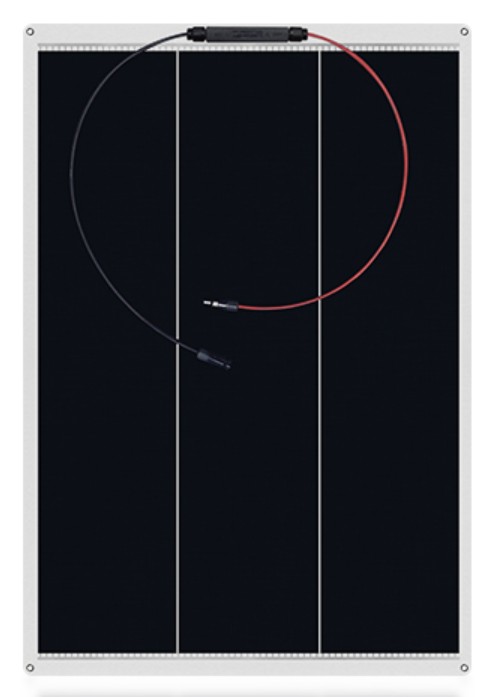
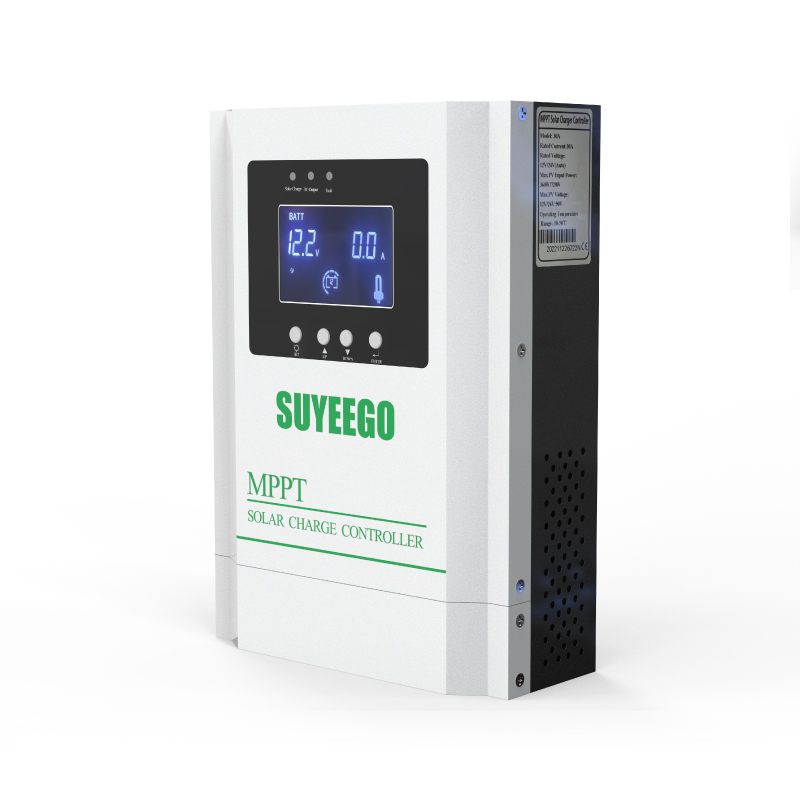
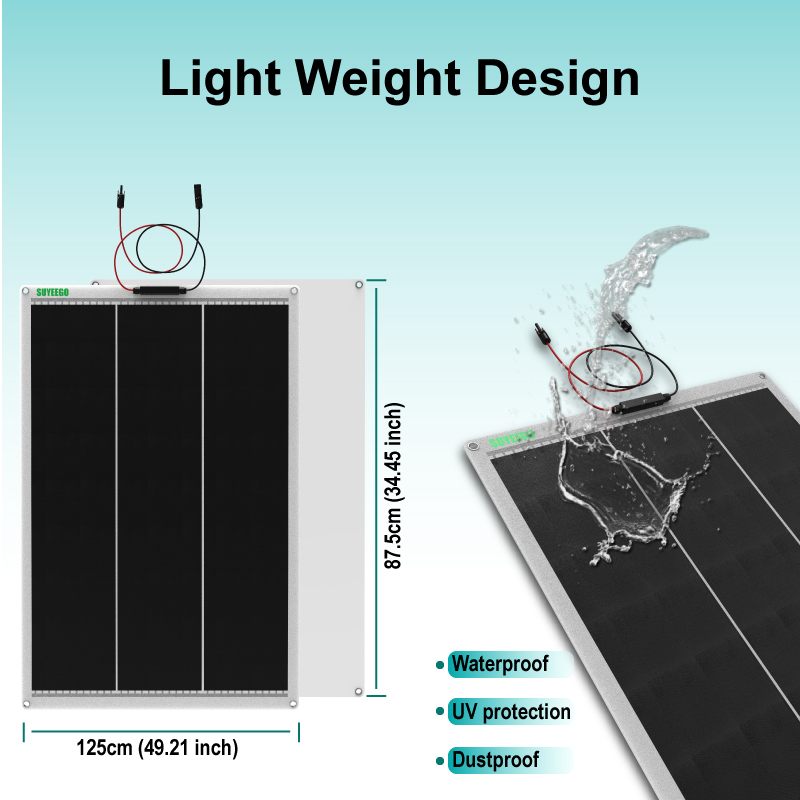
SUYEEGO's flexible panel range (SYGSP-F) covers 50W to 230W, with open-circuit voltages between 21.5V and 25.8V and bypass diodes built in, over a two-year stated warranty. The MPPT controller range that suits it accepts up to 80V or 130V of PV open-circuit voltage depending on the model, and up to 1200W of panel on a 12V bank. Whatever cell generation the panel uses, those two limits are what decide how much array the system can take.
Frequently asked questions
- Is a higher-efficiency panel always the better buy?
- Per square metre, yes; per pound, not always. If the roof has room to spare, a cheaper lower-efficiency panel that fits is usually the sensible purchase, and efficiency becomes the deciding factor only when space is the limit.
- Do flexible panels use the newest cell types?
- Flexible modules are usually built on cells chosen for how they bend and how they survive being walked on or bonded to a curved surface, and the newest cell generations take time to appear in that form. It is one reason flexible panels are often quoted lower per unit area than rigid ones of the same class.
- Does efficiency change when the panel gets hot?
- Yes. Cell output falls as temperature rises, and different cell types fall by different amounts, which is why two modules with the same nameplate rating can behave differently on a hot roof. The published temperature coefficient is the figure to compare.