Solar and the alternator at the same time: how dual input charging works
7 min read
Two sources can charge the same battery at once, and the reason people usually keep them apart is the behaviour of the alternator rather than the battery. A conventional alternator holds a fairly steady output — the published window for a traditional one is 13.2–16V on a 12V system — but a modern intelligent alternator varies its voltage to satisfy the engine management system and can sit far lower, which is why a second battery charged from it directly often never reaches full. A dual input charger reads both sources, converts each one to the voltage the leisure battery needs, and draws from both together, so the array and the alternator add up instead of competing. SUYEEGO builds the range in 40A and 60A versions, with automatic detection anywhere from 12V to 48V and one unit that accepts both traditional and intelligent alternator windows.
Why the two sources seem to fight
A battery accepts current according to the difference between the voltage being offered and its own. That single fact explains most of the confusion. Two sources connected to the same battery are not in conflict at all — the battery simply takes current from whichever is offering the higher voltage, and the other contributes little or nothing. The result is charging voltage set by accident rather than by design, and neither source applying the profile its own electronics were built to apply.
The alternator makes that worse. Its output is not a fixed 14.4V. A traditional alternator runs somewhere in a 13.2–16V window on a 12V system, and an intelligent alternator runs a deliberately wider 12–16V because the engine control unit uses voltage to manage charging and recuperation. A leisure battery needs to be taken up to a specific voltage and held there; a source that spends part of its life below that figure will fill the battery only slowly, or not at all.
- A separate solar controller and a split-charge relay can both be connected, and nothing will break — but the battery will end up at whatever voltage the stronger source happens to be providing at that moment.
- A solar controller applying its own charge profile while the alternator holds a different voltage means the better profile is simply overridden.
- On an intelligent alternator, the voltage may drop far enough for the alternator to contribute nothing while you drive, which is the opposite of what the driver paid for.
What a dual input charger does differently
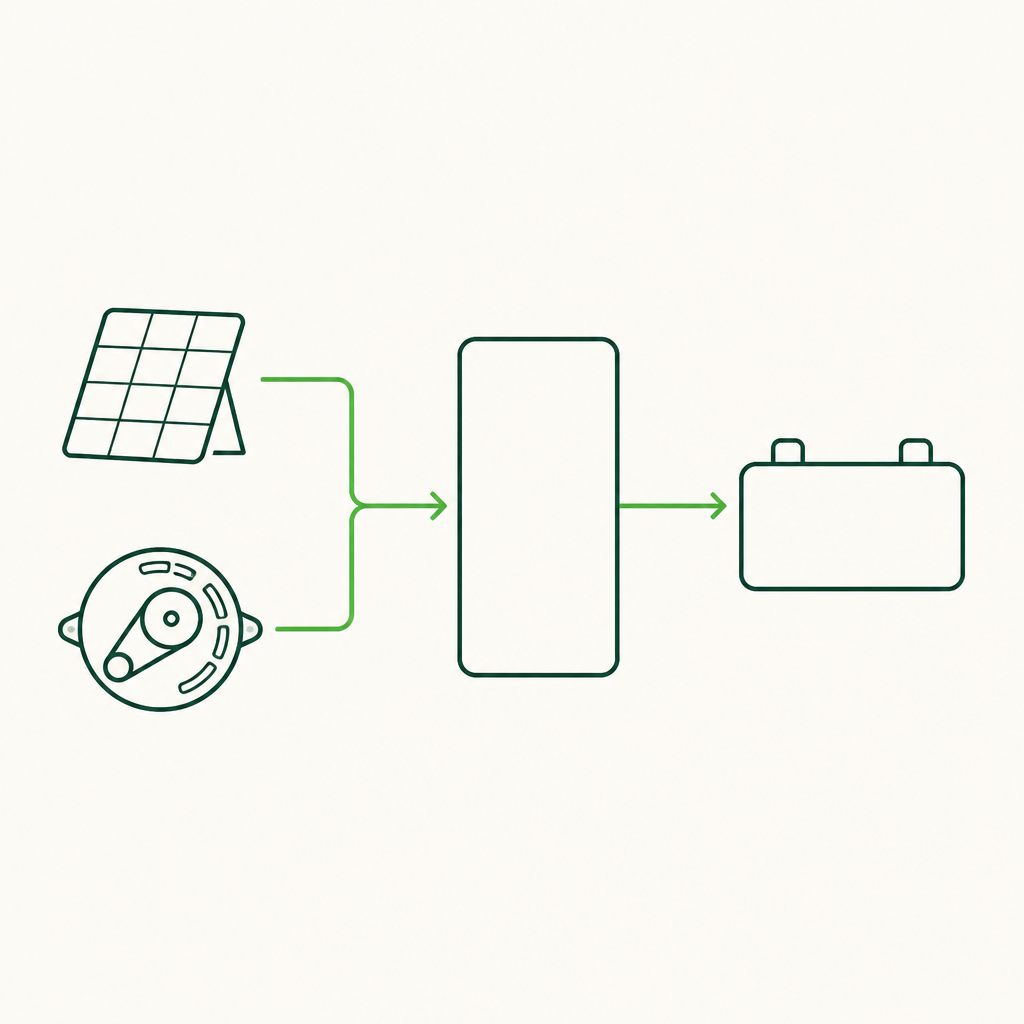
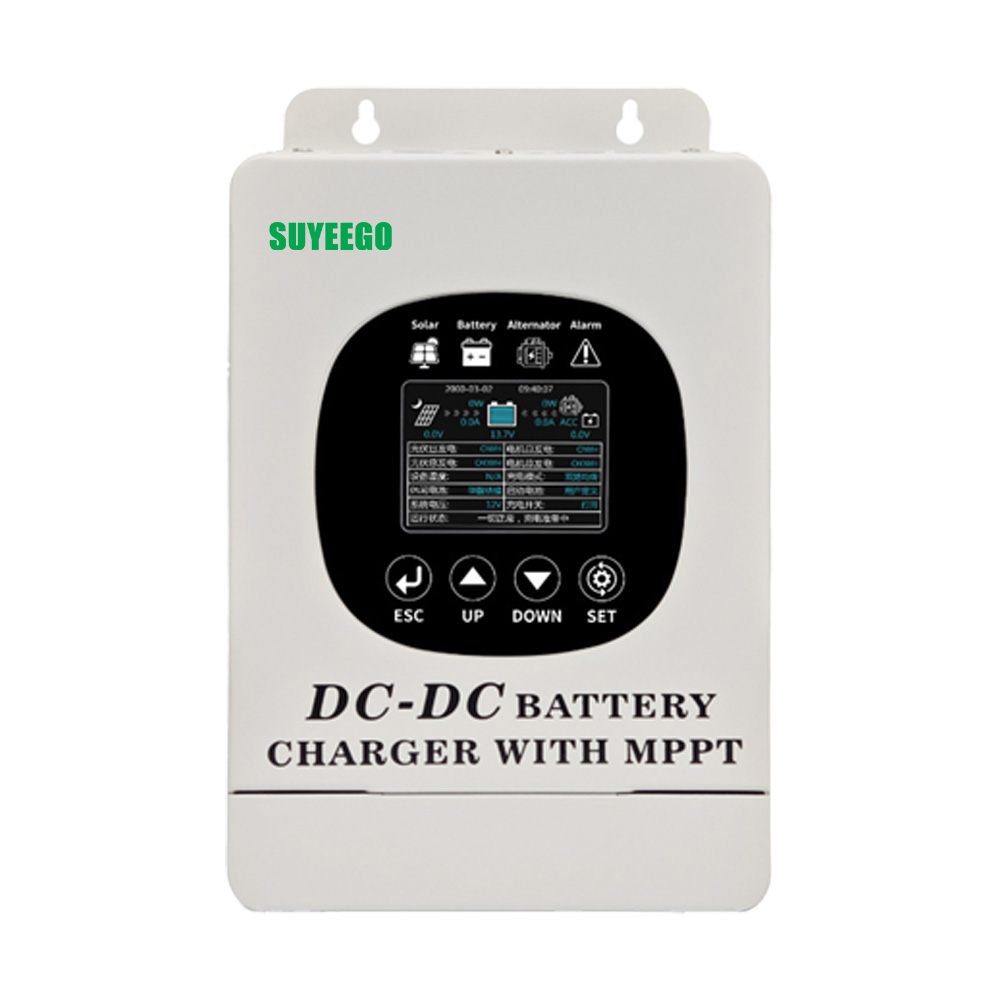
A dual input unit replaces two devices with one and, more usefully, decides how the two sources share the work. The published specification of SUYEEGO's range describes the solar side as a voltage reduction MPPT tracker with a tracking efficiency above 99%, and the alternator side as boost, buck or boost-buck conversion — which is what lets it take an input anywhere from the traditional window down to the lower intelligent one and still produce the correct charging voltage. Charging conversion efficiency is quoted at 98%.
| Specification | DD4048 | DD6048 |
|---|---|---|
| Maximum PV input current | 20A | 40A |
| Maximum PV open-circuit voltage | 80V | 80V |
| Maximum alternator input current | 20A | 20A |
| Maximum charge current to the leisure battery | 40A | 60A |
| Leisure battery voltage, automatic | 12 / 24 / 36 / 48V (9–60V range) | 12 / 24 / 36 / 48V (9–60V range) |
| MPPT tracking efficiency | >99% | >99% |
| Charging conversion efficiency | 98% | 98% |
Charging the starter battery from the array
The same unit can pass a small charge back to the starter battery from the solar array — a published 10A on the 40A model and 20A on the 60A version. This is a maintenance feature rather than a recovery tool. It keeps a parked vehicle's starter battery topped up, which is a real problem on a vehicle left standing for weeks, but it is not intended to bring a flat starter battery back, and the specification states that the starter battery must be lead-acid.
For a vehicle that sits for long periods, that single line removes the usual chore of a trickle charger and a mains lead. For one that is driven every few days, it makes very little difference.
What to check before choosing one
- The array has to stay under the 80V open-circuit limit. That figure counts the panels in series at their coldest, not at the comfortable temperature you measure them at (see the series and parallel guide).
- The alternator side accepts a maximum of 20A of input current, so it is the alternator's availability rather than its size that sets the ceiling.
- The leisure battery type has to be one the unit can be set for: the published list covers sealed, colloid, water addition, lithium iron phosphate, ternary lithium and custom.
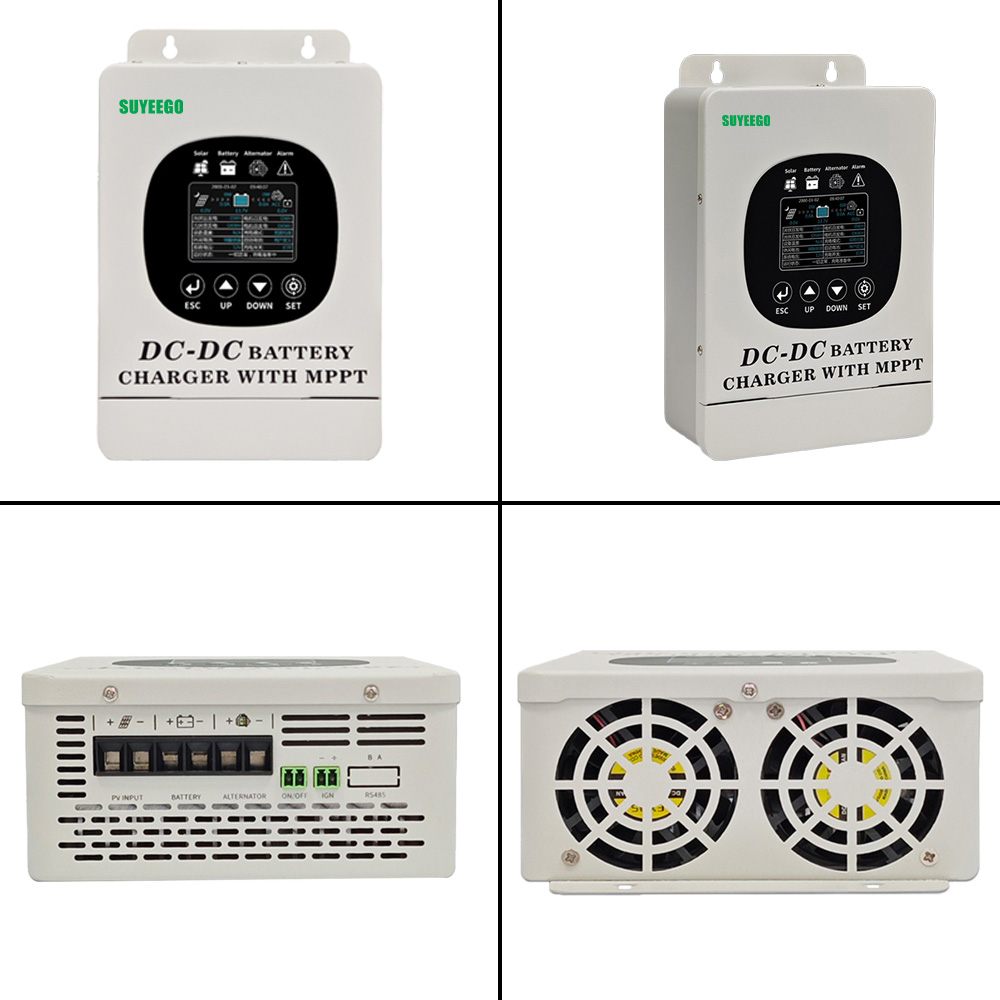
- The unit itself is IP32 and rated from −20 °C to 65 °C, 218.1 × 154 × 72 mm, with 80 mm mounting hole spacing — which decides where it can be fitted, and that is a separate question worth getting right.
- Monitoring is optional rather than included: RS485, WiFi or Bluetooth depending on the version ordered.
SUYEEGO builds this charger so that a vehicle which drives long distances and parks off-grid does not have to choose between its two sources. Tell us the alternator you have and the array you are planning, and we will say whether the 40A or the 60A version is the right one.
Frequently asked questions
- Can solar and the alternator charge the battery at the same time?
- Yes. A dual input charger is built to draw from both at once and to present the battery with a single managed charge, rather than letting the two sources set the voltage by accident.
- Do I still need a solar charge controller with a dual input charger?
- No. The MPPT solar controller is inside the unit, so a second controller on the same array would compete with it rather than add to it.
- Will a dual input charger charge the starter battery as well?
- It can pass a small PV current to the starter battery — 10A on the 40A model and 20A on the 60A model — which is enough to keep a parked vehicle's starter battery topped up. The published specification requires the starter battery to be lead-acid.
- Is a dual input charger better than a DC-DC charger plus a solar controller?
- It is one device instead of two, and it decides how the two sources share the load rather than leaving them to set the voltage between them. If the array is already served by a controller you are happy with, a DC-DC charger on its own may be all that is missing.