Will an RV MPPT solar charge controller charge the starter battery?
5 min read
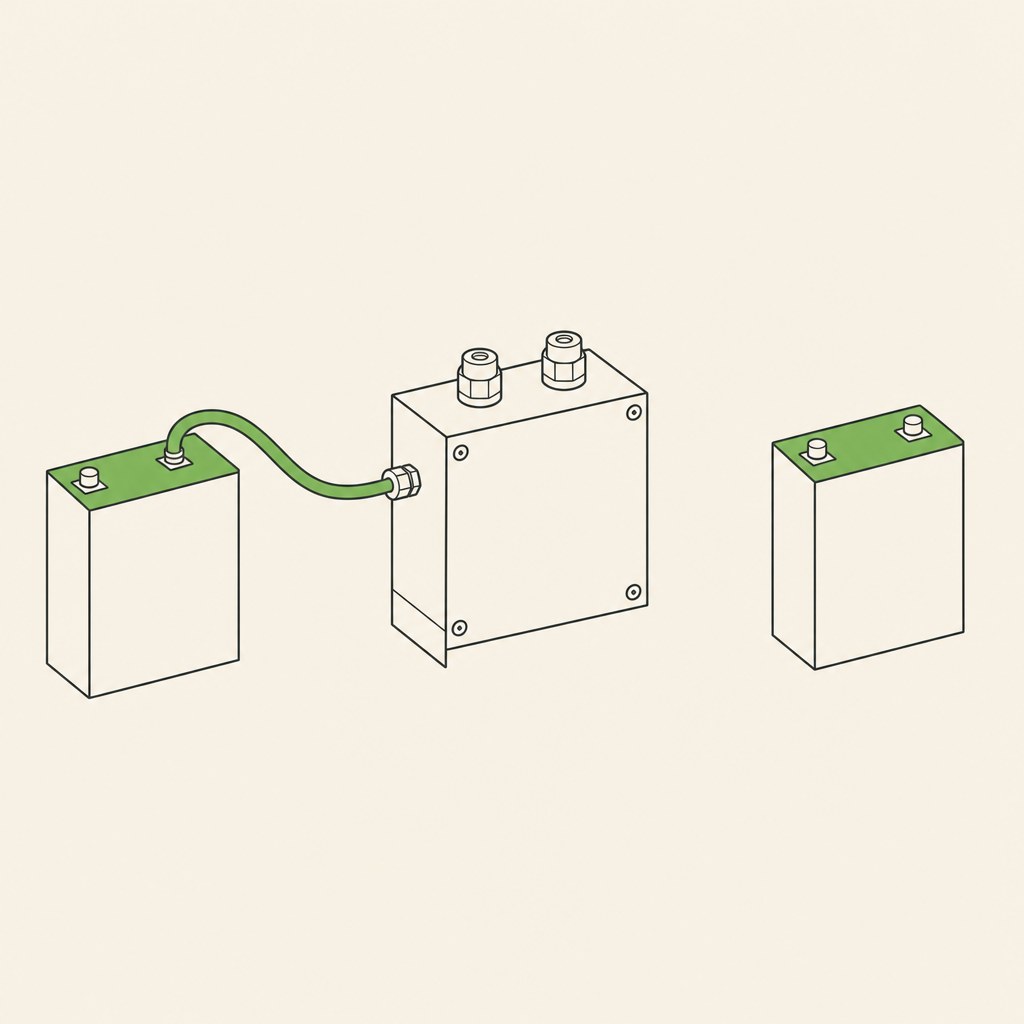
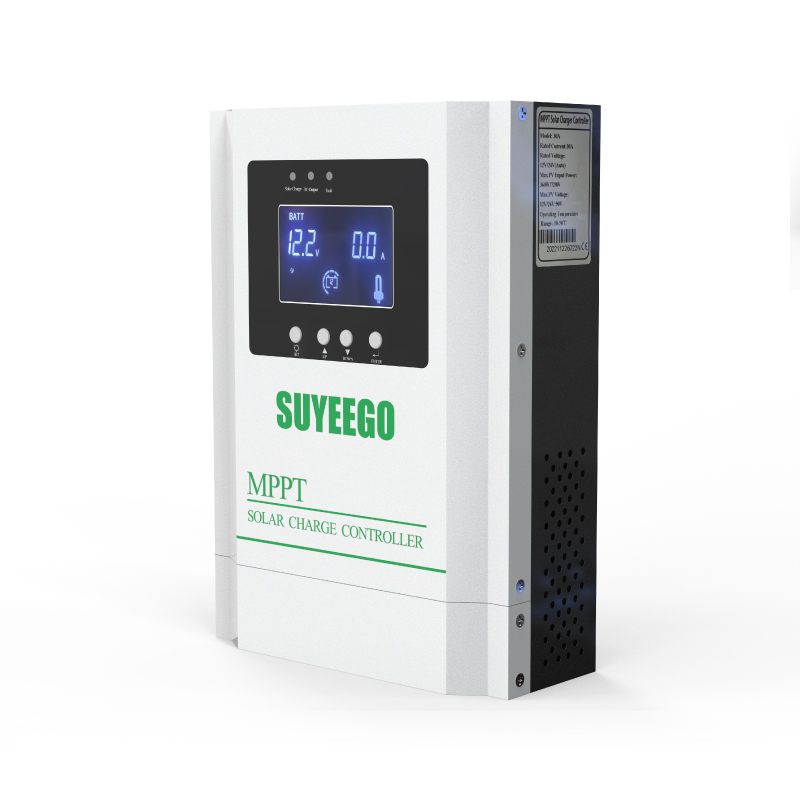
Not as a second charging output, because our MPPT range does not publish one. The range has a solar input, a battery connection and a DC load output, and only the battery connection is a charging circuit with a charge profile. So an MPPT wired to the leisure bank maintains that bank and nothing else, and the vehicle's starter battery needs a separate device to look after it.
Three sets of terminals, one of them a charger
A charge controller is easiest to understand as three connections rather than two. The array arrives on the PV input, the bank sits on the battery terminals, and the load output feeds DC appliances. Only the middle one charges anything: it is the one the controller applies a battery profile to.
That matters for a van with two batteries, because the habit is to look for a second output and assume it must be for the second battery. On this range the second output is the load output, and its job is to run things rather than to charge them.
Why the load output cannot stand in for a second battery
| What the load output has | What it would need to charge a second battery |
|---|---|
| A published output voltage range, such as 10.5–14V on a 12V model | A target voltage per charging stage, chosen for the battery chemistry |
| A published current limit — 10A default, 45A maximum | A current profile that tapers as the battery fills |
| A published undervoltage disconnect and recovery threshold | An understanding of the second battery's state of charge |
What actually looks after a starter battery
In a two-battery van the starter battery is normally maintained by a separate device that takes a small charge from the leisure side or from the alternator. We do not publish that behaviour for the MPPT range. We do publish it on our DC-DC charger range, and it varies by model, so the honest answer is model-specific rather than a general yes.
- Tell us your bank voltage and how the two batteries are arranged, and we will tell you which of our products publishes the behaviour you need.
- A solar-only van with no second device will leave the starter battery to the vehicle's own charging, which is fine while the van is being driven.
- A van that sits for months is where a starter battery suffers, and that is a battery maintenance question before it is a charging question.
If you are planning two batteries
The decision is usually between a dedicated device that maintains the starter battery and simply sizing the leisure bank so that the vehicle battery is left alone. Both are legitimate, and they lead to different products. What we would not want is for you to buy an MPPT on the assumption that its second output will maintain a second battery, because on this range the second output is published as a load circuit with a current limit of its own.
Frequently asked questions
- Can I use the DC load output to keep my starter battery topped up?
- It is not published as a charging output. The load terminals are a supply with a low-voltage disconnect, with a published default of 10A and a maximum of 45A, and they do not apply a charge profile to whatever is connected. Using them to maintain a second battery is outside what this range publishes.
- Does your MPPT controller have two battery outputs?
- No. Our MPPT range publishes one battery connection, plus a DC load output for appliances. If you need a second battery maintained, tell us the arrangement and we will point you at the product in our range that publishes that behaviour.
- Can I connect my starter battery directly to the MPPT controller as well as the leisure bank?
- Do not parallel two batteries of different types or states of charge on one charging output. The controller applies one profile to whatever it is connected to, so two dissimilar batteries on the same connection are being asked to accept the same treatment.
- Will the solar array charge my starter battery if the leisure bank is full?
- Not through an MPPT on this range. A full bank simply stops accepting current; nothing in the published behaviour of the range redirects surplus charging to a second battery.