Can I leave my lithium battery in the van over winter?
6 min read
Yes, with two conditions: nothing may charge it below freezing, and it should go into storage charged rather than flat. A LiFePO4 battery can be discharged at temperatures down to −15 °C and stored between −15 °C and 50 °C, but its charge window begins at 0 °C, because charging a cold lithium cell causes plating on the anode and permanently reduces capacity. Discharging cold is harmless. Before parking the van up, charge the battery, isolate it from its charging sources and check its resting voltage once or twice over the winter — a lithium battery holds its charge well enough to be left for months at a time.
Three temperature windows, and only one is a problem

| Operation | Temperature window |
|---|---|
| Discharge | −15 °C to 60 °C |
| Charge | 0 °C to 60 °C |
| Storage | −15 °C to 50 °C |
The three windows are different numbers, which is why the question has a more interesting answer than yes or no. A battery sitting in an unheated locker at −10 °C is entirely within its working range, and it will run a load if it is asked to. What it will not tolerate is being charged, and that is the single rule that matters when the vehicle is parked for the winter.
Self-discharge is low enough that leaving it alone is a realistic plan. A lithium battery of this type can be stored for more than six months at 25 °C, and the instruction that comes with those figures is simply to charge it before use.
Why charging cold is the one to avoid
Charging a lithium cell below freezing forces lithium onto the anode as metal rather than intercalating it into the structure, a process usually called plating. Plated lithium reduces the cell's usable capacity, and the effect is permanent rather than temporary: the capacity does not come back when the weather warms up. Discharging in the same conditions involves no plating, which is why a cold battery can run a load but must not be fed one.
What happens next depends on the battery's management system. A battery with low-temperature charge protection refuses the charge, which protects the cells and leaves you with a flat battery on a cold morning. A battery without it accepts the charge and takes the damage quietly. If you are not certain which one you have, treat the 0 °C limit as your own responsibility and disconnect the charging sources before the first frost.
Before you park the van up
- Charge the battery before leaving it. Storage with charge in it is the normal instruction for lithium, and a battery left deeply discharged for months is the case that does the damage.
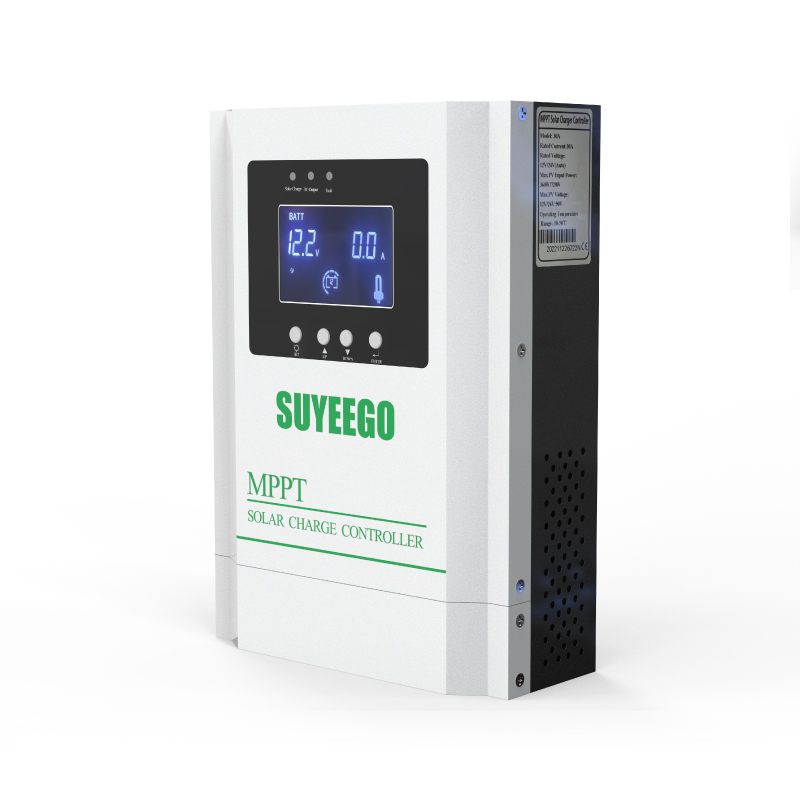
- Isolate it from its charging sources. A solar controller or a DC-DC charger will try to charge a cold battery on any bright day, which is exactly the situation the 0 °C limit exists to prevent.
- Switch off the loads as well. A small parasitic draw left connected for months empties a battery that would otherwise have held its charge.
- Check where it is going to sit. Storage between −15 °C and 50 °C covers an unheated vehicle in most climates; sustained heat is the limit worth watching.
- Leave the case clean and dry. The enclosure is sealed to IP55, which is protection against dust and water spray rather than immersion.
Checking it over the winter
One check is enough: measure the resting voltage with the loads disconnected, once a month or whenever you happen to be passing. A lithium battery that holds its voltage is doing exactly what it should, and lithium's flat discharge curve means the reading stays steady until the battery is nearly empty, so a healthy-looking number is more reassuring here than it would be on lead-acid.
If the reading has fallen, charge it — but only once the battery is above 0 °C, and only to the voltage the manufacturer specifies for the chemistry. A 12.8V LiFePO4 battery is charged at 14.40V–14.60V.
If you want to keep using it through the winter
A battery that lives inside the heated part of the vehicle rarely sees 0 °C at all, and that is the simplest answer: move the problem into the space you are already warming. Where that is not possible, the two useful routes are a battery with integrated low-temperature charge protection and a heating option, or a charging routine that only runs while the space is warm — driving with the heater on, for instance, so that the DC-DC charger is refilling a battery that is above freezing.
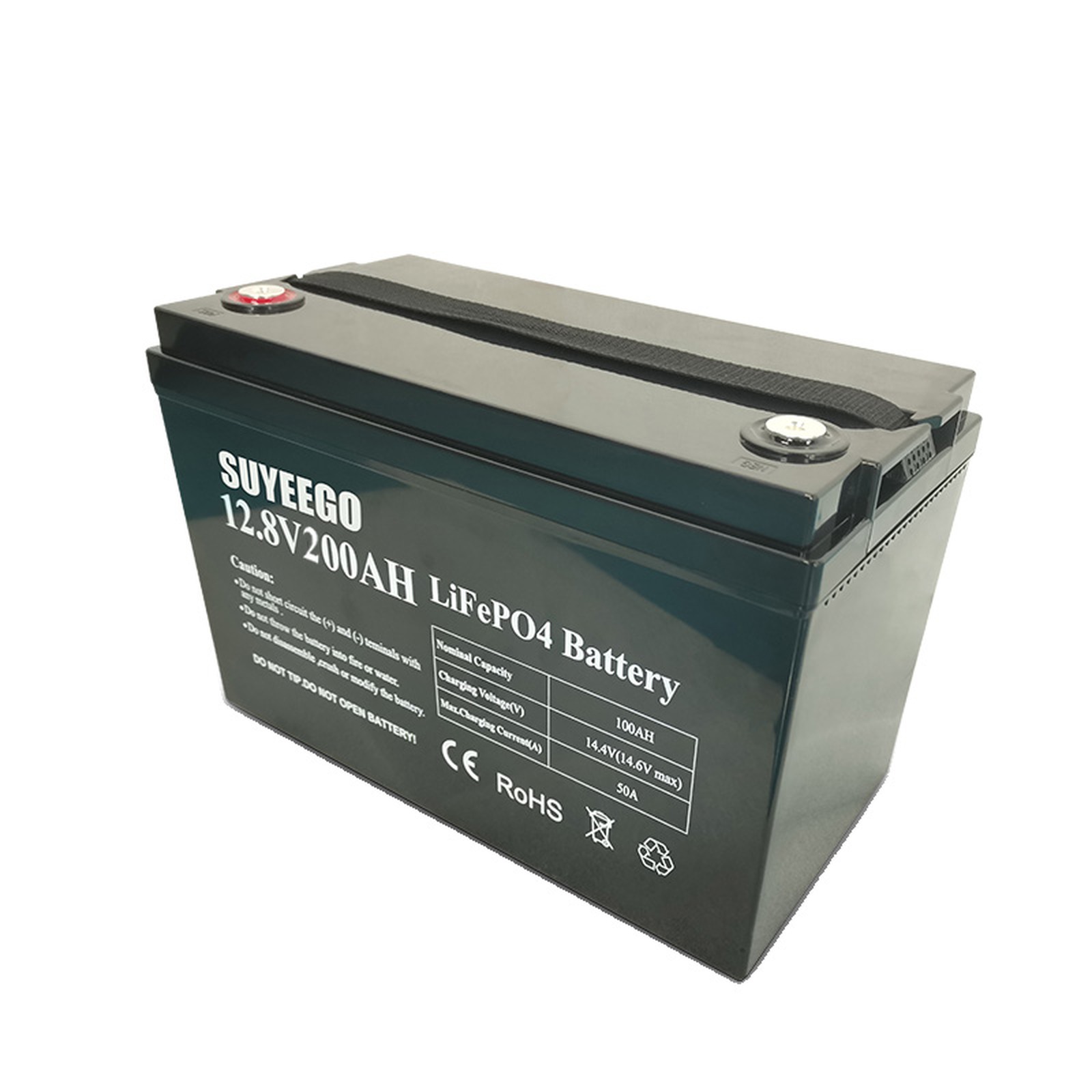
SUYEEGO's 12.8V 200Ah LiFePO4 battery stores 2.56kWh, is rated for more than 6000 cycles and uses an intelligent BMS in a case sealed to IP55. Its published windows are discharge from −15 °C to 60 °C, charge from 0 °C to 60 °C and storage from −15 °C to 50 °C, and its charging voltage is 14.40V–14.60V. Ask us before you park the van up if you are not sure how your installation should be left.
Frequently asked questions
- Can a lithium battery be damaged by freezing?
- Not by the cold itself. Discharging down to −15 °C is inside the published window for LiFePO4, and the electrolyte does not freeze at ordinary winter temperatures. The damage comes from charging below 0 °C, which plates lithium onto the anode and permanently reduces capacity.
- Should I leave my battery on a charger over winter?
- Only if the battery is above freezing and the charger has a proper lithium profile. A charger applied to a battery below 0 °C does the harm the temperature limit exists to prevent, and a charger set for lead-acid will not fill a lithium battery properly in any case.
- Does a lithium battery lose its charge over winter?
- Very little. Self-discharge is slow enough that a lithium battery can be stored for more than six months at 25 °C, with the standard instruction to charge it before use rather than to keep it topped up while it sits.
- Will my solar panels charge the battery in winter?
- They will whenever there is light and the battery is above 0 °C, and on a cold bright morning they will try to charge a battery that is below freezing — which is exactly why the charging sources should be isolated before the winter rather than left connected.