Do solar panels work on cloudy days?
7 min read
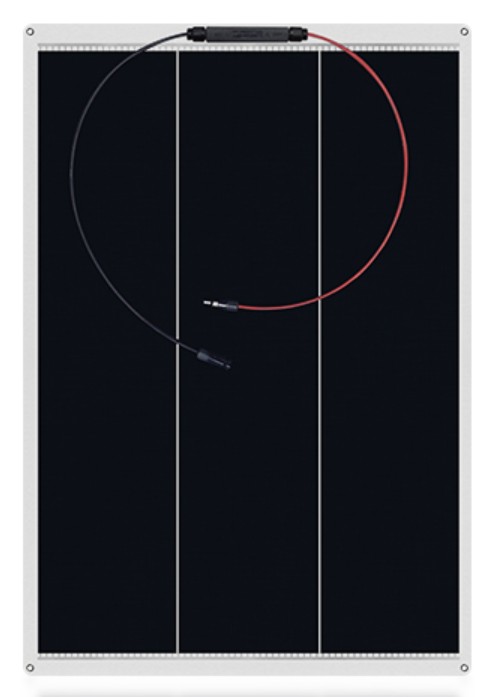
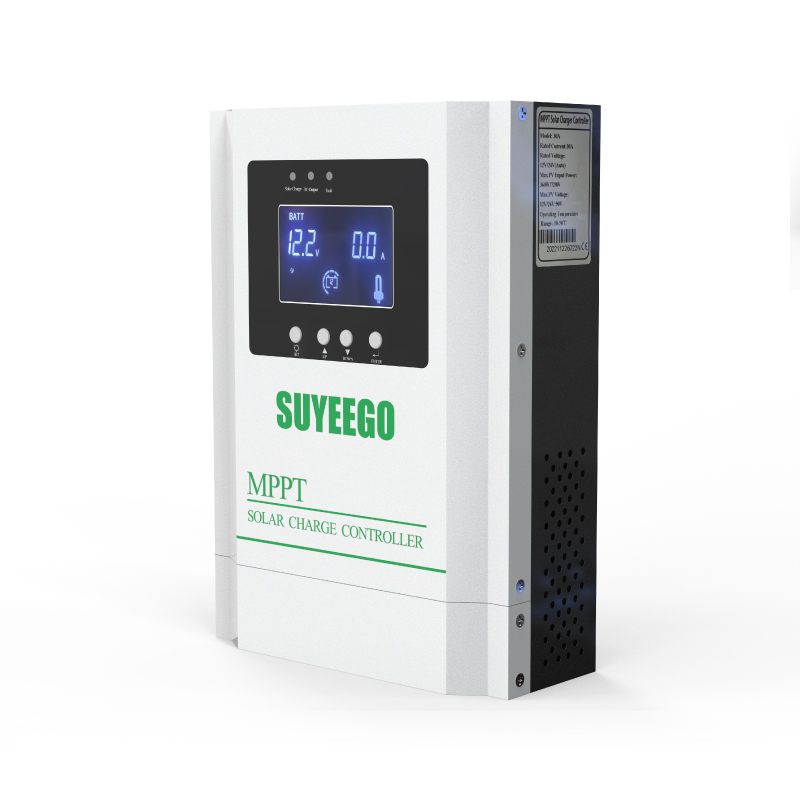
They work, but they produce a fraction of their rated output. A panel's rating is measured under a standard test condition of full sun, and under heavy overcast a flat-mounted panel may deliver well under a quarter of that figure. The physics explains the behaviour: cloud cuts the current a panel can deliver far more than it cuts the voltage, so the array spends a dull day at roughly the right voltage and a fraction of the current. A controller that can find the best operating point recovers more of what is left than a simpler one, which is why MPPT pays for itself in exactly the conditions that make people doubt their panels. SUYEEGO's flexible panels use a high-transmittance ETFE front surface chosen to hold its transmission in low light rather than clouding, with bypass diodes so a shaded section does not drag the rest of the string down.
What cloud actually takes away
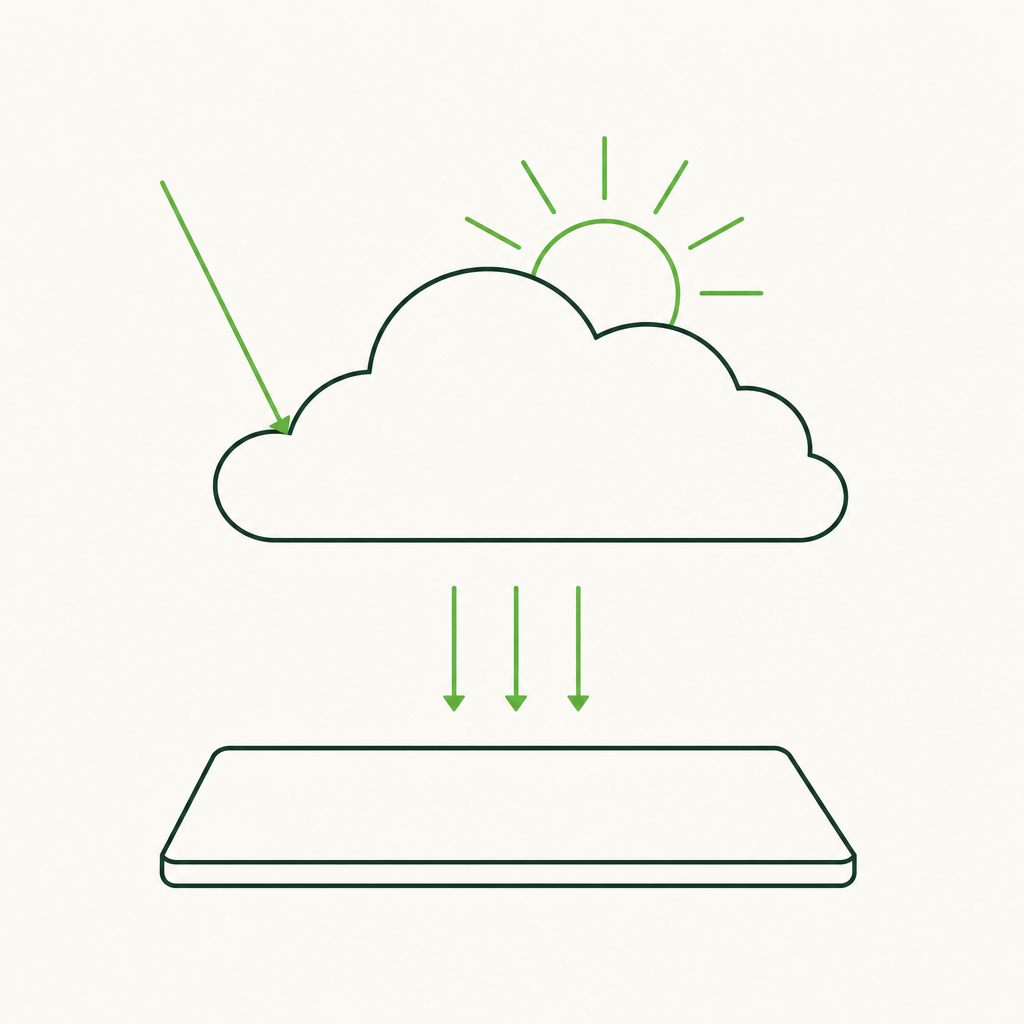
A panel's output is close to proportional to the light falling on it, but not uniformly. Voltage sags slightly as the light falls; current falls almost in step with it. That is why a panel measured on a dull morning can still read a healthy-looking voltage while delivering almost nothing — the number on the display looks normal and the current is not there.
| Conditions | Roughly what to expect |
|---|---|
| Full sun, panel square to the sun | Rated output |
| Thin cloud or strong haze | Around half |
| Heavy overcast | Well under a quarter |
| Dark storm or heavy rain | Close to nothing |
Those figures are a rule of thumb for a panel lying flat, not a calculation. A flat-mounted panel is at its worst in winter, when the sun is low and the loss from the angle adds to the loss from the cloud.
Why the controller matters more on a dull day
A panel's best operating voltage barely moves as the light falls, so the maximum power point on a dull day is found the same way it is found in full sun — which is the argument for an MPPT controller. It takes the panel's voltage and converts the surplus into extra charging current. A PWM controller cannot do that; it connects the panel to the battery and lets the panel sit at whatever voltage the battery imposes, which on a dull morning wastes a larger share of a smaller harvest.
Shading is a different problem with the same symptom. Cloud is even across the array; a shadow from a roof box, an aerial or a branch is not, and a single shaded cell in a series string can cost the whole string. Bypass diodes limit the damage by allowing current to route around the affected section, which is why they are worth having even on a panel that is never deliberately shaded.
What actually helps
- Keep the surface clean. A film of dust costs a few percent in sun and matters more when there is less light to lose (see the maintenance guide).
- Remove partial shade before adding panels. A shadow across one panel can cost more than the panel added to compensate for it.
- Use an MPPT controller rather than a PWM one, particularly on an array above roughly 200W (see the controller comparison).
- Size the array for your least sunny season rather than your sunniest, and accept that a dull week is a week the battery carries.
- Give the battery enough capacity to travel through a dull spell, because on those days the array is topping up rather than restoring.
What this means for the system you are planning
Plan for the dull days and the sunny ones look after themselves. A van used mainly in southern Europe in summer needs less array than the same van used in northern Europe in winter, and the difference is larger than most people expect — which is why the sizing worked out from a daily energy figure should use a realistic winter sun hour count rather than a summer one.
SUYEEGO's flexible panels cover 50W to 230W, 4 mm thick, with a high-transmittance ETFE surface and a waterproof TPT back sheet, and bypass diodes across the cell sections. Tell us where you travel and how much energy you use and we will tell you what the array has to be to cover the worst month rather than the best one.
Frequently asked questions
- Do solar panels work in the rain?
- They still produce a small amount, because some light reaches them through the cloud, but a dark storm is close to the worst case. Rain does at least rinse the surface, which helps on the next bright day.
- How much do solar panels produce on a cloudy day?
- Under heavy overcast, well under a quarter of the rated figure is a fair expectation for a flat-mounted panel; under thin cloud it is nearer half. It is a rough guide rather than a calculation, and the angle of the panel matters as much as the cloud.
- Do I need more solar if I live somewhere cloudy?
- Yes. The array has to cover the daily energy figure in the dull season, and the battery has to carry the system through a dull spell, so both are sized larger than a sunny-climate system with the same loads.
- Is shading as bad as cloud?
- Worse, for the output. Cloud reduces the light evenly across the array, while a shadow cutting across one panel can cost most of the output of the series string it sits in.