How hot is too hot for a lithium battery?
6 min read
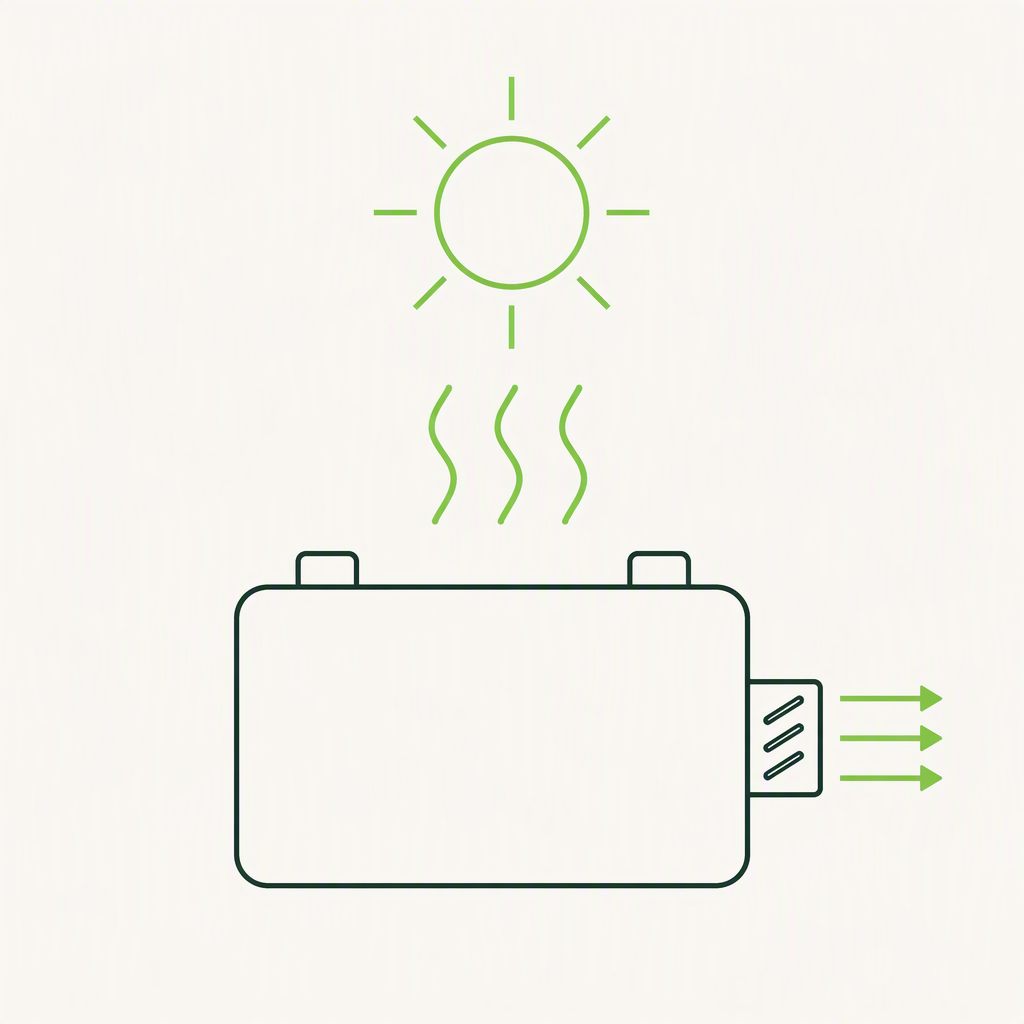
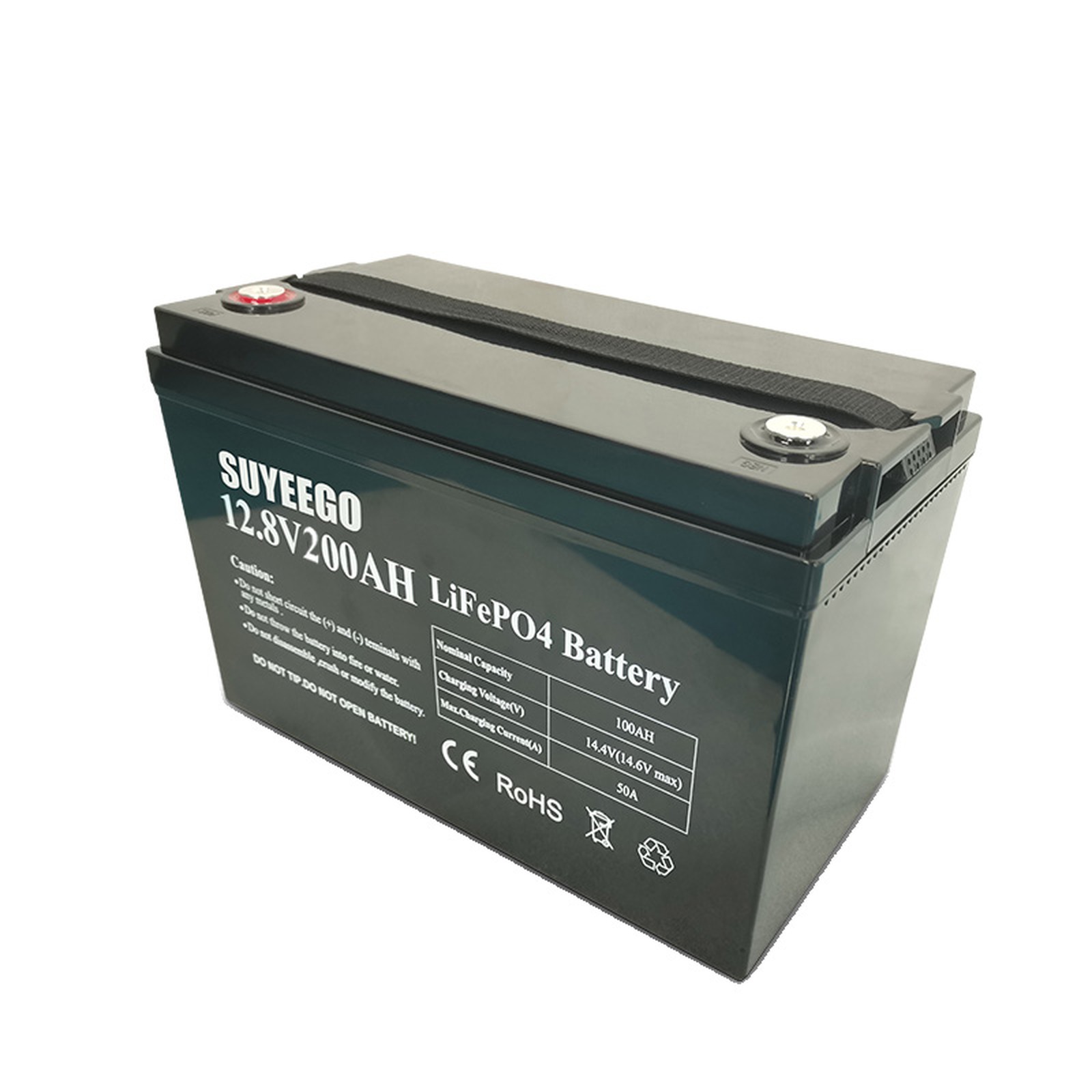
A lithium leisure battery publishes three temperature windows, and the hot end is the tightest of them. A 12.8V 200Ah LiFePO4 battery can be charged from 0 °C to 60 °C and discharged from −15 °C to 60 °C, but it should be stored between −15 °C and 50 °C — lower than the temperature it can be used at. That gap is the one worth acting on, because a vehicle parked in full summer sun with the battery in an unvented locker is the situation that sits in it. Heat does not destroy a lithium battery in an afternoon the way a deep discharge can; it ages it faster, and the capacity lost that way does not come back. Ventilating the compartment is cheaper than replacing the battery early.
The three windows, at the hot end
| Operation | Temperature window |
|---|---|
| Discharge | −15 °C to 60 °C |
| Charge | 0 °C to 60 °C |
| Storage | −15 °C to 50 °C |
The storage window is deliberately lower than the operating window, and that is the clue to how to think about heat. Sixty degrees is something the battery can be asked to work at; fifty is what it should be left sitting at. A battery used hard in a hot vehicle and then parked in the same place stays hot for hours after the load is removed.
What heat does over time
The mechanisms inside a lithium cell that consume capacity are chemical, and chemical reactions run faster when they are warm. A battery held at high temperature loses capacity faster than the same battery kept cool, and the loss is cumulative rather than self-correcting: the capacity does not return when the weather breaks. This is why a battery's cycle life figure should be read as a laboratory figure measured at a controlled temperature — real installations that run hot will not match it.
The management system inside the battery is the backstop rather than the answer. It will intervene on over-temperature at the extreme, but the published window already permits operation up to 60 °C, so the damage heat does happens well inside what the battery is rated for. Nothing in the specification is being breached while a battery slowly loses capacity in a hot locker.
Where the heat actually comes from
- The vehicle itself, standing in sun. A closed van can sit far above the outside air temperature, and the locker a battery lives in can be hotter still.
- The battery's own losses while charging and discharging, which are small in themselves but continuous.
- Whatever else shares the compartment — an inverter, a charger or a controller all shed heat into the same space.
- A compartment with no airflow, where heat has nowhere to go.
- The vehicle's structure, from a sunny side panel or an engine bay that shares a bulkhead with the battery.
What to do about it
- Ventilate the compartment properly, with an opening low and another high so air can pass through it rather than simply being present.
- Give the case clearance on all sides instead of boxing it in against the other equipment.
- Keep the heat-producing devices out of the same small space, or at least do not stack them so one draws the other's exhaust air.
- Shade the vehicle where it is possible, and choose a storage position that is not the sunniest corner of the vehicle.
- Keep the case clean. It is sealed to IP55 — dust and water spray — and a dusty case insulates it.
- Check the compartment in the middle of a hot afternoon rather than in the morning, because that is when the problem is measurable.
SUYEEGO's 12.8V 200Ah LiFePO4 battery is rated for discharge from −15 °C to 60 °C, charging from 0 °C to 60 °C and storage between −15 °C and 50 °C, with a sealed IP55 case and more than 6000 cycles. Those figures are published so a compartment can be checked against them; if yours cannot be kept under 50 °C in summer, that is worth fixing before the battery is fitted.
The cold end, briefly
Cold is a narrower problem than heat. A lithium battery discharges happily at −15 °C and loses nothing by being cold, but it must not be charged below 0 °C, which is why winter storage is a matter of isolating the charging sources rather than keeping the battery warm.
Frequently asked questions
- Can a lithium battery get too hot?
- Above its storage window, yes. The published storage limit of 50 °C is lower than the 60 °C it can be charged and discharged at, and heat above that limit accelerates permanent capacity loss rather than causing a sudden failure.
- Will my battery be damaged by a hot day?
- A single hot afternoon is within what the battery is rated for. The concern is a compartment that stays hot day after day through the summer, which ages the battery steadily.
- Should a lithium battery compartment be ventilated?
- Yes. Vents low and high let heat leave the space by rising, which keeps the battery closer to ambient and away from the storage limit.
- Is heat or cold worse for a lithium battery?
- They fail differently. Cold blocks charging below 0 °C but does no harm otherwise; heat does not stop the battery working but slowly removes capacity that never returns.