Does an RV inverter need a transfer switch?
6 min read
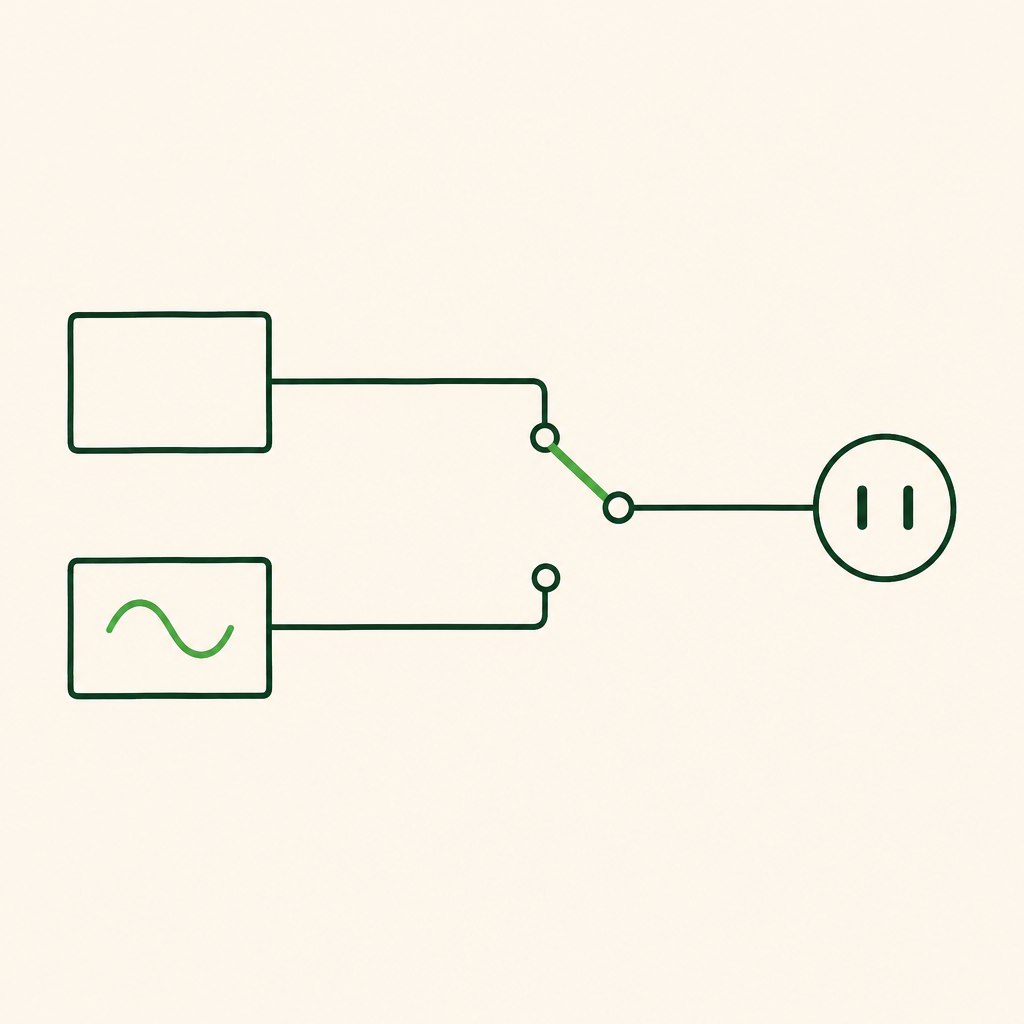
It does if you want the same sockets to work from either source without moving plugs. A transfer switch selects one source at a time — shore power or inverter — so the two can never meet, and it is either manual or automatic. Without one the arrangement is simpler and cheaper: a dedicated socket fed only by the inverter, which is what many small conversions use. What the switch buys is convenience and the ability to leave appliances plugged in.
What a transfer switch actually does
The switch sits between two possible sources and one load. When the van is hooked up, the load runs from the hook-up; when it is not, the load runs from the inverter. Its second job is the more important one: keeping the two sources apart. Inverter output is live whenever the unit is on, and it must never be connected to a shore inlet that is also live.
Manual or automatic
- Manual: a physical switch or a plug that is moved by hand. Cheap, obvious, and impossible to get wrong if it is correctly labelled.
- Automatic: a relay that senses the hook-up and changes over by itself, so the van behaves like a house with a backup supply.
- Built in: some inverter-chargers include a transfer relay and a charger in the same box, which is the tidiest option and the most expensive one.
- Whichever it is, the switch has to be rated for the current the sockets will draw, not just for the inverter's rating.
The simpler alternative
Many conversions skip the switch entirely and fit one socket that is fed only by the inverter, clearly marked as such. Nothing can be left plugged in by mistake, the wiring is short, and the cost is a fraction of an automatic changeover. The trade is that anything on that socket has to be moved to a hook-up socket when the van is plugged in.
Keeping the two sources apart
Never connect an inverter's output to the van's shore inlet. Doing so would put mains voltage onto the inlet pins, which is dangerous to anyone handling the cable and destructive to anything connected on the other side. A transfer switch or a proper interlock is the mechanism that prevents it. Requirements for earthing and for who may carry out the AC work differ between countries and vehicle types, so the applicable local rules are the ones to follow.
What the range publishes
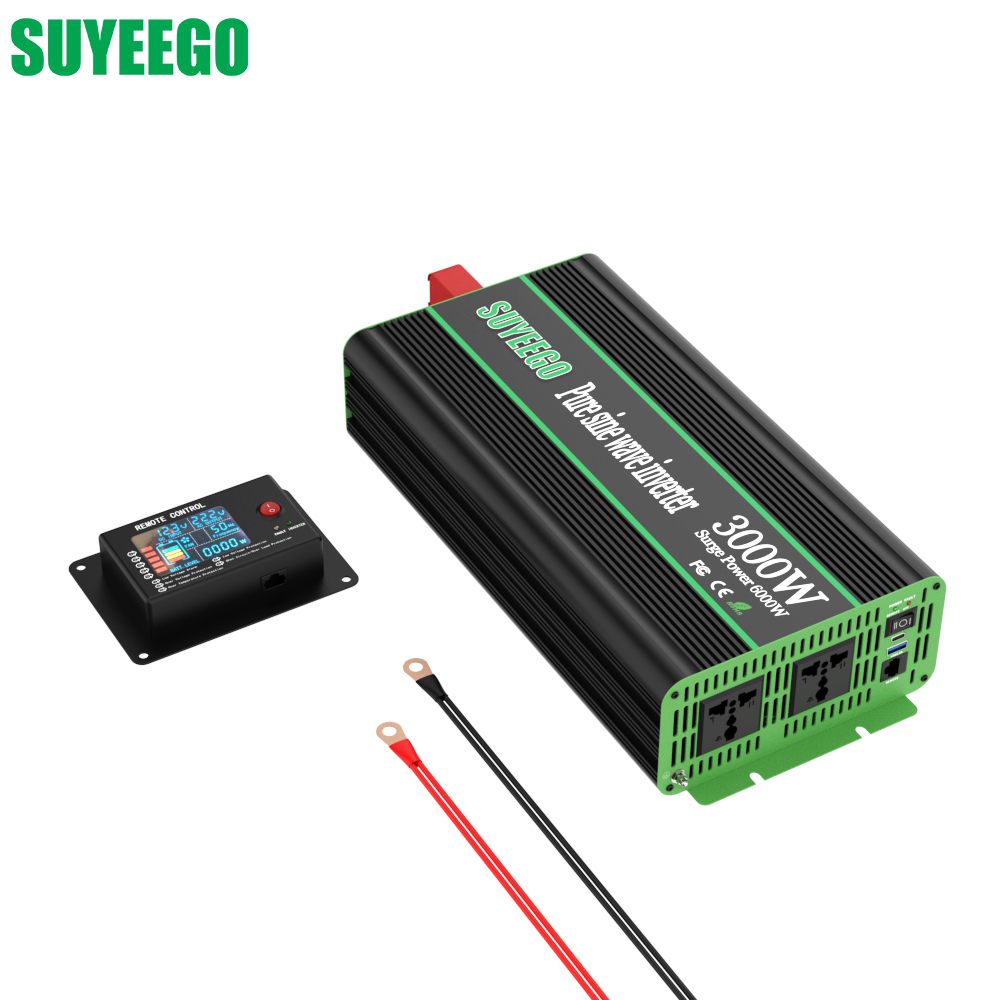
The SYGG-FSC inverter range covers 1000W to 3000W with 12V or 24V DC input, 110V or 220V output with 50Hz or 60Hz on request, peak ratings of twice the continuous figure, efficiency above 95% and a low-voltage alarm at 10.5V with cut-off at 10V on a 12V bank. The range is a straight inverter: a transfer switch is a separate part of the installation and is chosen with the AC wiring rather than with the inverter.
Frequently asked questions
- Can I plug the inverter into the van's shore inlet?
- Never. That puts the inverter's live output onto the inlet pins, which anyone touching the hook-up cable can come into contact with, and it can destroy equipment on the other side. Shore power and inverter output have to be kept apart by a switch or an interlock.
- Do all inverters have a transfer switch built in?
- No. Many inverters are supplied as a plain DC-to-AC unit with no switching at all, and the changeover is added separately. Units that include one are usually described as inverter-chargers, or as having a built-in transfer relay.
- Does a transfer switch charge the battery?
- No. It only switches the AC path between two sources. Charging from shore power is done by a charger or converter, which in an inverter-charger happens to live in the same box as the inverter, but they are separate functions.
- Can I leave appliances plugged in with an automatic switch?
- That is the point of having one. With an automatic changeover the sockets keep working when the hook-up is disconnected, so a fridge or a charger plugged into a van socket carries on. What it does not do is give you more energy: an appliance that runs on the inverter is still running from the battery.